
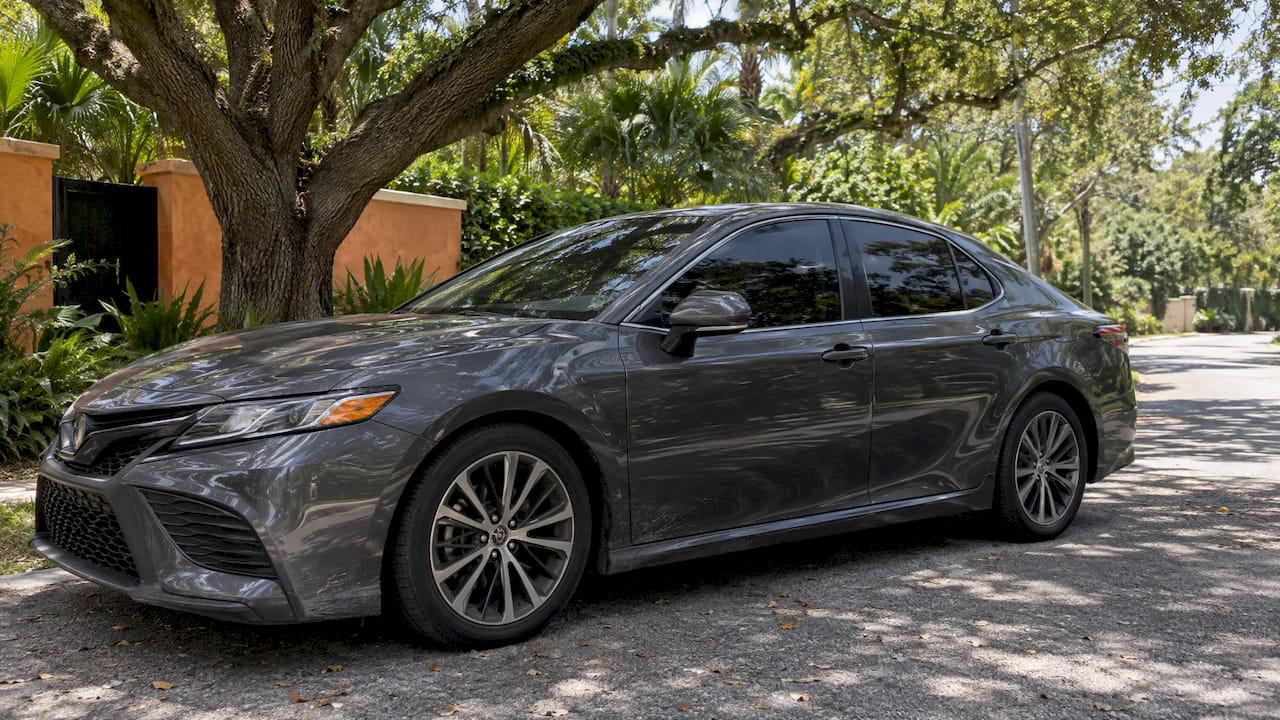
Non-metallic window tint is film that gets its look and performance from dye, carbon or ceramic particles instead of a metal layer. Ceramic is the premium non-metallic choice: it contains no metal, so it does not block cell, GPS or radio signals, and it is built to reject infrared heat. If you drive in Miami-Dade and want strong heat control without electronics trouble, ceramic film is the one we install, and we install it at your home or office.
TL;DR
- Non-metallic tint includes carbon and ceramic films. Metalized film uses a thin metal layer to reflect heat.
- Ceramic film is non-conductive, so it is designed to leave phone, GPS and radio signals alone.
- "Non-reflective" describes how the film looks from outside. "Non-metallic" describes what it is made of. They are related but not the same thing.
- Florida limits both darkness (VLT) and reflectance, so pick a shade that is legal for each window.
- Static cling film is a temporary option. Long-term car tint is applied as adhesive film by a professional installer.
Table of Contents
- What non-metallic window tint actually means
- Why the metal question matters in a modern car
- Non-reflective tint: a different question from "non-metallic"
- Heat and UV: what non-metallic film can do
- How to compare non-metallic films
- Static cling vs. adhesive tint
- Does this apply to homes and businesses?
- Care after installation
- Our perspective
- Get your car tinted where it is parked
- FAQ
- Sources
What non-metallic window tint actually means
Car window film comes in four main families: dyed, metalized, carbon and ceramic. AutoZone's guide to tint types describes dyed film as affordable and non-reflective, metalized film as heat-reflecting but prone to interfering with cell and GPS signals, carbon film as matte and color-stable, and ceramic film as the premium option made with non-conductive ceramic particles.
So "non-metallic" is a label that covers more than one family:
- Dyed film uses dye layers to absorb light and some heat. It contains no metal, but dye can fade over time.
- Carbon film uses carbon particles. It has a matte look and blocks less signal than metalized film.
- Ceramic film uses ceramic particles. Tint Center's breakdown notes that ceramic contains no metal or dyes and works by reflecting and absorbing infrared light.
Metalized (sputtered) film is the opposite approach. A thin metal layer reflects heat, and that metal is the reason it can interfere with in-car signals.
Why the metal question matters in a modern car
Your car now carries a lot of radio gear: GPS, Bluetooth, toll transponders, keyless entry, satellite radio, and in many newer vehicles, cameras and driver-assist sensors. Metal in the glass is the wrong thing to add to that mix.
The U.S. General Services Administration looked at this question for buildings. Its 2022 assessment of non-metalized window film states that non-metalized film components do not oxidize or corrode and do not interfere with radio frequency signals such as cell phone signals, unlike conventional metalized products. The same assessment says the durable surface coating lets you clean the glass the way you did before installation.
That is the practical reason many Miami drivers ask for non-metallic tint: the film does its job and your phone, navigation and toll tag keep working as they did. If you drive an EV, our article on sensor-safe ceramic tint for EVs goes deeper on that side.
Non-reflective tint: a different question from "non-metallic"
People who search for non-reflective tint usually mean one thing: they do not want a mirror-like finish. That is a look, and it is measured by visible-light reflectance.
Here is how the two ideas relate:
| Question | What it describes | What decides it |
|---|---|---|
| Is the film non-metallic? | Material | Dye, carbon or ceramic particles instead of a metal layer |
| Is the film non-reflective? | Appearance and legality | How much visible light the film bounces back from outside |
Metalized films tend to look shinier because metal reflects. Dyed and carbon films tend to look flat or matte. Ceramic films are made to reject heat mainly through infrared, not through a mirror effect, so you can choose a shade for looks and privacy without turning the car into a mirror.
Florida cares about this. For rear windows, Florida Statutes section 316.2954 permits sunscreening film with no more than 35% visible-light reflectance and at least 15% visible-light transmittance, or at least 6% for multipurpose passenger vehicles. Front side windows have their own, stricter limits, and the law also bars film that changes the window's color or increases reflectivity beyond what is allowed. Read the statute for the exact numbers on every window, or see our guides on what makes tint legal for Florida drivers and the windshield strip rules.
Heat and UV: what non-metallic film can do
Darkness is not the same as heat rejection. A light ceramic film can reject more heat than a dark film that only absorbs light. When you compare films, ask for the infrared rejection and total solar energy figures, not only the shade.
As a reference point, 3M publishes numbers for its Crystalline Series automotive film: up to 99.9% UV blocked, up to 64% of total solar energy rejected and up to 68% of infrared energy rejected. It is a multilayer optical film with IR-rejecting ceramic nano-technology and more than 200 layers, thinner than a sticky note. Those are 3M's figures for that product, and results depend on the film and the glass.
What that means in South Florida:
- Cooler cabin. Less infrared reaching the seats and dash means the A/C works less hard after the car sits in the sun.
- UV protection. Less UV reaching your skin and your interior.
- Privacy and glare. A shade you choose within the legal limits.
For a side-by-side look at the families, our posts on ceramic vs. carbon tint and carbon vs. dyed tint cover the differences in detail.
How to compare non-metallic films
Use this checklist when you get a quote from any installer:
- Material. Is the film dyed, carbon or ceramic? Ask for the product name.
- Infrared and total solar rejection. Ask for the manufacturer's numbers for that exact film.
- VLT for each window. VLT is the percentage of visible light that passes through. Our VLT guide explains how it is measured, including that measurements carry a tolerance.
- Reflectance. Confirm the finish is within Florida's limits.
- Warranty. Know what is covered and for how long.
- Install quality. Edges, seams and dust control matter as much as the film.
The films we use:
| Film | Type | Warranty |
|---|---|---|
| 3M Ceramic IR | Ceramic | Lifetime |
| SunTek CIR | Ceramic | 5 years |
| Uviron KoolMax | Ceramic | 3 years |
We install ceramic films only. You can read more on our ceramic tint page and our 3M window tinting page.
Static cling vs. adhesive tint
This is the other question that comes up with non-metallic film, and the answer depends on how long you want the film to stay.
Window Film World's comparison explains the trade-off:
| Static cling | Adhesive | |
|---|---|---|
| How it holds | Electrostatic force, no glue | Adhesive bond that sets once it dries |
| Positioning | Can be repositioned during installation | Set once applied |
| Removal | Peels off without residue or damage | Can be removed, usually with a razor scraper and possibly adhesive remover |
| Best for | Low-traffic areas, easy removal | Long-term, high-traffic, high-humidity and commercial use |
For a daily-driven car in Miami's humidity, the long-term choice is professionally installed adhesive film. 3M describes its automotive films as polyester films with a pressure-sensitive adhesive and an abrasion-resistant coating, which is what gives the film its durability on glass. Static cling is a short-term, easy-off option, and it is not what we install.
If you already have old film that is bubbling or turning purple, we also offer old tint removal for $50 to $150, depending on the job.

Does this apply to homes and businesses?
Yes, with different rules. Florida's vehicle limits apply to vehicles, not to your home or storefront. For buildings, the GSA's assessment says non-metalized film is best suited to buildings with a window-to-wall ratio above 30%, and that it suits historic buildings where the glass appearance cannot change. The exterior version is most advantageous for dual-pane windows.
If you want film on your house or office, see our residential window tinting and commercial window tinting pages. HOA, condo and landlord rules can apply, so check them before booking.
Care after installation
Give new film a few days before rolling the windows down, and clean with a soft cloth and a non-ammonia cleaner. Some drivers also add a ceramic coating on glass to help the outside of the windshield stay clean in rain. That coating is a separate product from tint film, and it goes on the outside surface.
Our perspective
We have been tinting cars for 28 years, and the question we hear most is whether a film will mess with a phone, a toll tag or the car's sensors. With ceramic, you do not have to worry about a metal layer in the glass.
That is why we only install ceramic films. We use 3M Ceramic IR, SunTek CIR and Uviron KoolMax, and each comes with a manufacturer warranty you can read before you decide. Most of our work is on cars that sit in the Miami sun all day, so heat rejection matters more to our customers than a dark look.
We cut patterns by computer for an exact fit, and we use 60-inch rolls so a large windshield goes on in one piece, with no seam. We are also used to working on Teslas, luxury and exotic vehicles, where the glass and the sensors need careful handling.
And we come to you. Home or office, anywhere in Miami-Dade, so you never sit in a waiting room.
Jose
Get your car tinted where it is parked
Our published starting prices are $200 for 2 front windows, $150 for a windshield and $450 for a full car plus windshield. Home and commercial jobs are quoted individually. Tell us your car, the shade you want and your ZIP code, and we will confirm what is legal for each window and what the job will cost.

See our mobile window tinting service, request a quote on our quote page, or check the areas we serve. You can also start from southmiamitint.com.
FAQ
Is ceramic tint non-metallic?
Yes. Ceramic film uses non-conductive ceramic particles and contains no metal layer. It is designed to leave cell, GPS and radio signals alone, and it rejects heat by reflecting and absorbing infrared light.
Is non-reflective tint the same as non-metallic tint?
No. Non-metallic describes the material, while non-reflective describes how shiny the film looks from outside. Florida limits reflectance, so a low-reflectance finish is also the safer choice for staying legal. Confirm the limits for each window in the state statute.
Can I use static cling tint on my car instead?
Static cling film holds by electrostatic force, repositions easily and peels off cleanly, so it suits temporary use. For long-term daily driving, adhesive film is the better fit, especially in humid weather. Our installs are professional film applications at your location.
Does non-metallic tint work for my house or office?
It can. Federal guidance describes non-metalized film as well suited to buildings with a lot of glass and to historic buildings. Florida's vehicle tint limits do not govern your home, but your HOA or landlord may have rules. We quote residential and commercial work by the job.
Which of your films has the longest warranty?
3M Ceramic IR carries a lifetime warranty. SunTek CIR is covered for 5 years and Uviron KoolMax for 3 years.
Sources
- Types of Window Film: Dyed vs Carbon vs Metalized vs Ceramic, Tint Center
- What Are the Different Types of Car Window Tint? AutoZone
- Non-Metalized Window Film assessment, U.S. General Services Administration, 2022
- 3M Automotive Window Film Crystalline Series
- Chapter 316.2954, 2026 Florida Statutes
- Static Cling vs. Adhesive Window Film, Window Film World
- Ceramic coating on glass