
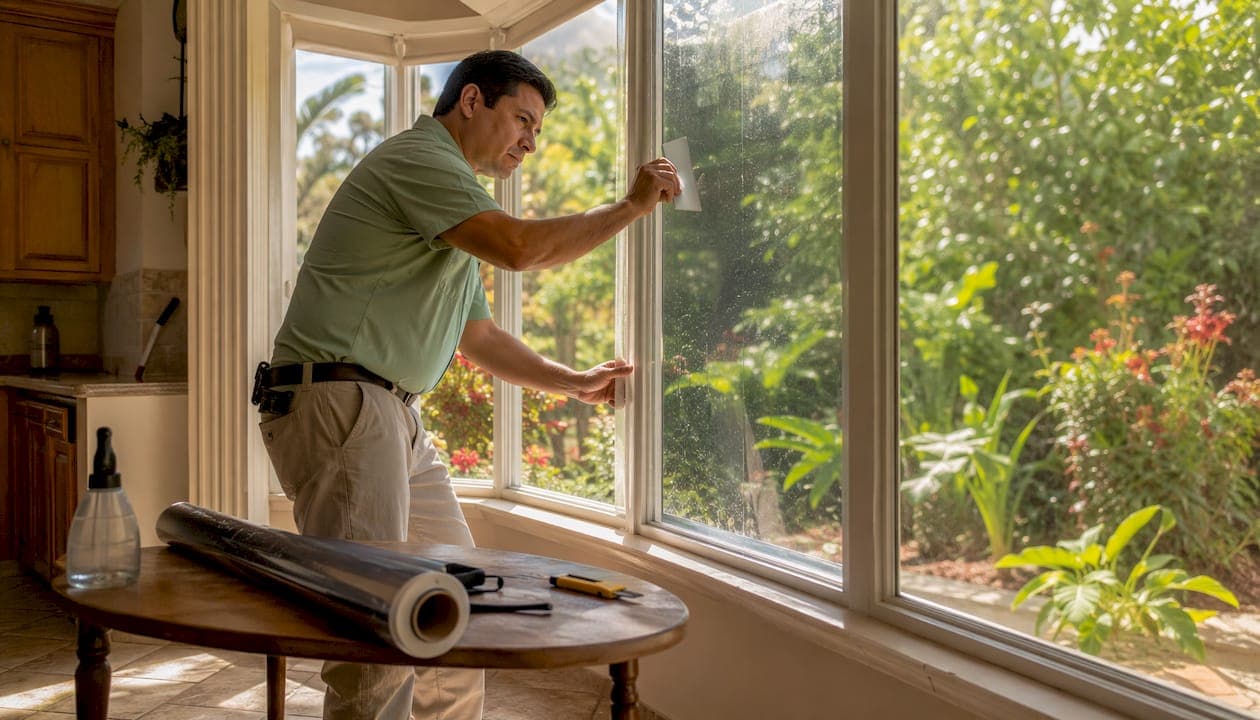
Spectrally selective tint is window film technology that blocks heat and UV rays while letting visible light pass through freely. Unlike standard dark tints, it targets specific solar wavelengths, so your windows stay bright while the heat stays out. High-quality spectrally selective films block over 99% of UV rays and up to 97% of infrared heat, according to Lawrence Berkeley National Laboratory standards. Products like 3M Ceramic Film and Iviron Kollmax Ceramic Tint are built on this technology, delivering real comfort and energy savings without turning your windows dark.
Key things this film does for you:
- Blocks infrared heat before it enters your space
- Filters out over 99% of UV radiation
- Keeps visible light transmission high for a bright interior
- Reduces cooling loads, lowering your energy bills
- Works for cars, homes, and commercial buildings
Table of Contents
- How spectrally selective tint filters solar radiation
- What benefits do you actually get from spectrally selective window film?
- How do ceramic films compare to other spectrally selective films?
- Does spectrally selective film affect visibility, especially at night?
- Why professional installation matters for spectrally selective tint
- Limitations to know before you choose spectrally selective tint
- Building codes and regulations you need to know
- Key Takeaways
How spectrally selective tint filters solar radiation
Solar energy arrives in three forms: visible light, infrared radiation (heat), and ultraviolet radiation. Spectrally selective window film handles each one differently. Visible light passes through, while infrared and UV are either reflected or absorbed by the film's layers before they reach your interior.
The film itself is a multi-layer polyester construction embedded with metalized or ceramic nanoparticles. Those particles are engineered to interact with specific wavelengths. Reflection is the most efficient strategy for managing solar heat, bouncing energy away before it ever enters the building.
Here is how each radiation type is handled:
- Visible light: Passes through with minimal reduction, keeping interiors bright
- Infrared (heat): Reflected or absorbed by nanoparticle layers before penetrating the glass
- Ultraviolet: Blocked by the film's coating, protecting interiors and occupants
One important point: a film's VLT and heat rejection are independent properties. A nearly clear film can still reject a high percentage of heat. Darker does not mean better performance.
Pro Tip: For multi-pane windows, spectrally selective film works best applied to the outer pane, where it reflects solar radiation before heat gets trapped between the glass layers.
What benefits do you actually get from spectrally selective window film?
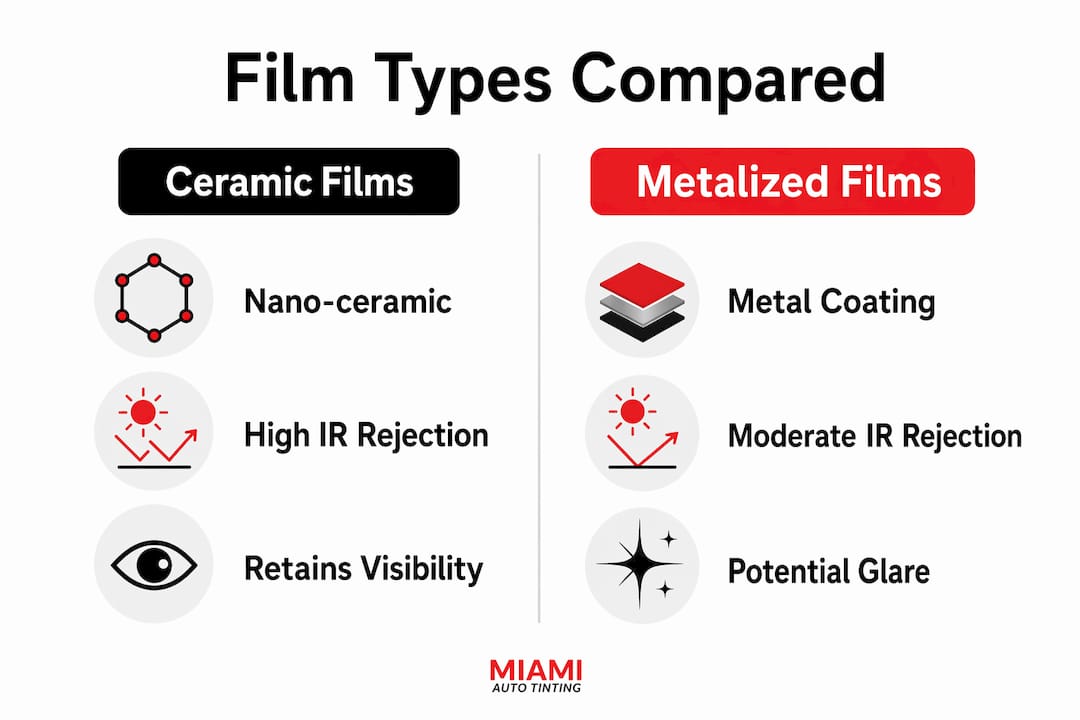
The most direct benefit is heat reduction. By blocking infrared radiation, the film cuts the cooling load on your HVAC system. Less heat entering means your air conditioner runs less, and your energy bills drop. Spectrally selective films can pay back their cost within 3–10 years for U.S. commercial buildings.
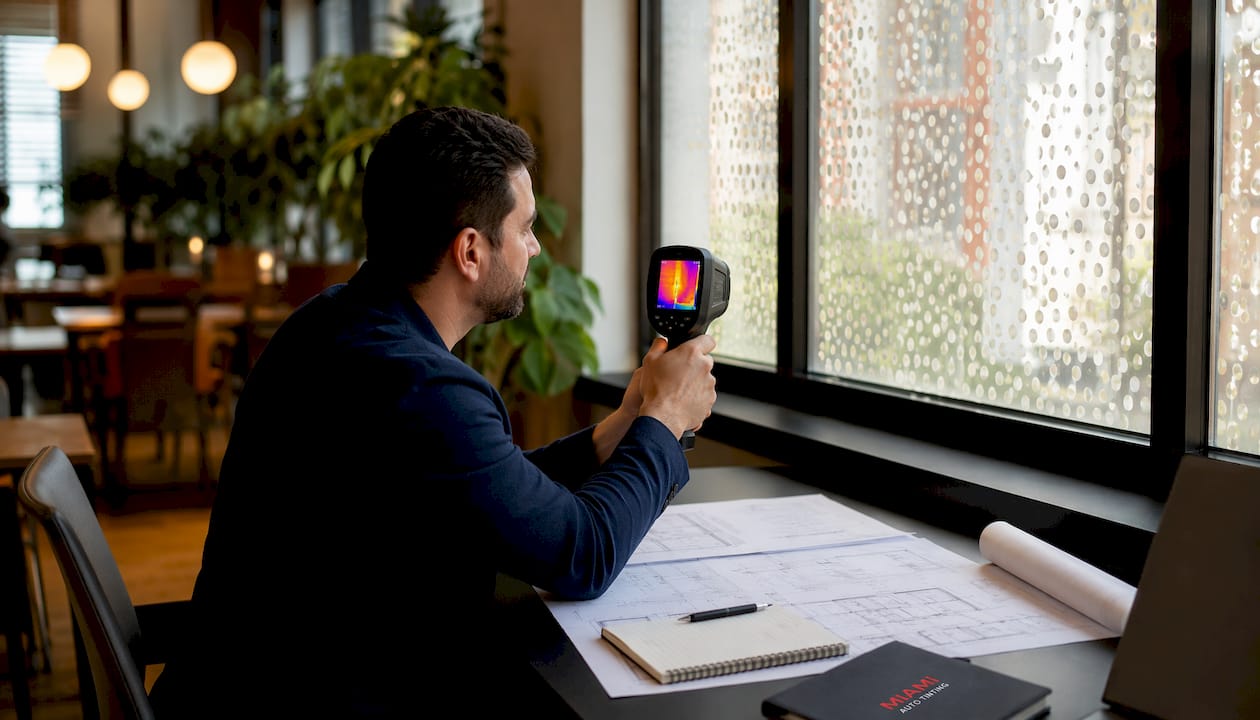
UV protection is equally valuable. Ultraviolet rays fade furniture, flooring, and artwork over time, and they carry real health risks for skin. Certified films that block 99% or more of UVA and UVB radiation protect both your interiors and the people inside.
Additional benefits include:
- Glare reduction without sacrificing natural daylight
- Consistent indoor temperatures by eliminating hot spots near windows
- Privacy options available in varying VLT levels
- Applicability across residential, commercial, and automotive glass
Spectrally selective films reduce solar gain enough to allow HVAC downsizing in many commercial buildings, delivering long-term savings beyond just lower utility bills.
How do ceramic films compare to other spectrally selective films?
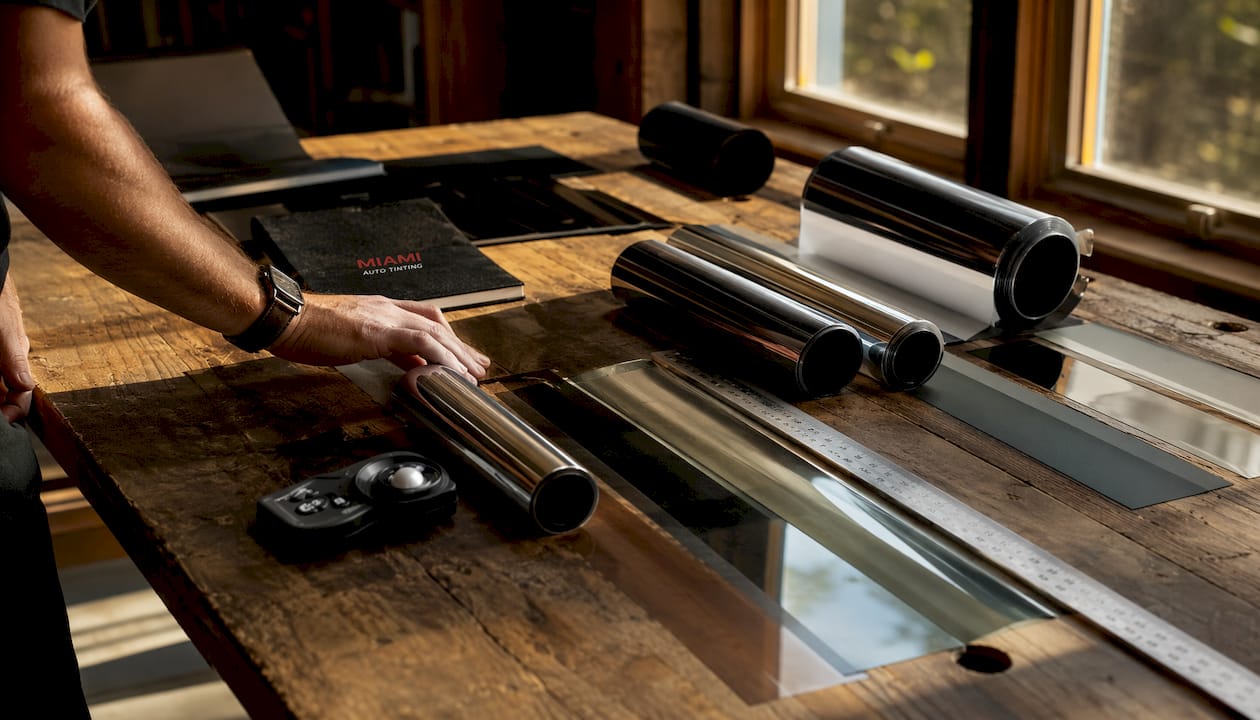
Not all spectrally selective films use the same materials. Ceramic films, like 3M Ceramic Film and Iviron Kollmax Ceramic Tint, use nano-ceramic particles to reject infrared heat without interfering with GPS, cell signals, or electronic devices. That is a practical advantage for cars and offices loaded with technology.
Other spectrally selective films may use metalized layers or thin-film coatings to achieve similar wavelength filtering. Both approaches work, but the materials differ in signal compatibility and long-term durability.
| Feature | Ceramic films | Metalized spectrally selective films |
|---|---|---|
| Heat rejection material | Nano-ceramic particles | Metal layers or thin-film coatings |
| Signal interference | None | Possible with some metals |
| Visible light clarity | High | Moderate to high |
| Durability | Excellent | Good |
| Appearance | Near-clear to light tint | Sometimes reflective |
The myth that darker tint performs better does not hold up. Ceramic films maintain visible light transmission while delivering strong infrared rejection, proving the two properties are independent. You can learn more about how ceramic and other film types compare for Miami drivers in this ceramic vs. carbon tint guide.
Does spectrally selective film affect visibility, especially at night?
High-quality spectrally selective and ceramic films maintain strong optical clarity during the day. At night, the picture changes slightly. Highly reflective or very dark films can reduce outward visibility after dark, though spectrally selective and ceramic films are specifically designed to minimize this effect by keeping VLT high.
For UV blocking, the standard is well-established. Films certified to block 99% or more of UVA and UVB radiation meet the industry benchmark set by organizations like the International Window Film Association (IWFA). That level of protection prevents interior fading and reduces occupant exposure to harmful radiation. You can read more about UV protection and car tinting to understand how this applies to automotive glass specifically.
Why professional installation matters for spectrally selective tint
Professional installation directly affects how long your film lasts and whether your warranty stays valid, which is why many opt for the GSI - LE Upgrade for Coco Coupes Only - Adds Custom Rims and Tints that includes expert tinting services. A proper install requires chemical cleaning, heat-shrinking the film to fit curved glass, and precision edge trimming. Skipping any of these steps leads to bubbling, peeling, and reduced performance.
Key reasons to choose a certified installer:
- Manufacturer warranties often require professional installation
- Proper glass prep prevents adhesion failures
- Heat-shrinking eliminates bubbles on curved automotive and architectural glass
- Precision cutting protects window seals and edges
- Certified dealers use films that meet manufacturer specifications
Southmiamitint installs 3M Ceramic Film, 3M Color Stable, and Iviron Kollmax Ceramic Tint across Miami-Dade, coming directly to your location for cars, homes, and commercial properties. For a detailed look at the multi-layer tinting process, that guide covers each installation step for automotive glass.
Limitations to know before you choose spectrally selective tint
Spectrally selective film is not without trade-offs. The upfront cost runs higher than basic dyed films, though the energy savings offset this over time. Some films with very high infrared rejection can have a slight color shift, typically a light blue or green tint, which may not suit every aesthetic preference.
Film applied to older single-pane glass can sometimes cause thermal stress if the glass absorbs too much heat, so compatibility with your existing windows matters. Very old or already-cracked glass may need replacement before film installation. Performance also depends on correct application; a poorly installed film underperforms regardless of its specifications.
Building codes and regulations you need to know
Window tint regulations vary by state, city, and application type. For automotive glass, Florida law sets specific visible light transmission limits for each window position. Residential and commercial installations face different rules, often tied to local building codes and energy standards. Miami-area tinting regulations cover the specific VLT requirements for cars registered in Miami-Dade.
For commercial buildings, spectrally selective glazing must meet energy codes such as ASHRAE 90.1, which governs window performance in new and retrofit construction across the United States. Choosing a certified installer who knows local codes protects you from compliance issues after the job is done.

Southmiamitint brings professional 3M ceramic window tint installation directly to your home, office, or vehicle anywhere in Miami-Dade. Get the heat rejection and UV protection of spectrally selective technology without the hassle of dropping off your car or scheduling around a shop. Call or text us to get your quote today.
Key Takeaways
Spectrally selective tint blocks over 99% of UV rays and most infrared heat while keeping visible light high, making it an efficient window film technology for energy savings and comfort.
| Point | Details |
|---|---|
| UV and heat blocking | High-quality films block over 99% of UV rays and up to 97% of infrared heat. |
| Energy payback period | Spectrally selective films pay back their cost within several years for U.S. commercial buildings. |
| Darkness vs. performance | A nearly clear film can reject as much heat as a dark one; VLT and heat rejection are independent. |
| Ceramic film advantage | Nano-ceramic films like 3M Ceramic Film reject heat without interfering with electronic signals. |
| Installation and warranty | Professional installation is required for manufacturer warranties of up to 10 years. |