
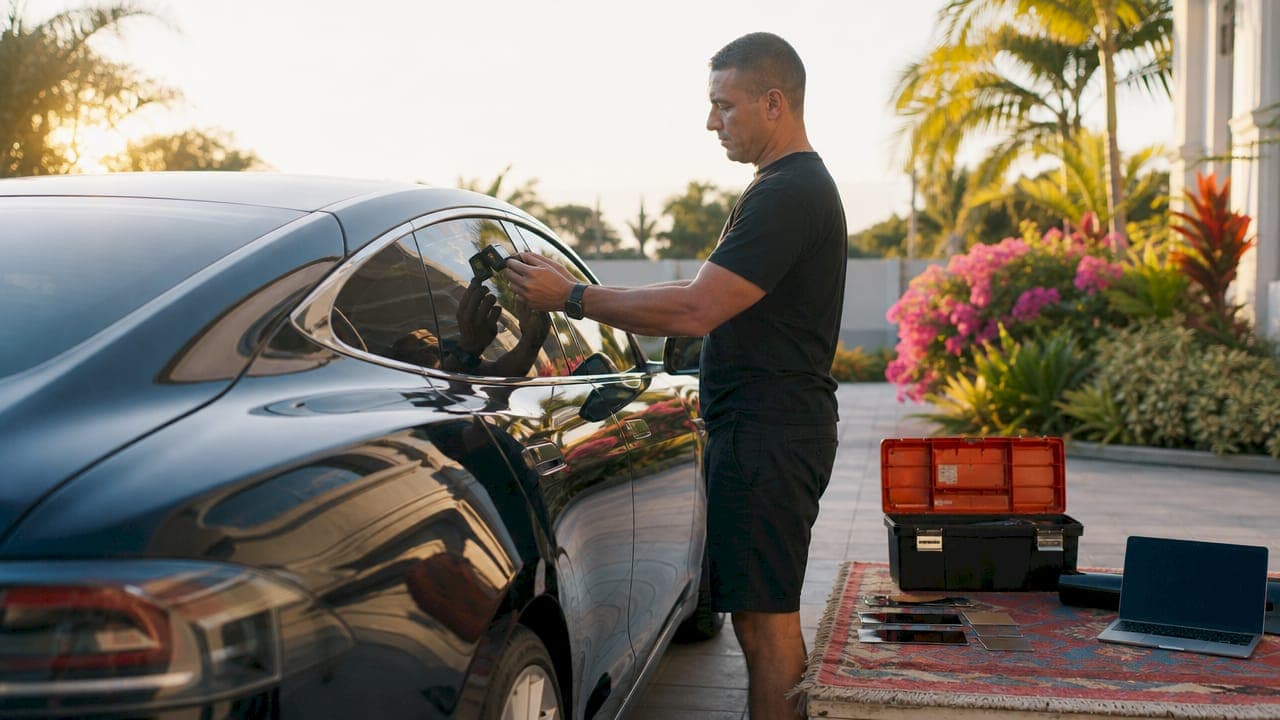
Tint percentage is defined as Visible Light Transmission (VLT), the measure of how much visible light passes through a window film into your vehicle. A lower VLT means darker tint, and a higher VLT means a lighter, more transparent film. This single number affects your privacy, driving safety, heat rejection, and whether your car passes a roadside inspection. Understanding what tint percentage means before you buy saves you from costly mistakes, failed inspections, and film that does not perform the way you expected.
What is tint percentage and how does VLT work?
Tint percentage, measured as VLT, tells you the exact share of visible light a film allows through the glass. A 5% film blocks 95% of light. A 70% film blocks only 30%. The number does not describe darkness directly. It describes light transmission, which is why many drivers misread VLT and end up choosing a shade that is either too dark to be legal or too light to provide real privacy.
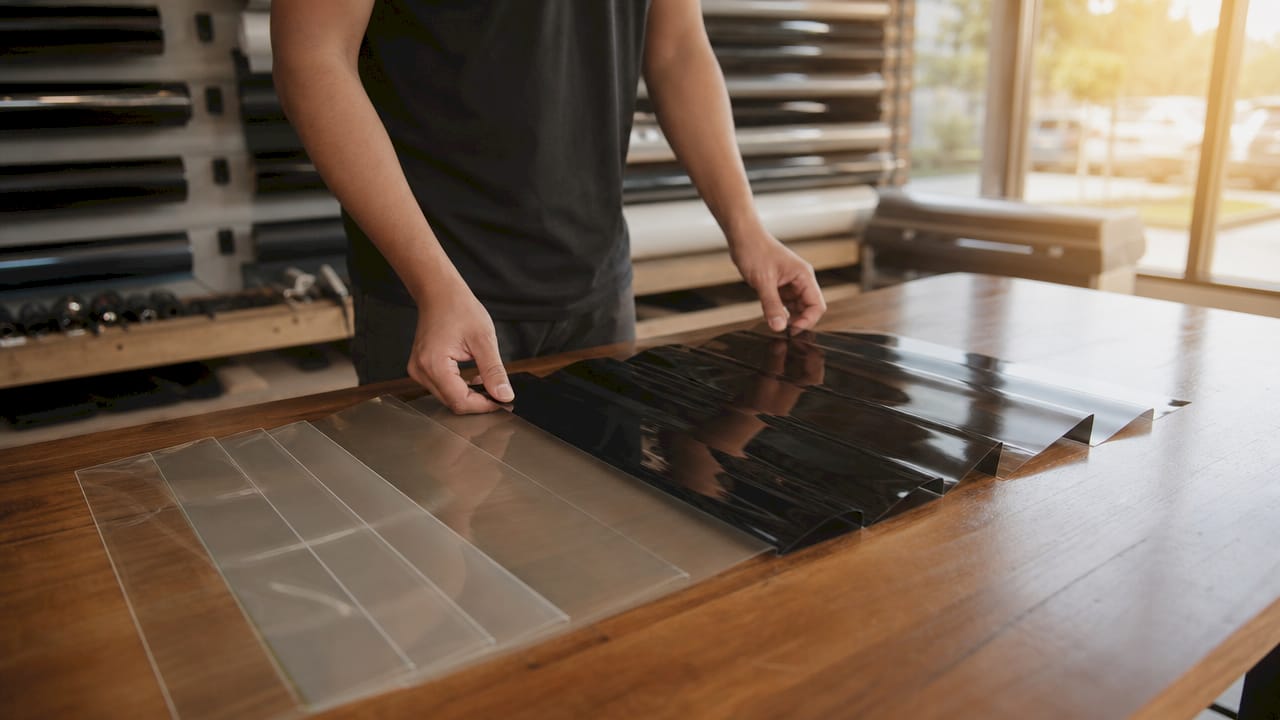
The most common automotive VLT range runs from 5% to 70%. Each point on that scale produces a noticeably different look and a different set of trade-offs. The table below shows the five most popular tint levels and what each one delivers in practice.
| VLT Level | Appearance | Privacy | Daytime Visibility | Common Use |
|---|---|---|---|---|
| 5% | Nearly opaque | Maximum | Very limited | Rear windows, limo glass |
| 20% | Very dark | High | Reduced | Rear windows, style builds |
| 35% | Medium dark | Good | Comfortable | Front and rear, daily drivers |
| 50% | Light smoke | Moderate | Clear | Front windows, subtle look |
| 70% | Nearly clear | Minimal | Excellent | Windshield strips, legal compliance |
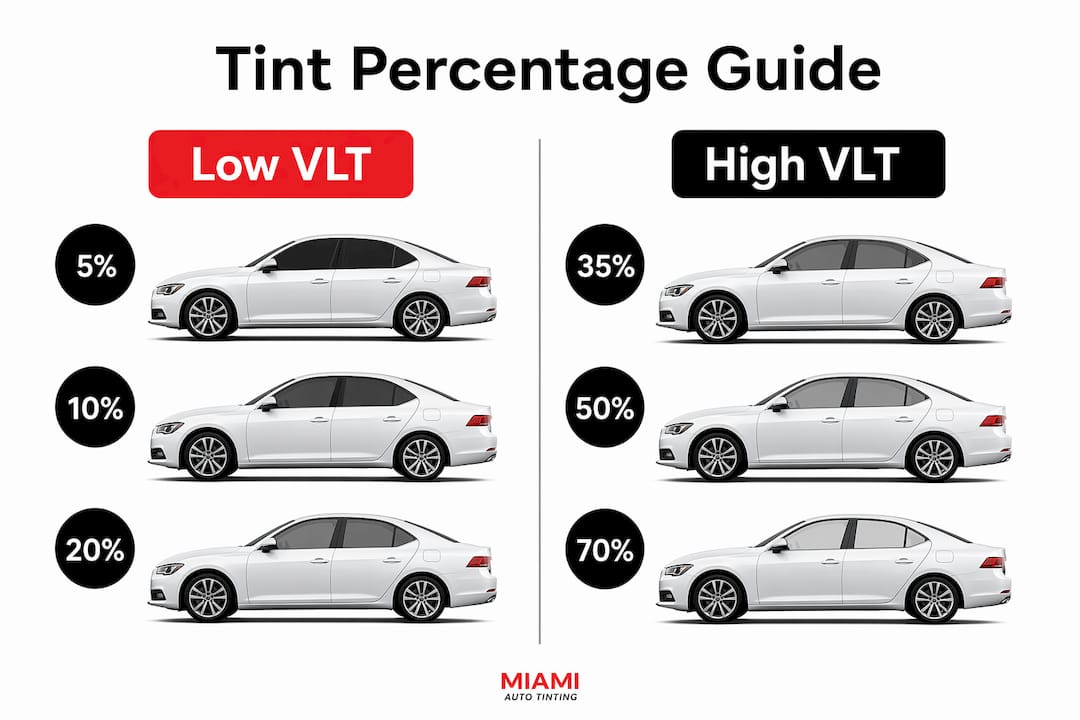
The 35% VLT is the most popular choice among everyday drivers. It delivers visible privacy, reduces glare, and keeps front-window visibility comfortable enough for safe driving in most conditions.
Pro Tip: Never assume a darker film blocks more heat. Heat rejection depends on film technology, not VLT number. A 35% ceramic film can outperform a 5% dyed film on heat blocking.
How do state laws regulate tint percentages?
State law sets the minimum VLT your vehicle must meet on each window. Front window limits range from 20% to 70% across the United States, and some states prohibit any aftermarket tint on front side windows at all. New Jersey, New Hampshire, and Vermont fall into that category. Florida, by contrast, allows 28% VLT on front side windows and 15% on rear side and rear windows for sedans.
The rules also differ by window position. Most states apply stricter limits to the front side windows and windshield because those directly affect the driver's field of view. Rear side and rear windows typically allow darker tint, and in many states, 5% limo tint is legal on rear windows but prohibited on front windows regardless of vehicle type.
Non-compliance carries real consequences:
- Fines ranging from a fix-it ticket to a moving violation, depending on the state
- Forced removal of the film at your expense before the vehicle passes inspection
- Failed registration renewal in states with visual inspection requirements
- Liability exposure if an accident involves impaired visibility from illegal tint
Pro Tip: Always check your state's current tint law before installation, not after. Laws update, and the shop installing your film is not legally responsible for your compliance.
One detail most drivers overlook is that the legal VLT limit applies to the combined transmittance of the glass and the film together, not the film alone. That distinction matters more than most people realize, and the next section explains why.
How does factory tint affect your final VLT?
Factory privacy glass, standard on most SUVs and trucks, typically carries 15–25% VLT on rear windows. When you add an aftermarket film on top of that glass, the combined VLT drops further. The math works by multiplying the two values. Factory glass at 20% VLT combined with a 50% film produces a combined transmittance of roughly 10%, which is darker than either number suggests on its own.
This is the most common reason drivers end up with illegal tint without intending to. They pick a film percentage that sounds legal, but the factory glass pushes the combined result below the state minimum. A professional installer measures the existing glass before recommending a film, which is why consulting a professional before selecting a shade is the right move, not an optional one.
What safety and performance factors should guide your choice?
Tint darkness directly affects how well you see at night. Nighttime visibility suffers significantly below 35% VLT, particularly when identifying pedestrians, reading road signs, and judging corners. Professionals recommend avoiding anything darker than 35% on front side windows for drivers who regularly drive after dark or in low-light urban conditions.
Heat rejection is a separate issue from darkness, and confusing the two leads to poor film choices. Ceramic films at 35% VLT often outperform dyed films at much darker percentages because heat rejection is determined by film technology, not by how much light the film blocks. Films like 3M IR and Iviron Kollmax ceramic tint, both used by Southmiamitint, block infrared heat at the molecular level regardless of their VLT rating.
Privacy effectiveness also shifts with lighting conditions. A 20% film provides strong daytime privacy from outside observers. At night, interior lighting reverses that effect. Interior lighting at night can reduce privacy even through very dark film because light now travels outward rather than inward. Drivers who want privacy at all hours need to factor in how and when they use their vehicle.
For drivers focused on UV protection and heat management, a lighter ceramic film often delivers better results than a dark dyed film. For drivers focused on UV and heat protection in a hot climate like Miami, ceramic technology at a legal VLT is the most practical solution. It keeps the car cooler, protects the interior, and keeps you on the right side of the law.
How to select the right tint percentage for your needs
Choosing the right shade requires balancing four factors: local law, driving habits, existing factory glass, and film technology. Work through them in this order:
- Check your state's VLT minimums for each window position before considering any film. Florida's limits differ from Texas, California, and New York, so confirm the current rules for your registration state.
- Measure your factory glass VLT before selecting a film. Most professional installers carry a tint meter and can read your existing glass in under a minute.
- Match your film to your driving conditions. Night drivers and those in dense urban areas benefit from staying at 35% or lighter on front windows. Rear windows allow more flexibility in most states.
- Choose film technology based on your climate and goals. In South Florida, ceramic tint options block heat and UV more effectively than standard dyed films at any darkness level.
- Get a professional combined VLT calculation before committing. A reputable installer calculates the combined transmittance of your factory glass plus the proposed film and confirms legality before the job starts.
Pro Tip: If you drive a vehicle with factory privacy glass on the rear and want to add film, ask your installer to measure the existing VLT first. Skipping this step is the single most common cause of illegal tint on vehicles that were never intended to break the law.
Vehicle customization choices, including tint, work best when they complement the car's overall setup. Drivers who take a similar methodical approach to vehicle performance decisions tend to get better results across every modification they make.
Key Takeaways
Tint percentage, measured as VLT, is the single most important number to understand before choosing a window film, because it determines legality, visibility, privacy, and heat performance simultaneously.
| Point | Details |
|---|---|
| VLT measures light transmission | Lower percentage means darker tint; higher percentage means more light passes through. |
| 35% is the practical sweet spot | It balances privacy, daytime visibility, and legal compliance for most front windows. |
| Factory glass changes the math | Combined VLT of glass plus film determines legality, not the film percentage alone. |
| Ceramic film beats dyed film on heat | A lighter ceramic film rejects more heat than a darker dyed film at any VLT level. |
| State laws vary by window position | Front side windows face stricter limits than rear windows in nearly every state. |
What I've learned after years of watching drivers get tint wrong
The single most common mistake I see is drivers choosing a tint percentage based on how it looks on someone else's car. That car may have different factory glass, a different state registration, or a film technology that performs nothing like what they end up installing. The result is either a film that fails inspection or one that looks great but does nothing for heat in a Florida summer.
The second mistake is treating VLT as a darkness scale rather than a light transmission scale. Most people assume a higher number means darker. It does not. A common VLT misconception leads to illegal or unsatisfactory choices every time someone skips the basic education. Once you understand that 5% lets in almost no light and 70% lets in almost all of it, the rest of the decision becomes much clearer.
My honest advice: prioritize legality and safety first, then performance, then aesthetics. A 35% ceramic film on front windows and a 20% ceramic film on rear windows covers most drivers in most states. It looks good, keeps the car cooler, protects the interior from UV damage, and does not compromise your ability to see at night. Chasing the darkest possible tint for style is the choice that most often ends with a fix-it ticket and a removal bill.
— Jose
Southmiamitint brings expert tinting to your driveway
Southmiamitint provides mobile window tinting across Miami-Dade, which means a certified installer comes to your home, office, or wherever your car is parked. No shop wait, no dropped-off vehicle.
Every installation uses 3M IR, 3M Color Stable, or Iviron Kollmax ceramic film, all selected for South Florida's heat and UV demands. The team calculates combined VLT before any film goes on, so your tint is legal from day one. Check the areas Southmiamitint serves or request a quote to get a same-day appointment. If you want the right shade installed correctly the first time, this is the call to make.
FAQ
What does tint percentage mean on a car?
Tint percentage refers to Visible Light Transmission (VLT), the share of visible light that passes through the window film. A 20% tint allows 20% of light in and blocks 80%.
What tint percentage is legal in Florida?
Florida law requires a minimum of 28% VLT on front side windows for sedans and allows 15% VLT on rear side and rear windows. Always verify current state rules before installation.
Does a darker tint block more heat?
Not necessarily. Heat rejection depends on film technology, not VLT darkness. A 35% ceramic film can block more heat than a 5% dyed film because ceramic material blocks infrared radiation at the molecular level.
How do I calculate my combined tint percentage?
Multiply your factory glass VLT by your film VLT. Factory glass at 20% combined with a 50% film produces roughly 10% combined transmittance. A professional installer can measure your factory glass and calculate this before installation.
Is 35% tint good for night driving?
Yes. Professionals recommend avoiding tint darker than 35% on front side windows for safe night driving. Darker films reduce your ability to see pedestrians, hazards, and road markings in low-light conditions.