
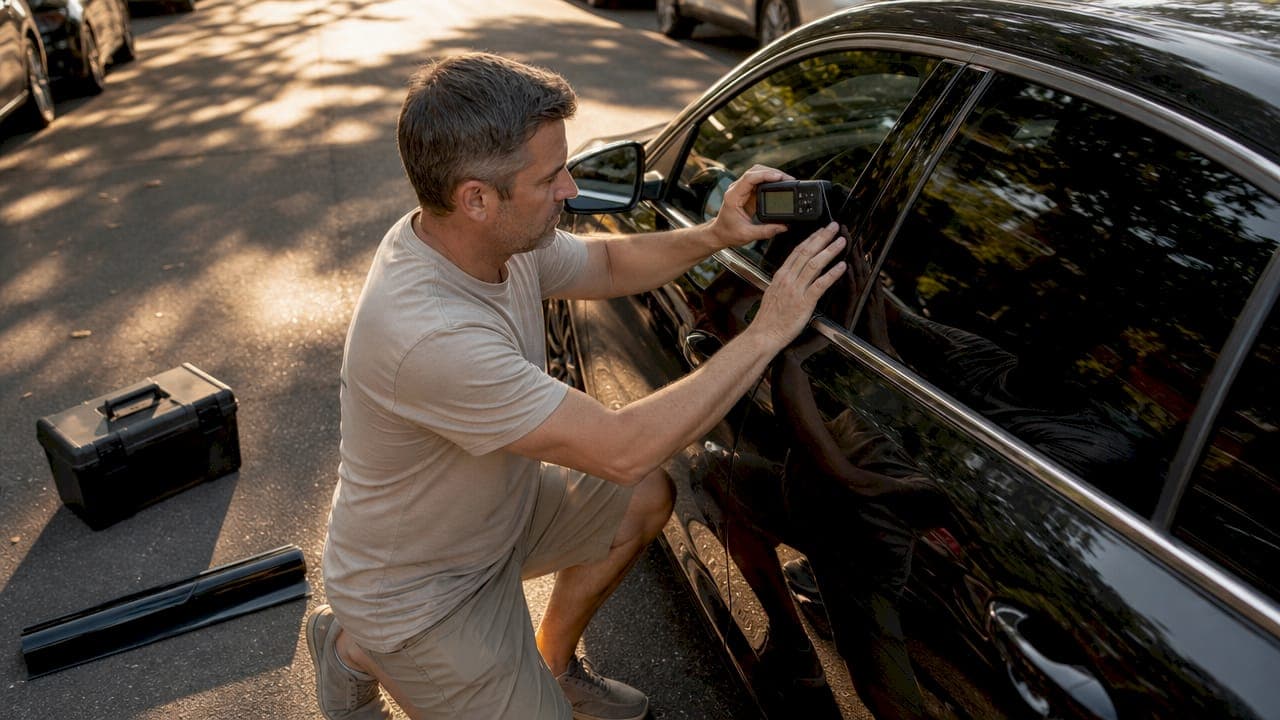
Visible Light Transmission, or VLT, is the percentage of visible light that passes through both your car's glass and the applied tint film combined, and it is the single most important number in every U.S. window tint law. The tinting terms automotive owners should know go well beyond just VLT. Terms like TSER, IR rejection, and nano-ceramic directly affect how comfortable, legal, and durable your tint job will be. Choosing a film based on shade alone, without understanding these terms, is the most common reason drivers end up with fix-it tickets or a sweltering cabin despite paying for a "dark" tint. This guide defines each term clearly and shows you how they connect to real decisions.
What tinting terms automotive owners should know first
VLT is the foundation of all automotive tinting terminology. VLT measures combined light transmission through both the factory glass and the applied film, expressed as a percentage. A 35% VLT means 35% of visible light passes through. Lower numbers mean darker windows.
Here is where most owners get tripped up. The film percentage printed on the box is not the installed VLT. Factory glass already absorbs some light on its own. A 35% film on 75% factory glass produces roughly 26% installed VLT, which is darker than the legal limit in many states. That gap between film VLT and installed VLT is the leading cause of tint violations.
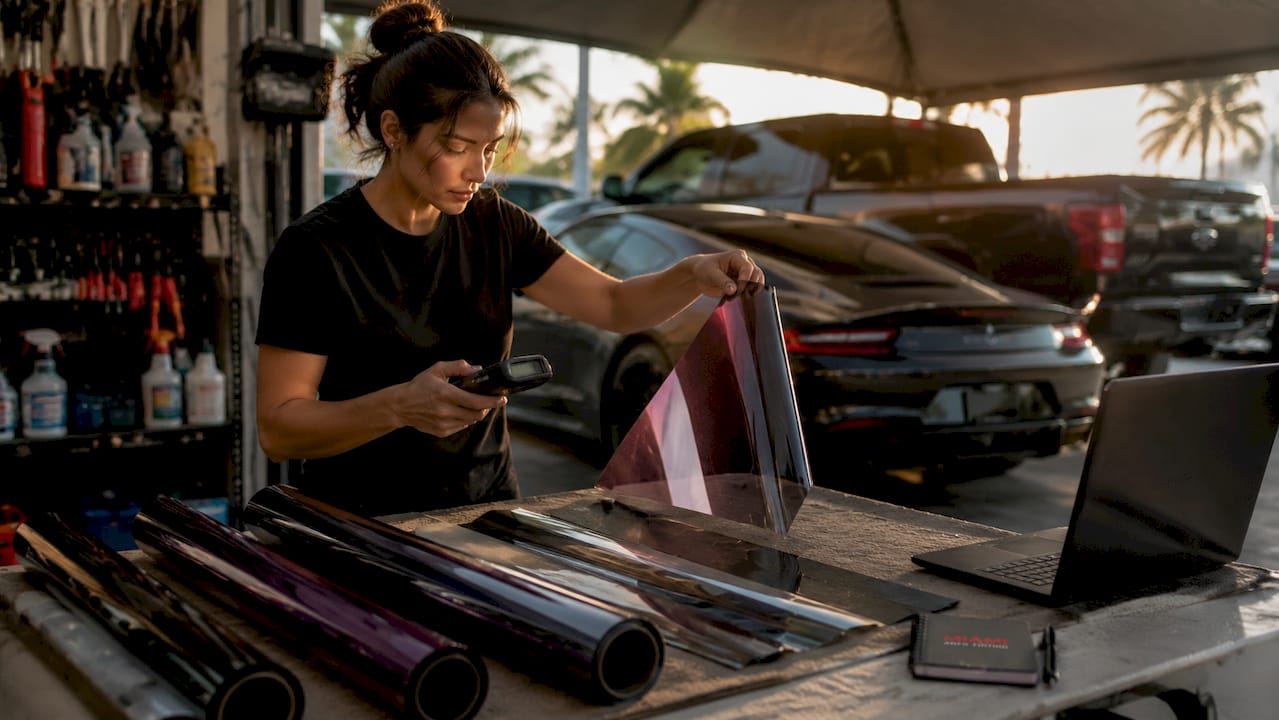
Pro Tip: Ask your installer to measure your factory glass VLT before applying any film, then confirm the combined installed VLT after the job is done. A reputable shop does this as standard practice.
Here is a quick reference for common VLT values and what they look like in practice:
| Installed VLT | Appearance | Common Use |
|---|---|---|
| 50% | Very light, barely noticeable | Windshield strips |
| 35% | Medium, popular for side windows | Front side windows |
| 20% | Dark, strong privacy | Rear side windows |
| 5% | Limo tint, near opaque | Rear windows, where legal |
Understanding installed vs. film VLT is the single most practical piece of window tinting basics any owner can learn. It prevents overspending on a film that ends up illegal once it hits your actual glass.
What are the main types of automotive window tint films?
Automotive tint films fall into five technological generations, and each one performs differently beyond just shade. The five categories are dyed, metallized, hybrid, ceramic, and nano-ceramic IR, and the differences between them matter far more than most owners realize.
Dyed films are the most affordable. They absorb solar heat rather than reflecting or blocking it, which means they fade over time and offer the weakest heat rejection. They do not interfere with GPS, cell signals, or radio reception.
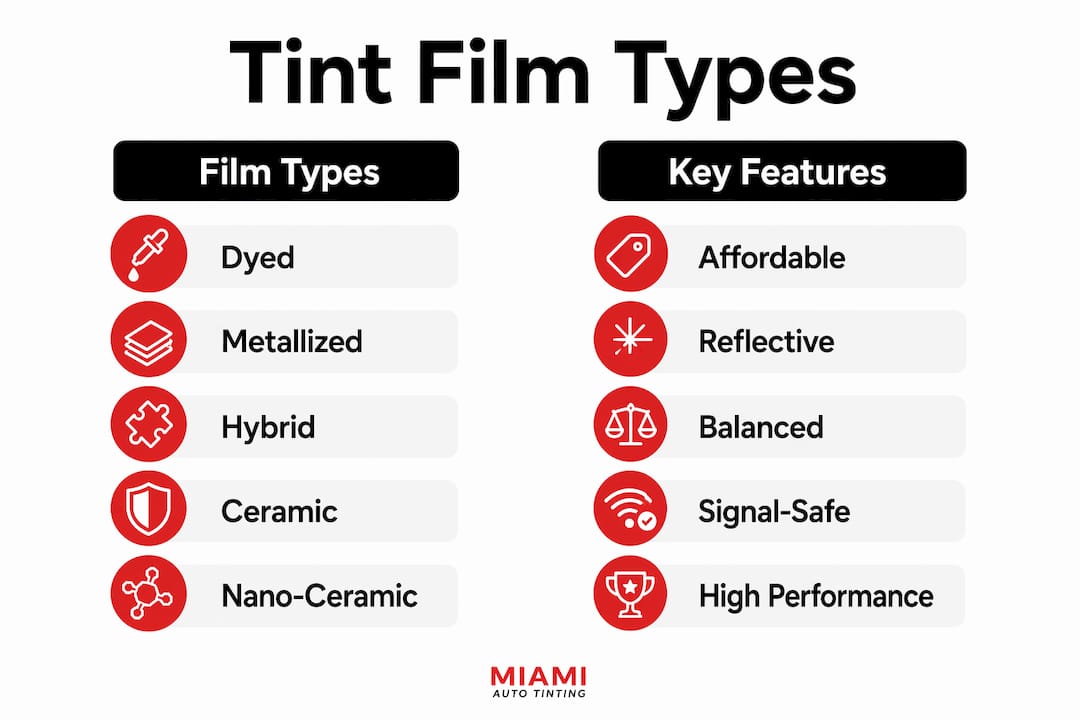
Metallized films embed tiny metallic particles that reflect solar energy. Heat rejection improves significantly over dyed films, but the metallic layer can interfere with Bluetooth, GPS, and toll transponders. They also tend to have a shiny, reflective appearance that some states restrict.
Hybrid films combine dyed and metallized layers to reduce signal interference while improving heat rejection over pure dyed films. They represent a middle ground in both price and performance.
Ceramic films use non-conductive ceramic particles. They block heat effectively, cause zero signal interference, and resist fading. 3M Color Stable and similar ceramic products sit in this category.
Nano-ceramic IR films are the current performance standard. Nano-ceramic IR films block up to 99% of infrared heat with no signal interference, using quantum-level coatings tuned to reject specific solar infrared wavelengths in the 800 to 2500 nm range. Iviron Kollmax ceramic tint and 3M IR products fall into this tier.
Pro Tip: When getting quotes, ask for the film's IR rejection percentage and TSER rating, not just the shade number. Those two figures tell you far more about real-world performance than darkness alone.
| Film Type | Heat Rejection | Signal Safe | Lifespan | Price Range |
|---|---|---|---|---|
| Dyed | Low | Yes | 3 to 5 years | $ |
| Metallized | Medium | No | 5 to 10 years | $$ |
| Hybrid | Medium-High | Mostly | 5 to 10 years | $$ |
| Ceramic | High | Yes | 10+ years | $$$ |
| Nano-Ceramic IR | Highest | Yes | 10+ years | $$$$ |
How do tint percentage and TSER actually affect your comfort?
TSER stands for Total Solar Energy Rejected, and it measures the combined rejection of visible light, infrared radiation, and UV rays as a single percentage. TSER is the key metric for heat rejection performance, not VLT shade. A film with a high TSER keeps your cabin cooler regardless of how dark it looks from the outside.
This distinction matters because heat rejection does not correlate linearly with tint darkness. A 50% VLT ceramic film can reject more total solar energy than a 20% VLT dyed film. Owners who go as dark as legally possible to stay cool are often choosing the wrong metric entirely.
Here is how the numbers compare across common film types at similar VLT shades:
| Film Type | VLT | Approx. TSER | IR Rejection |
|---|---|---|---|
| Dyed (35%) | 35% | 35 to 45% | Low |
| Hybrid (35%) | 35% | 45 to 55% | Medium |
| Ceramic (35%) | 35% | 55 to 65% | High |
| Nano-Ceramic IR (35%) | 35% | 65 to 80% | Very High |
UV blocking is a separate but related metric. Ceramic and nano-ceramic films block over 99% of UV radiation, which protects both passengers from skin damage and your interior from fading and cracking. UV rejection adds long-term value that pure darkness cannot provide.
When you choose window tinting, the practical formula is simple. Pick the lightest VLT that keeps you legal, then maximize TSER and IR rejection within that shade. That approach delivers the most comfort without risking a citation.
What window tinting legal terms do you need to understand?
VLT is the standard legal measurement in every U.S. state, but the specific limits vary by window location. Most states set different VLT minimums for windshields, front side windows, rear side windows, and rear windows. Front side windows face the strictest limits, often requiring 25% to 50% minimum VLT. Rear windows typically allow darker tint, and some states impose no limit at all on rear glass.
Here are the core legal concepts every owner should know before tinting:
- Combined VLT is what law enforcement measures. Officers use a tint meter on the installed window, not the film alone. The reading reflects both glass and film together.
- Reflectivity limits cap how mirror-like a tint can appear from outside. Metallized films are most likely to exceed these limits.
- Medical exemptions allow darker tint for drivers with documented conditions like lupus or photosensitivity. Requirements and accepted documentation vary by state.
- Installer certification stickers list the film brand, VLT percentage, and installer ID. Missing or incorrectly placed stickers can result in a separate violation even when the tint itself is compliant.
- Tint meter tolerance means enforcement readings can vary by a few percentage points. A film installed right at the legal limit carries real risk.
Owners in Miami should review local tint regulations before committing to a shade, since Florida law specifies different limits for sedans versus multi-purpose vehicles.
Pro Tip: Keep a copy of your installation receipt and the film's spec sheet in your glove box. If you are ever stopped, documentation showing your installer measured combined VLT and confirmed compliance is your best defense.
Understanding VLT is the single most effective way to reduce your risk during traffic stops. Owners who know their installed VLT and carry their certification sticker documentation rarely face issues.
Key takeaways
Knowing your installed VLT, film type, and TSER rating before you commit to any tint job is the difference between a smart purchase and an expensive mistake.
| Point | Details |
|---|---|
| VLT is the legal standard | Combined glass and film VLT determines legality, not the film percentage alone. |
| Film VLT differs from installed VLT | A 35% film on 75% factory glass produces roughly 26% installed VLT, often below legal limits. |
| TSER beats darkness for heat | Ceramic and nano-ceramic films reject more heat at lighter shades than dark dyed films. |
| Nano-ceramic IR leads performance | These films block up to 99% IR heat and UV with zero signal interference. |
| Documentation prevents violations | Installer stickers and spec sheets protect you during traffic stops even when tint is legal. |
What I've learned from watching owners get this wrong
I have seen the same mistake play out dozens of times at Southmiamitint. A customer comes in asking for "the darkest legal tint," picks a 35% film because that is what their state allows, and then gets a fix-it ticket two weeks later. The reason is always the same: they did not account for their factory glass absorbing additional light. Their installed VLT ended up at 26%, not 35%.
The other pattern I see constantly is owners who go dark to stay cool. They choose a 5% or 15% limo tint for the rear, assume it blocks the most heat, and are genuinely surprised when a lighter ceramic film on the front windows keeps the cabin cooler. Darkness and heat rejection are not the same thing. Professional installers separate privacy from performance: VLT handles privacy and legality, while IR rejection and TSER handle comfort.
The owners who get the best results are the ones who ask two questions before approving any job: "What will my installed VLT be?" and "What is the TSER on this film?" Those two numbers tell you everything. If an installer cannot answer both without hesitation, that is a signal worth paying attention to. The tinting terms covered in this article are not just vocabulary. They are the questions that separate a good tint job from one you will regret.
— Jose
Get a professional tint job that gets the numbers right
Southmiamitint installs 3M IR, 3M Color Stable, and Iviron Kollmax ceramic tint on cars across Miami-Dade, and every job includes pre-install factory glass measurement and post-install VLT confirmation. The mobile service means the work comes to your home or office, with no shop wait. If you want a film that balances legal compliance, heat rejection, and appearance, start with ceramic window tint in Miami or explore 3M tint options with full performance specs provided before you commit. Southmiamitint handles the measurements so you never have to guess.
FAQ
What does VLT mean in window tinting?
VLT stands for Visible Light Transmission and measures the percentage of visible light passing through both the glass and film combined. It is the primary metric used in U.S. window tint laws to determine legal compliance.
Why is my installed tint darker than the film percentage?
Factory glass absorbs some light before the film is even applied. A 35% film on 75% factory glass produces roughly 26% installed VLT, which is why film percentage and installed VLT are always different numbers.
What is TSER and why does it matter more than shade?
TSER is Total Solar Energy Rejected and measures how much combined visible, infrared, and UV solar energy a film blocks. Ceramic films at lighter shades often have higher TSER than dark dyed films, meaning better cabin cooling at a legal tint level.
Do ceramic tints interfere with GPS or cell signals?
Ceramic and nano-ceramic IR films use non-conductive particles, so they cause zero interference with GPS, Bluetooth, cell signals, or toll transponders. Metallized films are the category most likely to cause signal issues.
What is an installer certification sticker?
An installer certification sticker lists the film brand, VLT percentage, and installer ID, and is often required by law. Missing or incorrectly placed stickers can result in a separate violation even when the tint shade itself is within legal limits.