
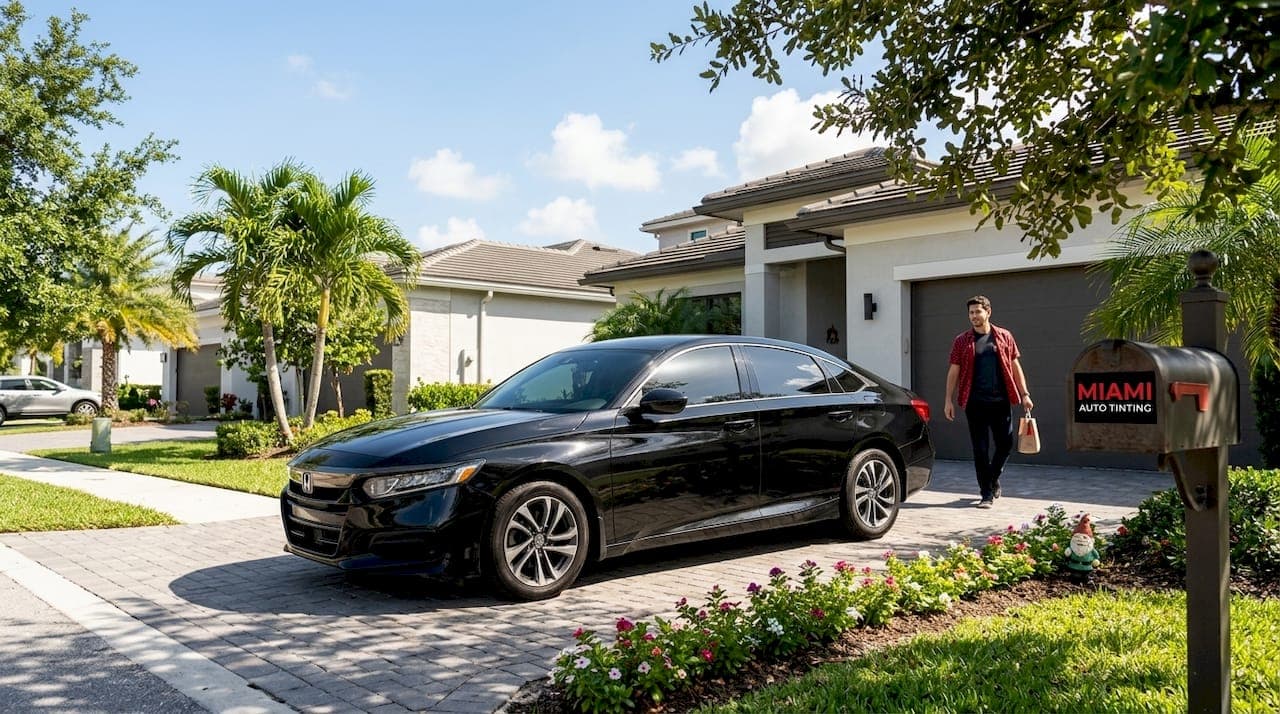
Window tinting is defined as the application of a polyester film to vehicle glass to reduce solar heat, block UV radiation, and increase privacy. The things to consider before tinting your car windows include legal VLT limits, film performance metrics, installation quality, and post-installation care. Getting any one of these wrong costs you money, a traffic citation, or a tint job that peels within a year. Brands like 3M and Iviron Kollmax produce films that perform very differently from budget alternatives, and knowing what separates them before you book an appointment is the difference between satisfaction and regret.
1. What legal restrictions affect your tint choices?
Visible Light Transmission, or VLT, is the percentage of visible light that passes through your combined glass and film. VLT limits vary by state and directly determine whether your tint is legal or not. A 35% VLT means 35% of light passes through. That sounds simple, but enforcement and measurement carry a tolerance of ±3%, which affects how close to the legal line you can safely go.
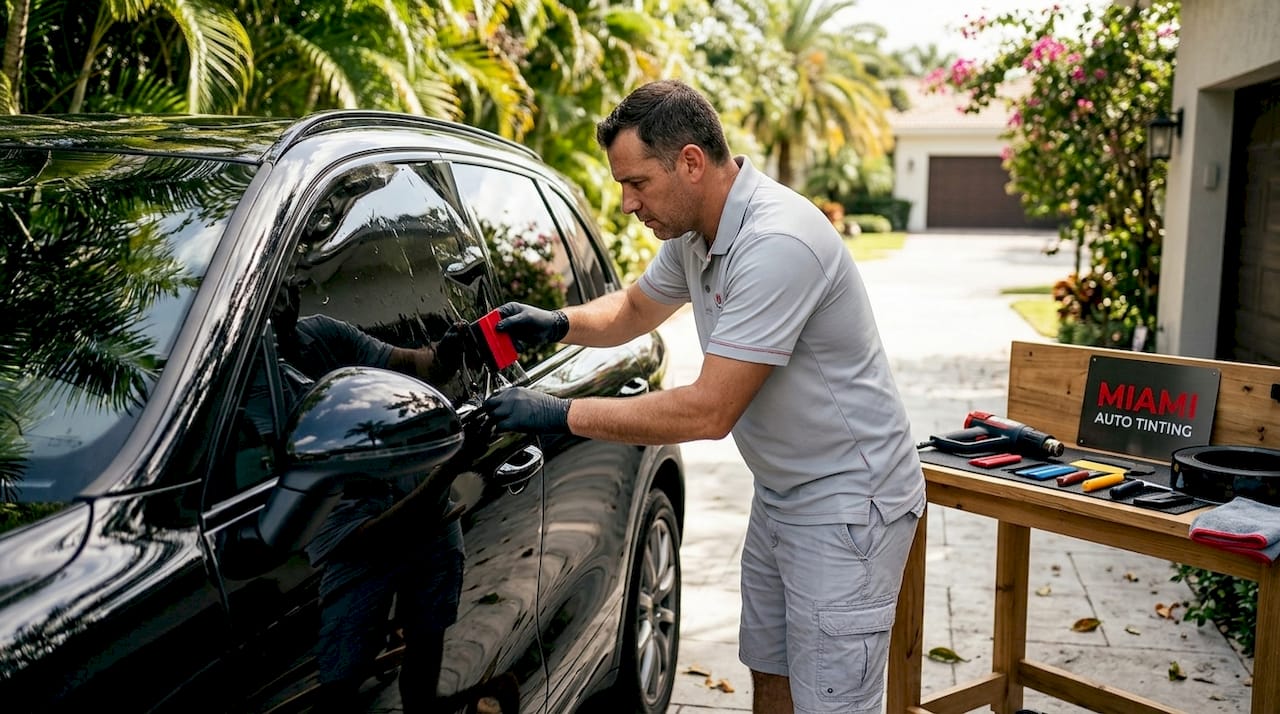
Federal regulation FMVSS 205 requires windshields to maintain at least 70% visible light transmission. This is why nearly every state restricts windshield film to a narrow strip at the top, typically the top four to six inches. Treating VLT as a safety standard rather than just an aesthetic preference is the correct frame.
State laws also vary by window position. Michigan, for example, allows unlimited rear tint but restricts windshield tinting to the top four inches. Florida has its own rules for front side windows, rear side windows, and the rear windshield. You need to know the rules for each window location on your specific vehicle, not just a single statewide number.
- Front side windows: most states require 28% to 35% VLT minimum
- Rear side windows: many states allow darker film, sometimes unlimited
- Rear windshield: often unrestricted when the vehicle has functional side mirrors
- Windshield: limited to a top strip in virtually every state
- Medical exemptions: available in most states with a physician's letter and a compliance sticker
Pro Tip: Ask your installer to show you the tint laws for Miami-Dade specifically before any film goes on. Florida law requires front side windows to allow more than 28% VLT, and a good shop will confirm your combined reading before you leave.
2. How factory glass changes your legal calculation
Factory tinted glass affects your final VLT reading in a way most first-time buyers never anticipate. A 35% film applied over 75% factory glass produces a combined VLT of roughly 26%, which falls below legal limits in many states. This is one of the most common reasons drivers get cited after a professional install.
The math is simple: multiply the film VLT by the factory glass VLT. A qualified installer always measures factory glass VLT before selecting a film. If your installer skips this step, that is a red flag worth acting on before any film is cut.
Glass curvature, defroster lines, and ambient temperature all influence tint meter readings, which is why installer expertise matters beyond just cutting and applying film. An experienced technician accounts for these variables and selects the correct film percentage to keep your combined reading legal and within the ±3% enforcement tolerance.
3. How different tint types and performance metrics impact your choice
Not all window films perform the same, and darkness alone does not determine heat rejection. The four metrics that matter are VLT, Solar Heat Gain Coefficient (SHGC), Total Solar Energy Rejected (TSER), and infrared rejection. Lower SHGC means less heat enters the cabin, while higher TSER means more total solar energy is blocked. A film can have a relatively high VLT and still reject significant heat if its infrared rejection rating is strong.
The three main film categories are dyed, metallic, and ceramic. Dyed films are the most affordable but fade over time and offer limited heat rejection. Metallic films reject heat well but can interfere with GPS, cell signals, and satellite radio. Ceramic films offer the best balance of heat rejection and visibility without signal interference, making them the preferred choice for daily drivers in hot climates like Miami.
| Film Type | Heat Rejection | Signal Interference | Longevity | Price Range |
|---|---|---|---|---|
| Dyed | Low | None | 3 to 5 years | Budget |
| Metallic | Medium to High | Yes | 5 to 10 years | Mid-range |
| Ceramic | High | None | 10 or more years | Premium |
Pro Tip: In Miami's climate, prioritize infrared rejection percentage over VLT darkness when comparing films. A ceramic film at 35% VLT can outperform a dyed film at 20% VLT in actual cabin temperature reduction.
Heat rejection performance is not perfectly correlated with tint darkness. Matching performance metrics to your actual priorities, whether that is UV protection, privacy, or heat comfort, prevents buyer's remorse after installation. For UV protection specifically, quality ceramic films block up to 99% of UV radiation regardless of VLT percentage, which matters for both skin protection and interior preservation. You can read more about UV protection benefits specific to Miami drivers.
4. What installation factors should you watch out for?
Installation quality determines whether your tint looks clean and lasts for years or starts bubbling within months. Here are the key factors to verify before and during your appointment:
- Installer measures factory glass VLT first. This step is non-negotiable for legal compliance and accurate film selection.
- Work area is clean and dust-free. Contamination from dust or moisture trapped under the film causes bubbles and hazing that cannot be fixed without removing and reapplying the film.
- Installer uses proper slip solution. Water and soap solution allows the film to be positioned correctly before adhesion sets.
- Film is cut precisely for your vehicle. Pre-cut kits or computer-cut patterns reduce edge gaps and contamination risk compared to hand-cutting on the glass.
- Installer provides a written warranty. Reputable shops back their work with a warranty covering peeling, bubbling, and color change. Confirm what is covered and for how long.
- Credentials and reviews are verifiable. Check Google reviews and ask whether the installer is certified by the film manufacturer. 3M, for example, certifies authorized dealers who meet installation standards.
The combined VLT reading should be confirmed after installation, not just estimated beforehand. A professional installer will measure the finished result and provide documentation if you request it.
5. Best practices for caring for your tint after installation
Post-installation care is where many car owners unknowingly damage a perfectly good tint job. The adhesive needs time to cure fully, and rushing the process creates permanent defects.
Avoid washing your car or rolling windows down for at least 48 to 72 hours after installation, and ideally wait three to five days before any water contact. The curing process depends on humidity and temperature. In Miami's heat, curing can happen faster, but the rule still applies because the adhesive needs to bond evenly across the entire surface.
Small water bubbles or a slight haze in the first few days are normal. They disappear as the film cures. Do not attempt to press or squeegee them out yourself. If bubbles persist beyond two weeks, contact your installer because that indicates a defect, not a curing issue.
Park in shade or a garage for the first two days after installation to prevent uneven adhesive curing from direct extreme heat. Long-term care is straightforward: clean tinted windows with an ammonia-free cleaner and a soft microfiber cloth. Ammonia-based products like standard Windex degrade the film's adhesive over time and cause premature peeling.
Signs that your tint was installed incorrectly include persistent large bubbles, visible dirt particles under the film, uneven edges, or purple discoloration within the first year. All of these warrant a call to your installer under warranty.
6. How to choose the right tint based on your situation
Choosing the right tint means balancing legal limits, climate demands, privacy needs, and budget. For Miami's climate, heat rejection should rank above aesthetics in your decision criteria. A 35% ceramic film will keep your cabin significantly cooler than a 20% dyed film, and it stays legal on front side windows in Florida.
| Priority | Recommended Film | VLT Range | Key Benefit |
|---|---|---|---|
| Maximum heat rejection | Ceramic (3M IR or Iviron Kollmax) | 35% to 50% | High infrared rejection, no signal loss |
| Maximum privacy | Dyed or ceramic | 15% to 20% (rear only) | Darkest legal option for rear windows |
| Budget-conscious | Dyed film | 35% | Lowest upfront cost |
| Long-term value | Ceramic | 35% to 50% | Durability and performance over time |
For rear windows, most states allow darker film, so you can push toward 20% or lower for privacy without legal risk. Front side windows require staying at or above your state's minimum VLT, which in Florida is 28%. Rear windshields with functional side mirrors are often unrestricted, giving you flexibility there as well.
If you drive a vehicle with heavy factory tinting already, your film options narrow significantly. A lighter film, such as 50% or even clear UV-blocking film, may be the only legal choice for front windows. This is exactly why the factory glass measurement step in installation is not optional.
Key takeaways
Choosing the right window tint requires understanding VLT law, film performance metrics, installation quality, and post-install care before any film is applied.
| Point | Details |
|---|---|
| VLT is a legal standard | Combined VLT of glass plus film must meet your state's minimum to avoid citations. |
| Factory glass changes the math | A 35% film over 75% factory glass produces roughly 26% combined VLT, which may be illegal. |
| Ceramic outperforms dyed film | Ceramic films like 3M IR reject more heat at higher VLT, with no signal interference. |
| Curing requires patience | Avoid washing or rolling windows for at least 48 to 72 hours after installation. |
| Installer credentials matter | Verify factory certification and written warranty before booking any tint appointment. |
What I've learned after years of watching tint jobs go wrong
After working with hundreds of Miami drivers at Southmiamitint, the pattern I see most often is this: people focus entirely on how dark they want their windows and skip every other consideration. They pick a shade, get it installed, and then discover their combined VLT is illegal, or their dyed film starts fading within two years in the Florida sun.
The single most important thing I tell every customer is to treat VLT as a compliance floor, not a style preference. Once you know your legal minimum, you can make smart choices about film type and performance within that range. Skipping the legal step first is what leads to citations and expensive re-dos.
I also think the industry undersells the difference between a certified installer and a cheap shop. Glass curvature, defroster lines, and temperature all affect meter readings in ways that require real expertise to manage. A $50 savings on installation can cost you $200 in film removal and reapplication if the job is done wrong.
My honest recommendation for anyone in Miami: go ceramic, confirm your factory glass VLT before selecting a film percentage, and give the tint a full week to cure before you wash the car. The performance difference between a quality ceramic film and a budget dyed film is not subtle in South Florida heat. You will feel it every time you get in the car.
— Jose
Get your tint done right with Southmiamitint
Southmiamitint offers mobile ceramic window tinting across Miami-Dade, bringing the installation to your home, office, or anywhere that works for you. Every job uses 3M IR, 3M Color Stable, or Iviron Kollmax ceramic film, and every installer measures your factory glass VLT before selecting a film to keep your vehicle fully legal.
Whether you want maximum heat rejection for Miami summers or a clean privacy tint for rear windows, Southmiamitint's team will walk you through your options and confirm compliance before any film is applied. Pricing starts at $249 for ceramic window tinting with mobile service included. You can also explore 3M ceramic tint options or check mobile tinting prices to find the right fit for your vehicle and budget.
FAQ
What VLT percentage is legal in Florida?
Florida requires front side windows to allow more than 28% VLT and windshields to maintain at least 70% light transmission per FMVSS 205. Rear side windows and rear windshields have more flexibility, but combined VLT including factory glass must still be measured.
How long does window tint take to cure?
Tint curing typically takes three to five days under normal conditions, with the first 48 hours being the most critical. Avoid rolling windows down or washing the car during this period to prevent bubbles and peeling.
Does darker tint always mean better heat rejection?
No. Heat rejection depends on the film's infrared rejection rating and SHGC, not just its VLT darkness. A ceramic film at 35% VLT can reject more heat than a dyed film at 20% VLT, making film type the more important variable.
What is the difference between ceramic and dyed window tint?
Ceramic films use nano-ceramic particles to block infrared heat and UV radiation without interfering with electronic signals, while dyed films absorb solar energy and fade over time. Ceramic films last longer and perform better in hot climates, but cost more upfront.
Do I need to tell my installer about factory tinted glass?
Your installer should measure factory glass VLT before applying any film, but pointing it out is a good practice. Factory tinting can push your combined VLT below legal limits even with a relatively light film, so this measurement step is critical for compliance.