
Mismatched window tint is one of the most frustrating things you can notice on an otherwise clean car. You spend good money on an aftermarket tint job, and then you step back and realize the rear windows look greenish while the front film sits charcoal gray. Knowing how to match tint color before you commit to a film saves you time, money, and that sinking feeling of a botched result. This guide walks you through every step: assessing what you already have, picking the right film, applying it correctly, and troubleshooting when things go sideways.
Table of Contents
- Key takeaways
- How to match tint color: start with what's already there
- Selecting the right film for a solid tint color match
- Applying and verifying your tint color match
- Common challenges when matching tint shades
- My take on tint color matching after years in the business
- Get your tint matched right the first time
- FAQ
Key takeaways
| Point | Details |
|---|---|
| Measure VLT before buying | Use a tint meter to read your existing glass darkness before choosing any new film. |
| Film type affects color | Ceramic, carbon, and dyed films each have distinct color tones that affect how well they match. |
| Test before full install | A spray-out or test patch under natural light reveals mismatches before full commitment. |
| Factory glass changes the math | Glass VLT and film VLT combine, so your final result will be darker than the film alone. |
| Professionals reduce mismatch risk | Expert installers use sample swatches and lighting tests that DIY methods often skip. |
How to match tint color: start with what's already there
Before you buy a single roll of film, you need to understand what you are working with. Your car's rear and quarter windows may already have factory privacy glass, which looks dark but is not tint film at all. It is pigment baked into the glass during manufacturing.
Here is why that distinction matters:
- Factory privacy glass typically has a VLT around 15 to 25% and a color undertone that leans slightly green or blue depending on the glass supplier.
- Aftermarket tint film sits on the surface of the glass. It can be removed, replaced, or layered.
- If you layer a film on top of factory glass, the VLTs combine. A 50% film on 80% VLT glass produces a result closer to 40%, not a straight 50%.
- Color undertones in factory glass are nearly impossible to replicate with standard film, which is why matching often means getting close rather than getting exact.
- Legal tint limits vary by state and can restrict how dark your front windows can go, which directly affects whether a true match is even achievable.
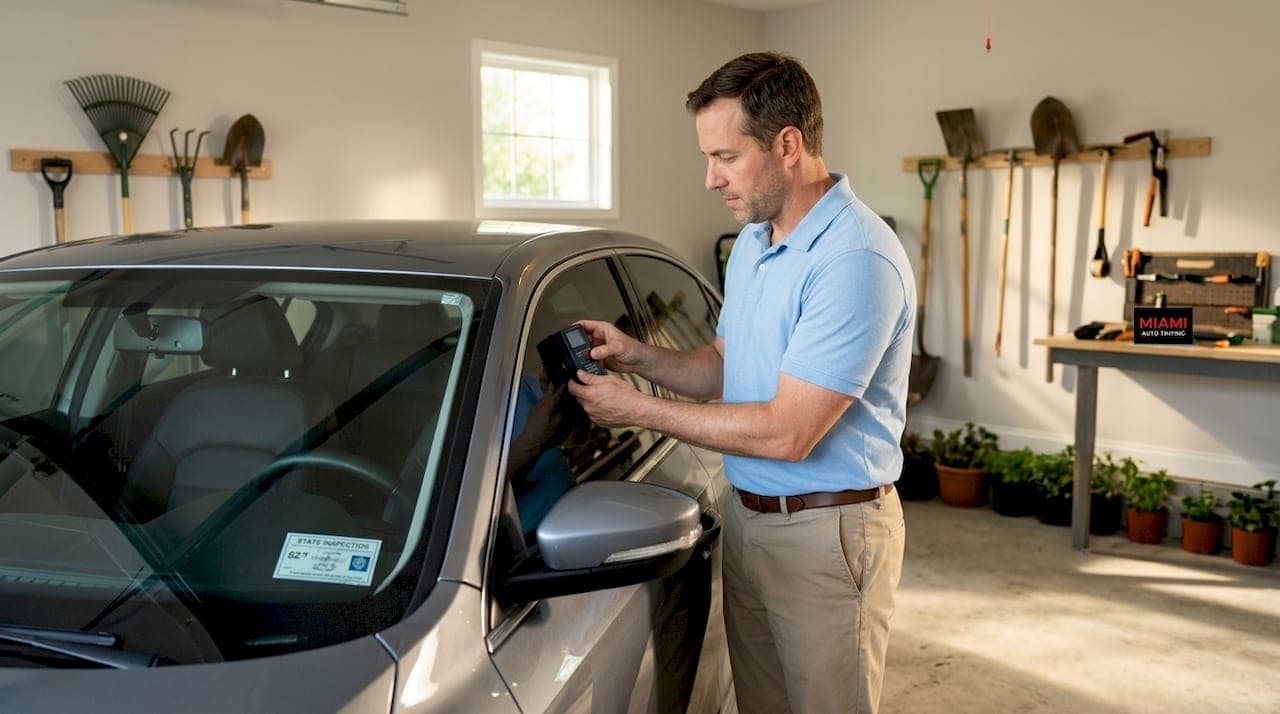
Pro Tip: Borrow or rent a handheld tint meter (sometimes called a VLT meter) from an auto parts store before your appointment. Run it on every window and write down each reading. That data is the foundation for every decision you make next.
Once you have your VLT readings, look at the color of your existing glass in natural daylight, not in a garage under fluorescent lights. Hold a white sheet of paper against the inside of the glass and look through it from the outside. You will see whether the tint leans warm brown, cool gray, or greenish. That undertone is what you need your new film to replicate.
Selecting the right film for a solid tint color match
This is where most car owners make their biggest mistake: they pick a film shade by number alone and ignore everything else. The shade is the starting point, not the whole answer.
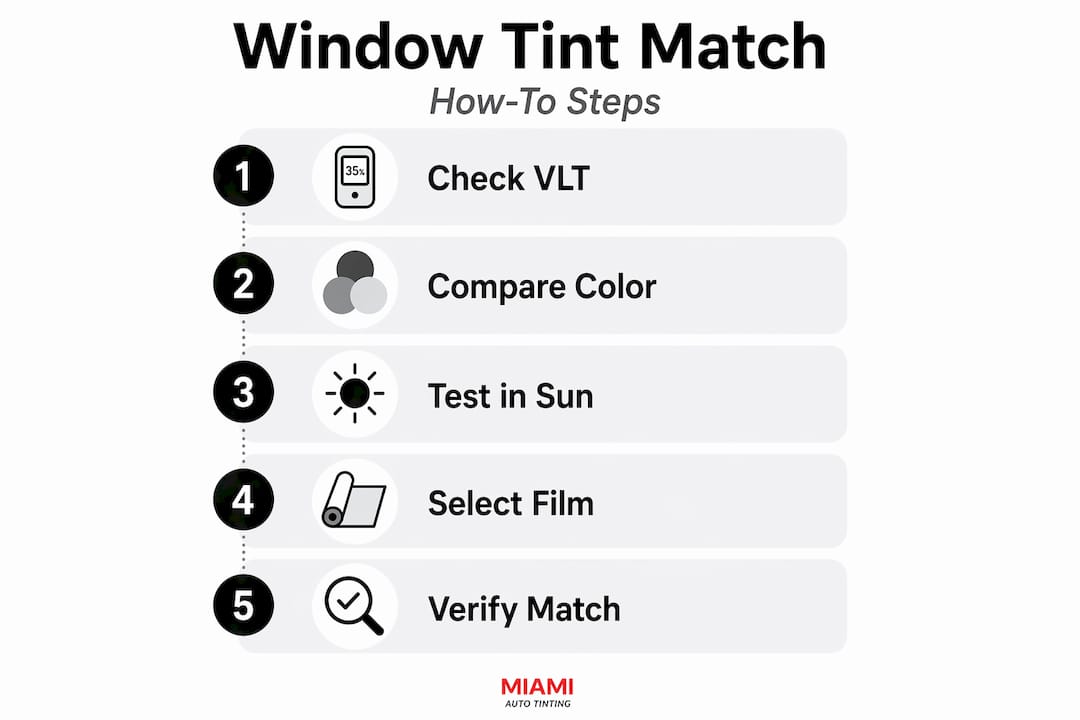
Tint film comes in VLT levels from 5% to 70%, where a lower number means a darker window. Here is a quick reference:
| VLT % | Common name | Typical use |
|---|---|---|
| 5% | Limo tint | Rear privacy, very dark |
| 20% | Dark tint | Rear windows, high privacy |
| 35% | Medium tint | All-around balance |
| 50% | Light tint | Front windows, mild shade |
| 70% | Nearly clear | Glare and UV reduction only |
Once you narrow down your target VLT range, the type of film matters just as much for color. Here is the order of operations:
- Start with ceramic. Ceramic tints offer better color stability over time and do not fade to purple or brown the way dyed films can. If your factory glass looks neutral gray, a good ceramic film in the matching VLT will stay consistent for years.
- Consider carbon film as your second option. Carbon tint has a rich, dark charcoal tone that complements most factory glass very well. It does not have the heat rejection of ceramic, but the color holds up.
- Avoid dyed film for matching purposes. Dyed films are the most affordable, but they shift color as they age. What matches today may clash in two years.
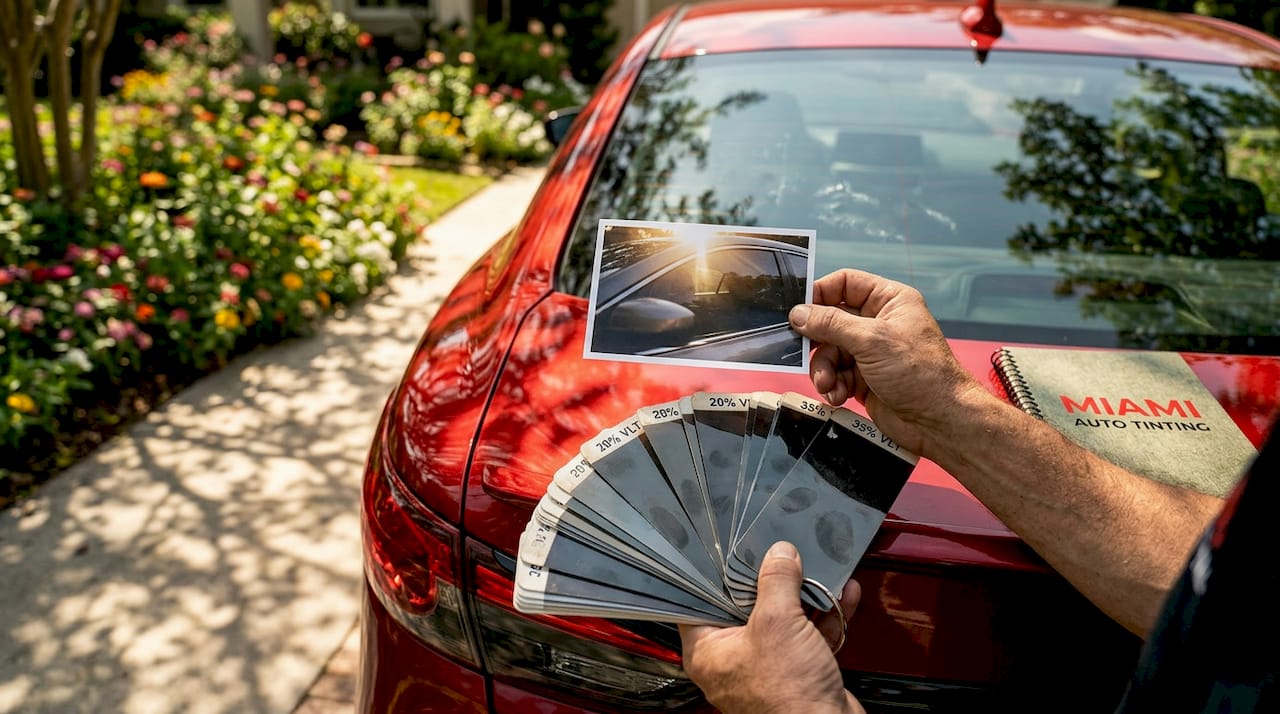
- Request physical swatches from your installer. Hold the sample against your actual window glass in outdoor lighting. Do not rely on a catalog photo or a screen image.
- Ask about a spray-out or test patch. Professional installers use partial test applications to check how a film looks on real glass before committing to a full install.
- Watch for undertone conflicts. Neutral black or charcoal films typically work best with factory glass. Films with a brownish or purplish tint base will clash even if the VLT number is correct.
Pro Tip: Take your phone and photograph your existing windows in direct sunlight before your consultation. Show those images to your installer. A picture tells them more about your undertone than any VLT reading can.
One more factor most people overlook: your car's paint color. A silver or white car with slightly green factory glass can handle a cooler-toned charcoal film without issues. But a black or dark blue car with warm-tinted glass can look disjointed if the front film runs significantly cooler. Match the film to the glass first, then verify it works with the car's color as a whole.
Applying and verifying your tint color match
Getting the film choice right is half the job. Application and verification are the other half.
- Clean the glass thoroughly before installation. Any residue, water spots, or old adhesive changes how the film bonds and can affect how the color reads from outside the car.
- Do a test patch in natural light. Cut a small piece of film, wet the glass, and lay the patch down. Step back and view it at multiple angles: straight on, from an angle, in shade, and in full sun. Color perception changes drastically between these conditions.
- Check at different times of day. Morning light runs cooler and bluer. Afternoon sun runs warmer. A film that looked perfect at noon may read slightly off at dusk. This is not a defect; it is just how light works. What you want is a match that holds up most of the time.
- Align edges carefully. Gaps or rolled edges near the window frame catch light differently and can make a well-matched film look uneven. A clean edge contributes to perceived color consistency.
- Allow full cure time before final judgment. Fresh tint often looks hazy or slightly uneven until the adhesive fully sets, which typically takes three to five days depending on temperature and humidity. Do not assess the color match the same day.
- Inspect in overcast conditions last. Overcast light is the most neutral and will give you the clearest read on whether your tint color match actually works across all your windows.
Pro Tip: If you notice a mismatch after the cure period, do not peel the film yourself. Improper removal scratches the glass and can leave adhesive residue that makes the next installation harder. Contact your installer first and discuss replacement options.
If your installer did the work, a quality shop will offer a correction window. If you went the DIY route, your options are to replace the film or blend strategically. Blending means adding a slight tint to adjacent panels so the variation reads as intentional rather than accidental.
Common challenges when matching tint shades
Even with great preparation, perfect matches are not always achievable. Here is what gets in the way and what to do about it.
- Tint aging. A car with a six-year-old factory tint has glass that has UV-shifted slightly. New film will look crisper and may appear darker even at the same VLT number.
- Lighting variability. Color matching done indoors at a shop often looks different in Miami's intense afternoon sun. Always check color outside.
- Film manufacturer differences. Two films labeled 35% from different brands will not look identical. Color matching requires professional testing and cannot be done by VLT number alone.
- Legal constraints. Some states require front side windows to be 50% or lighter. If your factory rear glass sits at 20%, you cannot legally match it on the front, so a color gap is built into the situation.
- Limited film options. Not every VLT level is available in every film type. If you need 22% in a ceramic film, your installer may only carry 20% or 25%, and that gap shows.
"Perfect match is the goal, but a well-blended match is the realistic win. Knowing the difference before you start is what separates a satisfied customer from a frustrated one."
When a perfect match is off the table, your best move is to choose a film that is slightly lighter than your factory glass rather than darker. Slightly lighter reads as a clean, intentional look. Slightly darker looks like an afterthought.
My take on tint color matching after years in the business
I have been doing window tint work in Miami for a long time, and I will tell you honestly: tint color matching is more art than checklist. You can read every tint color selection tip out there and still end up surprised by how a film reads on a specific piece of glass in afternoon Florida light.
The biggest lesson I have learned is that lighting is the variable nobody respects enough. I have seen gorgeous swatches in the shop that looked like a different product on the car in direct sun. Now, before any matching job, I do the spray-out test outside, period. No exceptions.
I have also learned to set expectations early. Clients sometimes come in expecting an invisible match on a car that has had tinted glass for eight years. The glass has shifted. The available films have a finite range. My job is to get as close as possible and be transparent when close is the best outcome available. Clients who understand this upfront are always happier with the result.
What technology like spectrophotometers has taught me is that color matching demands professional-grade testing that most DIY setups simply cannot replicate. The tool helps, but the human eye doing the final comparison, in real light, on the actual car, still matters more.
— Jose
Get your tint matched right the first time
If you are in Miami Dade and you want a tint color match done correctly, Southmiamitint brings the work to you. The team uses 3M IR, 3M Color Stable, and Iviron Kollmax ceramic films — materials known for color consistency and long-term stability, not the kind of dyed films that shift brown after two summers.
Southmiamitint's mobile service means the installation happens at your home, your office, or wherever works for you. No sitting in a waiting room. The technicians do spray-out tests, check swatches in real light, and walk you through the color comparison before any full installation begins. If you want ceramic film with professional color matching, check out the ceramic tinting service starting at $249, or review the mobile tinting price options to find the right fit for your vehicle and budget.
FAQ
What does VLT mean for matching window tint?
VLT stands for Visible Light Transmission and measures how much light passes through the glass. Matching tint color requires aligning the VLT of your new film with your existing windows so darkness levels are consistent.
Can you perfectly match factory privacy glass with aftermarket tint?
In most cases, a perfect match is difficult because factory glass has a baked-in color undertone that film cannot fully replicate. A professional installer can get very close using the right film base color and VLT level.
Does ceramic tint color stay stable over time?
Yes. Ceramic tint maintains color better than dyed or even some carbon films. This makes it the best choice when long-term color consistency and match stability are priorities.
How do I know if my tint color is off after installation?
Check the finished windows in natural daylight from outside the car at multiple angles. If one window reads noticeably darker or a different hue than adjacent glass after the full cure period, the film likely needs adjustment or replacement.
Is it legal to match dark factory tint on front windows?
Not always. State tint laws vary, and many require front side windows to allow 50% or more light transmission. This can make matching very dark rear factory glass on front windows illegal in some states, including Florida.