
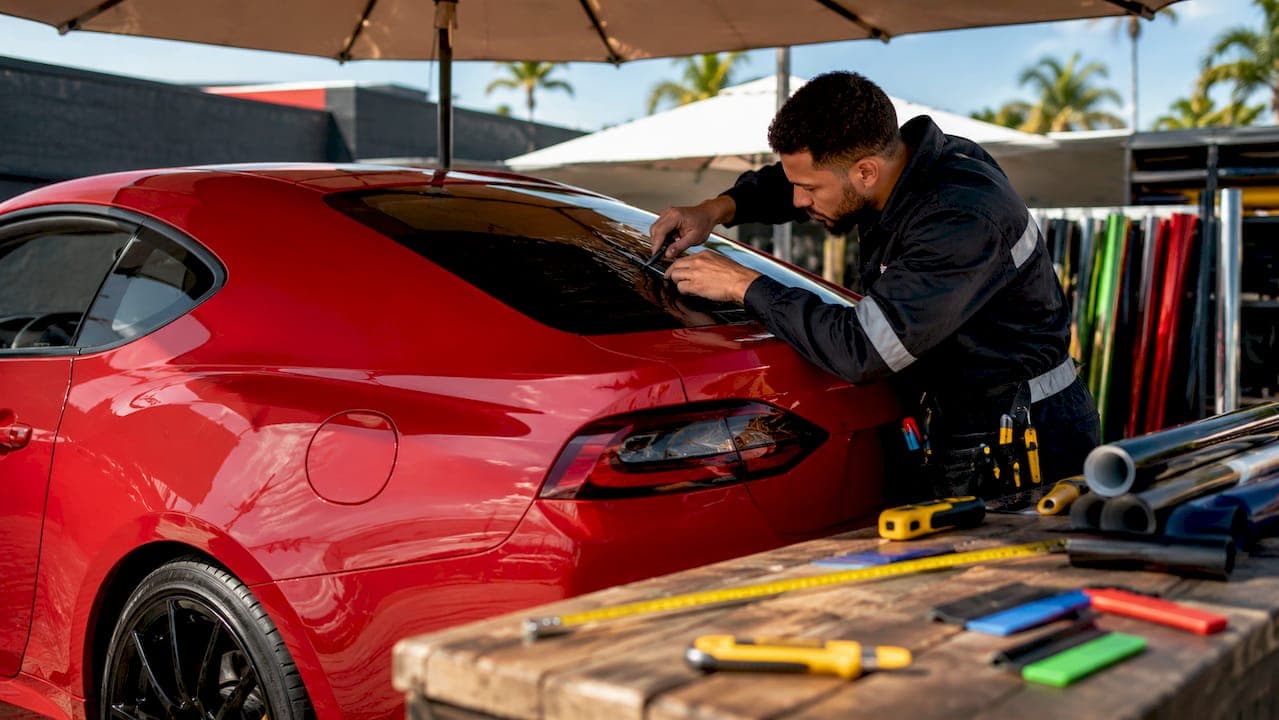
Custom tinting is the hand-cut application of window film shaped directly on your vehicle's glass to match its exact curves, edges, and dimensions. Unlike precut kits ordered from a catalog, custom tinting treats every car as unique. The result is tighter edge coverage, better heat rejection, and a finish that looks factory-installed. Films like 3M IR, 3M Color Stable, and Iviron Kollmax ceramic deliver measurable performance gains over standard options, making custom tinting one of the most practical upgrades a car owner can make.
What is custom tinting vs. precut tinting?
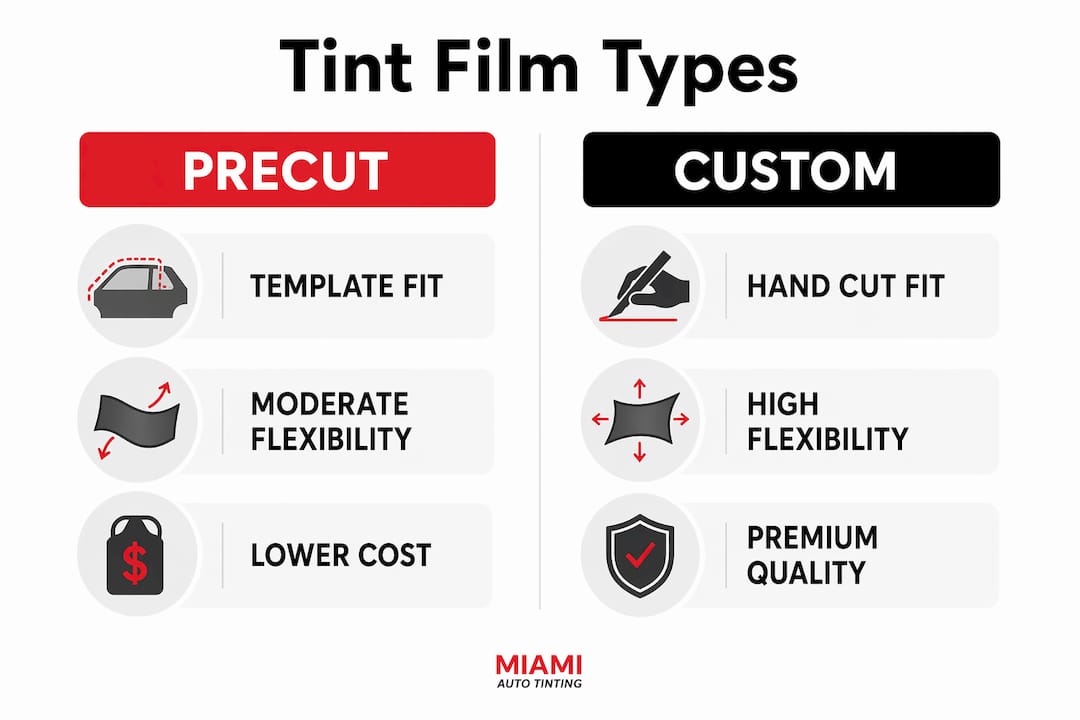
Precut tinting uses machine-generated templates based on a vehicle's make and model. The film arrives pre-shaped, and the installer applies it without cutting on the glass. It works well on common vehicles with standard glass shapes, and the process is faster and cheaper upfront.
Custom tinting works differently. The installer places the film directly on the glass and cuts it to fit the actual surface in front of them. This matters most on vehicles with curved rear windows, frameless doors, or irregular glass shapes. Custom hand-cut tinting covers variances in older models and provides closer edge coverage than any machine template can replicate. Closer edges mean less lifting over time and a cleaner look from both inside and outside the car.
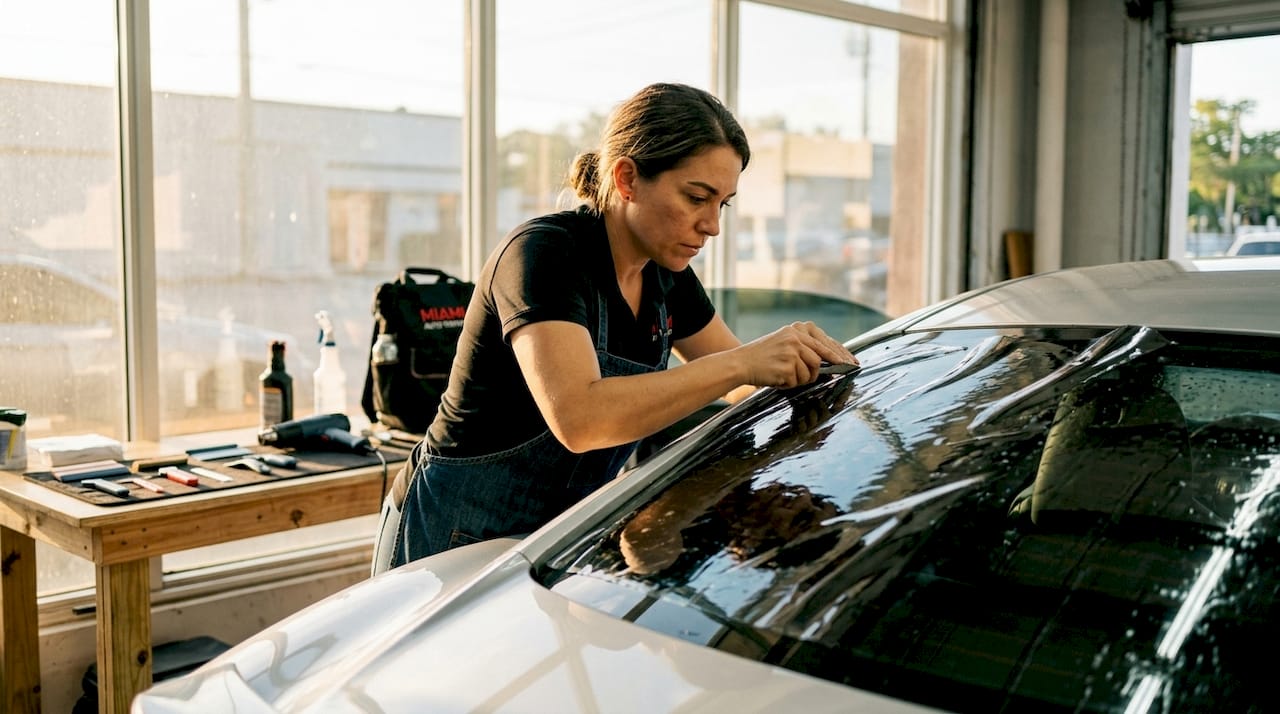
The skill gap between the two methods is real. Custom installation requires an experienced technician who understands how film stretches, where tension builds on curves, and how to avoid bubbles on compound-curved glass. Precut kits can be installed by a moderately skilled person at home. Custom tinting cannot. That difference in labor is reflected in the price, but it is also reflected in how the tint performs five years later.
| Feature | Precut tinting | Custom tinting |
|---|---|---|
| Fit on curved glass | Moderate, based on template | Precise, cut on the actual glass |
| Edge coverage | Can leave small gaps | Tight, gap-free coverage |
| Installation skill required | Moderate | High, professional recommended |
| Best for | Standard, newer vehicles | Complex, older, or frameless glass |
| Long-term durability | Depends on template accuracy | Superior due to exact fit |
Pro Tip: If your car has a rear window with a strong curve or a frameless door glass, always request custom hand-cut installation. A precut template will almost never account for the exact radius of your specific vehicle's glass.
What are the main types of tint film?
Not all window film is the same material, and the differences affect everything from heat rejection to how your phone signal behaves inside the car.
- Dyed film is the most affordable option. It absorbs some solar energy and reduces glare, but it fades over time and offers limited heat rejection compared to newer technologies. It is a reasonable choice for drivers who want a darker look on a tight budget.
- Metalized film adds a layer of metallic particles that reflect heat more effectively than dyed film. The tradeoff is signal interference. Some metalized films disrupt GPS, cell service, and radio reception, which is a real problem for drivers who rely on navigation or hands-free calling.
- Carbon film eliminates the signal problem while still delivering solid heat rejection. It holds its color well and does not fade the way dyed film does. Carbon is a strong mid-range choice for drivers who want performance without the premium price of ceramic.
- Ceramic film sits at the top of the category. Ceramic tints reject up to 98% of IR heat and block more than 99% of UV radiation, outperforming every other film type by a significant margin. That level of UV blocking directly protects your dashboard, leather, and upholstery from fading. Ceramic films also maintain full device compatibility. Premium ceramic films do not interfere with GPS, cell service, or radio signals, unlike some metalized alternatives.
- Hybrid film combines dyed and metalized layers to balance cost and performance. It performs better than pure dyed film but falls short of carbon or ceramic in heat rejection.
For Miami drivers dealing with intense year-round sun, ceramic is the clear performance winner. Brands like 3M IR and Iviron Kollmax ceramic deliver the heat rejection numbers that actually move the needle on cabin temperature. You can read more about ceramic tint benefits and why they outperform older film technologies in real-world conditions.
How to choose the right tint shade for your car
Visible light transmission, or VLT, is the percentage of light a tinted window allows through. A 5% VLT film is very dark and lets in almost no light. A 70% VLT film is nearly clear. The number you choose affects privacy, heat rejection, nighttime visibility, and whether your car is legal to drive.
Here is a practical process for choosing the right shade:
- Check your state's VLT laws first. Florida law sets specific minimums for front side windows, rear side windows, and the windshield. Choosing tint shade based only on darkness without checking local VLT laws is one of the most common and costly mistakes car owners make. A ticket or a required removal is an avoidable expense.
- Understand that darker does not mean cooler. Modern ceramic films block high IR heat even in lighter shades. A 70% VLT ceramic film can reject more heat than a 20% VLT dyed film. The metric to look for is total solar energy rejection, or TSER, and infrared rejection percentage, not just the shade number.
- Consider your nighttime driving habits. Very dark tints reduce visibility after sunset. If you drive frequently at night or in low-light conditions, a mid-range VLT like 35% to 50% gives you privacy during the day without compromising safety after dark.
- Think about the aesthetic you want. Lighter shades on the front windows with darker shades on the rear is a common and legal configuration that balances appearance with compliance. Custom tinting makes this kind of layered approach easy to execute precisely.
- Ask your installer about custom tint shades specific to your vehicle. A good technician will know which VLT levels work best for your car's glass configuration and your local regulations. Understanding Miami tint regulations before you book an appointment saves time and money.
Pro Tip: Always ask your installer for the TSER percentage of the film, not just the VLT. Two films with the same shade can have dramatically different heat rejection performance depending on the technology inside the film.
What to expect during installation and aftercare
A professional custom tinting job on a standard sedan typically takes two to four hours. The installer cleans the glass thoroughly, cuts the film on the exterior surface of the window, then applies it to the interior side using a slip solution and a squeegee to remove air and moisture.
The curing period after installation is where most car owners make mistakes. Attempting to roll down windows before the adhesive has fully bonded can peel back film edges, ruining the installation. The standard curing period is three to five days with windows kept closed. During this time, small water bubbles or a hazy appearance are normal. They disappear as the adhesive cures and the moisture evaporates.
Ongoing maintenance is straightforward if you follow a few rules:
- Use ammonia-free cleaning products only. Ammonia-free cleaners preserve the tint's adhesive layer and protective coatings. Standard glass cleaners like Windex contain ammonia and will degrade the film over time.
- Use a soft microfiber cloth. Abrasive materials scratch the film surface and reduce clarity.
- Avoid pressure washing the interior window edges for at least two weeks after installation.
- Inspect edges periodically. Lifting at the corners is an early sign of adhesive failure and is easier to fix when caught early. Resources like common installation issues can help you identify problems before they become full replacements.
High-quality custom tinting, properly maintained, lasts seven to ten years on most vehicles. Premium films preserve interiors and improve resale appeal, making the upfront cost a genuine long-term investment rather than a cosmetic expense.
Key takeaways
Custom tinting delivers superior fit, heat rejection, and UV protection compared to precut alternatives, with ceramic films representing the highest-performing option available in 2026.
| Point | Details |
|---|---|
| Custom vs. precut fit | Hand-cut film on the actual glass outperforms templates on curved or frameless windows. |
| Ceramic film performance | Ceramic tints block up to 98% of IR heat and over 99% of UV rays, outperforming all other film types. |
| VLT and legal compliance | Always verify local VLT laws before choosing a shade to avoid fines or mandatory removal. |
| Curing period matters | Keep windows closed for 3 to 5 days post-installation to prevent edge peeling and adhesive failure. |
| Maintenance is simple | Ammonia-free cleaners and microfiber cloths are all you need to protect your tint long-term. |
Why custom tinting is worth every dollar, from my experience
I have seen hundreds of cars come through with precut tint that looked fine on day one and started lifting at the edges by month six. The template never quite matched the actual glass, and the adhesive had nowhere to grip at the corners. Custom tinting solves that problem at the source.
What surprises most car owners is how much the film type matters beyond the shade. A driver who picks a 35% VLT ceramic film gets a cooler, more comfortable cabin than someone who went with a 5% VLT dyed film. The darker car is actually hotter inside. That counterintuitive reality is something I explain to every customer who walks in asking for "the darkest tint possible."
The interior preservation angle is underrated. High-quality films protect interiors from the UV damage that cracks dashboards and fades leather. In Miami's climate, that protection is not optional. It is the difference between a car that looks three years old and one that looks ten years old when you go to sell it.
My honest advice: do not let budget be the only factor. A ceramic custom tint job costs more than a dyed precut kit, but it performs better, lasts longer, and actually protects what you paid for. The math works out in your favor within two to three years.
— Jose
Get expert custom tinting in Miami, delivered to you
Southmiamitint brings professional custom window tinting directly to your home, office, or anywhere in Miami-Dade. No shop visits, no waiting rooms. The team installs 3M IR, 3M Color Stable, and Iviron Kollmax ceramic films on cars, trucks, and SUVs with the precision that custom hand-cut installation demands.
Whether you want maximum heat rejection with a light ceramic shade or a darker privacy tint that stays within Florida's legal limits, Southmiamitint matches the film to your vehicle and your goals. Check the service areas across Miami to confirm coverage in your neighborhood, or go straight to a mobile tinting quote to get pricing for your specific vehicle. Same-day appointments are available across Miami-Dade.
FAQ
What is custom tinting in simple terms?
Custom tinting is the process of cutting window film directly on your vehicle's glass to match its exact shape and size. It delivers a more precise fit and better edge coverage than precut film templates.
How long does custom tint installation take?
Most custom tinting jobs on a standard sedan take two to four hours. Complex vehicles with more windows or unusual glass shapes may take longer.
How do I know which VLT level is legal in Florida?
Florida law sets minimum VLT requirements for front side windows, rear side windows, and windshields. Checking Miami tint regulations before booking an installation prevents fines and mandatory removal.
Is ceramic tint worth the extra cost?
Ceramic tint blocks up to 98% of infrared heat and over 99% of UV radiation, outperforming dyed, metalized, and carbon films. For drivers in high-sun climates like Miami, the comfort and interior protection gains justify the price difference.
Can I wash my car right after getting tint installed?
Avoid rolling down windows or washing the interior glass for at least three to five days after installation. The adhesive needs this curing period to bond fully. Use only ammonia-free cleaners on tinted glass after the curing period ends.