
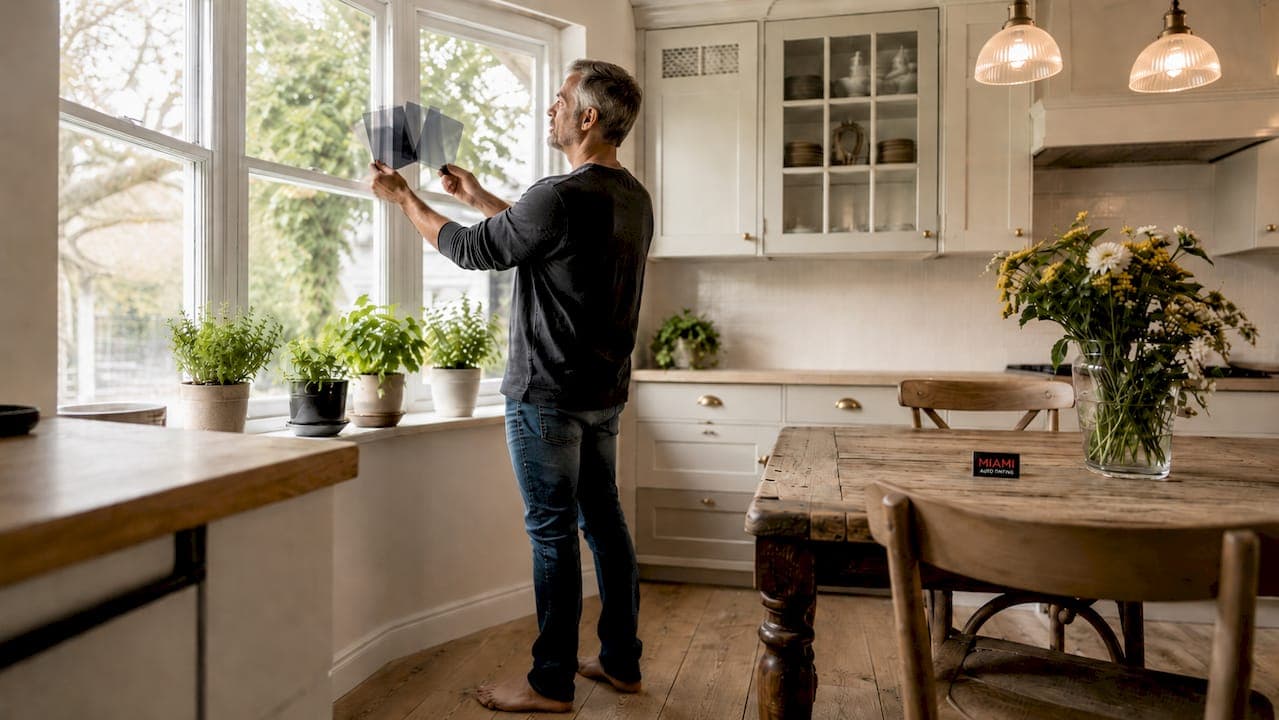
Choosing tint shades for privacy means selecting the right Visible Light Transmission (VLT) percentage, matching it to local laws, and picking a film material that performs over time. The industry term for this process is "tint shade selection," and it applies equally to vehicles and residential windows. Get it wrong and you face fines, poor night visibility, or a film that fades within a year. Get it right and you gain genuine privacy, UV protection, and heat rejection that holds up in Miami's sun. This guide covers every factor you need to make a confident decision.
How to choose tint shades for privacy: VLT explained
Visible Light Transmission (VLT) is the percentage of light that passes through a window tint film. A lower VLT means a darker tint and more privacy. A higher VLT means a lighter film with less visual blockage.
The 20–35% VLT range is the optimal balance for privacy and safety. At 35% VLT, you get moderate privacy with solid daytime visibility. At 20% VLT, the tint is noticeably dark and blocks most outside views without creating a dangerous blind spot.
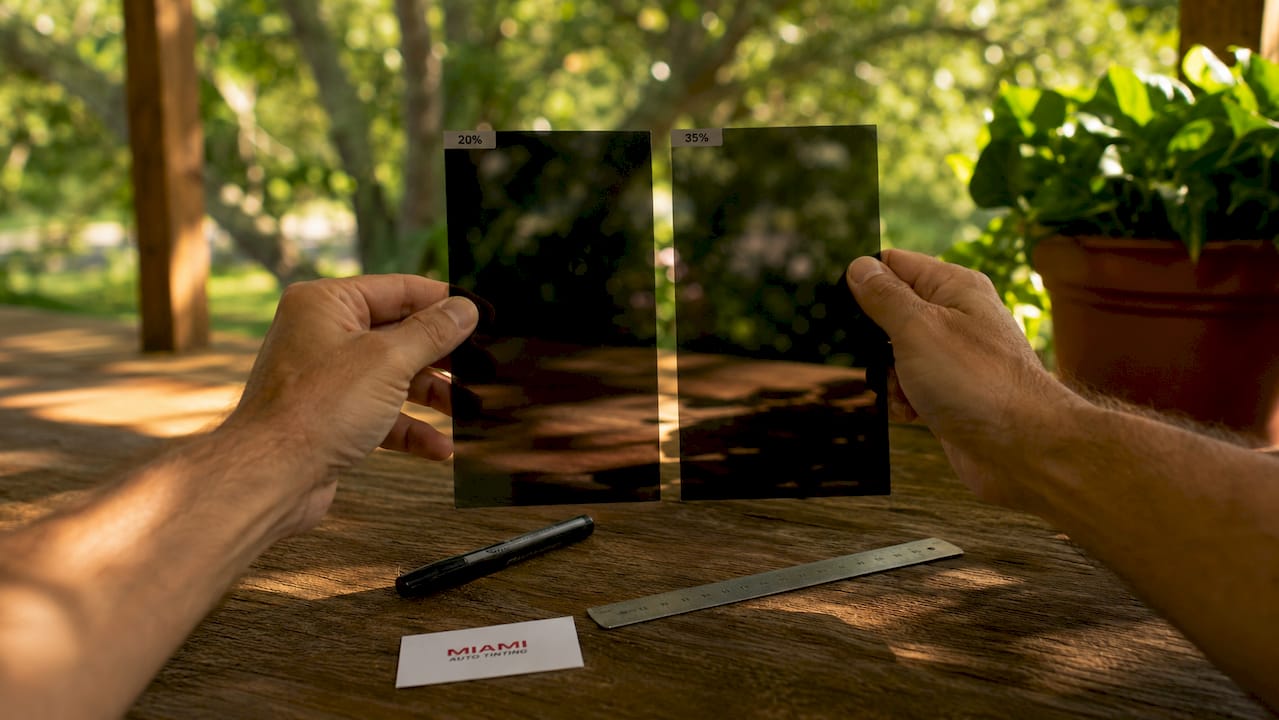
Here is how the most common VLT levels compare:
| VLT % | Privacy Level | Daytime Visibility | Night Visibility | Best Use |
|---|---|---|---|---|
| 5% | Extreme (limo tint) | Very limited | Severely impaired | Rear windows only |
| 20% | High | Good | Reduced | Rear vehicle windows, home glass |
| 35% | Moderate | Excellent | Good | Daily drivers, front windows |
| 50% | Low | Clear | Clear | Light privacy, UV filtering |
| 70% | Minimal | Near-clear | Clear | Legal compliance zones |
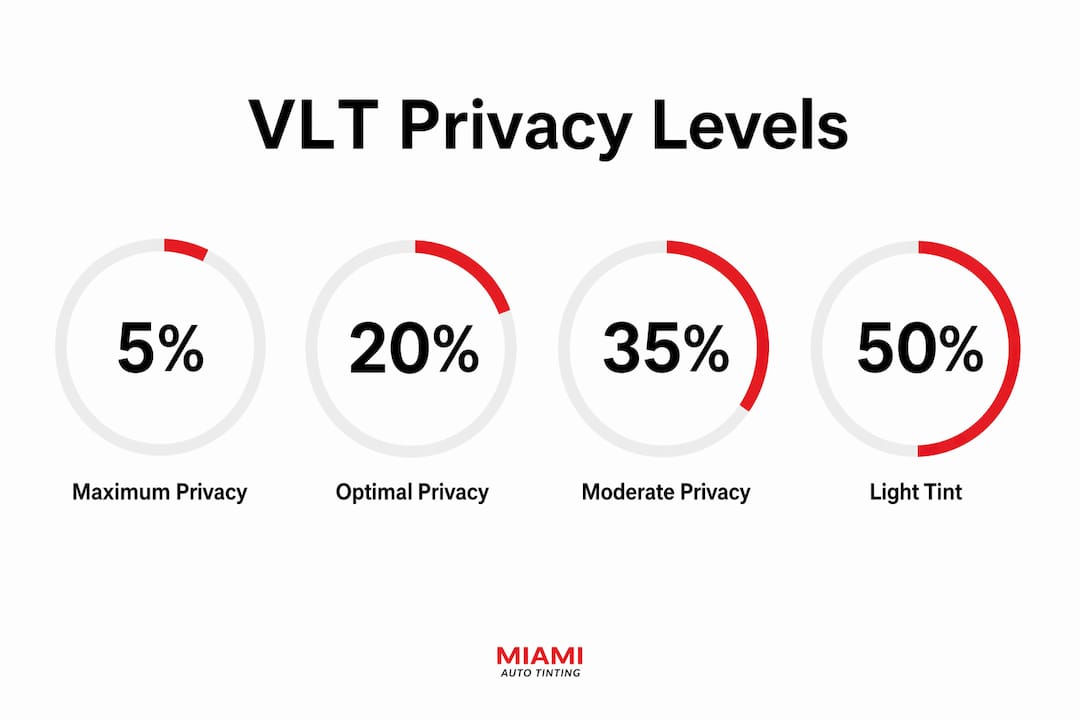
Darker tints at 5% VLT can severely impair night driving visibility, sometimes forcing drivers to roll down windows just to check side mirrors. That is a safety trade-off most daily drivers cannot afford.
Pro Tip: If you want strong privacy without sacrificing night visibility, 20% ceramic tint on rear windows paired with 35% on front windows is the most practical setup for daily drivers.
How do local tint laws impact your shade choice?
Legal restrictions are the single most overlooked factor when choosing window tint for privacy. Most buyers focus on darkness and forget that installing the wrong VLT on the wrong window can result in fines, failed inspections, or mandatory film removal.
Front vehicle windows in California are restricted to 70% VLT or lighter, while rear windows allow much darker tints. That pattern repeats across most U.S. states, with front windows carrying stricter limits than rear glass. The 20–35% range is the legal sweet spot in most jurisdictions for rear privacy tinting.
Common legal thresholds across U.S. states include:
- Front side windows: 35% VLT minimum in most states (some allow 28%)
- Rear side windows: 20% VLT or darker permitted in many states
- Rear windshield: Often unrestricted if the vehicle has side mirrors
- Windshield strip: Usually limited to the top 4–6 inches
- 5% and 15% VLT: Restricted to rear windows only in most jurisdictions
Residential window tinting faces fewer legal restrictions than vehicles, but HOA rules and local building codes can still limit reflectivity and darkness on exterior-facing glass.
Pro Tip: Before booking any tint installation, look up your state's DMV tint regulations and your county's residential codes. Southmiamitint checks Miami-Dade compliance on every job before applying film.
What are the best materials for privacy window tints?
Film material determines how well your tint performs beyond just blocking light. Two films at the same VLT percentage can deliver very different results in heat rejection, UV protection, and longevity.
Ceramic window films block 99% of UV rays, reduce heat transfer significantly, and do not fade over time. Dyed films, by contrast, offer limited UV protection and tend to lose color within a few years. That gap in performance is why ceramic is the preferred choice for anyone serious about privacy and comfort.
Here is a breakdown of the main film types:
- Ceramic film: Blocks 99% UV, superior heat rejection, no signal interference, does not fade. Best overall choice for privacy and performance. Southmiamitint installs 3M IR, 3M Color Stable, and Iviron Kollmax ceramic films.
- Carbon film: Good heat rejection, matte finish, no signal interference. More affordable than ceramic but slightly less effective at UV blocking.
- Dyed film: Lowest cost, absorbs light rather than reflecting it. Fades quickly, minimal UV protection. Suitable only for short-term or budget applications.
- Metallic film: Reflects heat and strengthens glass, but interferes with GPS, radio, and cellular signals due to metal content. Not recommended for modern vehicles.
- Hybrid film: Combines dyed and metallic layers. Reduces signal interference compared to pure metallic but still underperforms ceramic in UV and heat metrics.
Privacy depends not only on darkness but on technology quality. A premium ceramic film at 35% VLT outperforms a cheap dyed film at 20% VLT in nearly every practical category.
How to match tint shade to your specific privacy needs
Not every privacy situation calls for the same shade. Your use case, location, and lighting conditions all shape the right choice.
Consider these four common scenarios:
- Daily vehicle driver: Use 35% VLT ceramic on front windows and 20% ceramic on rear windows. This setup satisfies most state laws and gives strong rear privacy without impairing night driving.
- Parked or stationary vehicle: A 20% or even 15% rear tint works well here since night driving visibility is not a concern. Pair it with a sunshade on the windshield for full coverage.
- Residential home windows: A 20–35% ceramic film blocks outside views during the day while keeping interiors bright. For ground-floor rooms facing the street, 20% is the more effective choice.
- Commercial property: Reflective or one-way privacy films at 15–20% VLT are common for office glass. They block outside views during daylight hours without requiring interior blackout.
One critical factor most buyers miss: tint privacy is lighting-dependent. At night, when interior lights are on, even a very dark tint becomes transparent from outside. This applies to both vehicles and homes. Managing interior lighting is as important as selecting the right VLT.
Supplementing tint with sunshades or blinds is necessary for total privacy when vehicles or homes are stationary, especially after dark.
Pro Tip: For home offices or bedrooms facing a street, combine a 20% ceramic film with blackout curtains for nighttime privacy. The film handles daytime; the curtains handle the rest.
How to apply window tint: steps and maintenance
Installing window tint correctly determines how long it lasts and how well it performs. Professional installation follows a strict process that DIY kits often shortcut.
Here is what a proper installation involves:
- Inspect the glass for chips, cracks, or existing film residue.
- Clean the window with a non-ammonia solution. Ammonia-based cleaners like Windex damage the film's adhesive and are forbidden in professional installs.
- Cut the film to the exact window dimensions using a template or plotter.
- Apply a soapy water solution to the glass to allow repositioning during placement.
- Position the film carefully, aligning edges without stretching the material.
- Remove air bubbles and moisture with a squeegee, working from center to edges.
- Trim and seal the edges for a clean, durable finish.
The cost difference between DIY and professional installation is significant. DIY kits cost around $100–200, while professional ceramic tint installations can reach $600 in 2026. That is roughly a 3x price difference. For ceramic films like 3M IR or Iviron Kollmax, professional installation protects the investment and ensures the film performs as rated.
| Installation Type | Cost Range | Film Quality | Longevity |
|---|---|---|---|
| DIY kit | $100–$200 | Entry-level dyed or carbon | 2–4 years |
| Professional ceramic | $249–$600 | 3M IR, Iviron Kollmax | 10+ years |
For long-term care, follow these tint maintenance tips to preserve both appearance and performance:
- Wait at least 3 days after installation before rolling down vehicle windows.
- Clean tinted glass with ammonia-free cleaners only.
- Avoid abrasive cloths or scrubbers on the film surface.
- Inspect edges annually for peeling or bubbling, especially in high-heat climates like Miami.
Pro Tip: If you are weighing DIY versus professional tinting, ceramic film almost always requires professional application to achieve a bubble-free, warranty-backed result.
Key takeaways
Choosing the right tint shade for privacy requires matching VLT percentage to your use case, staying within legal limits, and selecting a film material that performs beyond just blocking light.
| Point | Details |
|---|---|
| VLT determines privacy level | Lower VLT means darker tint; the 20–35% range balances privacy and safe visibility. |
| Laws restrict front window tinting | Most U.S. states limit front windows to 35% VLT or lighter; check local rules before installing. |
| Ceramic film outperforms dyed film | Ceramic blocks 99% UV and resists fading; dyed films degrade within a few years. |
| Night privacy requires lighting control | Even dark tints become transparent from outside when interior lights are on. |
| Professional install protects ceramic film | DIY kits cost $100–$200; professional ceramic installation runs $249–$600 with far better longevity. |
The mistake i see most often with privacy tinting
After years of working with clients across Miami-Dade, the most common mistake I see is simple: people confuse darkness with performance. A customer will come in asking for the darkest tint available, convinced that 5% limo tint is the gold standard for privacy. Then they drive home at night and realize they can barely see out of their own windows.
The uncomfortable truth is that 5% VLT tints become nearly transparent from outside the moment you turn on your interior lights. You paid for extreme darkness and got zero privacy after sunset. That is a bad trade.
My recommendation is always the same: go with 20% ceramic on rear windows and 35% ceramic on front windows for vehicles. For homes, 20% ceramic on street-facing glass does the job during daylight without making the interior feel like a cave. Then add blinds or curtains for nighttime coverage.
The other thing I push back on is the idea that you can skip professional installation to save money on a ceramic film. Ceramic films like 3M IR and Iviron Kollmax are precision products. Installing them without the right tools and technique leaves bubbles, lifting edges, and voids the warranty. The $200 you save on installation will cost you $400 in replacement film within two years.
Choose quality film, stay legal, and think about lighting. Those three things will get you better privacy than any extreme tint shade ever will.
— Jose
Get professional ceramic tinting in miami with Southmiamitint
Southmiamitint installs 3M IR, 3M Color Stable, and Iviron Kollmax ceramic films on cars, homes, and commercial properties across Miami-Dade. Every job is mobile, meaning the crew comes to your location. No shop drop-offs, no waiting rooms.
Ceramic tint from Southmiamitint blocks 99% of UV rays, cuts interior heat, and delivers real privacy at legal VLT levels. Ceramic window tinting starts at $249 for vehicles, with residential and commercial pricing available on request. If you want to see full pricing before booking, the mobile tinting price list covers all service tiers. Every installation includes a compliance check for Miami-Dade tint regulations at no extra charge.
FAQ
What VLT percentage gives the best privacy?
The 20% VLT range delivers high privacy for most applications. For daily drivers, 20% on rear windows and 35% on front windows is the recommended setup for privacy and legal compliance.
Is ceramic tint worth the higher cost for privacy?
Ceramic film blocks 99% UV rays, rejects more heat, and does not fade, making it a far better long-term investment than dyed film at any VLT level.
Can window tint provide privacy at night?
No tint provides full privacy at night when interior lights are on. Tint privacy is lighting-dependent, so combining film with blinds or curtains is necessary for nighttime coverage.
What is the darkest legal tint for front windows?
Most U.S. states require front side windows to be 35% VLT or lighter. California sets its front window limit at 70% VLT. Always verify your state's specific law before installing.
How long does professional ceramic tint last compared to DIY?
Professional ceramic tint installations typically last 10 or more years. DIY entry-level kits using dyed or carbon film generally last 2–4 years before fading or peeling.