
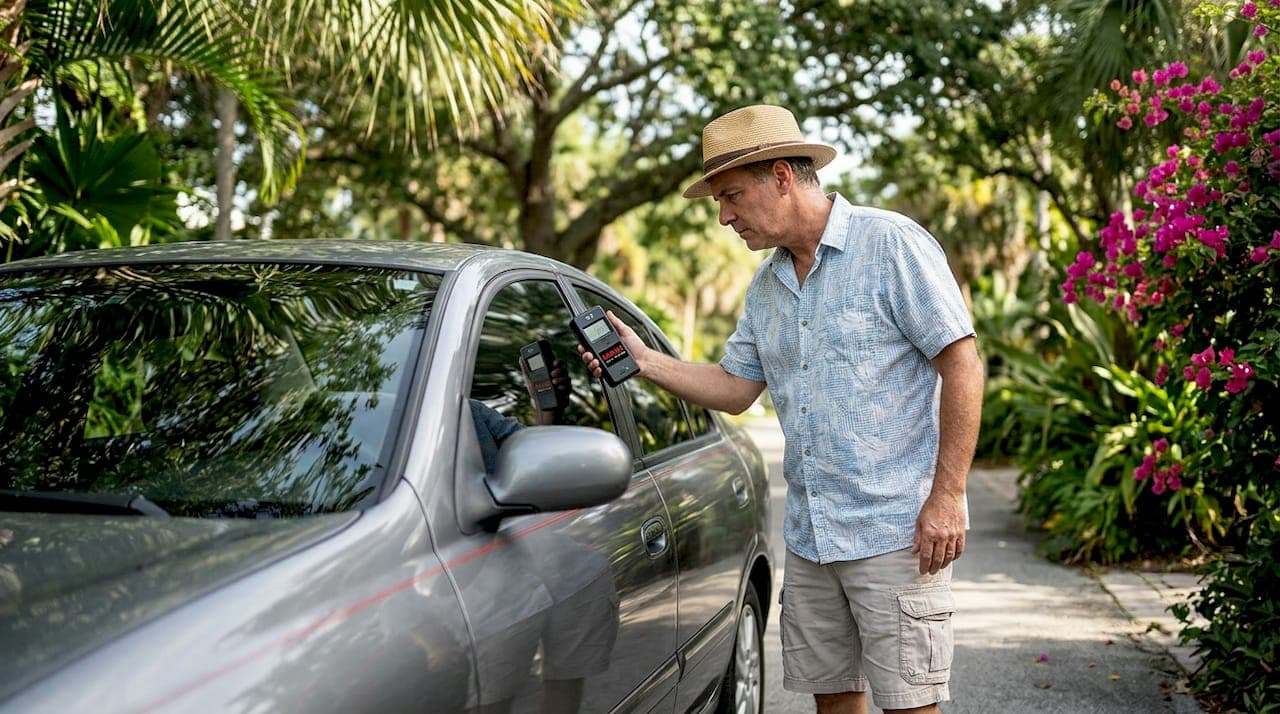
If you've ever wondered what makes window tint legal on your car, you're not alone. Most Florida drivers assume the percentage printed on a tint film roll is all that matters. It isn't. Legality comes down to the actual Visible Light Transmission, or VLT, measured through your installed film and factory glass combined. Florida enforces specific VLT limits that vary by window position, and getting this wrong means fines, fix-it tickets, and a failed inspection. This guide breaks down exactly how Florida's rules work and what you need to do to stay compliant.
Key Takeaways
| Point | Details |
|---|---|
| VLT is the legal standard | Tint legality is measured by the light passing through both the film and factory glass together. |
| Florida sets window-specific limits | Front side windows require at least 28% VLT; rear and back side windows require at least 15%. |
| Film label doesn't equal installed VLT | Factory glass already reduces light, so your installed tint will always read darker than the film alone. |
| Medical exemptions exist but require paperwork | Qualifying conditions allow darker tint, but documentation must stay in the vehicle at all times. |
| Professional installation protects you | Reputable shops measure and document installed VLT, giving you proof of compliance during traffic stops. |
What makes window tint legal: understanding VLT
VLT, or Visible Light Transmission, is the percentage of visible light that passes through your car's glass and film combined. A 50% VLT film lets in half the available light. A 20% VLT film lets in a fifth. The lower the number, the darker the tint.
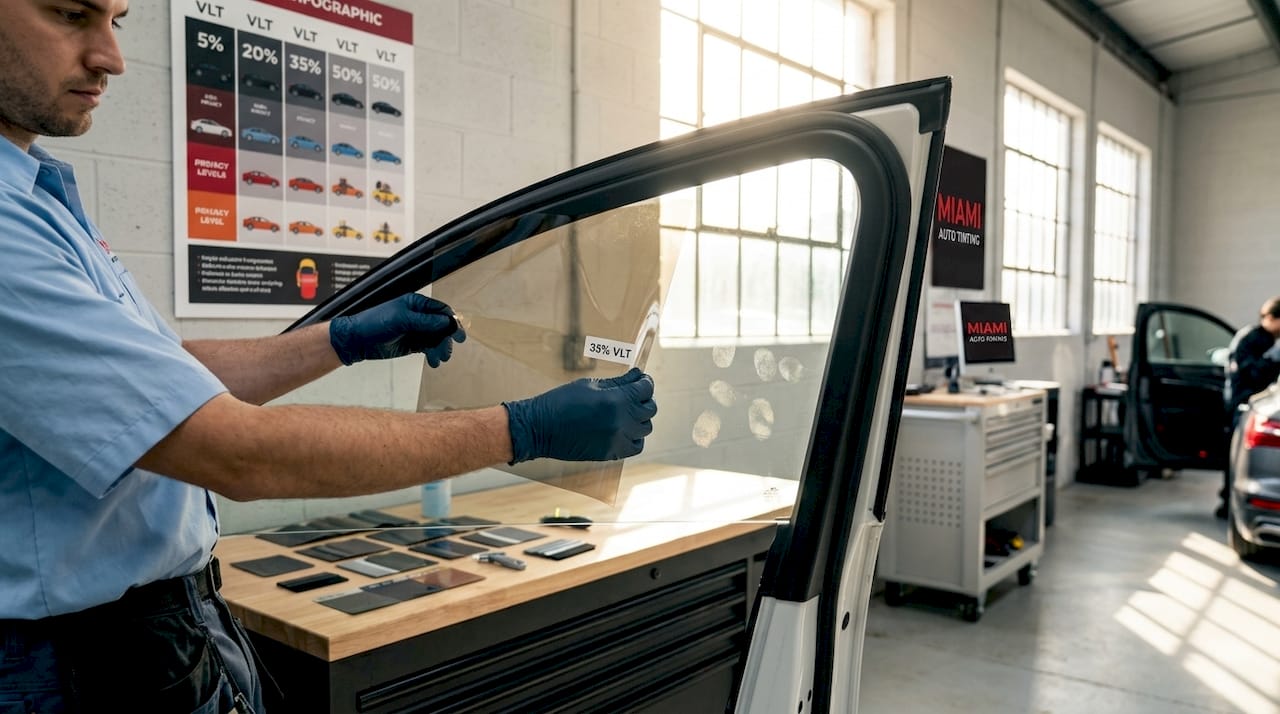
Here's what most car owners miss. When a shop installs a "35% film" on your window, your final VLT reading will be lower than 35% because your factory glass already has a built-in tint value. Factory glass affects final VLT, which means the label on the film is not what law enforcement measures. They measure the combined result through the glass.
Law enforcement uses a device called a tint meter to check compliance. Tint meters complying with ANSI Z2 standards provide the legally recognized measurement used during traffic stops and inspections. If your window reads below Florida's minimum at that point, you're out of compliance, regardless of what the film packaging said.
A few key things to understand about VLT:
- Higher VLT means more light gets through, which is lighter tint
- Lower VLT means less light gets through, which is darker tint
- VLT is the basis of nearly all US tint laws, though each state sets its own minimums
- The measurement is always taken with the film installed on actual glass
Pro Tip: Ask your tint installer what the expected installed VLT will be after accounting for your factory glass, not just the film's rated percentage. A good shop can calculate this before they even cut the film.
Florida's window tint regulations by window type
Florida's rules are not one-size-fits-all. Different windows on your vehicle have different legal minimums, and knowing the breakdown protects you from a citation.
Here are Florida's specific VLT requirements for passenger sedans:
| Window | Minimum VLT | Additional Rules |
|---|---|---|
| Front side windows | 28% | Must allow more than 28% light |
| Back side windows | 15% | More tinting permitted |
| Rear window | 15% | Dual side mirrors required if tinted |
| Front windshield | No film below AS-1 line | Non-reflective only above AS-1 line |
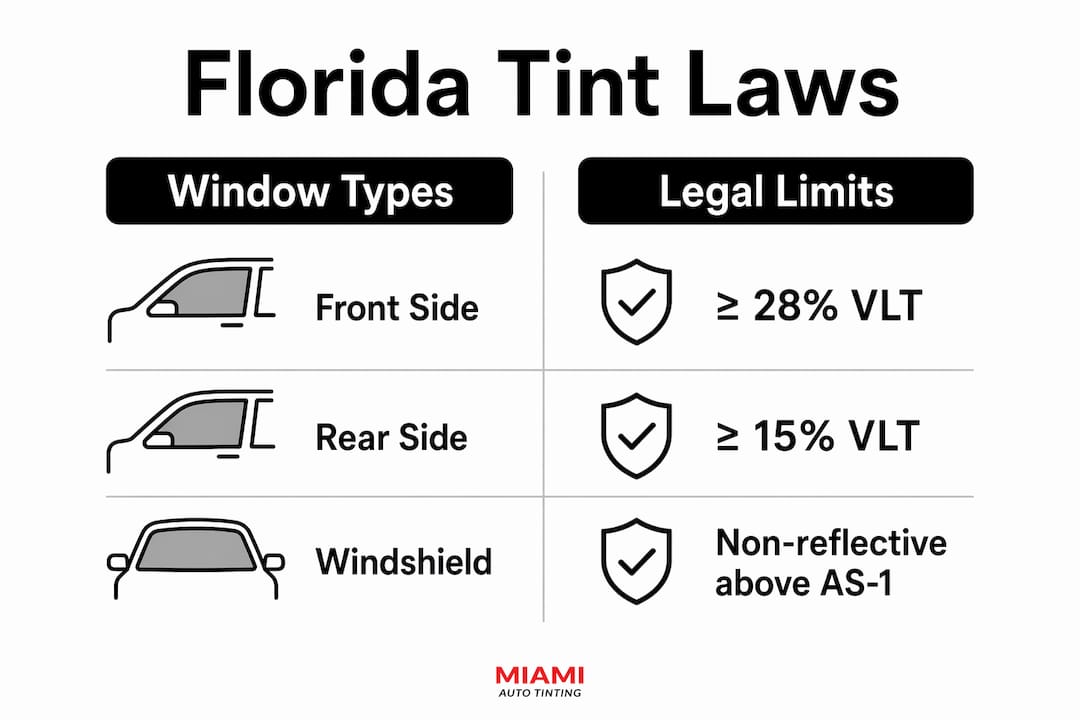
The windshield rule catches a lot of drivers off guard. Florida only permits non-reflective tint above the AS-1 line on the front windshield. That's typically the top five to six inches of the glass. The rest of the windshield must remain untinted. Period.
SUVs and trucks have more flexibility. Their rear and back side windows can go darker than a sedan's limits, which reflects practical differences in how these vehicles are used. However, front side windows stay at the 28% minimum across all vehicle classes.
Reflectivity is another layer people overlook. Florida caps tint reflectivity at 25% for both front and rear side windows. Metallic or mirrored-looking films that bounce back excessive light are illegal even if the VLT number is technically compliant.
Violating these limits can result in fines ranging from $100 to $250 for a first offense, with escalating penalties for repeat violations. Many citations come as fix-it tickets, meaning you'll need to remove or replace the tint and prove compliance within a set timeframe. Ignoring the ticket makes the problem significantly more expensive.
Check out this Miami tinting rules guide for a closer look at what's permitted and prohibited locally.
Medical exemptions and professional use
Not everyone has to live with the standard VLT limits. Florida recognizes that certain medical conditions make sun exposure genuinely harmful, and the law provides a path to legally darker tint for qualifying drivers.
Medical exemptions allow darker tint for conditions such as lupus, photophobia, melanoma, and other disorders where direct sunlight exposure creates a documented health risk. To qualify, you need a signed certification from a licensed physician. That documentation must ride in the vehicle at all times. Not in your glove box at home. In the car.
A few critical points about Florida's exemption system:
- Exemptions are vehicle-specific. If you sell your car or buy a new one, the exemption doesn't carry over.
- Medical exemption certificates become void upon vehicle transfer, so you must reapply for each new vehicle.
- You apply through the Florida Department of Highway Safety and Motor Vehicles (DHSMV).
- Professional exemptions also exist for law enforcement, private investigators, and certain government vehicles.
- Even with a valid exemption, windshield tint rules and reflectivity caps still apply.
Pro Tip: If you have a medical exemption, keep a photo of the documentation on your phone in addition to the physical copy. If you're ever pulled over and the physical copy isn't immediately accessible, having it on your screen can demonstrate good faith while you locate the paper.
How to tint windows legally in Florida
Knowing the rules is step one. Actually getting tint installed that passes muster requires a deliberate process. Here's how to approach it correctly.
-
Know your factory glass VLT before you book an appointment. Many car manufacturers publish this data, and a quality tint shop can measure it before installation. This tells you exactly how much additional tinting your windows can legally absorb.
-
Choose films rated for the right installed VLT, not just the film percentage. A 35% film on a window with 80% factory glass may land around 28% installed. That's legal for front windows. The same film on rear privacy glass could push you below 15%. Film selection must account for the combined result.
-
Request a written measurement or test sheet from the installer. Mismatches between labeled and installed VLT are a common reason drivers get ticketed. A document showing your installed readings gives you something tangible to show if you're stopped.
-
Avoid overly reflective films. Metallic films may look sharp, but if reflectivity exceeds 25%, they're illegal regardless of how the VLT reads.
-
Understand what happens during a traffic stop. An officer will place a tint meter against your window with the glass rolled up. The reading is immediate. There's no ambiguity. If your tint fails on the spot, you're getting a ticket.
For a deeper breakdown, the Florida legal tinting guide from Southmiamitint walks through the compliance process step by step. Choosing the right film from the start also helps. This overview on comparing tint film options can help narrow down what works for your vehicle and Florida's standards.
How Florida compares to other states
Florida's rules fit into a national pattern where almost all US tint laws use VLT as their baseline measurement, but the specific numbers vary considerably.
| Window | Florida minimum VLT | National range |
|---|---|---|
| Front side windows | 28% | 20% to 70% depending on state |
| Back side windows | 15% | 15% to unlimited in some states |
| Rear window | 15% | Varies widely; some states unrestricted |
| Windshield | AS-1 line only | Most states mirror this restriction |
Florida sits stricter than some states on front windows but is relatively permissive compared to others on rear windows. States like New York require 70% VLT on front side windows, making Florida look generous by comparison. States like California allow 70% on fronts as well. The variation is significant, which is why understanding window tint laws by state matters if you're driving a vehicle across state lines or relocating.
Enforcement in Florida concentrates heavily on front side windows and the windshield. These are the windows officers see first during a traffic stop and the ones most directly tied to driver visibility. Rear window tint gets checked too, but front windows draw the most scrutiny.
Reflectivity enforcement tends to come up less frequently but still carries real consequences. If your tint looks like a mirror from outside the vehicle, expect it to get flagged. Read more on Miami and surrounding areas tint rules for a broader regional picture.
My honest take on staying compliant in Florida
I've seen the same scenario play out more times than I can count. Someone buys a car with aftermarket tint already installed, drives it for months without a problem, then gets pulled over and handed a ticket for windows they didn't even tint themselves. They assumed the previous owner handled it legally. That assumption costs people real money.
The single most underrated step in this whole process is getting your tint measured after installation, not before, not based on the film label. An actual post-install reading is the only number that matters. I've worked with customers who had "legal" 35% film installed, only to find their factory glass pushed the combined VLT below Florida's front window minimum. Without a post-install measurement, they wouldn't have known until a traffic stop.
My other strong belief: go professional and go ceramic. Cheap films fade, turn purple, and often bubble over Florida's heat. More importantly, low-quality installation makes consistent VLT readings less reliable. Ceramic films from reputable brands hold their performance and their VLT rating over time.
Exemptions are genuinely useful for people who need them, but they're not a shortcut. I've seen drivers treat medical exemption letters as a free pass to do whatever they want with their windows. That's not how it works. Reflectivity rules still apply. Windshield rules still apply. And the documentation must actually be in the car.
Proactive compliance isn't complicated. Know your VLT limits, get measured post-install, keep any exemption paperwork in the vehicle, and work with a shop that documents what they install.
— Jose
Get legal tint installed right the first time
If you want tint that looks great and passes every roadside check in Miami-Dade, Southmiamitint makes it simple. The team brings the installation to your location and uses premium 3M IR and ceramic film options engineered to meet Florida's VLT standards on every window.
Southmiamitint installs 3M Color Stable, 3M IR, and Iroviron Kollmax ceramic films, all with transparent documentation of your installed VLT so you have proof of compliance from day one. Whether you need compliant tint for a sedan, SUV, or truck, the mobile service comes to your home or office across Miami-Dade. For premium protection that keeps you street-legal and cool in Florida's heat, explore ceramic tint starting at $249. You can also check mobile tinting prices to find the right package for your vehicle.
FAQ
What does VLT mean in window tint laws?
VLT stands for Visible Light Transmission, the percentage of light that passes through your glass and film combined. It's the measurement law enforcement uses to determine whether your tint is legal.
What is the legal window tint limit in Florida?
Florida requires at least 28% VLT on front side windows and at least 15% VLT on back side and rear windows for passenger sedans. Windshield tint is only permitted above the AS-1 line using non-reflective film.
Why does the film percentage not match my installed VLT?
Your factory glass already has a built-in tint value that reduces light transmission. When film is added, the combined result is always darker than the film rating alone, which is why post-install measurement is the only reliable compliance check.
Can I get darker tint legally in Florida with a medical condition?
Yes. Florida offers medical exemptions for qualifying conditions such as lupus and photophobia. You need a physician's certification, it must stay in the vehicle, and it's tied to the specific car, not to you as a driver.
How do I know if my current tint is legal in Florida?
Have your tint measured with a calibrated tint meter after installation. Any reputable shop can do this. The reading will show your actual installed VLT, which is what Florida law enforcement checks during a traffic stop.