
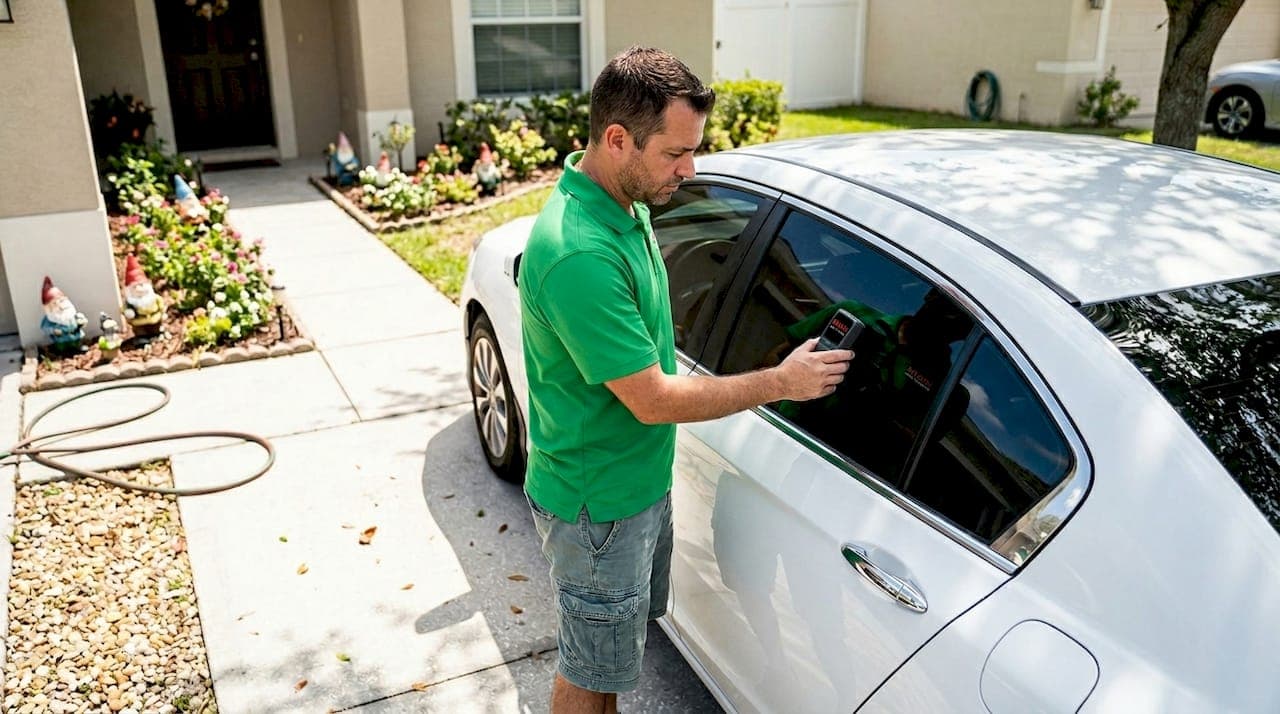
Getting pulled over because your window tint is too dark is one of those entirely avoidable situations that frustrates Florida drivers every day. This guide to legal tinting compliance walks you through exactly what the law requires, how to choose the right film, and how to verify you're street legal before you ever get behind the wheel. Florida's tint laws are specific, and non-compliance can mean fines, fix-it tickets, failed inspections, and even insurance complications. You deserve to enjoy darker windows without the legal headache.
Table of Contents
- Key takeaways
- Florida legal tint limits by window type
- Choosing the right tint film and installer
- Getting your car legally tinted: step by step
- Verifying and maintaining your tint after installation
- Special cases: exemptions, vehicle types, and state borders
- Why tint compliance matters more than you think
- Get compliant tinting from Southmiamitint
- FAQ
Key takeaways
| Point | Details |
|---|---|
| Know your VLT numbers | Front side windows need at least 28% VLT; rear side windows need at least 15% VLT under Florida law. |
| Windshield tinting is limited | Only non-reflective tint is allowed on the windshield, and only above the AS-1 line. |
| Always get a compliance sticker | Licensed installers are legally required to place a sticker confirming your tint meets Florida standards. |
| Verify after installation | Use a tint meter or check your sticker to confirm compliance before driving regularly. |
| Special vehicles have different rules | SUVs, trucks, and vehicles with medical exemptions follow separate tinting guidelines. |
Florida legal tint limits by window type
Understanding this tinting regulations guide starts with one concept: Visible Light Transmission, or VLT. VLT measures the percentage of light a tinted window allows through. A lower VLT percentage means a darker tint. Florida law sets minimum VLT thresholds for each window on your vehicle, and those numbers are not suggestions.
Here is what Florida law currently requires:
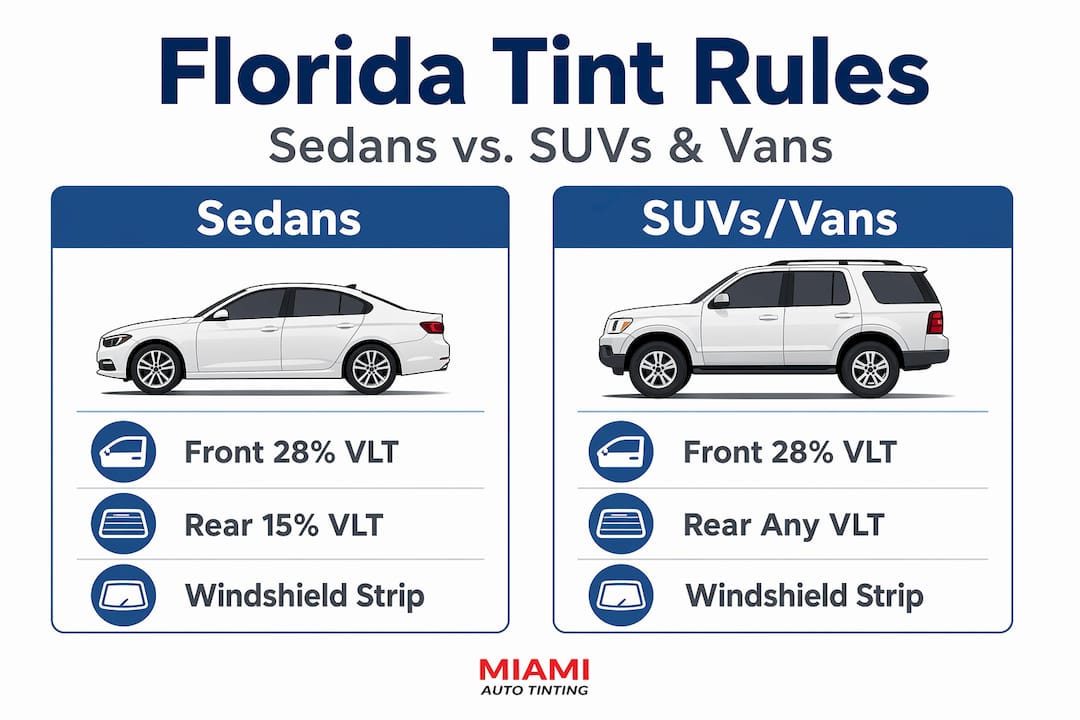
| Window Location | Minimum VLT | Additional Rules |
|---|---|---|
| Windshield | No VLT minimum | Non-reflective tint above AS-1 line only |
| Front side windows | 28% VLT or more | No highly reflective films |
| Rear side windows | 15% VLT or more | Less restrictive than front windows |
| Rear window | 15% VLT or more | Dual mirrors may be required with very dark tint |
The windshield rule catches a lot of people off guard. Only non-reflective tint is permitted on the windshield, and it can only cover the strip above the AS-1 line, which sits roughly 5 to 6 inches from the top. That thin strip is all you get up front.
For your side windows, front side windows require a VLT of 28% or higher. That means the film cannot block more than 72% of incoming light. Your rear side windows allow a darker 15% VLT minimum, giving you more flexibility toward the back of the vehicle.
Violations carry real consequences. Beyond the fine itself, you may receive a fix-it ticket requiring you to remove the illegal tint entirely and show up for re-inspection. That is time, money, and hassle that no tint job is worth.
Choosing the right tint film and installer
Before anything touches your glass, you need to make smart decisions about the film and the person applying it. This is where most tinting problems start, and where following a proper compliance guide saves you the most grief.
When selecting tint films that meet Florida's legal tint limits, look for these characteristics:
- VLT rating clearly labeled. Every legitimate tint film comes with a manufacturer specification sheet. If a shop cannot show you the VLT percentage, walk away.
- Certification labels. Quality films from manufacturers like 3M come with documentation confirming performance specs and legal compliance.
- Appropriate darkness for each window. Choosing a 30% to 50% VLT range for front windows gives you comfort without creeping into illegal territory.
- No "limo tint" on front windows. "Limo tint" at around 5% VLT is illegal on front windows in Florida and virtually every other state. Installers who push this on your driver and passenger windows are setting you up for citations.
- Low-reflectivity film for the windshield strip. Florida prohibits metallic or mirror-like films on the windshield area.
Choosing the right film also means understanding your options. Ceramic films offer superior heat rejection without going excessively dark. You can read more about selecting the right tint for your specific vehicle needs before committing to an installation.
Pro Tip: Ask your installer directly: "What VLT percentage will this film deliver on my specific glass?" Factory glass already has a slight tint. Adding an aftermarket film reduces the total VLT further, which means a 30% film on slightly tinted glass could result in a lower effective VLT reading than you expect.
Verified professional installers know this. An experienced shop measures your factory glass before cutting any film so the finished result actually stays within Florida's legal tint limits.
Getting your car legally tinted: step by step
Walking into a tint shop without a plan is how people end up with illegal windows. Here is the process a properly run installation should follow, and what you should expect at each stage.
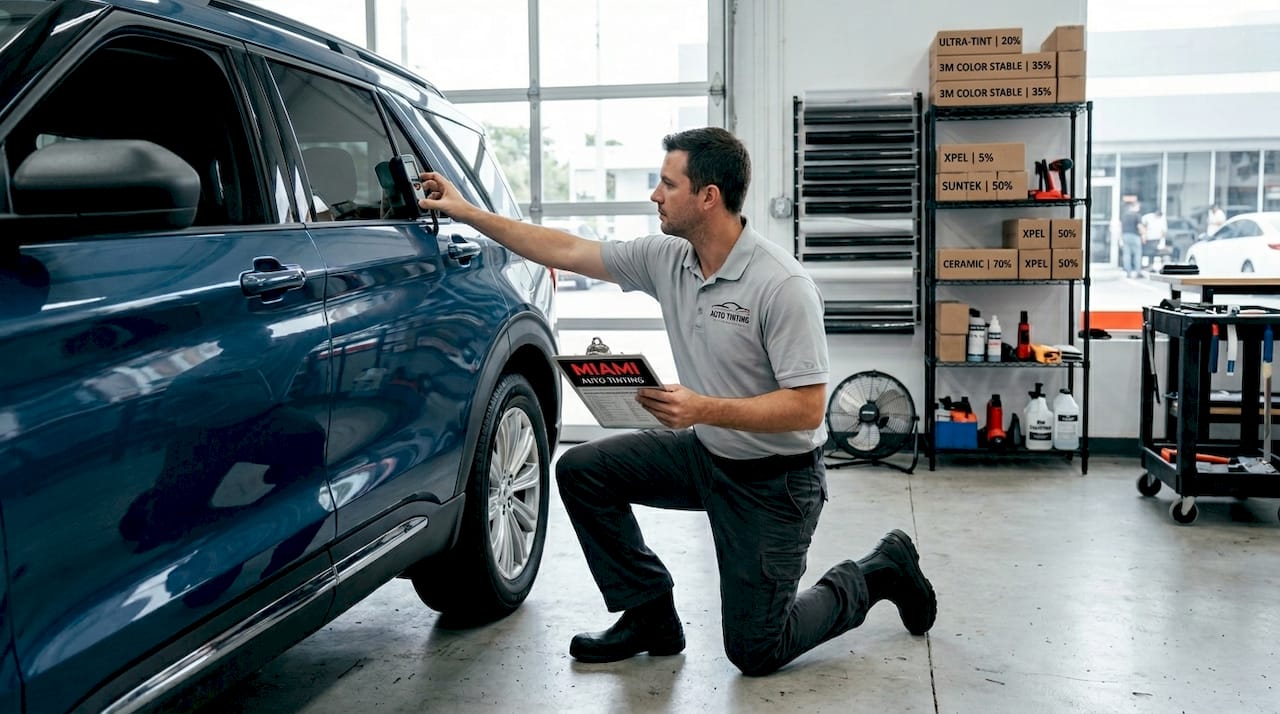
- Measure factory glass VLT first. A reputable installer checks your existing glass transmittance before selecting film. This is non-negotiable if you want accurate final readings.
- Select compliant film for each window. Film choice varies by window location. What works legally on the rear may be too dark for the front.
- Clean all glass surfaces. Professional tint installation starts with a thorough cleaning to remove dust, oils, and debris that would trap under the film and cause bubbling.
- Cut and apply the film. The installer cuts each piece precisely to fit your window, then applies it using a slip solution that allows repositioning before the adhesive cures.
- Squeegee out air bubbles. This step determines the visual quality and longevity of your tint. Rushing it causes problems that surface weeks later.
- Allow proper cure time. Do not roll your windows down for at least 48 hours after installation. The adhesive needs time to bond fully to the glass.
- Receive your compliance sticker. This is required. Tint shops are legally obligated to place a sticker on each treated window confirming the film meets Florida compliance standards.
Pro Tip: Schedule your installation on a dry day. High humidity slows the curing process and can introduce moisture under the film if the shop is not climate-controlled. A mobile tinting service that works in a controlled environment eliminates this risk entirely.
Common mistakes to avoid include skipping the curing period, choosing film without checking its rated VLT, and failing to get your compliance sticker documented. That sticker is your proof if you ever get pulled over.
Verifying and maintaining your tint after installation
Compliance for window tints does not end when the installer drives away. You need to verify the result and maintain it over time to stay out of legal trouble.
Knowing how to check tint legality after installation comes down to a few reliable methods:
- Read your compliance sticker. The sticker placed at the bottom of each window should display the film brand, VLT percentage, and installer information. Check it against Florida's legal minimums.
- Request a tint meter reading. Some shops offer this as a final step. A calibrated tint meter measures actual light transmission through your completed window. Law enforcement uses the same meters during roadside inspections, so testing with one beforehand removes any uncertainty.
- Inspect for bubbling or peeling. Damaged tint can discolor and effectively change its light transmission properties. A bubbled window that started at 30% VLT may behave differently as the film deteriorates.
For maintenance, the rules are straightforward. Clean with mild soap or a film-safe product. Never use ammonia-based cleaners like standard glass sprays. Ammonia breaks down the film adhesive over time, causing delamination and discoloration.
If you receive a tint citation, do not just pay the fine and move on. Get the tint measured by a professional, because officer-estimated readings can occasionally be wrong. If your sticker proves compliance, that documentation matters in a hearing.
Avoid the temptation to add a second layer of tint on top of existing film. Layering is one of the most common ways legal tint becomes illegal tint, and it also voids most film warranties.
Special cases: exemptions, vehicle types, and state borders
Not every vehicle or driver falls under the standard Florida tint rules. Understanding these exceptions is part of a complete tinting regulations guide.
Medical exemptions are available for Florida drivers with documented conditions like lupus, photosensitivity disorders, or certain eye conditions. A physician must certify the need, and the exemption documentation must stay in the vehicle. The exemption does not give you unlimited darkness. It grants specific allowances outlined in your certificate.
SUVs, trucks, and vans follow a modified version of the standard rules. Many states allow darker tint on rear windows of multi-purpose vehicles, and Florida follows a similar approach. However, very dark rear tint may require dual side mirrors to maintain adequate visibility. Check your specific vehicle classification before choosing film.
Crossing state lines creates a problem many Florida drivers overlook. Florida's legal tint limits are more permissive than some neighboring states. What is perfectly legal here may earn you a citation the moment you drive into Georgia or Alabama.
Here is a quick comparison of front side window minimums for states Florida drivers commonly travel through:
| State | Front side window VLT minimum |
|---|---|
| Florida | 28% |
| Georgia | 32% |
| Alabama | 32% |
| South Carolina | 27% |
If you regularly travel outside Florida, keep that in mind when selecting your front window film. Going slightly above Florida's 28% minimum gives you a buffer for neighboring state compliance. You can also review the Miami tinting regulations for a closer look at how local rules compare to statewide requirements.
Why tint compliance matters more than you think
I have talked with hundreds of car owners in Miami and South Florida who came to us after getting a citation. Almost all of them said the same thing: they had no idea their tint was illegal. They bought the car with tint already on it, or they went to a cheap shop that never mentioned VLT percentages.
What I have found is that people treat window tinting like a cosmetic choice and nothing more. But in Florida, where you spend a significant portion of your year driving in direct sun, the tint on your windows also affects driver visibility, UV exposure, and heat load inside the cabin. Going too dark on front windows does not just risk a ticket. It genuinely reduces your ability to see pedestrians and cyclists in low-light conditions.
The legal system here is not particularly forgiving either. A fix-it ticket sounds minor until you realize you have to get the tint removed, pay for new compliant film, and show proof of correction at a station within a set number of days. I have seen people spend three times what they saved by going cheap on installation.
My honest take is this: the comfort and privacy benefits of window tinting are real and worth having. But the only version of tinting worth doing is one that keeps you completely within the law. The peace of mind alone is worth choosing a certified installer who knows Florida's state tinting compliance rules cold.
— Jose
Get compliant tinting from Southmiamitint
Southmiamitint specializes in mobile window tinting across Miami-Dade, bringing the installation to your home, office, or wherever your car is parked. Every job uses 3M IR, 3M Color Stable, or Iviron Kollmax ceramic film, and every installation is done to meet Florida's legal tint limits from the start. No guessing. No cutting corners on VLT measurements.
If you want ceramic performance without the compliance headache, check out the ceramic tinting options that come with guaranteed legal readings for every window. Prefer 3M film specifically? Southmiamitint's 3M mobile tint service delivers it straight to your door. Every installation includes proper compliance stickers so you are covered if you ever get pulled over. Book your appointment today and drive with confidence.
FAQ
What is the legal VLT for front windows in Florida?
Florida requires front side windows to allow at least 28% of light through, meaning a VLT of 28% or higher. Going darker than this on driver and passenger windows is a ticketable offense.
How do I check if my current tint is legal?
Check the compliance sticker at the bottom of each window for the VLT rating, or ask a professional tint shop to measure it with a calibrated tint meter. Law enforcement uses the same tint meters during traffic stops.
Can I tint my windshield in Florida?
You can apply a non-reflective tint strip to the windshield, but only above the AS-1 line, which sits about 5 to 6 inches from the top of the glass. Full windshield tinting or reflective film is not permitted.
Does Florida allow medical exemptions for darker tint?
Yes. Florida allows medical exemptions for documented conditions like photosensitivity. You need a physician's certification, and that document must remain in your vehicle at all times.
Will my Florida-legal tint be legal in other states?
Not always. Georgia and Alabama both require a minimum of 32% VLT on front side windows, which is stricter than Florida's 28% threshold. If you travel frequently, choosing a film closer to 30% to 35% VLT gives you a compliance buffer across state lines.