
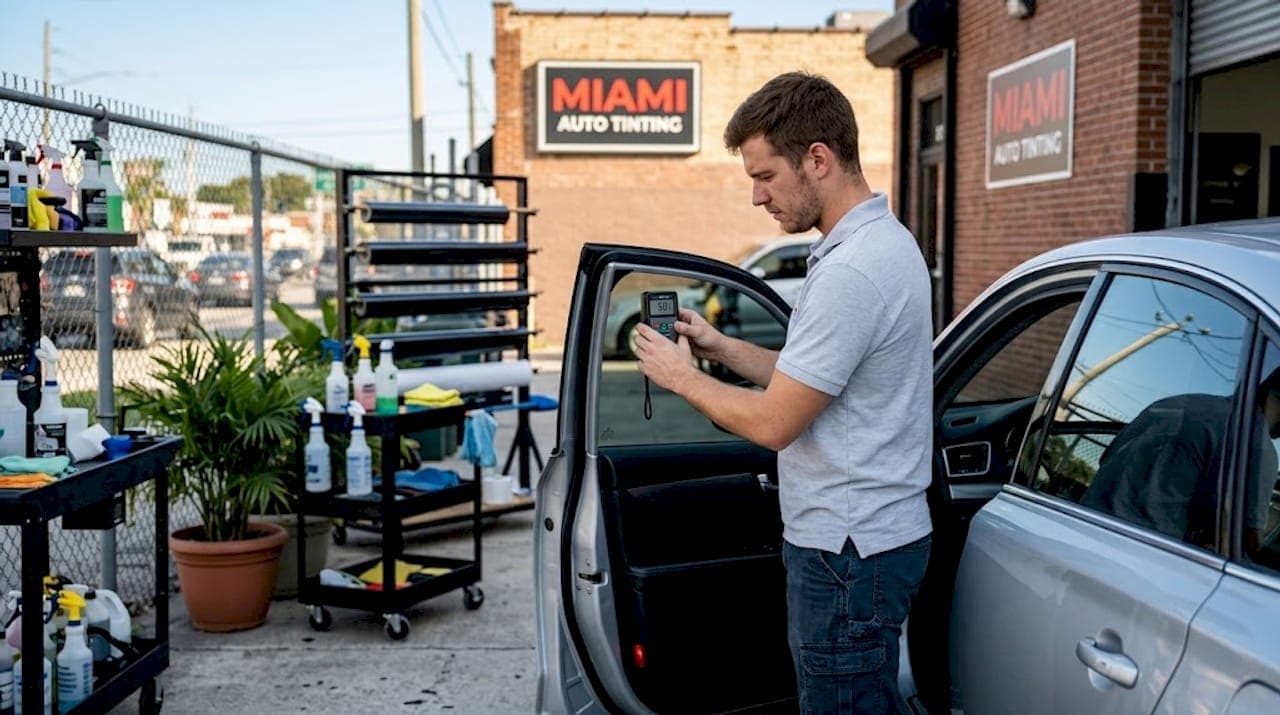
Many Florida drivers get ticketed for tint they genuinely believed was legal. The confusion usually comes down to one misunderstood concept: explaining window tinting regulations isn't just about reading a number off a film box. It's about understanding how visible light transmission is measured through your actual glass, by vehicle type, by window position. Get that wrong, and a tint job that looks perfectly fine at the shop becomes a traffic stop waiting to happen. This guide breaks down Florida's tinting laws clearly, including VLT limits, reflectivity rules, medical exemptions, and how enforcement actually works.
Table of Contents
- Key takeaways
- Explaining window tinting regulations in Florida
- Reflectivity limits, banned colors, and installer certification
- Medical exemptions for darker window tint
- Enforcement, penalties, and how to avoid violations
- Common misconceptions about calculating legal tint
- My honest take after years of watching this play out
- Stay legal and cool with Southmiamitint
- FAQ
Key takeaways
| Point | Details |
|---|---|
| VLT limits vary by window | Front side windows must allow at least 28% VLT; rear windows have lower minimums depending on vehicle type. |
| Film ratings can mislead you | A film labeled "28%" may read lower through factory-tinted glass, making your combined tint illegal. |
| Installer certification is mandatory | Florida law requires a certification label on the driver door jamb confirming your tint is legal. |
| Medical exemptions are available | Drivers with qualifying conditions can legally run darker tint, but must carry documentation at all times. |
| Fines apply per window | Violations cost around $116 per window, with escalating consequences for repeated offenses. |
Explaining window tinting regulations in Florida
Florida's window tint law centers on one measurement: Visible Light Transmission, or VLT. It refers to the percentage of visible light that passes through your window. A higher VLT means a lighter tint. A lower VLT means a darker tint. The law sets minimum VLT thresholds, meaning your windows must allow at least that percentage of light through.
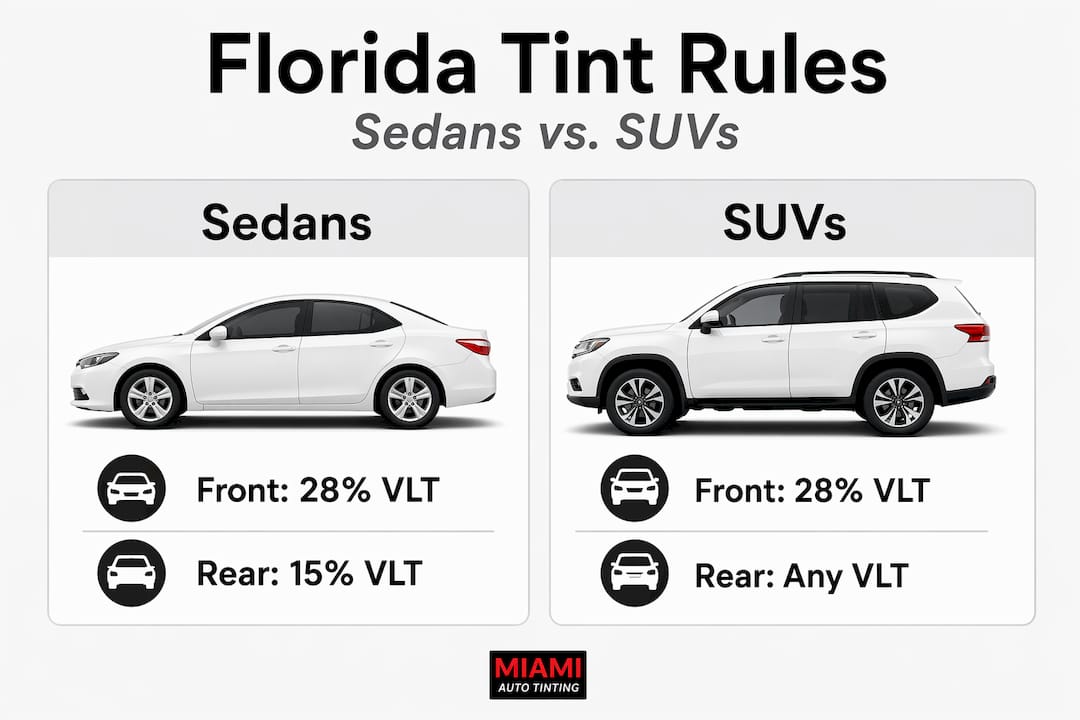
Here is where it gets specific. Florida sets different limits depending on the window position and vehicle category.
| Window position | Sedans and coupes | SUVs, trucks, and vans |
|---|---|---|
| Front side windows | 28% VLT minimum | 28% VLT minimum |
| Back side windows | 15% VLT minimum | 6% VLT minimum |
| Rear window | 15% VLT minimum | 6% VLT minimum |
| Windshield | Above AS-1 line only | Above AS-1 line only |
The front side windows carry the strictest limit at 28% VLT for every vehicle category. The back windows and rear window are more flexible, especially for SUVs, trucks, and vans. That flexibility exists because tint laws balance privacy with safety, and rear passengers in larger vehicles are considered less of a visibility concern for law enforcement.
On the windshield, Florida only allows non-reflective tint above the AS-1 line. The AS-1 line runs roughly 4 to 6 inches below the top edge of the windshield. Tinting below that line is illegal on any vehicle.
Pro Tip: Before your tint appointment, look up your specific vehicle trim level online. Some factory glass already includes a light tint. That base layer affects your combined VLT reading, so knowing it ahead of time helps you choose the right film darkness.
Reflectivity limits, banned colors, and installer certification
Florida does not just regulate how dark your tint can be. It also controls how reflective it is and what colors are allowed. Both rules exist for the same reason: officer visibility during traffic stops.
Reflectivity is capped at 25% on front side windows and 35% on back side and rear windows. Mirror-style tint is explicitly prohibited. Any film that turns your windows into a reflective surface is illegal, regardless of VLT.
Certain tint colors are also banned outright in Florida:
- Red tint is prohibited on any window
- Amber tint is prohibited on any window
- Blue tint is prohibited on any window
These colors can interfere with how drivers and officers perceive emergency vehicle signals. A red or blue sheen on a window can mask approaching lights, which creates a genuine road safety issue.
The third requirement that most people overlook is the certification label. Florida law requires a label on the driver side door jamb from your installer confirming that the film meets legal standards. The label includes the manufacturer, the film model, and the VLT percentage. Without it, law enforcement has no way to confirm your tint is compliant, and you have no easy way to prove it either.
Pro Tip: When you book a tint installation, ask directly whether the installer provides a certification label. Reputable shops do this automatically. If a shop hesitates or says it is not necessary, that is a red flag worth taking seriously.
Medical exemptions for darker window tint
Florida does allow certain drivers to run darker tint than the standard limits. If you have a qualifying medical condition, you can apply for an exemption that legally permits lower VLT.
Here is how the process generally works:
- Get a physician's certification. Your doctor must confirm in writing that your condition requires protection from sunlight exposure. Qualifying conditions include lupus, photosensitivity, albinism, and other autoimmune disorders that make standard sunlight exposure harmful.
- Apply through the Florida Department of Highway Safety and Motor Vehicles. You submit the physician's documentation as part of the exemption application.
- Carry the certificate in your vehicle at all times. The exemption is tied to a specific vehicle, not to you personally. You cannot transfer it to a rental car or a friend's vehicle.
- Understand the limits. Even with a medical exemption, you are not allowed to drive with completely blacked-out windows. Some minimum visibility standard still applies.
- Renew as required. Exemptions are not always permanent. Check your documentation for expiration dates and renewal requirements.
The practical benefit here is real. Drivers with lupus or similar conditions can experience genuine pain and flare-ups from sun exposure during long drives. Florida's exemption process acknowledges that while still requiring transparency with law enforcement.
Enforcement, penalties, and how to avoid violations
Understanding the rules is one thing. Knowing how they are applied on the road is what keeps you out of trouble.
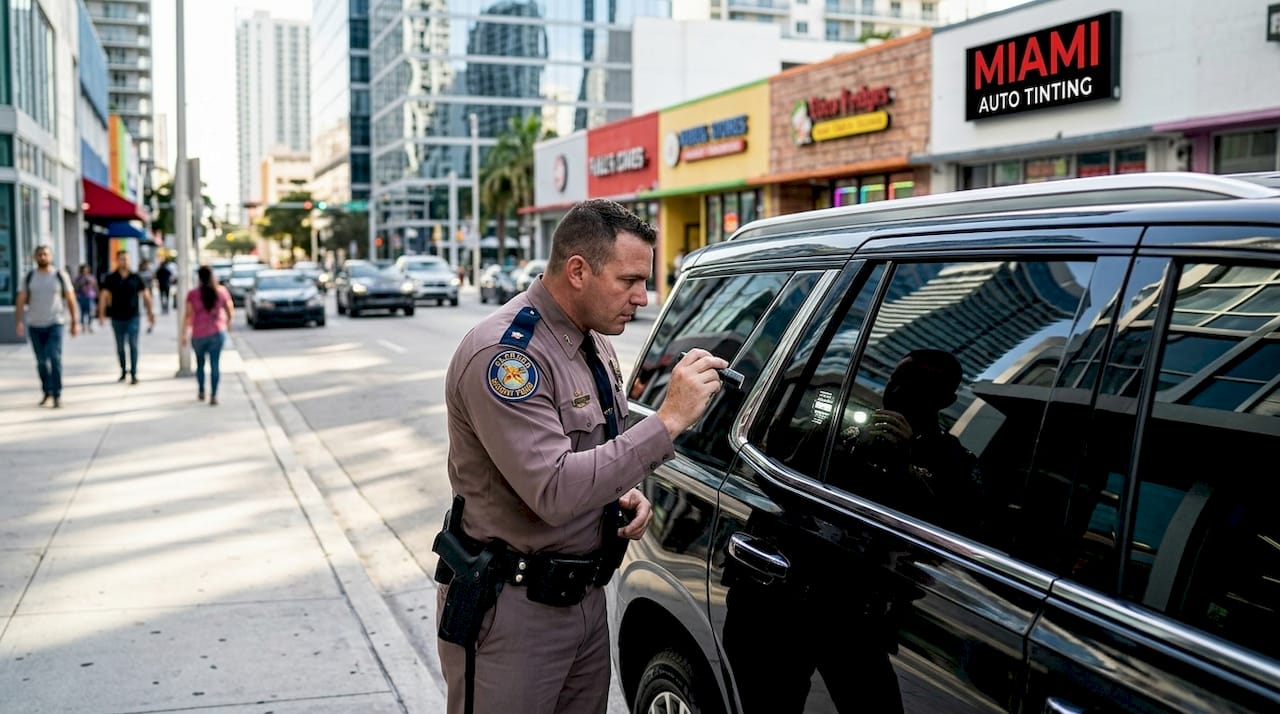
Florida officers use a device called a tinted meter photometer to check your windows. This is not a visual judgment call. The meter measures the combined VLT through factory glass and tint film. That combined reading is what matters legally, not what the film box says.
"Reflective films and dark tints obstruct officer visibility during stops; thus Florida law restricts reflectivity and tint darkness." Florida window tint law
When an officer stops you for a suspected tint violation, here is what typically happens:
- The officer measures your windows with the photometer
- If your combined VLT reads below the legal minimum, you receive a citation
- Fines run approximately $116 per window, classified as a non-moving infraction
- No license points are added for a first offense, but unpaid or repeated violations can escalate
- You may be required to remove or replace the illegal tint
There is a ±3% tolerance on VLT readings to account for meter variance in the field. However, treating that tolerance as a free 3% buffer is a mistake. It exists for measurement accuracy, not to give you wiggle room to tint darker than the law allows.
To stay on the right side of the law, check your local Miami tinting rules before scheduling an appointment, and always work with a shop that provides certified film and a proper door jamb label.
Common misconceptions about calculating legal tint
This is the area where most good-faith violations happen. The rules sound simple until you realize the film VLT and the legal VLT are not the same number.
The combined VLT problem
Your car's factory glass already transmits a specific percentage of light. Most untinted factory glass transmits somewhere around 70 to 80% VLT. When you add a tint film, the two transmissions multiply together. A 35% film on glass that transmits 75% of light does not give you 35% combined VLT. It gives you something closer to 26%. That reading puts a sedan's front side windows into illegal territory.
Officers measure total VLT through the full window assembly. So what you see labeled on the film package is not what the photometer reads at your car window.
Front versus rear windows
The chart below shows why the front/rear distinction matters so much in practice:
| Scenario | Front side window | Back side window (sedan) | Back side window (SUV) |
|---|---|---|---|
| Legal minimum VLT | 28% | 15% | 6% |
| Factory glass VLT (approx.) | 75% | 75% | 75% |
| Maximum film darkness you can use | ~37% film | ~20% film | ~8% film |
The rear flexibility for SUVs reflects the intent behind Florida's tint law framework: rear passengers in cargo-style vehicles are not in the direct sightline of an officer during a front-window check, so the privacy benefit outweighs the visibility risk.
The AS-1 line confusion
Many drivers assume the AS-1 line is a fixed universal measurement. It is not. The line is typically 4 to 6 inches below the top edge of the windshield, but it varies by vehicle. Look for the "AS-1" marking etched into your windshield glass near the upper edge. Tinting below that marking is illegal regardless of how light the film is.
My honest take after years of watching this play out
I have seen the same scenario repeat itself more times than I can count. A driver brings a vehicle in after getting a ticket and says the shop told them the tint was legal. And technically, the film was legal. The combined reading was not. That distinction costs people real money.
What I have learned is that the biggest risk is not the driver who ignores the rules. It is the driver who tries to follow them but uses the film box rating as the final word. Your factory glass is part of the equation. An installer who does not ask about your vehicle's factory glass and its baseline transmission before selecting a film is not doing the job right.
Florida's laws are genuinely well-considered. The front window limits protect officer safety during stops. The rear flexibility for SUVs acknowledges how those vehicles are actually used. The reflectivity cap prevents the kind of glare that causes accidents. None of this is arbitrary. When you understand the reasoning, compliance becomes easier because you understand what you are actually trying to achieve.
My practical advice: work with a certified installer who measures your factory glass before selecting a film, provides you with a door jamb label, and can answer the combined VLT question for your specific vehicle. If a shop skips any of those steps, keep looking. The money you save on a cut-rate installation will not cover the first fine, let alone the second.
— Jose
Stay legal and cool with Southmiamitint
Knowing the rules is step one. Getting professional installation that actually meets them is step two. At Southmiamitint, every car tint job uses certified film including 3M Ceramic IR and Iviron Kollmax ceramic, with a proper certification label placed on your driver door jamb. The team accounts for your factory glass baseline before recommending a film so your combined VLT stays legal. Mobile service means they come to you anywhere in Miami-Dade. No shop wait, no guessing about compliance. You can also browse the full ceramic tint guide to understand what premium film actually delivers in Florida heat.
FAQ
What is the darkest legal tint for front windows in Florida?
Florida requires front side windows to allow at least 28% visible light transmission. That minimum applies to every vehicle category, including sedans, SUVs, and trucks.
Does a film labeled "28%" make my front windows legal in Florida?
Not necessarily. Law enforcement measures the combined VLT of your factory glass plus the film together. A 28% film on factory glass that already filters some light can produce a combined reading below the 28% legal minimum.
What colors of window tint are illegal in Florida?
Red, amber, and blue tint are banned in Florida on all windows. These colors can interfere with emergency vehicle signal visibility and are prohibited regardless of VLT percentage.
Do I need a certification label after getting my windows tinted?
Yes. Florida law requires the installer to place a label on your driver side door jamb confirming the film brand, model, and VLT percentage. Without it, proving compliance during a traffic stop becomes much harder.
How do I qualify for a medical tint exemption in Florida?
You need a physician's written certification confirming a qualifying medical condition such as lupus or photosensitivity. You then apply through the Florida DHSMV, and the exemption is tied to your specific vehicle. The documentation must be carried in that vehicle at all times.