
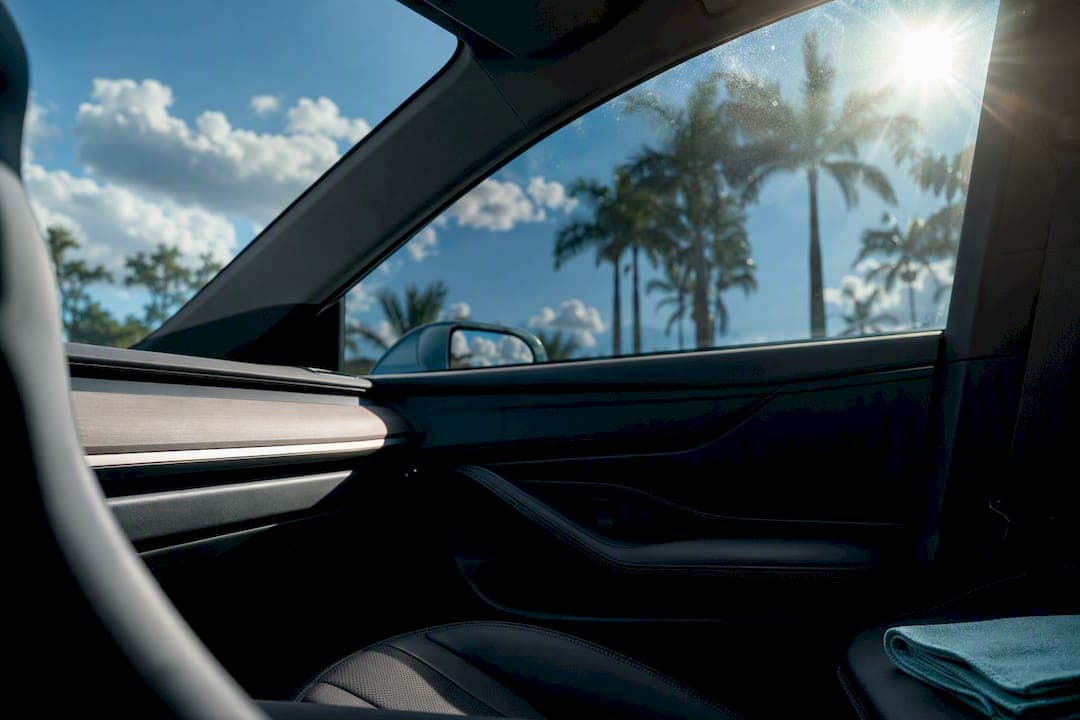
High-quality ceramic or nano-ceramic window film reduces cabin heat, blocks damaging UV rays, and can measurably improve your EV's driving range in hot weather. Independent testing points to hot-weather range gains of 3% to 10% once solar heat load is cut at the glass. Premium films also block up to 99% of UVA and UVB rays, protecting your dashboard, seats, and skin, all without interfering with GPS, keyless entry, or driver-assist sensors. For EV owners, that combination of comfort, range, and interior protection makes tint one of the more practical upgrades you can make.
TL;DR:
- Window films that reject infrared and UV rays can reduce interior heat load by up to 45%, cutting the energy required for cooling in hot weather.
- Premium ceramic films block up to 99% of UVA and UVB rays without interfering with vehicle sensors, GPS, or keyless entry systems.
- Installing ceramic tint can boost an EV's driving range by approximately 3% to 10%, especially in sunny, high-temperature climates with large glass surfaces.
- When choosing film, ask for IR rejection and TSER specifications rather than relying solely on darkness or VLT percentages.
- Proper installation, including a post-installation electronics check and UV protection habits, extends film lifespan and ensures optimal performance.
Table of Contents
- Why EV window tint benefits go beyond looks and privacy
- How window tint actually blocks heat: IR rejection, TSER, and UV protection
- Ceramic, carbon, metallic, or dyed: which film actually fits an EV?
- What the range and battery data actually shows
- Protecting your interior without breaking your electronics
- The sustainability case for tinting an EV
- Glare reduction: the comfort benefit nobody mentions first
- How tint changes the ride in hot climates versus cold ones
- A mobile installer's take on ceramic film for EVs
- Book a mobile ceramic tint install with Southmiamitint
- Sources
Why EV window tint benefits go beyond looks and privacy
Your gas-powered neighbor's air conditioning runs off waste engine heat and a belt-driven compressor. Yours doesn't have that luxury. Every watt your climate control system uses in an EV comes straight out of the traction battery, competing directly with the miles you actually want to drive.
That single fact explains most of the EV window tint benefits this article covers. When your cabin overheats faster, your HVAC system works harder and pulls more from the battery to bring the temperature back down. EVs are more exposed to this problem than combustion vehicles for a few structural reasons:
- Panoramic glass roofs and larger window areas, common on EVs like the Tesla Model Y and Ioniq 5, let in more solar radiation than a traditional steel-roofed sedan.
- Heat soak from a car parked in direct sun for hours means the AC system has to work its hardest right when you first get in, which is also when energy draw is least efficient.
- Short trips magnify this problem. A five-mile errand run spends a disproportionate share of its energy budget just cooling down a hot cabin, since there's no cruising phase to average out that initial spike.
- Factory glass on most vehicles offers only modest infrared and UVA blocking. It's designed for basic safety and some solar control, not the heat rejection performance of aftermarket ceramic film.
Reduce the heat entering the cabin in the first place, and you reduce how hard the compressor has to work to catch up. That's the mechanism behind every efficiency claim in this article, and it's worth understanding before you start comparing film specs.
How window tint actually blocks heat: IR rejection, TSER, and UV protection
Film shopping gets confusing fast because "dark" and "effective" are not the same thing. A film's visible light transmission (VLT) tells you how much light passes through, which affects how dark the glass looks. It says almost nothing about how much heat or UV radiation it blocks.
Three specs actually matter for EV performance:
- Infrared (IR) rejection measures how much heat-carrying infrared radiation the film blocks, which is the main driver of that "hot car" feeling.
- Total solar energy rejection (TSER) measures the film's overall ability to block the full spectrum of solar energy, combining UV, visible light, and infrared into one performance number.
- UVA and UVB rejection measures protection against the wavelengths responsible for interior fading and skin damage. UVA penetrates side and rear windows more than most drivers realize, since factory tempered glass provides limited protection against it.
The number that matters: Premium ceramic films can block up to 99% of UVA and UVB rays, meeting the threshold the Skin Cancer Foundation requires for its Seal of Recommendation.
Here's what trips people up: a lightly tinted ceramic film can outperform a much darker dyed film on heat rejection. Industry testing consistently shows that visible darkness and IR performance don't move together, which is why manufacturer spec sheets, not shade charts, should guide your decision. When you're comparing options, ask for the IR rejection and TSER numbers directly rather than picking a shade off a swatch card.
Ceramic, carbon, metallic, or dyed: which film actually fits an EV?
Not all window film is built the same way, and the differences matter more for an EV than for a gas-powered car loaded with fewer sensors and antennas. Here's how the four main film families stack up.
- Ceramic and nano-ceramic film. This is the top tier for heat rejection, and it's non-metallic, meaning it won't interfere with GPS, keyless entry, or the radar and cameras that power advanced driver-assist systems. Ceramic tints are specifically engineered to avoid signal interference, which is precisely why they've become the default recommendation for sensor-dependent EVs. Expect a premium price for that performance.
- Carbon film. A solid middle ground. Carbon film rejects a respectable amount of heat, resists fading better than dyed film, and stays signal-safe since it's also non-metallic. It costs less than ceramic but won't match its IR rejection numbers.
- Metalized film. These films use a thin layer of metal particles to reject heat effectively, sometimes rivaling ceramic on raw numbers. The problem is the metal itself: it can degrade GPS accuracy, cellular reception, and toll transponder signals. For a sensor-heavy EV, that's a real drawback, not a minor inconvenience.
- Dyed film. The cheapest option and the weakest performer. Dyed film absorbs some heat rather than reflecting or blocking it, offers minimal IR rejection, and tends to fade or bubble over a few years. Automotive guides note that poor-quality dyed films fade and underperform on IR rejection compared to ceramic or carbon alternatives.
Pro Tip: Don't judge film quality by shade alone. Ask your installer for the printed IR rejection and TSER numbers for the specific product they're proposing, then confirm in writing which brand and product line will actually go on your car.
The installer's reputation and the film manufacturer's warranty matter just as much as which family you pick. A ceramic film installed poorly, with visible edges or trapped bubbles, won't perform to spec and can void the warranty you paid extra to get.
What the range and battery data actually shows
The headline number worth remembering: premium ceramic tint can recover roughly 3% to 10% of driving range in hot weather by cutting the solar heat load your HVAC system has to fight.
That range isn't a fixed guarantee, and several variables push your results toward either end of it:
- Climate. Owners in consistently hot, sunny regions see the benefit more often and more strongly than someone in a temperate climate who only faces a handful of scorching days a year.
- Parking habits. A car that bakes in direct sun all day starts every trip further behind than one kept in shade or a garage, so tint delivers more relative benefit to sun-exposed vehicles.
- Glass area. Vehicles with panoramic roofs or unusually large window surfaces have more area for tint to protect, which widens the potential gain.
- Drive-cycle length. Short trips see the biggest proportional benefit, since the AC startup penalty on a hot-soaked cabin is a bigger share of total energy use on a five-mile errand than on a fifty-mile highway run.
It helps to separate two distinct effects here. The immediate one is the AC startup savings: tinted glass can reduce interior temperatures by up to roughly 45% in extreme heat conditions, meaning your compressor doesn't have to work nearly as hard the moment you get in. The second, longer-term effect is subtler: consistently lower interior heat reduces the thermal stress on the battery management system, which may support healthier battery performance over years of ownership rather than delivering a dramatic one-time gain. Neither effect shows up as a single flashy number on your dashboard, but both stack in your favor every time you park in the sun.
Protecting your interior without breaking your electronics
Tint does two protective jobs at once in an EV, and both matter more than most owners realize until they see the damage UV exposure causes.
The first job is preserving what's inside the cabin. Dashboards crack, leather fades, and upholstery discolors under sustained UV exposure, and factory glass doesn't stop most of it. Ceramic film blocking up to 99% of UVA and UVB radiation slows that degradation substantially, which matters even more for EVs with large glass roofs that flood the cabin with light.
The second job is staying invisible to your car's electronics. Non-metallic ceramic construction means the film won't attenuate the radio frequencies your GPS, keyless entry, cellular connectivity, and toll transponders depend on. That's a meaningful distinction from older metalized films, which can quietly degrade signal strength in ways you might not notice until your navigation starts lagging or your key fob needs a second try.
A few habits extend the life of both the film and what it's protecting:
- Wait the full cure time, typically several days, before rolling down freshly tinted windows.
- Clean tinted glass with ammonia-free products and a soft microfiber cloth; a streak-free cleaning method designed for treated glass avoids the residue and scratching that harsher products cause.
- Park in shade when possible, even with tint installed. It reduces cumulative UV exposure on both the film and your interior trim.
The sustainability case for tinting an EV
Choosing an EV is already a decision built around reducing energy waste, and window tint extends that same logic to the cabin. Every watt your HVAC system doesn't need to pull from the battery is a watt that stays available for driving, which means less frequent charging over the life of the vehicle.
There's a durability angle too. Interiors that resist UV fading and heat damage last longer before they need replacement parts, upholstery repairs, or a full interior refresh. Fewer replacement parts manufactured and shipped is a small but real reduction in the resource footprint tied to keeping your car looking and functioning well.
Ceramic and nano-ceramic films themselves are also built to last considerably longer than cheaper dyed alternatives, which tend to bubble, purple, or peel within a few years and need replacing sooner. A film that holds up for a decade or more, rather than needing a redo every three to four years, means less material waste over the ownership period. For EV owners already thinking about total environmental impact, from battery sourcing to charging habits, tint is a small piece of the same puzzle: get more useful life and efficiency out of the vehicle you already have.
Glare reduction: the comfort benefit nobody mentions first
Heat and UV protection get most of the attention, but glare reduction might be the benefit you notice on your very first drive with new tint installed. Sun glare off wet pavement, low-angle morning and evening light, and reflections off other vehicles all get meaningfully softer through tinted glass.
That matters for more than comfort. Reduced glare means less squinting, less eye fatigue on long drives, and better contrast when you're trying to read your EV's dashboard displays or infotainment screen in bright daylight. Many EVs rely heavily on large touchscreens for critical information, from remaining range to climate controls, and glare washing out that screen is a genuine visibility problem, not just an annoyance.
Quality ceramic film cuts glare without the tradeoffs of very dark tint. Because heat and UV rejection come from the film's IR-blocking layers rather than from how dark it looks, you can choose a lighter, more legal VLT percentage and still get strong glare reduction and heat performance. That's particularly useful on the windshield strip and front side windows, where legal tint darkness limits are strictest but glare exposure during commutes is often at its worst.
How tint changes the ride in hot climates versus cold ones
The comfort benefits of window tint shift depending on where you drive, and it's worth setting realistic expectations for both extremes.
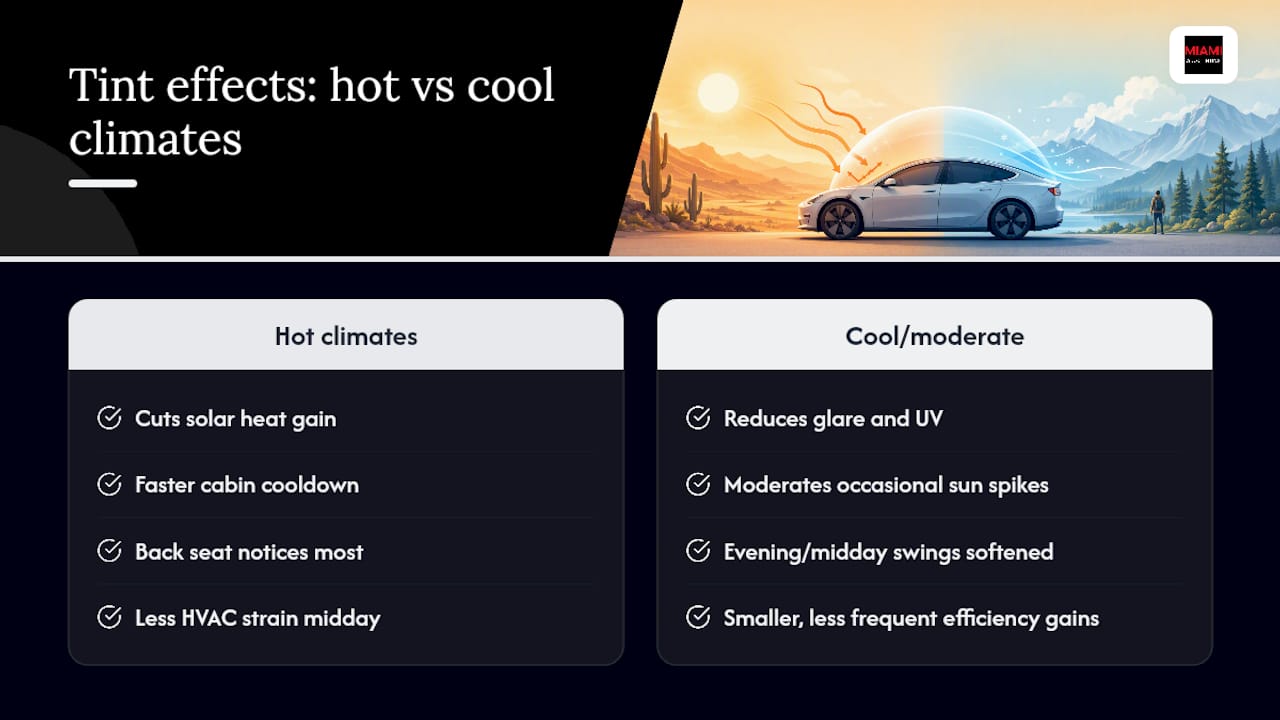
In hot, sun-heavy climates, tint's biggest contribution is cutting the intensity of solar heat gain before it ever reaches passengers. That means less time waiting for the cabin to cool down after a hot parking session, more even temperatures across the front and back seats, and less strain on the HVAC system during the hottest parts of the day. Passengers in the back seat, who often sit closer to larger expanses of side glass, tend to notice the difference most.
In cooler or more moderate climates, the comfort case is less about extreme heat and more about consistency. Tint still reduces glare, still protects interior materials from UV, and still moderates temperature swings on the occasional hot or sunny day. The efficiency gains are smaller and less frequent, since the HVAC system isn't fighting solar heat load as often, but the interior protection and glare benefits apply year-round regardless of climate. If you split time between climates, say a snowbird who drives in Florida for part of the year, tint delivers value in both settings, just through slightly different mechanisms.
A mobile installer's take on ceramic film for EVs
At Southmiamitint, we install 3M Ceramic IR, 3M Color Stable, and Iviron KoolMax ceramic films specifically because they hold up under Miami-Dade's heat and humidity without the signal risk that comes with older metalized products. When an EV owner calls us about heat complaints or range anxiety in summer traffic, ceramic is almost always the right recommendation, especially for models with glass roofs that turn the cabin into a greenhouse by midday.
Panoramic-roof EVs and vehicles parked outdoors most of the day get the strongest push toward premium ceramic in our shop. For customers who mostly garage their car and drive shorter city routes, a carbon film sometimes makes more financial sense without sacrificing much performance.
Every EV install includes a post-install electronics check on GPS, keyless entry, and any driver-assist cameras near the glass, since avoiding signal interference matters as much as the heat numbers on the spec sheet. We also confirm front-window darkness against Florida's legal VLT limits before cutting a single piece of film, because a beautiful install that fails inspection helps no one.
— Jose
Book a mobile ceramic tint install with Southmiamitint
The installation service can be performed at your location, eliminating the need for a shop visit, waiting room, or rearranging your day around a drop-off window. We work on-site across Miami-Dade County using 3M Ceramic IR, 3M Crystalline, 3M Color Stable, and Iviron KoolMax ceramic films, the same non-metallic, signal-safe products discussed throughout this article.
If your EV is fighting summer heat, fading interior trim, or you just want the range benefit that comes with a properly specified ceramic film, our mobile ceramic tint service starting at $249 covers everything from consultation to a post-install electronics check. Check pricing across vehicle types and get a quote for your model today.
Sources
- Do Tinted Windows Block UV? The Quick Answer - CLEARPRO
- UV window film - Skin Cancer Foundation
- Ceramic Window Tint for EVs: Heat, Range & Sensor Safety - Sundown Window Tint