
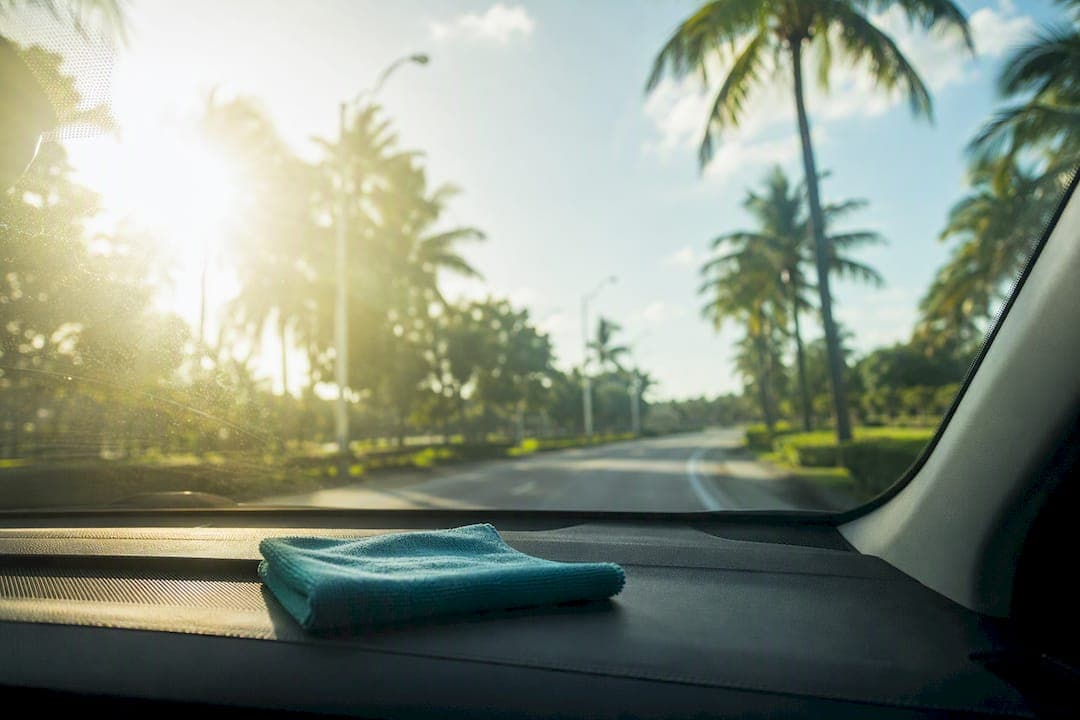
Windshield ceramic film is worth it if your main goal is heat and UV control without a dark, tinted look. Manufacturer testing from brands like 3M and Madico backs up strong heat rejection and very high UV blocking. Before you book installation, confirm your state's visible light transmission (VLT) rules and ask your installer to test HUD and camera compatibility. Southmiamitint handles both steps as part of every mobile install.
TL;DR:
- Manufacturer testing shows IR rejection ranges from 87% to 95%, with UV protection above 99%, but actual results depend on install quality and vehicle specifics.
- Legal VLT limits vary widely by state, making it crucial to verify local rules and request documented measurements after installation to avoid fines.
- Proper installation is essential to prevent optical distortion and ensure HUD or camera compatibility, especially on curved windshields.
- Ceramic film costs more than dyed options due to complex materials, but it offers clear, heat-rejecting benefits without electromagnetic interference.
Table of Contents
- What Is Windshield Ceramic Film and How Does It Work?
- What Are the Real Benefits of Ceramic Windshield Film?
- Is Ceramic Windshield Film Legal, and Will It Affect Night Visibility?
- What Are the Downsides of Ceramic Windshield Film?
- How Do You Choose the Right Ceramic Film and Installer?
- Southmiamitint's Take: Which Ceramic Films Actually Hold Up
- When I Recommend Windshield Ceramic Film
- Get Clear Ceramic Protection Without Guessing on Compliance
- Where to Verify Ceramic Film Specs
- Sources
What Is Windshield Ceramic Film and How Does It Work?
Ceramic film is built from nano-ceramic particles, tiny non-conductive, non-metallic materials suspended in a polymer layer, that block infrared and solar energy before it reaches the cabin. Unlike dyed film, which mostly just darkens glass to cut glare, ceramic film targets the heat itself. That's the difference that matters most to anyone comparing ceramic tint vs traditional dyed or metallic options.
Clear ceramic windshield film takes this a step further. It rejects heat while staying nearly invisible, which is why it's the category most windshield buyers actually want. Nobody wants a hazy strip across their line of sight, but everybody wants a cooler dash on a Miami afternoon.
Windshields aren't treated like side or rear glass, and for good reason:
- Windshields use laminated safety glass, not tempered glass, which changes how film adheres and cures.
- Many newer vehicles run head-up displays (HUD) and ADAS cameras that can be thrown off by the wrong film or a sloppy install.
- Windshields carry the strictest VLT sensitivity of any glass on the car, since visibility directly affects driving safety.
That last point is why clear ceramic film, not dark tint, dominates the windshield category. It delivers heat rejection while staying within the light transmission most states expect for the glass you drive through.
What Are the Real Benefits of Ceramic Windshield Film?
The benefit that sells most owners is heat rejection, and the manufacturer numbers back it up. 3M's Ceramic IR Series rejects up to 66% of total solar energy and up to 95% of infrared rejection, while blocking up to 99.9% of UV rays. 3M's Crystalline Series uses multilayer optical film technology to reject up to 64% of solar energy and up to 99% of heat-generating infrared rays, without the darker look that comes from older films. Madico's Black Pearl Nano-Ceramic claims up to 87% IR rejection alongside 95% glare reduction and over 99% UV protection.
Statistic Callout: Manufacturer testing on today's leading ceramic films shows IR rejection ranging from roughly 87% to 95%, depending on the product line, with UV rejection consistently above 99%.
Less heat pouring through the windshield means your AC works less to hold cabin temperature, which can translate into modest fuel savings in gas vehicles and a small range boost in EVs, where climate control draws directly from the battery.
The other underrated advantage is what these films don't do. Because ceramic film is non-metallic, it doesn't create the electromagnetic interference that older metallic tints sometimes did with GPS signals, HUD projections, or mobile reception. That matters more now than it did a decade ago, since so many vehicles depend on GPS, satellite radio, and 5G connectivity to function normally.
A few things worth keeping in mind:
- Manufacturer figures are laboratory maximums ("up to"), not a guarantee for every windshield geometry.
- Heat rejection and UV rejection are separate specs. Always ask for both, not just one.
- Glare reduction varies by film line, so compare it separately from IR numbers.
Is Ceramic Windshield Film Legal, and Will It Affect Night Visibility?
Legality depends entirely on where you live, and windshield film gets stricter scrutiny than side or rear glass almost everywhere. Most states allow a strip along the top of the windshield, but full-coverage film, even clear ceramic, runs into state VLT minimums that vary widely. SunTek is upfront about this with its CoolSight line, noting that windshield installation is only appropriate where local regulations permit it.
VLT measures how much visible light passes through the glass and film combined. A lower VLT means a darker result. States publish minimum VLT thresholds for windshields through their DMV or motor vehicle statutes, and those numbers differ from what's allowed on your front side windows. Don't rely on a shop's verbal assurance. Ask for a printed or digital VLT reading taken with a meter after installation, not an estimate pulled from a spec sheet.
Night visibility deserves its own check, separate from the legal minimum. Even a film that passes VLT requirements can interact differently with headlights, HUD projections, or driver-assist cameras at night. A short sequence protects you from both a fix-it ticket and a frustrating drive home:
- Look up your state's windshield VLT rule before you schedule anything.
- Request a documented VLT measurement once the film is installed, not a promise.
- Take a short night drive, or ask the installer to demonstrate HUD and camera function, before you sign off on the job.
Skipping that third step is how owners end up back at the shop asking for a partial removal.
What Are the Downsides of Ceramic Windshield Film?
Ceramic film costs more than dyed film, sometimes noticeably more, because the nano-ceramic materials and multilayer construction cost more to produce than basic dye layers. That price gap is the biggest reason some owners hesitate, even when the performance numbers clearly favor ceramic.
Optical distortion is the other real risk, and it's almost always tied to installation quality rather than the film itself. A poorly cut or improperly heat-shrunk film can create waviness or a faint haze that's most noticeable at dusk or under streetlights. Look for even, distortion-free clarity across the entire windshield before you accept the job. Our breakdown of window tint clarity covers exactly what to check for.
A few other trade-offs worth weighing:
- HUD and driver-assist cameras can occasionally react to film in ways that vary by vehicle and film brand, so compatibility should be confirmed, not assumed.
- Warranty terms differ by manufacturer and installer, and a self-installed or non-authorized job can void coverage entirely.
- Owner reports on forums like Reddit describe mixed real-world experiences with nighttime glare and installer inconsistency, a reminder that installer skill matters as much as film choice.
How Do You Choose the Right Ceramic Film and Installer?
Start with the specs, not the sales pitch. Ask for the film's IR rejection percentage, TSER (total solar energy rejected), UV rejection, and the resulting VLT once applied to your specific windshield. Those four numbers tell you more than any brand name alone.
Pro Tip: Ask the installer to run a handheld VLT meter on a sample piece of the exact film before installation, not just quote you the manufacturer's published number. Real-world readings can shift slightly based on your windshield's factory glass tint.
Before booking, walk through this sequence:
- Confirm the installer is authorized for the film brand they're quoting, since 3M's own documentation ties warranty validity to authorized installation.
- Ask which specific film model they're using, not just "ceramic," since performance varies significantly between product lines.
- Request a live measurement demo and written warranty terms, including what's covered if the film bubbles, peels, or discolors.
- Get a price range up front. Complex windshield curves, embedded antennas, and rain sensors typically add labor time and cost more than a flat side window.
- After installation, check VLT, test your HUD and camera systems, inspect for distortion, and ask how long the film needs to cure before rolling down other windows or running the defroster on high.
Southmiamitint's Take: Which Ceramic Films Actually Hold Up
Southmiamitint installs 3M Ceramic IR, 3M Crystalline, and Iviron KoolMax ceramic films because each handles Miami's heat and UV load differently depending on a driver's priorities: maximum IR rejection, minimal visible darkness, or a balance of both.
Mobile installation means the work happens at your home or office, with a VLT reading taken on-site and warranty paperwork handed over the same day. Every install includes an HUD and camera compatibility check before the job is called finished, so you're not discovering a problem on your first night drive.
- Brand-authorized films with documented specs, not unbranded "ceramic" film sold on performance claims alone.
- On-site VLT measurement, so you see the actual number instead of a manufacturer estimate.
- HUD and ADAS camera testing built into the install, not an optional add-on.
When I Recommend Windshield Ceramic Film
Ceramic film earns its price in hot climates, for owners worried about UV exposure or interior fading, and for anyone who wants heat control without a darker windshield. I'd skip it in states with tight windshield tint restrictions, on a strict budget, or on older vehicles with curved glass prone to optical issues.
— Jose
Get Clear Ceramic Protection Without Guessing on Compliance
Southmiamitint is the practical alternative to guessing your way through film brands and installer credentials. We come to your home or office in Miami-Dade County, measure VLT on-site, and hand you warranty paperwork before we leave, so there's no separate shop visit and no waiting to find out if the tint passes inspection.
Our ceramic mobile installation service starts at $249 and covers 3M Ceramic IR, 3M Crystalline, and Iviron KoolMax films, each backed by manufacturer warranty terms and installed by authorized technicians. If you want pricing details across vehicle types first, our mobile tinting price guide breaks down what affects cost. To book, call or submit a quote request with your vehicle's make, model, and whether it has a HUD or rain-sensing wipers, since those details determine film compatibility and install time.
Where to Verify Ceramic Film Specs
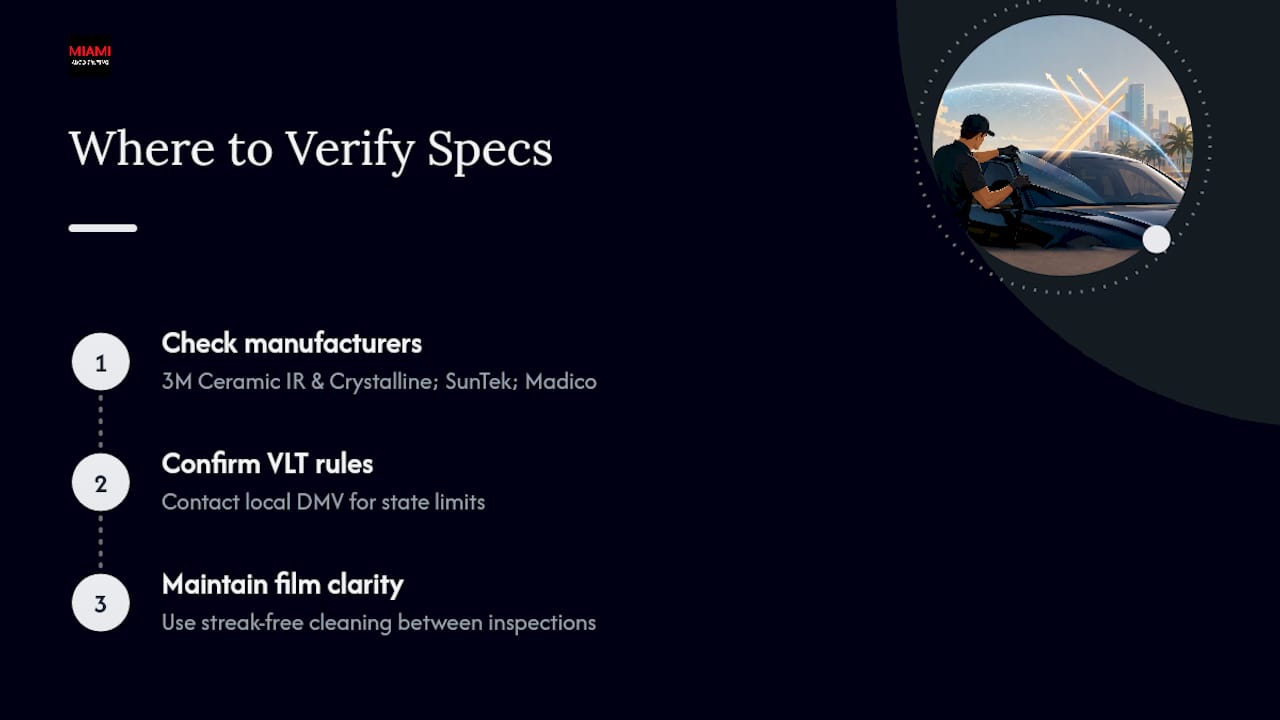
Check manufacturer pages directly for performance data: 3M's Ceramic IR Series, 3M's Crystalline Series, SunTek's CoolSight line, and Madico's Black Pearl Nano-Ceramic. Confirm your state's VLT rules through your local DMV, and keep glass clean between visits using a streak-free cleaning method to protect film clarity long term.
Sources
- 3M™ Automotive Window Film Ceramic IR Series | 3M United States
- Clear Ceramic Tint | SunTek CoolSight
- Black Pearl® Nano-Ceramic | Madico, Inc.