
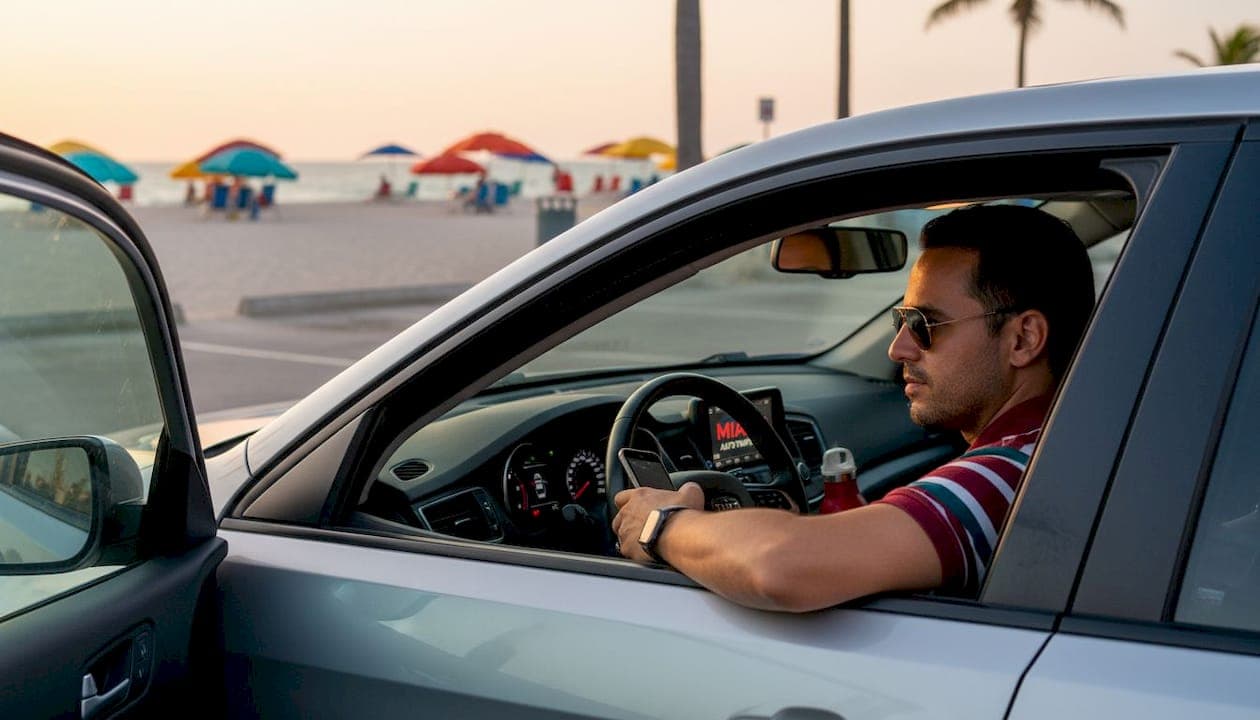
Standard car glass blocks almost nothing when it comes to the ultraviolet radiation beating down on Miami roads. Your factory windows let in UVA rays that penetrate deep into the skin, contributing to the cumulative sun exposure linked to skin cancer — and most drivers never think twice about it. What is ceramic window tint? It's the film technology that changes that equation entirely, blocking nearly all harmful UV rays while rejecting infrared heat, reducing glare, and doing all of it without making your car look like a limo. If you've been putting off tinting because you thought it was just a style choice, this guide will change your mind.
Table of Contents
- What is ceramic window tint and how does it work?
- Heat reduction and UV protection benefits for Miami drivers
- Ceramic tint vs. other window tint types: comparison and clarity
- Practical considerations: installation, maintenance, and legal aspects in Miami-Dade County
- How to choose the right ceramic window tint product and installer in Miami
- Why ceramic tint is more than just an aesthetic upgrade for Miami drivers
- Get the best ceramic window tint installed in Miami with expert service
- Frequently asked questions
Key Takeaways
| Point | Details |
|---|---|
| Nanotechnology-based tint | Ceramic window tint uses nano-ceramic particles to block heat and UV rays without affecting visibility or electronics. |
| Superior heat and UV protection | It can block up to 99.9% of UV rays and reject 70–90%+ of infrared heat, keeping your car cooler and safer. |
| Clear options available | You don’t have to choose dark tint; ceramic films can be nearly clear with high heat rejection. |
| Installation and curing | Proper professional installation requires a curing period of up to 20 days and care to avoid damage during this time. |
| Choose certified installers | Selecting reputable brands and authorized local installers ensures the best results and warranty coverage. |
What is ceramic window tint and how does it work?
To understand why ceramic tint is worth your investment, let's explore exactly what it is and how it works.
Ceramic window tint is a high-performance window film made up of multiple polyester layers with nano-ceramic particles embedded throughout. These are not metallic particles, not dye, and not carbon. Ceramic tint integrates nano-ceramic particles, tiny inorganic beads that absorb, reflect, or scatter UV and infrared radiation as sunlight passes through the glass. The result is a film that stops heat and UV at the molecular level before it ever reaches you or your interior.
What sets ceramic apart from older tint technologies is that it does its job without touching your electronics. No signal blocking, no GPS disruption, no interference with your backup camera or Bluetooth. You get maximum protection and zero performance tradeoffs.
Here's what makes ceramic tint stand out technically:
- Nano-ceramic particles absorb and scatter infrared (IR) and UV radiation rather than relying on dye or metal layers
- Near 99.9% UV blocking protects skin and prevents interior fading on seats, dashboards, and trim
- Superior IR heat rejection keeps cabin temperatures significantly lower without requiring extreme film darkness
- No signal interference because the film contains zero metal content
- Long-term optical clarity with no fading, bubbling, or discoloration over years of Florida sun exposure
You can read more about the benefits of ceramic window tint and how they stack up against other film types before making your decision.
Heat reduction and UV protection benefits for Miami drivers
With a technical understanding established, let's focus on the specific benefits ceramic tint offers for Miami drivers concerned about heat and UV risks.
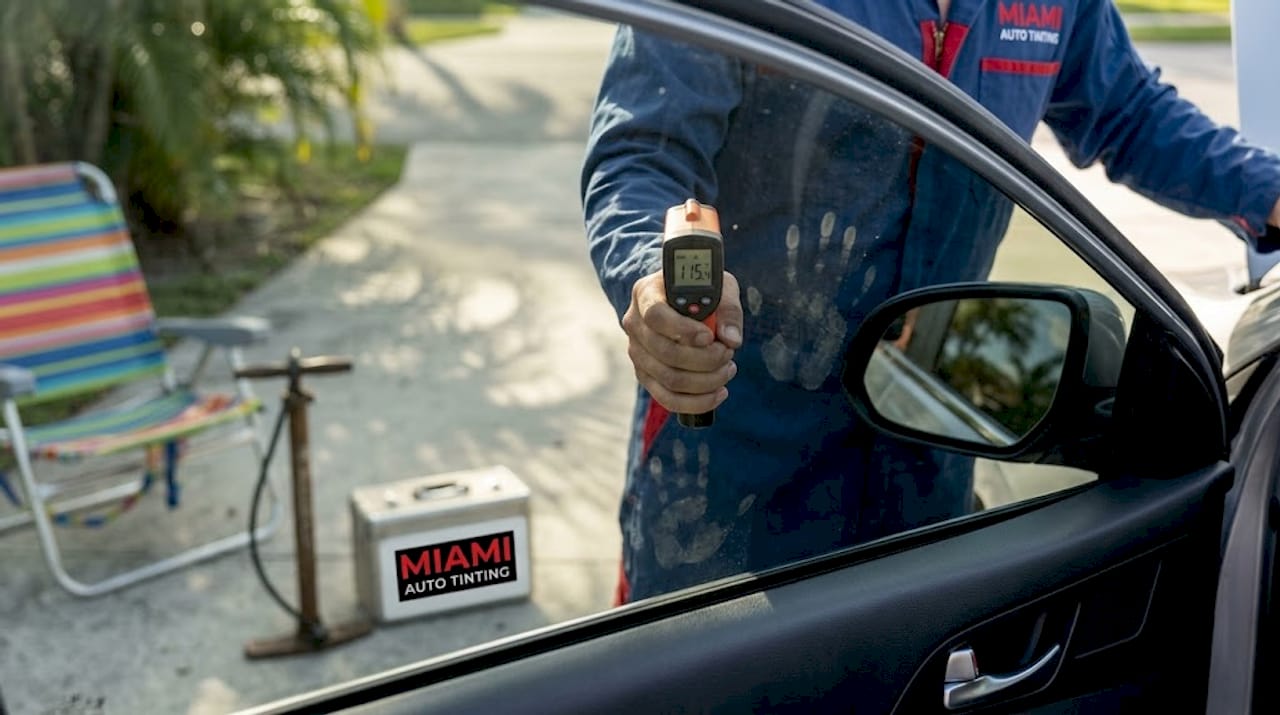
Miami-Dade County sits at a latitude and humidity level where UV exposure is among the most intense in the continental United States. Your car is essentially a greenhouse on wheels. Standard factory glass does almost nothing to stop UVA rays, and even a 20-minute commute on I-95 adds up over years of exposure.
Ceramic tint blocks up to 99.9% of UVA/UVB rays and rejects 70 to 90 percent or more of infrared heat, which is the radiation responsible for that suffocating blast of heat when you open your car door. That's not a minor improvement. On a 95-degree Miami afternoon, the difference in cabin temperature between an untinted car and a ceramic-tinted one can exceed 30 degrees Fahrenheit.
"Certified UV-blocking window films are a science-backed, proactive health measure to reduce cumulative UV exposure, which is linked to 85 to 90% of skin cancers." — Skin Cancer Foundation
The health angle matters more than most people realize. The Skin Cancer Foundation actually recommends certified UV-blocking window film as a legitimate sun safety tool, not just a comfort upgrade. That puts ceramic tint in the same category as sunscreen and protective clothing when it comes to daily UV defense.
The practical benefits for Miami drivers include:
- Skin protection from UVA and UVB rays during every commute, every errand, every road trip
- Lower cabin temperatures that reduce the load on your air conditioning and improve fuel economy
- Glare reduction that makes driving safer on bright, reflective Miami roads and over water
- Interior preservation because UV rays fade leather, vinyl, and fabric over time
Explore the full breakdown of car window tint benefits in Miami to see how each factor adds up across Florida's year-round sun season.
Ceramic tint vs. other window tint types: comparison and clarity
Now that you know why ceramic tint excels, let's compare it directly with other common tint types to clarify the advantages.
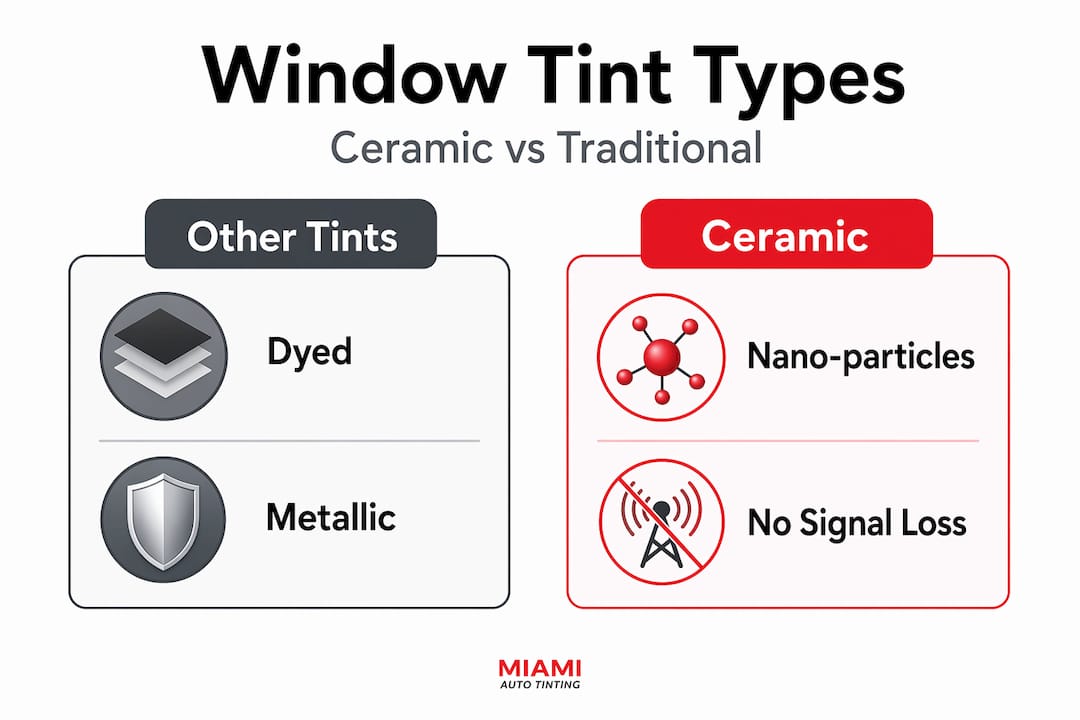
There are three major categories of window film you'll encounter: dyed, metallic, and ceramic. Each has a different mechanism, different performance level, and a very different lifespan in a market like Miami where your car faces intense sun 365 days a year.
Dyed tints are the entry-level option. They rely on a layer of dye to absorb heat, but the color fades with UV exposure, which is exactly the thing you're trying to block. Heat rejection is low, UV protection is minimal, and the look degrades within a few years. Metallic tints perform better on heat but introduce a new problem: metal particles in the film reflect radio waves, which can disrupt GPS, cellular signals, and satellite radio. For drivers who rely on navigation and hands-free calling, that's a real issue.
Ceramic tint does not interfere with electronics unlike metallic tints, and it outperforms dyed tints on heat rejection by a wide margin. One of the most important ceramic window tinting facts that surprises people is that ceramic tint can be nearly clear and still deliver maximum heat rejection. You do not have to go dark to get protection.
| Feature | Dyed tint | Metallic tint | Ceramic tint |
|---|---|---|---|
| Heat rejection | Low | Moderate | Excellent |
| UV protection | Minimal | Moderate | Near 99.9% |
| Signal interference | None | Yes | None |
| Fading over time | High | Moderate | Very low |
| Optical clarity | Moderate | Reflective/shiny | Excellent |
| Ideal for Miami | No | Not recommended | Yes |
Pro Tip: When comparing ceramic vs carbon window tints or ceramic vs dyed window tint, always ask for the film's Total Solar Energy Rejected (TSER) rating. That single number tells you more about real-world heat performance than any marketing claim.
Practical considerations: installation, maintenance, and legal aspects in Miami-Dade County
Understanding practical factors like installation and legal rules is key to making a confident choice for your vehicle.
Window tinting is not a weekend DIY project when you're investing in quality ceramic film. Professional installation matters because the film must be applied without air bubbles, contaminants, or misalignment, and any errors become very visible once the film cures. Film installation is a precise multi-day process, and slight haziness or water pockets are completely normal. They resolve on their own within 15 to 20 days. Do not roll down your windows for at least 3 to 5 days after installation to avoid lifting or damaging the film edges.
Here's what the installation and care process typically looks like:
- Surface preparation — glass is thoroughly cleaned to remove dust, debris, and oils before film application
- Film cutting and fitting — the tint is precision-cut to match each window using computerized templates or manual trimming
- Application — film is applied with a solution that allows repositioning before final squeegee adhesion
- Curing period — allow 15 to 20 days for full clarity and adhesion; expect some temporary haziness
- Post-install care — clean only with mild, ammonia-free cleaners and a soft microfiber cloth
- Avoid harsh conditions — skip car washes for the first week and keep windows rolled up during the cure window
On the legal side, choosing window tint for Miami means understanding Florida's Visible Light Transmission (VLT) laws. Florida law requires non-reflective tint with a minimum of 28% VLT on front side windows and 15% on rear windows and the rear windshield for passenger vehicles. A good installer will verify your final product meets those limits before you leave.
Pro Tip: Ask your installer for a printed certificate or window sticker showing the VLT percentage of the film applied. In Florida, you're legally allowed to carry that documentation to show law enforcement during a traffic stop, which protects you from any tint-related citation.
Review ceramic tint installation tips to go into your appointment fully prepared.
How to choose the right ceramic window tint product and installer in Miami
Finally, learn how to select the best ceramic window tint product and find trusted Miami installers to achieve optimal comfort and protection.
Not all ceramic films are equal. The term "ceramic" has become somewhat loosely used in the industry, so it's worth knowing which products have real backing. 3M Crystalline Black Series offers metal-free nano-layers for superior heat rejection without darkening windows, and comes with a lifetime warranty when installed by authorized dealers. That warranty coverage is a significant differentiator because it tells you the manufacturer stands behind the performance for the life of your vehicle ownership.
We install three proven film lines: 3M IR, 3M Color Stable, and Iviron Kollmax ceramic tint. Each is verified for performance and approved for professional installation. When you're evaluating any product or installer, here's what to ask:
- What is the TSER rating of this film? Higher is better for heat rejection.
- Does the film carry manufacturer warranty coverage, and does your shop honor it?
- Are you an authorized dealer? Third-party installers may void manufacturer warranties.
- What VLT percentage does this film provide, and does it comply with Florida law?
- Do you offer mobile installation? This is one of the clearest benefits of mobile window tinting: the installer comes to you, saving you time and protecting your vehicle on-site.
- What cleaning and maintenance instructions should I follow post-install?
Explore the full lineup of 3M ceramic film products to compare options or check mobile window tint services Miami if scheduling a shop visit doesn't work for your week.
Why ceramic tint is more than just an aesthetic upgrade for Miami drivers
Most people come in asking about shade and looks. That's understandable. Window tint shades explained by visual comparison is how this industry has always sold itself. But here's what those conversations usually miss: the visual darkness of a tint film tells you almost nothing about its actual protective performance.
You can install a very dark dyed film and get worse UV protection than a nearly clear ceramic film. That's not a subtle distinction. It's the difference between a product that looks like protection and one that actually delivers it. Ceramic tint can be nearly clear while offering maximum heat rejection, which completely dismantles the idea that you need limo-dark windows to benefit from tinting. For Miami drivers who want factory-fresh aesthetics with real-world performance, that changes the entire calculation.
One of the most persistent mobile tinting misconceptions we encounter is that professional installation takes too long or requires you to leave your car at a shop for days. Mobile service eliminates that entirely. The installer comes to your home, your office, your parking lot. Your schedule stays intact. That's one of the concrete advantages of car window tint through a mobile provider that doesn't get discussed enough.
The other side of this is the long-term cost argument. Drivers who skip ceramic tint to save upfront money often pay more over time in air conditioning fuel costs, interior damage from UV fade, and replacement tint when cheaper films bubble and discolor. Ceramic tint installed correctly with a trusted film brand is a one-time investment that holds for years without degradation. We've seen cars in Miami with ceramic film still performing strong after a decade. That's the benefits of beyond looks argument made real.
Get the best ceramic window tint installed in Miami with expert service
If you're ready to enjoy the heat reduction and UV protection benefits of ceramic tint, here's how to get expert installation in Miami today.
We provide ceramic window tint Miami mobile service across all of Miami-Dade County, bringing professional installation directly to your home, office, or wherever your car is parked. We use only proven films including 3M IR, 3M Color Stable, and Iviron Kollmax ceramic tint, all backed by manufacturer warranties. Pricing starts at $249, making high-performance ceramic protection genuinely accessible. Explore our full selection of 3M ceramic window tint Miami options or book directly through our mobile window tinting service Miami page to schedule a same-day or next-day appointment with our certified team.
Frequently asked questions
What makes ceramic window tint better than traditional dyed tint?
Ceramic tint uses nano-ceramic particles that block more heat and UV without fading or disrupting electronics, while dyed tints degrade faster and offer far less heat rejection over time.
Can ceramic window tint be clear and still reduce heat effectively?
Yes. Ceramic tint can appear nearly clear while still rejecting up to 90% of infrared heat, making it ideal for drivers who want protection without a dark-window appearance.
How long does it take for ceramic window tint to fully cure after installation?
Ceramic tint takes 15 to 20 days to fully adhere and clear up. Avoid rolling down windows for at least 3 to 5 days after installation to prevent edge lifting.
Is ceramic window tint legal in Miami-Dade County?
Yes, ceramic tint is legal in Miami-Dade County as long as it meets Florida's VLT requirements, which set a minimum of 28% VLT for front side windows on passenger vehicles.
Does ceramic window tint interfere with GPS or mobile signals?
No. Since ceramic tint contains no metal content, it has zero interference with GPS, cellular, Bluetooth, or satellite radio signals.