
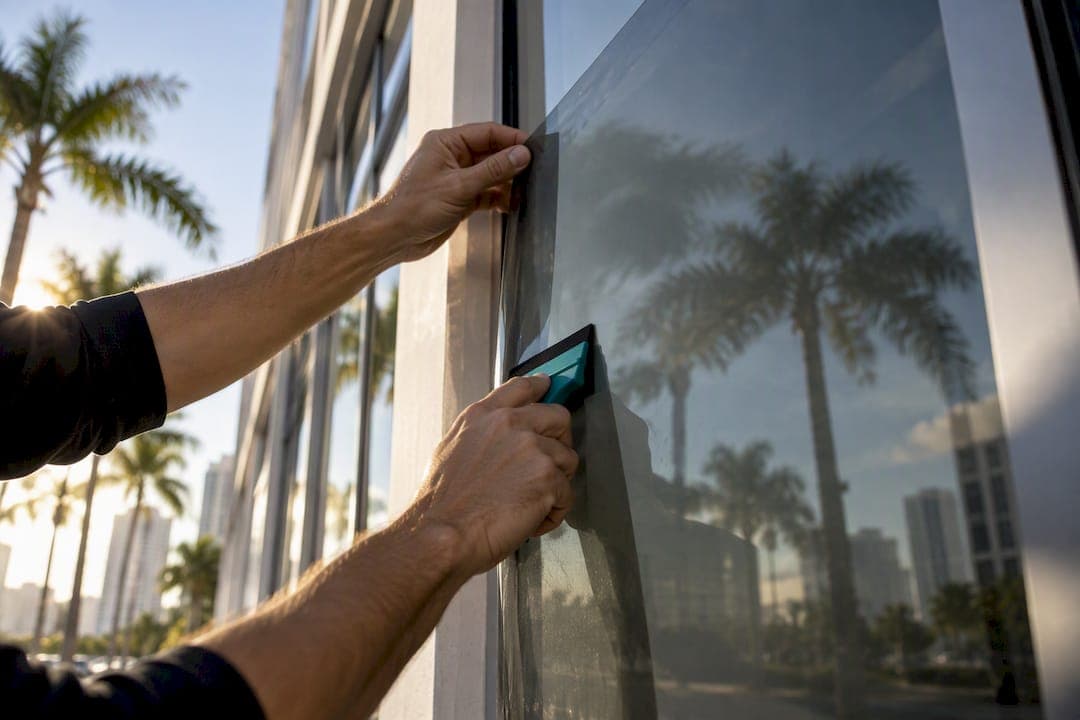
Non-reflective window tint is a low-gloss, non-metalized film that cuts heat and glare without turning your glass into a mirror. It relies on ceramic, dyed, carbon, or other engineered materials instead of metal particles, so it keeps a clean appearance and won't interfere with electronics. Choose it when exterior appearance matters, when your HOA or building code restricts reflectivity, or when you need to protect GPS, satellite radio, or 5G signal strength.
TL;DR:
- Non-metalized films protect signals and electronics, making them ideal for GPS, satellite radio, and 5G reliance, especially in connected vehicles.
- Spectrally selective non-reflective films can match reflective films' solar heat rejection without creating a mirror finish, reducing glare and maintaining appearance.
- Ceramic films offer the best long-term infrared heat rejection and fade resistance, while dyed films are cheaper but fade or turn purple over time.
- Proper professional installation and curing are essential to prevent bubbling, delamination, and early failure of window tint films.
- Buyers should prioritize NFRC-certified VLT, SHGC, and U-factor data over marketing images to ensure the film's real-world energy and visibility performance.
Table of Contents
- Understanding VLT, SHGC, and emissivity ratings
- Non-reflective vs reflective film: what actually changes
- Comparing ceramic, dyed, carbon, and engineered films
- Choosing the right non-reflective tint for your project
- Getting installation, curing, and upkeep right
- What field installations show about non-reflective film performance
- The spec sheet matters more than the sales pitch
- Getting a mobile quote for non-reflective tint
- Sources
- FAQ
Understanding VLT, SHGC, and emissivity ratings
Before you compare films, you need to know what the numbers on a datasheet actually measure. Visible Light Transmission, often written as VLT or VT, tells you how much visible light passes through the glass and film combined. It's different from exterior reflectance, which measures how much light bounces back off the surface toward someone looking at your window. A film can have moderate VLT and still look shiny if its reflectance is high, which is exactly the look non-reflective films avoid.
Solar Heat Gain Coefficient, or SHGC, measures how much solar heat makes it through the window into the space behind it. DOE guidance on energy-efficient windows explains that adding tint or a low-e coating can lower SHGC substantially, and that spectrally selective low-e coatings can hold VT steady while still cutting solar gain. Emissivity describes how much heat a surface radiates. Low-e coatings have low emissivity, which means they reflect radiant heat back before it enters the room.
When you read an NFRC or manufacturer table, look for:
- VLT/VT percentage for the film-and-glass combination, not just the raw film
- SHGC value on a 0 to 1 scale, where lower means less heat gain
- U-factor if you're comparing whole-window energy performance
- Whether the numbers apply to your glazing type (single pane, dual pane, or architectural glass)
Non-reflective vs reflective film: what actually changes
Reflective films use a metalized layer that bounces visible and infrared light off the surface like a mirror, which delivers strong solar reflectance but creates that unmistakable outward shine. Non-reflective ceramic and multilayer films work differently: they absorb and scatter infrared energy across the spectrum rather than reflecting it in one direction, so they cut heat while keeping a flat, low-gloss finish.
Reflective film tends to win when maximum solar reflectance is the only priority, such as a west-facing commercial facade with no aesthetic restrictions. Non-reflective film wins almost everywhere else:
- Appearance: No mirror effect, which matters for HOA rules, historic districts, or luxury vehicles
- Electronics: Metalized films can weaken GPS, radio, and cell signal; non-metalized films generally don't
- Privacy at night: Reflective film loses its daytime privacy advantage after dark, since interior lights make either film type transparent from outside
Non-metalized films are explicitly built to avoid signal interference. 3M's product documentation states that non-metalized construction won't interfere with electronics, satellite radio, GPS, or mobile devices, a detail that matters more every year as vehicles and buildings add more connected sensors.
Comparing ceramic, dyed, carbon, and engineered films
Each film family trades off cost, heat rejection, and finish differently, and matching the right one to your project starts with knowing what each is actually made of.
Ceramic film uses non-metalized ceramic particles that reject infrared heat while staying color-stable over time. It's electronics-safe by design and holds up better against fading than older film generations, which makes it the common choice for both vehicles and homes that want long-term performance.
Dyed film is the budget option. It uses a layer of dye to darken glass and cut glare, but it offers the lowest heat rejection of the group and can fade or turn purple after years of sun exposure.
Carbon film sits between dyed and ceramic. It rejects more heat than dyed film, keeps a low exterior gloss, and resists fading better, though it typically falls short of ceramic's infrared performance.
Non-metalized engineered films, including spectrally selective products like 3M's Obsidian Series, combine low exterior reflectivity with strong total solar energy rejection and UV protection while avoiding the metal layer entirely.
For architectural glazing, low-e storm windows or coatings are a separate alternative worth considering. Energy notes they can be cost-effective in many climates and often preserve the original exterior appearance better than applied film, since the low-e layer sits inside a separate glazing unit rather than on the existing glass.
Choosing the right non-reflective tint for your project
Matching film to project starts with defining your goal in plain terms: are you trying to keep a car cooler, protect furniture from UV, or meet a building code on reflectivity? Once you know the goal, you can shop by spec instead of guesswork.
- Identify your use case and target VLT. Vehicle windows usually run cooler and darker than legal limits allow, while a living room window might prioritize daylight and choose a higher VLT with strong SHGC reduction.
- Ask for VLT/VT, SHGC, and NFRC certification on any film you're considering, and compare those numbers against the NFRC Certified Products Directory, which lists verified values for real glazing assemblies rather than marketing claims alone.
- Confirm non-metalized construction if you rely on GPS, satellite radio, or in-home Wi-Fi and 5G signal strength near the tinted glass.
- Watch for red flags: no NFRC data, vague percentages with no source, no written warranty, or an installer with no local references.
- Get documentation after installation, including the exact film model, its VLT percentage, and a signed warranty card. This paperwork protects you if the film fails early or fades unevenly.
Pro Tip: Ask for the whole-window SHGC and VT numbers, not just the film's lab rating. Frame and glass type change the real-world performance more than most buyers expect.
For drivers weighing legal tint limits against heat control, our guide on VLT and safe tint ranges breaks down what numbers keep you compliant.
Getting installation, curing, and upkeep right
Curved automotive glass and large commercial panels are unforgiving of trapped air and misaligned edges, which is why professional installation matters more as the glass gets more complex. A shop with computer-cut templates and mobile equipment can fit film precisely at your location instead of asking you to bring the vehicle or property to them.
Curing time varies by film and climate, but expect several days before the film fully bonds and any light haziness clears. Signs of proper adhesion include a flat, even surface with no visible bubbles or lifted edges.
- Do clean tinted glass with a soft cloth and ammonia-free cleaner
- Do wait for full cure time before rolling down freshly tinted car windows
- Don't use abrasive sponges or window scrapers on the film surface
- Don't ignore small bubbles early, since they often signal incomplete adhesion that gets worse over time
Bubbling, delamination, and edge lifting are the most common failure modes, and catching them early usually means a simple repair instead of a full re-tint. If you notice any of these, call your installer rather than trying to fix it yourself. For drivers dealing with fogging on newly tinted or coated glass, basic anti-fog prep steps can help keep visibility clear during the first few cold mornings after installation.
What field installations show about non-reflective film performance
On the vehicles and properties we work on across Miami-Dade, 3M Ceramic IR, 3M Color Stable, and Iviron KoolMax make up most of our non-reflective installs. Each is chosen for a reason: 3M's ceramic lines hold color and heat rejection over years of South Florida sun, and Iviron KoolMax offers a non-metalized ceramic option at a different price point for customers comparing brands.
Across these jobs, the consistent outcomes are lower cabin and interior temperatures, a finish that doesn't drift toward purple or bubble at the edges, and no reported interference with GPS or phone signal. Sensor-safe, non-metalized construction also matters for newer vehicles with lane-assist cameras and EV models where every bit of range counts.
Mobile installation means the film goes on at your driveway or office lot, with the same computer-cut precision a shop would use.
Non-metalized film construction won't interfere with electronics, satellite radio, GPS, or mobile devices.
— Jose
The spec sheet matters more than the sales pitch
The window tint industry sells on darkness and shine, but the numbers that actually predict your comfort and your electric bill are VLT, SHGC, and whether the film is metalized. Most buyers pick a tint by eyeballing a sample in a showroom, which tells you nothing about how that film performs on your specific glass, in your climate, over five years.

The bigger blind spot is assuming reflective automatically means better heat rejection. Spectrally selective, non-metalized films can match or approach reflective performance while skipping the mirror finish and the signal interference that comes with metal content. If you take one thing from any film comparison, request the NFRC or manufacturer SHGC and VT numbers before you look at a single swatch. Appearance is a legitimate priority, but it should be the second decision, not the first.
Getting a mobile quote for non-reflective tint
Once you know the film type and VLT range you want, the next step is getting it installed correctly. A local mobile window tinting service offers installation of premium ceramic and color stable films, as well as non-metalized ceramic options, at customer locations covering automotive, residential, and commercial glass.
Mobile installation matters for fit and finish because computer-cut templates only help if the technician applying them has room to work without rushing a shop schedule. It also protects your warranty, since improper curing or contamination during install is one of the most common reasons film fails early.
To get an accurate quote, have ready:
- Window count and type (vehicle windows, home windows, or commercial storefront glass)
- Your target VLT or privacy goal
- A photo of the vehicle or property
- Your general location in Miami-Dade County for scheduling
Options like 2 Front Windows, Windshield Tint, and Full Car + Windshield packages are listed with upfront pricing, or you can review the 3M film lineup before requesting a quote.
Sources
- 3M™ Automotive Window Film Obsidian Series | 3M United States
- Measure Guideline: Energy-Efficient Window Performance and Selection
- Certified Products Directory
- Low-E Storms: The Next "Big Thing" in Window Retrofits
FAQ
What does non-reflective tint mean?
Non-reflective tint is a film made without a metalized layer, so it doesn't create a mirror-like shine on the outside of the glass. It typically uses ceramic, dyed, or carbon materials to cut heat and glare while keeping a flat, low-gloss appearance.
Is reflective tint better than regular tint?
Reflective tint often delivers stronger raw solar reflectance, which can help in climates with extreme heat, but it creates a visible mirror finish and can interfere with electronics like GPS and satellite radio. Non-reflective options such as 3M's non-metalized films trade a small amount of reflectance for a natural look and signal-safe construction, which makes them the better fit for most vehicles and homes.
What is a good non-reflective tint for house windows?
Ceramic film is a common choice for residential windows because it rejects heat without darkening the glass excessively or creating an outward shine that might conflict with HOA rules. For architectural projects focused purely on energy performance, a low-e coating or storm window can serve as an alternative to applied film.
Can you see through reflective tint at night?
Reflective tint loses much of its daytime privacy advantage after dark, since interior lighting makes the glass transparent from outside once it's brighter inside than out. This applies to non-reflective films as well, so neither type offers reliable nighttime privacy without curtains or blinds.