
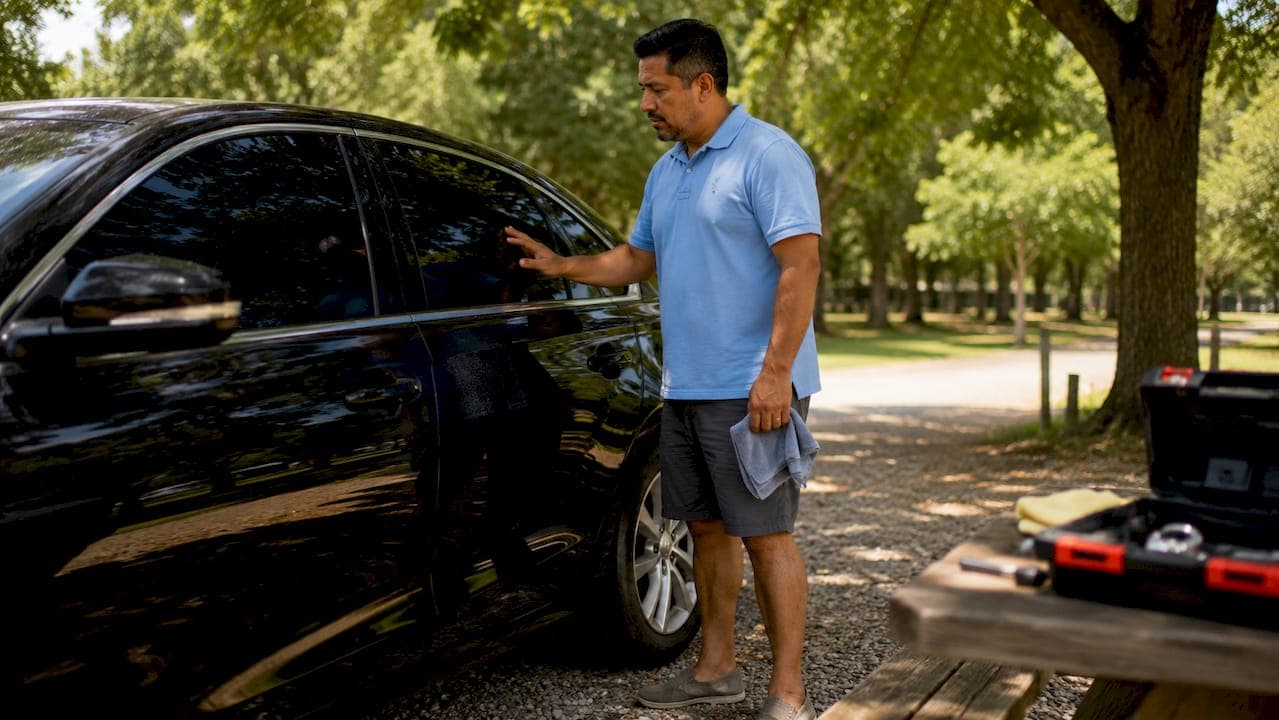
Tint film clarity is defined as the optical transparency and visual sharpness of a window film after installation, measuring how cleanly light passes through without distortion, haze, or color shift. For car owners, this matters more than most people realize. Poor clarity shows up as ghosting at sunrise, a milky haze on sunny highways, or doubled reflections at night. Understanding tint film clarity means knowing which film types, VLT levels, and manufacturing standards actually protect your visibility while still blocking heat and UV rays. Films like 3M IR, 3M Color Stable, and Iviron Kollmax ceramic tint each handle this balance differently.
What determines tint film clarity?
Tint film clarity is governed by two things: the film's physical composition and the quality of its manufacturing. Get either one wrong, and you end up with a film that looks fine on the showroom sample but distorts your view on the road.
Visible Light Transmission (VLT) is the most cited clarity measure in the industry. It expresses the percentage of visible light that passes through both the glass and the film combined. Typical industry VLT values are 5%, 20%, 35%, 50%, and 70–85%. A 5% VLT film is limousine dark; a 70% film is nearly transparent. Higher VLT means more light passes through, which directly supports daytime and nighttime visibility.
Beyond VLT, optical uniformity is what separates a premium film from a budget one. Ghosting and low-angle haze are the two most common clarity defects. These defects come from unstable nanoparticle distribution, poor lamination, and film construction that sacrifices optical quality. They cause doubled images and a milky haze under glare-heavy conditions, particularly at sunrise and sunset. This is a film defect, not an installer error.
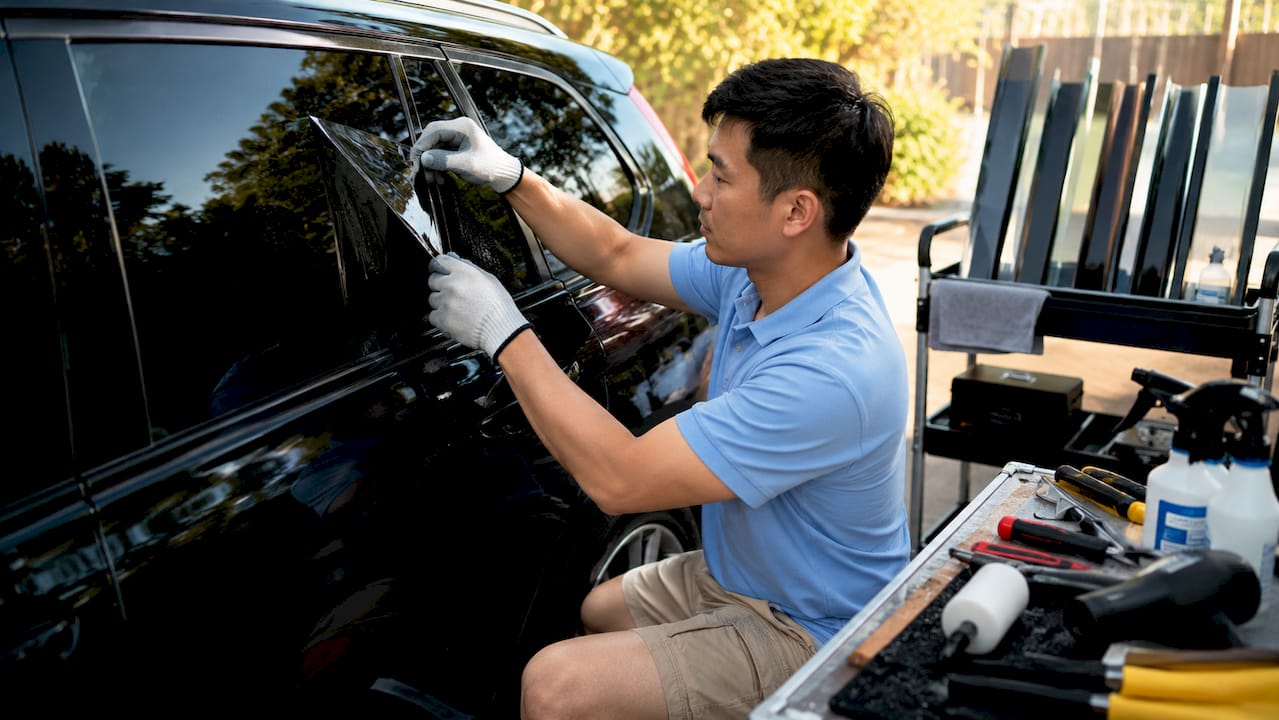
Nano-ceramic particles are the gold standard for optical clarity in modern films. Ceramic tint uses nano-sized particles to block infrared heat without affecting visible light or optical sharpness, unlike dyed or carbon films that absorb light unevenly. Dyed films are especially prone to discoloration over time, which degrades both color accuracy and clarity. Carbon films perform better than dyed but still introduce a slight amber cast that some drivers notice.
Lamination quality and coating consistency also play a role. A film with uneven adhesive layers will develop micro-bubbles and stress points that scatter light. This is why the same VLT percentage can look crystal clear in one brand and hazy in another.
- VLT percentage: Higher values mean more light passes through and better daytime clarity
- Nanoparticle distribution: Uneven distribution causes ghosting and haze under glare
- Film lamination: Poor bonding creates micro-bubbles that scatter light
- Film type: Ceramic outperforms carbon and dyed in long-term optical consistency
- Coating uniformity: Inconsistent coatings shift color and reduce sharpness
Pro Tip: Before committing to any film, ask your installer to show you a sample installed on actual glass, then view it from inside the car under direct sunlight and at a low angle. Ghosting only shows up under the right conditions.
How do ceramic, carbon, and dyed films compare?
The difference in tint clarity across film types is significant enough to affect your daily driving experience. Here is how the three main categories stack up.
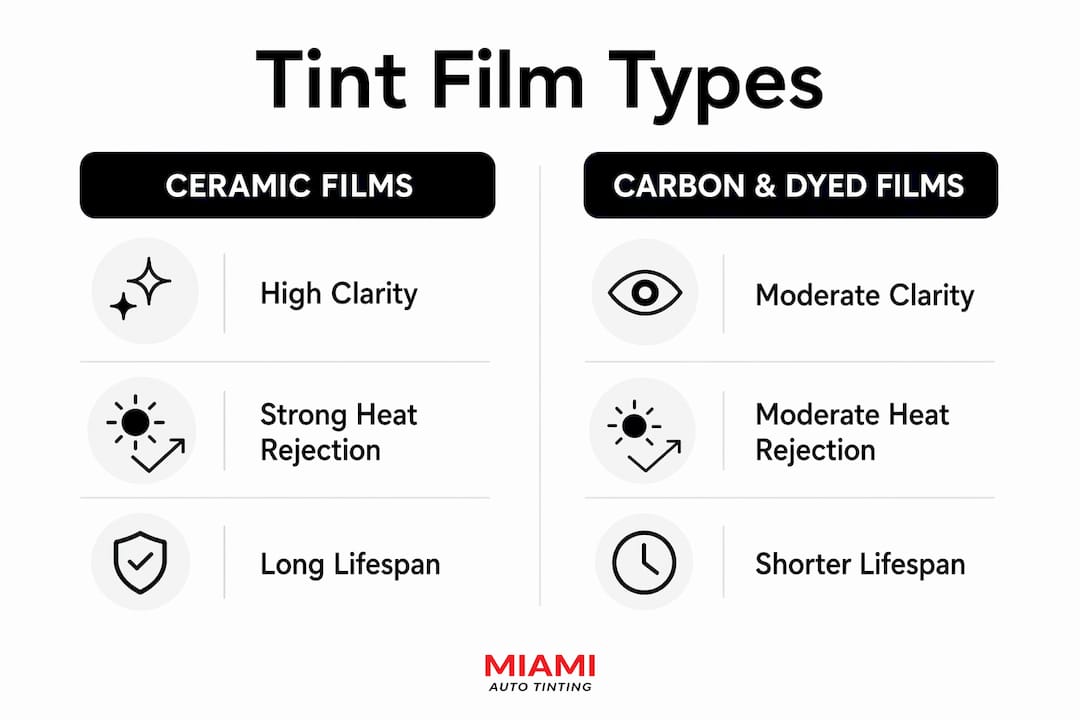
Ceramic films reject up to 80% of infrared heat while maintaining high optical clarity, with a lifespan of 15 or more years. That outperforms carbon films by 15–25% in heat rejection. The optical advantage comes from the ceramic particle structure, which blocks heat energy without absorbing or scattering visible light. You get a clean, neutral view through the glass regardless of the VLT level you choose.
Carbon films offer moderate clarity with a slight amber or brown cast. They last 8–12 years and provide decent heat rejection, but they do not match ceramic performance in either category. The color cast is subtle in most lighting but becomes noticeable in overcast conditions or when comparing side by side with ceramic.
Dyed films are the weakest option for clarity. They absorb solar energy rather than reflecting it, which means they heat up and eventually fade. As the dye breaks down, the film shifts purple or brown, and the optical quality drops noticeably. They also provide the least heat rejection of the three types.
| Film Type | Optical Clarity | Heat Rejection | Lifespan | Relative Cost |
|---|---|---|---|---|
| Ceramic (e.g., 3M IR, Iviron Kollmax) | Excellent, neutral | Up to 80% IR blocked | 15+ years | Highest |
| Carbon | Good, slight amber cast | Moderate | 8–12 years | Mid-range |
| Dyed | Fair, fades over time | Low | 3–5 years | Lowest |
For car owners in Miami's intense sun, ceramic is the clear winner. The benefits of ceramic window tint go beyond aesthetics. You get a film that stays optically consistent for over a decade while keeping your cabin cooler without going darker.
How do VLT levels affect visibility and aesthetics?
Understanding tint levels starts with one key fact: darkness and heat rejection are not the same thing. Most car owners assume a darker film blocks more heat. That assumption is wrong.
Some lighter ceramic tints outperform darker dyed films in both heat rejection and clarity. A 50% VLT ceramic film can keep your cabin cooler than a 20% dyed film while giving you far better nighttime visibility. This is the most important misconception to correct before you choose a tint level.
Films with 70% or higher VLT can still block 95–99% of UV radiation through chemical composition rather than darkness. That means you can run a nearly clear film on your windshield and still get full UV protection. Clear ceramic windshield films at 70%+ VLT block UV and 40–60% of infrared heat while remaining virtually invisible. This matters for drivers who want comfort without a dark appearance.
Here is how the common VLT levels break down in practice:
- 70–85% VLT: Nearly clear, used on windshields and front side windows for legal compliance; excellent clarity
- 50% VLT: Light tint, good balance of privacy and visibility; strong nighttime clarity
- 35% VLT: The most popular choice; solid privacy, good daytime clarity, acceptable at night
- 20% VLT: Dark tint; noticeably reduces nighttime visibility; best for rear windows
- 5% VLT: Limousine dark; near-zero nighttime visibility from inside; rear windows only
Legal compliance adds another layer to this decision. Total VLT depends on the combined factory glass and film, not just the film alone. Factory privacy glass already reduces light transmission. If you ignore that and add a 35% film to glass that already reads at 70%, your actual combined VLT may fall below your state's legal minimum. Always measure the combined result.
Pro Tip: Pick the lightest legal tint that meets your heat and privacy needs. You can always add a ceramic film with high IR rejection at a higher VLT and get better comfort than a dark dyed film at half the VLT.
How to choose the right tint film for your car
Choosing the right tint film comes down to matching your driving habits, your environment, and your legal requirements. Here is a practical process to follow.
-
Identify your primary goal. Are you tinting for heat rejection, UV protection, privacy, or aesthetics? Each goal points to a different VLT range and film type. Heat and UV protection favor ceramic at 35–50% VLT. Privacy favors 20% on rear windows.
-
Check your state's legal VLT limits. Florida law sets specific limits for front side windows, rear side windows, and rear glass. Measure your factory glass VLT before selecting a film so the combined result stays legal.
-
Test film samples in real conditions. Optical clarity should be the first buying criterion. View installed samples from inside the car under direct sunlight, at a low angle, and at dusk. Ghosting and haze only reveal themselves under specific lighting.
-
Choose film type based on longevity. If you plan to keep your car for more than five years, ceramic pays for itself. Dyed films degrade visually within three to five years, meaning you will pay for a reinstall anyway.
-
Prioritize professional installation. Even a premium film like 3M IR or Iviron Kollmax can develop bubbles and edge lifting if installed incorrectly. A certified installer with experience in your specific vehicle model matters. Southmiamitint's mobile service brings that expertise to your driveway.
-
Avoid the darkness trap. Do not choose a darker film just because it looks more aggressive. A 35% ceramic film from a trusted brand will outperform a 20% dyed film in every measurable category except initial cost.
For a deeper look at how these films compare in Miami's climate specifically, the ceramic vs. carbon tint comparison from Southmiamitint breaks down real-world performance differences worth reading before you book.
Key takeaways
Tint film clarity is determined by film composition, VLT level, and manufacturing quality, and ceramic films deliver the best long-term optical performance across all three.
| Point | Details |
|---|---|
| Clarity is not just darkness | Higher VLT ceramic films can outperform darker dyed films in both heat rejection and visibility. |
| Ceramic leads in optical quality | Films like 3M IR and Iviron Kollmax maintain neutral, distortion-free clarity for 15+ years. |
| Ghosting is a film defect | Low-angle haze and doubled images come from poor nanoparticle distribution, not installer error. |
| Combined VLT determines legality | Factory glass tint plus film tint equals your actual legal VLT; measure both before installing. |
| Test before you commit | Always view film samples from inside the car under direct sunlight and at low angles to catch haze. |
What most car owners get wrong about tint clarity
I have talked to hundreds of car owners about window tinting, and the same misunderstanding comes up almost every time. People walk in wanting the darkest tint they can legally get, assuming that darkness equals performance. It does not.
The customers who end up most satisfied are the ones who prioritize optical clarity first. They choose a 35% or 50% VLT ceramic film, drive for a week, and then tell me they cannot believe how much cooler the cabin is without the car feeling like a cave. The ones who go straight to 20% dyed film to save money often come back within two years because the film has turned purple and their rear visibility at night feels genuinely unsafe.
The ghosting issue is one I take seriously. I have seen brand-name films from reputable distributors that still show low-angle haze under Miami's morning sun. That is a manufacturing quality issue, and it is why Southmiamitint works specifically with 3M IR, 3M Color Stable, and Iviron Kollmax. These are not random films off a wholesale catalog. They are products with consistent nanoparticle distribution and lamination quality that I can stand behind after installation.
My honest recommendation: treat clarity as your first filter, not your last. Pick a film that passes the glare test, then choose your VLT level. You will drive with that film every day for the next decade. The extra cost of ceramic pays off every single morning commute.
— Jose
Get premium ceramic tint installed at your door
If you want the clarity and heat rejection of a true ceramic film without the hassle of dropping your car off at a shop, Southmiamitint brings the installation to you anywhere in Miami-Dade.
Southmiamitint installs 3M IR, 3M Color Stable, and Iviron Kollmax ceramic tint on cars, trucks, and SUVs with a fully mobile setup. These films deliver the optical consistency and infrared rejection that dyed and carbon films simply cannot match. Whether you want a nearly clear windshield film or a 35% ceramic on your side windows, every job is done by a certified installer at your home or office. Check out ceramic window tint pricing and booking to see current rates and schedule your installation today.
FAQ
What does tint film clarity actually mean?
Tint film clarity refers to how cleanly and sharply you can see through a tinted window, measuring optical transparency without distortion, haze, or color shift. It is determined by film composition, nanoparticle quality, and lamination consistency.
Does a darker tint always mean better heat rejection?
No. Darker tint does not guarantee better heat rejection; high infrared rejection specs matter more than darkness. A lighter ceramic film at 50% VLT can outperform a dark dyed film at 20% VLT in both heat blocking and optical clarity.
What is VLT and why does it matter for visibility?
VLT stands for Visible Light Transmission, the percentage of light that passes through your glass and film combined. Lower VLT means a darker tint and reduced nighttime visibility; higher VLT keeps the view clearer while still allowing heat and UV protection through ceramic film technology.
What causes ghosting in window tint films?
Ghosting comes from uneven nanoparticle distribution or lamination defects in the film itself, not from the installation process. It appears as doubled images or a milky haze, most visibly under low-angle glare at sunrise or sunset.
How do i know if my tint is legally compliant?
Legal compliance depends on combined VLT from both your factory glass and the film. Measure your factory glass transmission first, then select a film so the combined result meets your state's minimum requirements for each window position.