
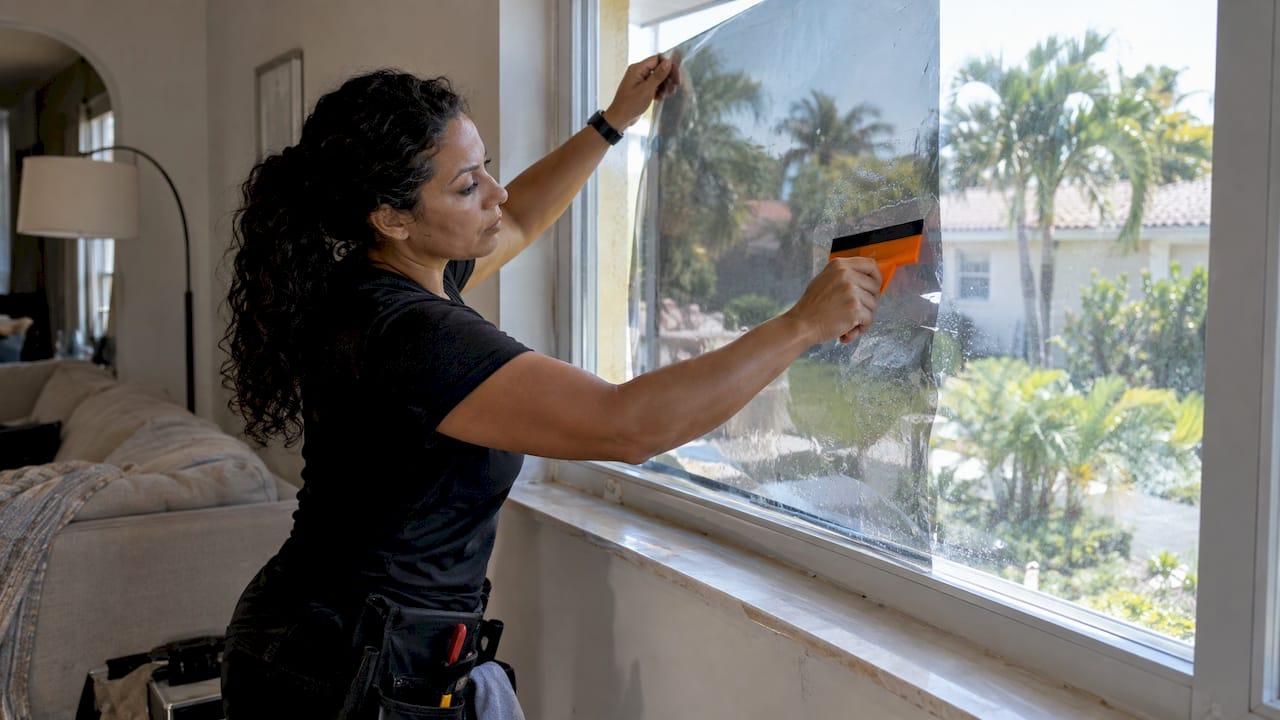
The most effective way to block heat from windows is to stop the sun before it turns into heat inside your space. Outside shading does that best. For cars, and for homes and offices where you can't add awnings or screens, ceramic window film is the permanent, practical fix. It sits on the glass, rejects infrared heat and UV, and works every day without you doing anything. Below you'll find every option ranked, what each does, and what to check first.
TL;DR
- Exterior shading (awnings, solar screens, shutters) stops solar heat before it reaches the glass, so it beats interior coverings, according to the Building America Solution Center.
- Heat-rejection film is the permanent option for car, home and office glass. Industry sources say it can reject as much as 80% of solar heat.
- Curtains, blinds and foil help, but they cover the view or need daily handling. Film keeps the glass clear.
- Before you apply anything, check your glass type (Low-E, double pane) and your vehicle's tint rules.
- In Miami-Dade we install ceramic film at your home, office or driveway, so you never wait at a shop.
Table of Contents
- Why Miami windows get so hot
- How heat gets through glass
- Ways to block heat from windows, ranked
- Blocking heat in your car
- Blocking heat in your home or office
- What to check before you apply anything
- Our perspective
- Get it done at your door
- FAQ
- Sources
Why Miami windows get so hot
Glass lets sunlight through, and that light becomes heat once it lands on seats, floors and furniture. In Miami the sun is strong for most of the year, so the effect never really stops.
The county's own numbers show the trend. Miami-Dade's Extreme Heat Action Plan says the Miami area has on average 51 more days per year above 90°F than it did 50 years ago. It also expects the highest increase of dangerously hot days (heat index over 100°F) of any U.S. county by mid-century.
BR Energy's page on local cooling loads puts Miami in IECC Climate Zone 1A, hot-humid, with year-round cooling demand and virtually no heating load. In practice, every window that faces east, south or west is working against your air conditioning. A parked car is the same problem in a smaller box.
How heat gets through glass
Sunlight is not just the light you see. According to Facilitiesnet, near-infrared radiation makes up 53% of the solar spectrum, visible light 44% and ultraviolet 3%. More than half of the sun's energy is infrared, which you can't see but which warms everything it touches.

That is why a good heat blocker is not the same as a dark one. A film can reject a lot of infrared and still look light. Darkness only controls visible light.
Two terms help you compare products:
- SHGC (solar heat gain coefficient): the IWFA Automotive Education Guide explains it is a number between 0 and 1. A lower SHGC means less solar heat gets through.
- Visible light transmission (VT): how much visible light passes. This is what you see when you look through the glass.
There are two ways to control solar heat: absorb it or reflect it. The same IWFA guide notes that reflecting products are generally more efficient, though the difference is less evident when a car is moving.
Ways to block heat from windows, ranked
Here is how the main options compare for a Miami-Dade home, office or vehicle.
| Option | Where it works | Heat control | Keeps the view | Lasts |
|---|---|---|---|---|
| Exterior awnings, solar screens, shutters | Homes, offices | Highest for shading | Partly | Years |
| Ceramic window film | Cars, homes, offices | High, passive, always on | Yes | Years, with warranty |
| Reflective foil or Mylar | Home windows | High while in place | No | Temporary |
| Blackout curtains, blinds | Interior | Moderate | No | Years, needs daily use |
| Sealing air leaks | Homes | Supports other methods | n/a | Years |
Exterior shading
The Building America Solution Center states exterior window attachments block solar heat before it reaches the window and are typically more effective than interior ones. The categories it lists include hurricane shutters and operable shutters, solar screens, fixed awnings and operable awnings.
It also gives a simple operating rule: close the attachments during the day and open them at night, when it is cooler outside than inside. That answers the common heatwave question about whether to open or close your windows. During the hot part of the day, keep them shut and shaded. Open them at night only if the outdoor air is actually cooler.
Exterior shading is excellent where you can install it. But a car has no awning, and many condos and office suites can't add exterior hardware. That is where film comes in.
Window film
Heat-rejection film is a thin layer applied to the glass. BuildingGreen's guide to surface-applied films says these films are designed to reject solar heat gain, cut glare and block UV, with a range of light transmission options. It says they are typically about 2 to 7 mils thick and come on rolls 36 to 72 inches wide.
On heat, Facilitiesnet quotes the International Window Film Association's Darrell Smith saying film heat rejection can be as high as 80%. On UV, BuildingGreen says films can block 95 to 99.9%. The IWFA FAQ says film can reduce UV impact by up to 99%, and adds that no film eliminates fading completely. That is a useful reminder for your floors, dashboards and furniture: film slows fading a lot, and it doesn't promise to stop it.
Film does its job without blocking your view or needing a daily routine. That is the reason it suits both cars and Miami homes.
Reflective foil and DIY covers
People often ask whether foil on windows keeps a house cool. The Lawrence Berkeley National Laboratory's DIY window shading guide says exterior-mounted solutions give the highest protection from solar heat. Its examples include reflective foil, thermal blankets or Mylar sheets, and reflective bubble wrap, and it describes them as ideally temporary fixes.

For interior use, it recommends light-colored or mirror-like materials and warns against creating an airtight pocket between the glass and the room. So foil can reduce heat, but it also blocks the light and the view. It suits a short-term need, such as a bedroom you can't treat yet.
Curtains, blinds and sealing
Blackout curtains and blinds cut the sunlight that enters, and they are easy to add. They work from the inside, so the glass itself still heats up. Sealing air leaks around frames keeps hot air from sneaking in. These are good partners for film, not substitutes for treating the glass.
Blocking heat in your car
A car sits in the sun, has a lot of glass, and has no outside shading. Tint is the standard answer, and the film you pick matters more than the shade.
The IWFA guide is clear that regional laws determine how much tint is allowed on vehicle windows, and that the owner is responsible for compliance. Pick a film and shade that fit the rules for your vehicle's windows.
What we focus on in Miami:
- Ceramic film. It is built to reject infrared heat without needing a very dark look. We install ceramic films only.
- The windshield. It is the biggest piece of glass and takes the most sun. We use 60-inch rolls so large windshields get one piece of film with no seam. See our guide to windshield tint heat reduction.
- Trucks and SUVs. Large cabins benefit most from infrared rejection. Read why IR rejection beats darker shades.
- Old tint. Faded or purple film stops working well. Upgrading existing film restores comfort.
Tint is one part of a hot-weather routine. Cooling system, tires and battery all work harder in summer, and these summer car care checks are worth running through alongside it.
For how film compares with what the factory installs, see factory tint vs aftermarket film.
Blocking heat in your home or office
For houses, condos and offices in Miami, Kendall, Pinecrest, Homestead and Cutler Bay, film is usually the fastest route. You don't need to alter the exterior, and the glass stays clear.
A few points:
- West and south glass first. These get the hardest afternoon sun. Treating them gives the biggest comfort change per window.
- Film plus a shade. On a sliding door or big picture window, film handles the heat and a light curtain handles privacy at night.
- Offices and storefronts. Film reduces glare on screens and cuts the load on air conditioning, and it keeps the storefront visible from outside.
Our thermal reduction tinting guide covers cars and homes together, and the window film types for Kendall weather article helps match film to local conditions. If you want the specifics for a house, see our residential window tinting page. For businesses, see commercial window tinting.
What to check before you apply anything
A few quick checks keep the result safe and long-lasting.
- Know your glass. The IWFA FAQ says film benefits on Low-E windows depend on the type and location of the Low-E surface and the benefits you want. It recommends asking a dealer whether your windows can take film, and consulting film-to-glass guidelines, because film may affect thermal stress.
- Watch double-pane windows. The same thermal stress idea applies to any cover you put directly against glass. A small air gap and lighter colors are the safer approach for double-pane units.
- Check vehicle tint rules. Laws vary by region, as noted above.
- Ask about the warranty. The IWFA says quality residential and commercial films are warranted by the film manufacturers, and that effective life varies with film type, glass, construction, compass orientation and location. Our films carry manufacturer warranties: 3M Ceramic IR has a lifetime warranty, SunTek CIR has 5 years and Uviron KoolMax has 3 years.
- Plan for hurricane season. Miami-Dade is a high-velocity hurricane zone, so any exterior attachment or glass change should be confirmed against local product approval rules with your contractor or the building department.
Our perspective
After 28 years of tinting in Miami-Dade, we see the same thing over and over: people try to fix a heat problem with something that covers the window, and the window ends up dark, closed off and still warm.
Film works on the glass itself. A ceramic film rejects infrared heat, so the cabin or room stays more comfortable without turning everything dark. That is why we install ceramic films only: 3M Ceramic IR, SunTek CIR and Uviron KoolMax.
We also think how the film goes on matters as much as the film. Our patterns are computer-cut for an exact fit, and the work is owner-installed. With 60-inch rolls, large windshields get one piece with no seam. We have worked on Tesla, luxury and exotic vehicles, so we know how careful that glass needs to be handled.
And we come to you. A shop visit costs you half a day in Miami traffic. We do it at your driveway, home or office.
Jose
Get it done at your door
If you want the heat handled once, we install ceramic film at your location anywhere in Miami-Dade. Published starting prices:
- 2 front windows: from $200
- Windshield tint: from $150
- Full car plus windshield: from $450
- Old tint removal: $50 to $150
Homes and businesses are quoted by the job. See mobile window tinting, our ceramic tint options, or the 3M Ceramic IR and Crystalline films.

Ready to cool things down? Request a quote on our site or call now, and we will schedule a time that suits you.
FAQ
What can I put on windows to block heat?
The strongest choice is exterior shading such as awnings, solar screens or shutters. Where that isn't possible, such as on a car, a condo or an office, heat-rejection film is the usual choice. Curtains and blinds add a layer inside.
Does foil on windows keep a house cool?
Reflective foil can cut solar heat, and Berkeley Lab's guide treats it as a temporary fix, best mounted outside. If you place it inside, use a light or mirror-like surface and avoid sealing an airtight pocket against the glass. It blocks the view, so many people move to film for a lasting solution.
How much heat can window film block?
Industry sources say film heat rejection can be as high as 80%, depending on the product and glass. Check the SHGC and light transmission of the film you choose. A lower SHGC means less solar heat gets through.
Should I open or close windows in a heatwave?
Keep windows and their coverings closed during the day. Open them at night only if it is cooler outside than inside. That is the strategy the Building America Solution Center recommends for saving cooling energy.
Can you tint my car or home windows at my location?
Yes. We are fully mobile and serve all of Miami-Dade County, including Miami, Kendall, Homestead, Cutler Bay and Pinecrest. We install at your home, office or driveway.
Sources
- Window Attachments for Solar Control and Energy Efficiency, Building America Solution Center
- DIY Affordable Window Shading, Lawrence Berkeley National Laboratory
- Solar Window Films As An Energy Efficient Retrofit, Facilitiesnet
- Surface-Applied Window Films, Efficient Window Coverings
- FAQ, International Window Film Association
- Automotive Education Guide, International Window Film Association
- Heat Action Plan 2022, Miami-Dade County
- Manual J HVAC Load Calculations Miami FL, BR Energy