
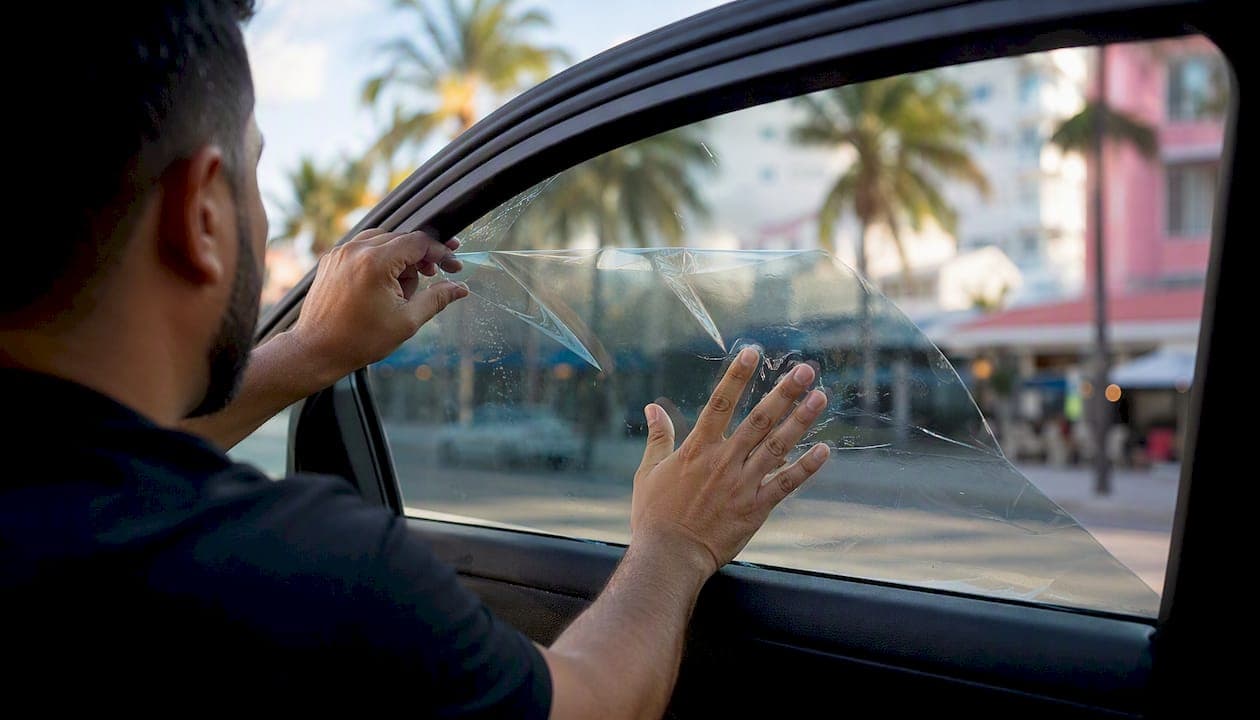
Multi-layer window film, properly called a multi-layer optical film (MOF), is a non-metalized, spectrally selective window tint designed to block infrared heat and UV rays while keeping your windows light and clear. For vehicle owners, homeowners, and business owners in Miami-Dade, that distinction matters: you get high heat rejection without going very dark. Products like the 3M Crystalline Series and 3M Ceramic IR are the most recognized examples of this technology.
Three reasons Miami owners choose multi-layer optical films:
- High heat rejection at lighter tints — reject solar energy without blacking out your windows
- Up to 99.9% UV block — protects skin and prevents interior fading
- No signal interference — non-metallic construction keeps GPS, 5G, and satellite radio working normally
Pro Tip: When comparing film options, ask specifically for 3M Crystalline or 3M Ceramic IR product specs. Both are non-metalized multi-layer films, and Southmiamitint installs both as a mobile service across Miami-Dade.
Key Takeaways
Multi-layer optical window film delivers the highest heat rejection at lighter tint levels, making it the most practical choice for Miami-Dade vehicle owners, homeowners, and business owners who want comfort without dark windows.
| Point | Details |
|---|---|
| What multi-layer film is | A non-metalized, spectrally selective optical film that blocks infrared and UV while passing visible light. |
| Top performance numbers | 3M Crystalline rejects a significant portion of total solar energy and a very high percentage of infrared rays. |
| Key metrics to request | Ask for TSER and IRER figures for the specific film code, not just the brand name. |
| No signal interference | Non-metallic construction keeps GPS, 5G, and satellite radio fully functional. |
| Southmiamitint | Installs 3M Ceramic IR, 3M Crystalline, and Iviron KoolMax as a mobile service across Miami-Dade. |
Request the product datasheet and written warranty before booking any installation.
Table of Contents
- How do multi-layer optical films block heat while staying clear?
- What performance metrics should you compare when choosing a film?
- How do multi-layer films compare to dyed, metallic, and single-layer ceramic?
- Why do Miami-Dade owners benefit most from multi-layer films?
- What does a mobile installation look like, and what does it cost?
- How long do multi-layer films last, and what does the warranty cover?
- How do you choose a qualified mobile tint installer in Miami-Dade?
- Why non-metallic multi-layer films are the right call for Miami
- Southmiamitint brings premium multi-layer film installation to your door
- Sources
How do multi-layer optical films block heat while staying clear?
The core answer: these films use a spectrally selective stack of microscopic layers (or nano-ceramic particles) that absorb and reflect infrared wavelengths while letting visible light pass through. That is the opposite of how dyed films work, which rely on darkness to reduce perceived heat.
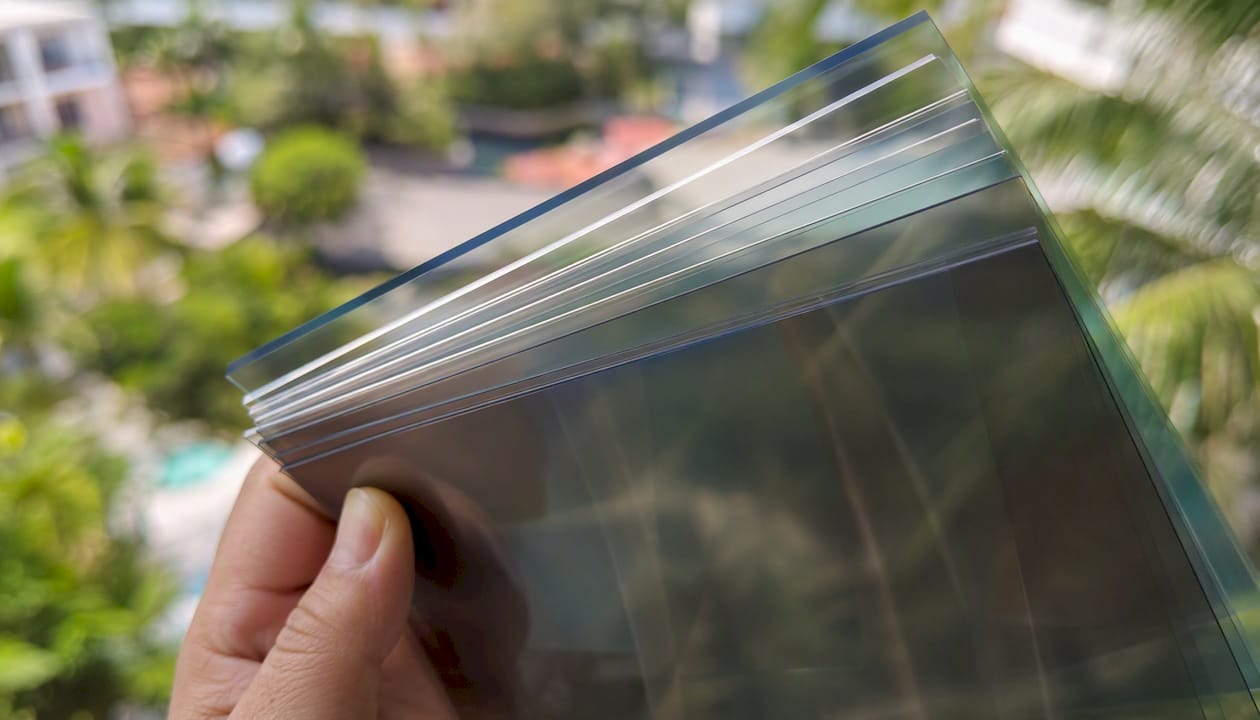
The 3M Crystalline Series product bulletin describes the construction as a non-metalized polyester base with an acrylic pressure-sensitive adhesive, an abrasion-resistant scratch coat, and the optical stack itself. The Crystalline Series combines over 200 individual layers — each thinner than a wavelength of light — to target the infrared spectrum without darkening the glass.
The 3M Ceramic IR Series takes a different but related approach: nano-ceramic particles embedded in a PET base absorb infrared energy and convert it to negligible heat, again without metal.
Why does non-metallic construction matter? Because metal films act like a Faraday cage around your car or building. Modern vehicles are packed with GPS, toll transponders, satellite radio, and 5G connectivity. A metallic film can degrade all of them. Non-metalized films avoid that problem entirely, which 3M explicitly highlights in its product bulletins.
Pro Tip: Curved automotive glass requires wet application and heat-shrinking to conform without bubbles or fingers. In Miami's humidity, this step demands an experienced hand — poor water removal during installation can cause delayed haze that takes weeks to resolve.
Typical film construction layers, from outside to inside:
- Scratch-resistant hard coat — protects the film surface
- PET base layer(s) — the structural foundation
- Optical stack or nano-ceramic layer — the heat-rejection engine
- Pressure-sensitive adhesive — bonds film to glass
- Release liner — removed during installation
What performance metrics should you compare when choosing a film?
Five numbers tell you everything about a film's real-world performance. Here is what each one means and why it matters:
| Metric | What It Measures | Why It Matters |
|---|---|---|
| TSER / TSEL | Total Solar Energy Rejection | Overall heat blocked from all solar sources |
| IRR | Infrared Rejection Rate (780–2,500 nm) | Heat from the near-infrared band |
| IRER | Infrared Energy Rejection (780–2,500 nm) | Broader IR range; better predicts real comfort |
| VLT | Visible Light Transmission | How dark the window appears |
| UV Block | Ultraviolet rejection % | Skin protection and interior fade prevention |
The 3M Crystalline Series brochure reports that the film rejects a substantial portion of total solar energy and most infrared rays while remaining non-metallic. The 3M product listing for Crystalline CR BLK 70 Plus confirms the 200-layer construction and the same headline figures, along with a manufacturer claim of a significant cabin temperature reduction.
A technical explainer on nano-ceramic technology notes that premium nano-ceramic films can block nearly all UV and reach substantial TSER values — consistent with 3M's published data.
Key callout: A 70% VLT multi-layer optical film can outperform many very dark dyed films in TSER because the optical stack targets infrared directly, not darkness. Lighter tint, more heat rejection.
IRER is the more useful metric of the two IR figures. It covers the full 780–2,500 nm infrared range, which better predicts how hot you actually feel inside the vehicle or room.
How do multi-layer films compare to dyed, metallic, and single-layer ceramic?
Multi-layer optical films deliver the highest heat rejection at the lightest VLTs. Here is how the four main categories stack up for Miami buyers:
- Dyed films — lowest cost, fade over time, rely on darkness for heat reduction, no signal interference, shortest lifespan (3–5 years typical)
- Metallic films — good heat rejection, durable, but cause GPS/5G/radio signal interference; increasingly problematic in modern vehicles
- Single-layer ceramic — solid mid-range heat rejection, no signal interference, longer lifespan, but TSER typically lower than multi-layer optical at the same VLT
- Multi-layer optical / nano-ceramic — highest TSER and IRER at lighter VLTs, non-metallic, longest lifespan, best choice for electronics-heavy vehicles and Miami's year-round solar load
For a deeper side-by-side look at how these categories perform on Miami roads, comparing window tint options is a useful next read.
Bottom line: If your priority is staying cool without dark windows, and you want your phone, GPS, and radio working perfectly, multi-layer optical or ceramic IR is the right category. Dyed film is a budget option with real performance tradeoffs in a climate like Miami's.
Why do Miami-Dade owners benefit most from multi-layer films?
Miami averages intense year-round solar exposure, and that changes the math on film selection. A film that performs adequately in Chicago may fall short here.
For vehicle owners: A multi-layer film keeps cabin temperatures lower, reduces A/C load, and protects your dashboard and seats from UV fading. Because the film works at lighter VLTs, you keep good night visibility — a real safety benefit on Miami's busy roads. Electronics stay fully functional. For guidance on choosing the best window tint for your car in Miami's climate, the local conditions make a strong case for ceramic IR or Crystalline.
For homeowners: Lower cooling bills, UV protection for furniture and flooring, and reduced glare without sacrificing natural light. Multi-layer films on residential glass can meaningfully cut the solar heat gain that drives air conditioning costs in South Florida.
For business owners: Comfortable interiors for customers and staff, protection for merchandise and displays from UV degradation, and a professional appearance that dark privacy film can undermine.
Pro Tip: Don't just ask if a film is "ceramic." Ask for the TSER and IRER numbers for the specific film code being installed. The label "ceramic" covers a wide performance range — the numbers tell the real story.
What does a mobile installation look like, and what does it cost?
The process is straightforward. Here is a typical timeline for a Miami-Dade mobile install:
- Get a quote — by phone or online form, specifying your vehicle or window count
- Schedule — most mobile installs book within a few days; same-day slots are sometimes available
- On-site prep — the installer cleans glass thoroughly; you provide sheltered parking (a garage or shaded driveway works)
- Wet application — film is cut, wet-applied, and squeegeed to remove mounting solution
- Heat-shrinking — curved automotive glass requires a heat gun to conform the film without creases
- Inspection — installer checks for bubbles, edges, and alignment before finishing
- Warranty paperwork — you receive written warranty documentation
For a full walkthrough of the process, the multi-layer tinting process guide covers each step in detail.
What to have ready for the installer:
- Clean, sheltered parking (shade or garage preferred)
- Access to a power outlet if the installer needs a heat gun
- Windows rolled up and interior cleared of items near the glass
Cost considerations: Pricing varies by vehicle type, glass count, and film choice. For current mobile window tinting prices in Miami-Dade, Southmiamitint's pricing page lists starting rates. Premium multi-layer and ceramic IR films carry a higher material cost than standard ceramic, and that difference is well justified in Miami's sustained heat.
Curing time: In Miami's humidity, allow 3–5 days before rolling windows down. Some haze or small water pockets are normal during curing and typically clear within a week. Avoid abrasive cleaners on the film during this period.
How long do multi-layer films last, and what does the warranty cover?
Care is minimal, but the first 30 days are critical. Don't roll your windows down, and avoid any cleaning of the tinted surface during that curing window.
After curing, maintenance is simple:
- Do clean with a soft microfiber cloth and ammonia-free cleaner
- Do inspect edges annually for lifting or peeling
- Don't use abrasive pads, razor blades, or ammonia-based products
- Don't apply suction cups or stickers directly to tinted glass
Premium multi-layer optical and ceramic IR films commonly carry lifetime or long limited warranties covering bubbling, peeling, cracking, and color change. Dyed films typically carry shorter coverage, often 1–3 years, because they fade faster. When reviewing warranty terms, confirm whether the coverage is transferable if you sell your vehicle or property.
Lifespan note: Multi-layer optical and nano-ceramic films are among the most durable window film types available. Dyed films in Miami's UV environment can begin fading or purpling within a few years; ceramic and multi-layer films hold their performance and appearance significantly longer under the same conditions.
Always ask your installer for the specific warranty document tied to the film code being installed, not a general brand promise.
How do you choose a qualified mobile tint installer in Miami-Dade?
Hire a certified, insured installer who uses manufacturer-backed films and provides a written warranty. Here are the exact questions to ask before booking:
- Which film model and film code will you install, and can you show me the datasheet?
- Are you an authorized dealer for that manufacturer?
- What warranty is included, and is it in writing?
- What is the expected curing time given Miami's humidity?
- Can you show me photos of recent local installs on similar vehicles or glass?
Checklist of trust signals to verify:
- Manufacturer certification or authorized dealer status
- Proof of liability insurance
- Written quote with film specs (TSER, IRER, VLT listed)
- Before-and-after photos of past work
- Clear warranty documentation
Red flags to watch for:
- No written quote or warranty paperwork
- Vague specs ("it's ceramic, trust me")
- Pressure to choose the darkest legal tint regardless of your needs
- Cash-only pricing with no receipt
The 3M Ceramic Film page at Southmiamitint shows the specific products available and the manufacturer backing behind them — a useful reference when verifying installer credentials.
Why non-metallic multi-layer films are the right call for Miami
Every vehicle rolling off a lot today carries more electronics than cars did a decade ago. Toll transponders, adaptive cruise radar, lane-keep sensors, and 5G connectivity are standard. A metallic film that degrades any of those systems is a real problem, not a minor inconvenience.
What gets overlooked in most film conversations is this: the "ceramic" label has become a marketing umbrella. Some films marketed as ceramic perform closer to standard single-layer products. The films that consistently deliver high TSER at lighter VLTs are the ones built on genuine multi-layer optical or nano-ceramic technology — specifically products like 3M Crystalline and 3M Ceramic IR, where the manufacturer publishes the actual performance numbers and backs them with a warranty.
Miami's climate makes the performance gap between film categories more visible than almost anywhere else in the country. A film that "works fine" in a temperate climate may leave your cabin uncomfortably hot here. Choosing by TSER and IRER numbers, not by marketing copy, is the only reliable way to know what you're getting.
Southmiamitint brings premium multi-layer film installation to your door
Southmiamitint installs 3M Ceramic IR, 3M Crystalline, 3M Color Stable, and Iviron KoolMax ceramic films at your location across Miami-Dade County. No shop visit, no waiting room. The installer comes to your home, office, or parking spot with everything needed for a complete, professional install.
Every job includes on-site glass prep, wet application, heat-shrinking for curved glass, a final inspection, and written warranty documentation. Pricing for ceramic window tint in Miami starts at $249 for a sedan, with SUVs, trucks, and residential glass quoted individually. Most installs complete in a single visit. Scheduling is fast, and same-week appointments are typically available.
Ready to get a quote? Book your mobile install or call Southmiamitint directly to discuss film options and get exact specs for your vehicle or property.
Sources
Verify film specs and manufacturer claims directly from these primary sources:
- 3M™ Automotive Window Film Crystalline Series brochure
- Nano-Ceramic Window Film: How the Technology Works
When speaking with an installer, ask them to pull up the specific datasheet page for the exact film code they plan to install — not just the brand overview.