
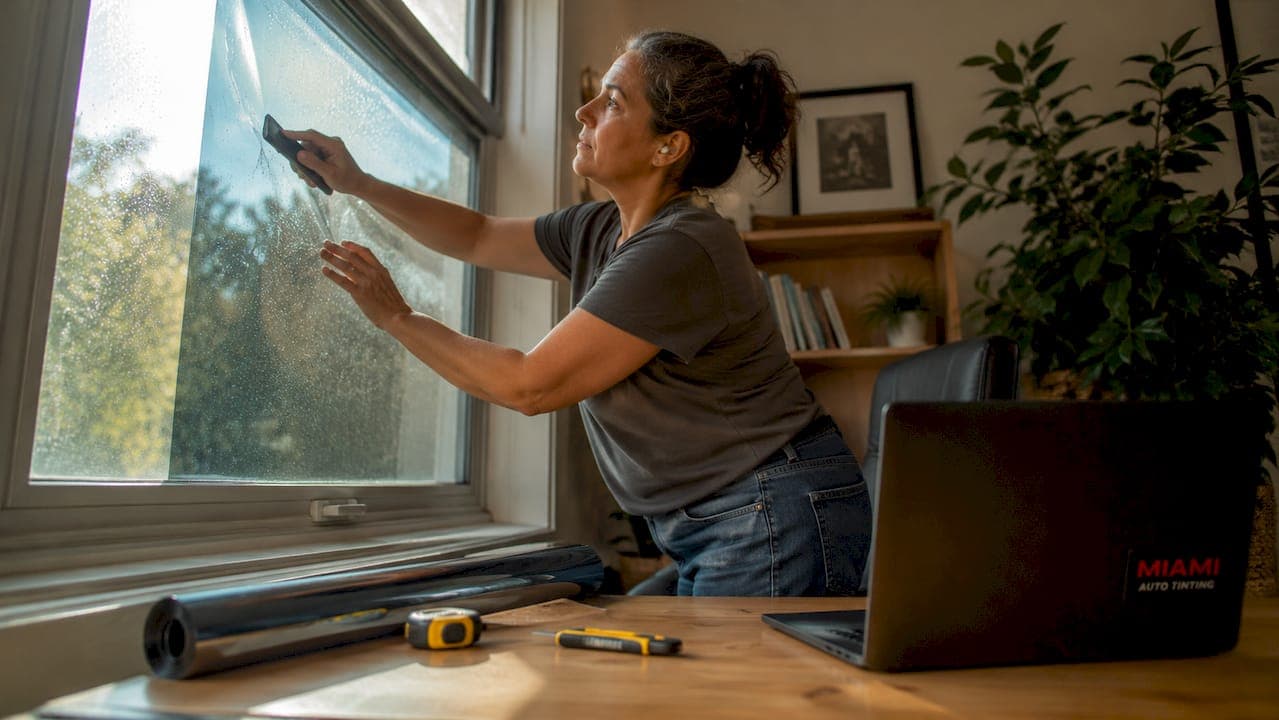
UV blocking window film is a thin polyester layer applied to the inside of glass that stops up to 99% of UVA and UVB rays from entering your home. Standard glass transmits 60–75% of UVA radiation, which means your furniture, floors, and skin absorb that damage every day. A quality UV protection film changes that equation without darkening your rooms or replacing your windows. This guide to UV blocking window film covers what specs matter, which film types last, how to install correctly, and what realistic results look like in 2026.
What specs should you look for in UV blocking window film?
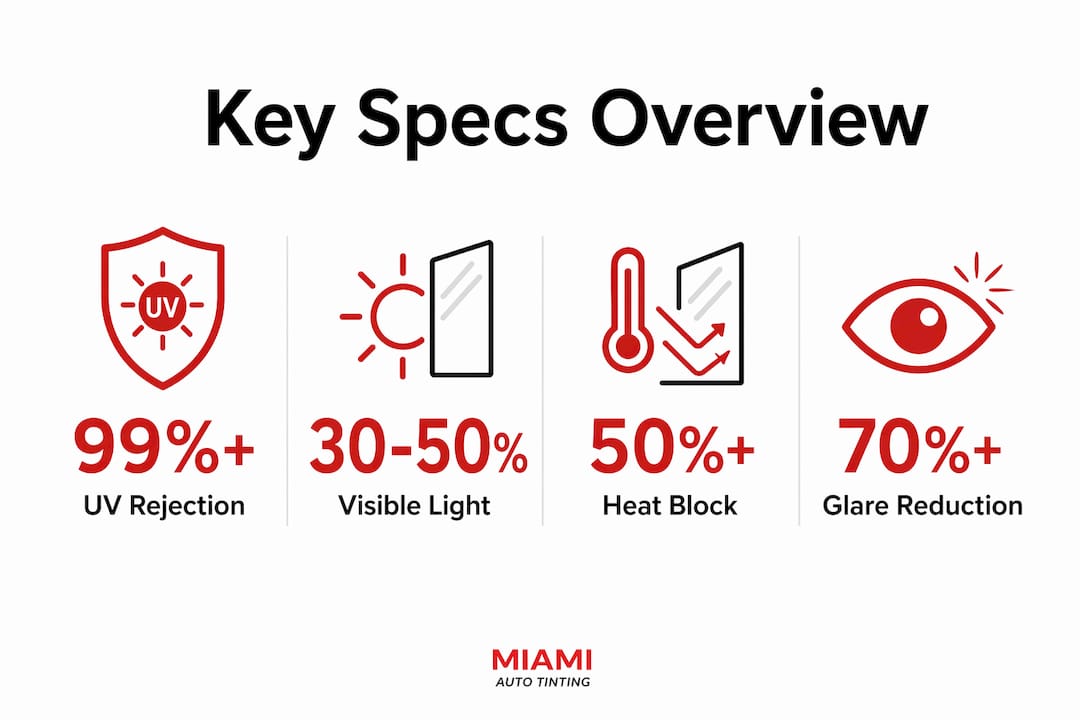
The right film starts with four numbers: UV rejection, VLT, TSER, and glare reduction. Each one tells you something different about how the film will perform in your home.
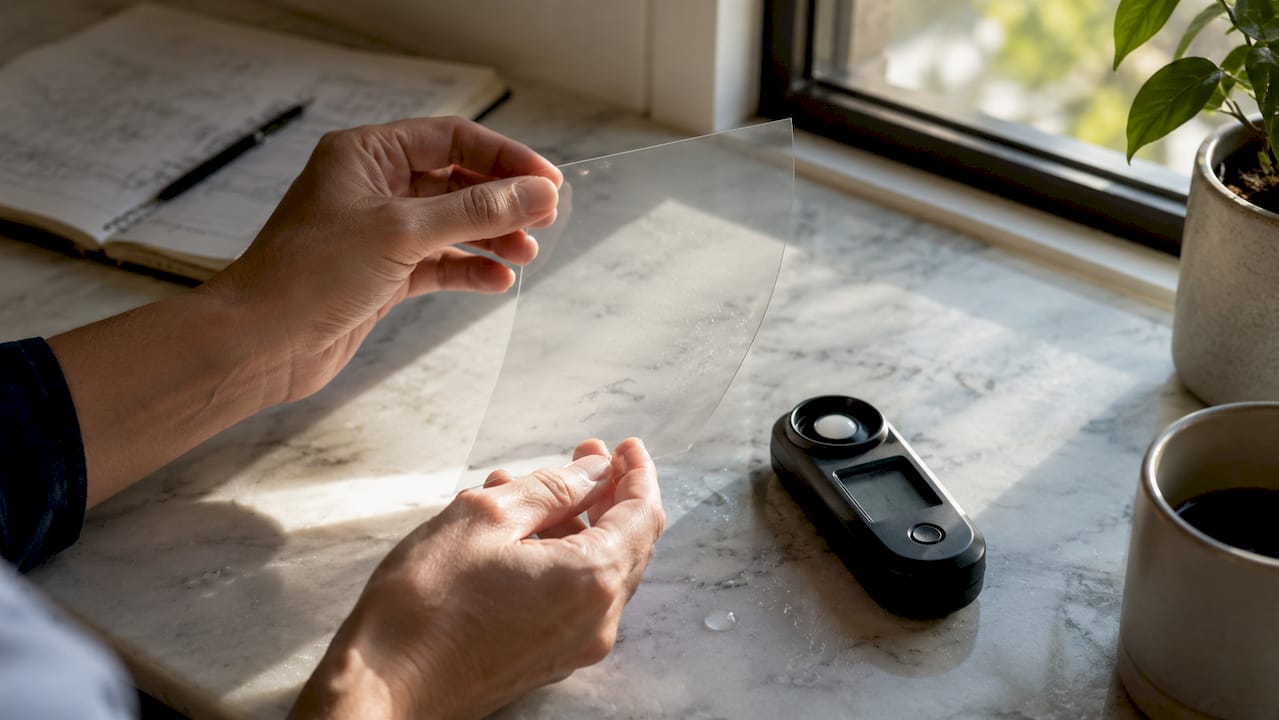
UV Rejection is the most critical metric. Any film worth buying blocks 99% or more of ultraviolet radiation. Films below that threshold leave meaningful UV exposure on your floors, art, and skin. The Skin Cancer Foundation awards its Seal only to films that validate 99%+ UV blocking through independent testing. That seal is the fastest way to confirm a film's UV claim is real.
Visible Light Transmission (VLT) measures how much daylight passes through. Most residential films sit in the 30–50% VLT range. A higher VLT keeps rooms bright; a lower VLT reduces glare more aggressively. South-facing rooms in Miami or Phoenix benefit from lower VLT. North-facing rooms in Seattle rarely need it.
Total Solar Energy Rejected (TSER) tells you how much total heat the film blocks. Films with TSER above 50% deliver meaningful cooling benefits on top of UV protection. This matters most in warm climates where air conditioning costs are high. If you live in a coastal or sun-heavy region, TSER should rank just behind UV rejection in your decision.
Glare Reduction is often overlooked but affects daily comfort. A film that cuts glare by 70%+ makes a real difference in rooms with televisions, computer monitors, or artwork you want to view without squinting.
Pro Tip: Match your spec priorities to your room. A bedroom needs high UV rejection and moderate VLT. A home office facing west needs strong glare reduction and high TSER. One film does not fit every window in your house.
| Metric | What it measures | Target value |
|---|---|---|
| UV Rejection | Percentage of UV rays blocked | 99% or higher |
| VLT | Daylight passing through | 30–50% for most homes |
| TSER | Total solar heat blocked | 50%+ for warm climates |
| Glare Reduction | Reduction in visible glare | 70%+ for screen-heavy rooms |
What are the main types of UV blocking window films?
Not all UV films are built the same. The technology inside the film determines its performance, appearance, and how long it lasts before it needs replacing.
Dyed films
Dyed films are the entry-level option. They absorb solar energy using layers of dye, which gives them a tinted appearance. They cost roughly $5–$7 per square foot installed and provide moderate UV blocking. The problem is longevity. Discount and generic dyed films often lack UV inhibitors, which causes discoloration and bubbling within 3–5 years. That short lifespan makes them a poor value for permanent installations.
Ceramic films
Ceramic films use nano-ceramic particles instead of dye. They block UV and infrared heat without changing the color of your glass. Professional-grade ceramic films from brands like 3M and LLumar cost $8–$15 per square foot installed and carry lifespans of 15–20 years. 3M window films, for example, block up to 99.9% of UV rays while staying optically clear. That combination of performance and longevity makes ceramic the top choice for homeowners who want a permanent solution.
Clear UV-only films
Clear UV-only films are nearly invisible after installation. They do not change the look of your windows at all. They are ideal for renters who want UV protection without altering the appearance of their apartment. Their UV rejection matches ceramic films, but they offer little heat control. For sun-heavy climates, a combined UV and solar control film delivers better overall protection.
Pro Tip: If you are renting, look for clear UV films with a static-cling or low-tack adhesive. They come off cleanly when you move out and leave no residue on the glass.
| Film type | UV rejection | Lifespan | Cost per sq ft | Heat control |
|---|---|---|---|---|
| Dyed | Moderate | 3–5 years | $5–$7 | Low |
| Ceramic | 99%+ | 15–20 years | $8–$15 | High |
| Clear UV-only | 99%+ | 10–15 years | $6–$10 | Minimal |
How do you install UV blocking window film correctly?
Installation quality determines whether your film lasts 2 years or 20. The process is straightforward, but the margin for error is small.
What you need before you start
Gather these tools before touching the film:
- A spray bottle filled with a diluted soap solution (a few drops of dish soap per liter of water)
- A hard plastic squeegee
- A sharp utility knife or film cutter
- A lint-free microfiber cloth
- A tape measure
Step-by-step installation
- Clean the glass thoroughly. Use the soapy solution and a lint-free cloth. Microscopic debris causes bubbles that cannot be removed after the adhesive sets. Clean twice if the glass has not been washed recently.
- Measure and cut the film. Cut the film about half an inch larger than the window on all sides. You will trim the excess after the film is positioned.
- Wet the glass. Spray the soapy solution generously on the glass surface. This lets you slide the film into position before it adheres.
- Peel and apply. Peel the backing off the film while keeping the adhesive side wet. Lay the film onto the wet glass and slide it into alignment.
- Squeegee from center outward. Work in overlapping strokes from the center of the pane toward the edges. This pushes water and air out from under the film.
- Trim the edges. Use the utility knife to cut flush along the window frame. A straight edge helps here.
- Final squeegee pass. Go over the entire surface one more time to remove remaining moisture. Small water pockets are normal and will evaporate within a few days.
When to hire a professional
Large panes, curved glass, and high-end ceramic films are best left to professionals. Squeegee technique requires practice to avoid creases on big surfaces, and a mistake on a $15-per-square-foot ceramic film is expensive. Professional installation also typically includes a warranty on the labor, not just the film. For windows larger than 20 square feet, the cost of professional installation is worth it.
Pro Tip: Install film in the morning or on a cloudy day. Direct sunlight speeds up adhesive curing and makes it harder to reposition the film before it locks in place.
What can UV film actually protect, and what can it not?
UV film is a preventative tool, not a cure. Understanding its real limits helps you set the right expectations before you buy.
UV radiation is the largest single cause of interior fading, responsible for roughly 40% of total fading damage. A film that blocks 99% of UV rays eliminates that 40% share almost entirely. That is a significant win for hardwood floors, wool rugs, leather furniture, and framed artwork.
The remaining 60% of fading comes from visible light, heat, humidity, and the natural aging of materials. UV film does not address those factors on its own. A combined UV and solar control film, like a ceramic product with high TSER, handles both UV and heat simultaneously. That combination covers a larger share of total fading risk.
What UV film cannot do:
- Reverse fading or discoloration that already exists
- Protect against moisture damage or humidity
- Fully prevent fading from visible light exposure
- Replace window treatments like blinds or curtains for complete light control
UV film works best as part of a layered approach. Pair it with UV-rated blinds or curtains on south and west-facing windows for the most complete interior protection.
For a deeper look at how UV exposure affects interiors in high-sun environments, the coastal UV and heat guide from Southmiamitint covers regional considerations in detail.
Key takeaways
UV blocking window film delivers its best results when you match the right film type and specs to your specific windows, climate, and goals.
| Point | Details |
|---|---|
| Prioritize 99% UV rejection | Any film below 99% UV blocking leaves meaningful damage risk on floors, furniture, and skin. |
| Ceramic films outlast dyed films | Ceramic products last 15–20 years; dyed films degrade in 3–5 years without UV inhibitors. |
| TSER matters in warm climates | Choose films with TSER above 50% if heat control is as important as UV protection. |
| Clean glass is non-negotiable | Microscopic dust causes permanent bubbles; clean the glass twice before applying any film. |
| Film slows fading, not stops it | UV film eliminates roughly 40% of fading causes; visible light and heat require additional measures. |
Why I always recommend ceramic over dyed for Miami homes
I have seen a lot of window film jobs in South Florida, and the pattern is consistent. Homeowners who go with budget dyed films to save money upfront call back within three years because the film has turned purple, bubbled at the corners, or simply stopped performing. The savings evaporate fast when you factor in removal and reinstallation.
Ceramic film is the only type I recommend for homes in Miami Dade. The combination of year-round UV intensity and heat makes the performance gap between ceramic and dyed films larger here than anywhere else in the country. A film with a 15–20 year lifespan and a manufacturer warranty is not a luxury in this climate. It is the only version that makes financial sense.
The other mistake I see regularly is treating UV film as a complete solution. It is not. Film handles UV and, with the right product, heat. But south-facing windows in a Miami home still need interior shading during peak afternoon hours. Film plus shading covers the full spectrum of fading risk. Film alone does not.
One more thing: always check for the Skin Cancer Foundation Seal before buying. It is the only independent confirmation that a film's UV claims have been tested and verified. Any brand that cannot point to that certification is asking you to take their word for it.
— Jose
Get professional UV protection installed at your door
Southmiamitint installs professional-grade ceramic and 3M window films for homes across Miami Dade, and the service comes to you. No shop visits, no scheduling around traffic.
The film options include 3M IR, 3M Color Stable, and Iroviron Kollmax ceramic tint. All three deliver 99%+ UV rejection with the heat control performance that South Florida windows demand. Ceramic film installed by a trained technician lasts decades and comes with a manufacturer warranty. If you are ready to protect your interiors and reduce cooling costs, ceramic window tinting in Miami starts at $249 with mobile installation. For 3M-specific options, 3M ceramic film installation is also available with the same mobile convenience.
FAQ
What does UV blocking window film actually block?
UV blocking window film filters UVA and UVB radiation, with top-performing films blocking up to 99.9% of both types. It does not block visible light or heat unless the film also includes solar control technology.
Are UV blocking films effective for preventing furniture fading?
UV film eliminates roughly 40% of total fading causes by blocking UV radiation. Visible light and heat account for the remaining fading, so pairing UV film with solar control film or interior shading gives the most complete protection.
How long does UV window film last?
Ceramic films from professional brands like 3M and LLumar last 15–20 years. Dyed discount films typically degrade within 3–5 years due to the absence of UV inhibitors.
Can renters use UV window film?
Yes. Clear UV-only films with static-cling or low-tack adhesive install without permanent bonding and remove cleanly, making them a practical option for renters who cannot modify the property.
How do I know if a UV film is certified?
Look for the Skin Cancer Foundation Seal, which confirms the film has been independently tested and verified to block 99% or more of UV radiation.