
Miami-Dade isn't just hot. It's a UV gauntlet that runs 365 days a year, and your car's interior and home's furniture are losing that fight quietly, daily. Solar control window tint is the most effective fix most owners either underestimate, install wrong, or get ticketed over. This guide covers what actually works in South Florida's climate, which film types deliver real heat rejection, what the law requires in 2026, and how to make a smart investment whether you own a sedan, an SUV, or a two-story home in Coral Gables.
Table of Contents
- Understanding solar control window tint and its benefits
- Key legal requirements for window tinting in Miami-Dade vehicles and homes
- Comparing ceramic and reflective solar control window tints for Miami vehicles and properties
- Practical tips for installation and maintenance of solar control window tint
- The uncomfortable truth about solar control window tint most owners overlook
- Explore professional ceramic solar control window tinting services in Miami
- Frequently asked questions
Key Takeaways
| Point | Details |
|---|---|
| Understand legal limits | Miami requires specific visible light transmission percentages for car window tints to avoid fines. |
| Prefer ceramic films | Ceramic tints provide superior heat rejection without signal interference or reflective issues. |
| Avoid DIY tinting | DIY window films tend to fail quickly in Miami's climate, risking damage and replacement costs. |
| Professional installation matters | Expert installation ensures durability, compliance, and optimal performance of solar control tint. |
| Use certified products | Certified, legal window tints protect you from fines and maintain vehicle functionality and aesthetics. |
Understanding solar control window tint and its benefits
Solar control window tint is a thin multi-layer film applied to glass surfaces to block or absorb a portion of the sun's energy before it enters your vehicle or building. It sounds simple. The technology behind it, however, has improved dramatically over the last decade. Modern films no longer rely on dyes that fade or metallic layers that interfere with electronics. Today's best options use nano-ceramic particles that are invisible to the naked eye but highly effective at filtering out heat and ultraviolet radiation.
The key to understanding what is solar tinting comes down to three types of solar energy: visible light, infrared radiation (the heat you feel), and ultraviolet rays (the energy that fades leather and causes skin damage). A quality film targets all three. Standard dyed films absorb some visible light but do little for infrared. Reflective films bounce energy back but create enforcement problems under Florida law. Ceramic films, like the 3M IR and Iviron Kollmax products we install, handle all three without the trade-offs.
Key benefits of solar control window tint for Miami residents:
- Heat reduction: Ceramic solar control films reject up to 85 to 95% of infrared heat, making a parked car noticeably cooler before you even start the engine.
- UV protection: Blocks up to 99% of ultraviolet rays, protecting your skin during daily commutes and preserving leather, vinyl, and fabric from cracking and fading.
- Energy savings: In homes and commercial spaces, window tint for heat reduction cuts air conditioning load significantly, lowering monthly utility bills.
- Privacy and glare control: Reduces eye strain while driving and limits visibility into your home or vehicle from outside.
- Interior preservation: Keeps dashboard materials, upholstery, and flooring from deteriorating prematurely under South Florida's relentless sun.
For a deeper look at heat rejection window film for Miami, the performance gap between film types matters more in this climate than almost anywhere else in the country.
Now that you know why solar control tint matters, let's explore which tint types perform best in Miami's unique climate.
Key legal requirements for window tinting in Miami-Dade vehicles and homes
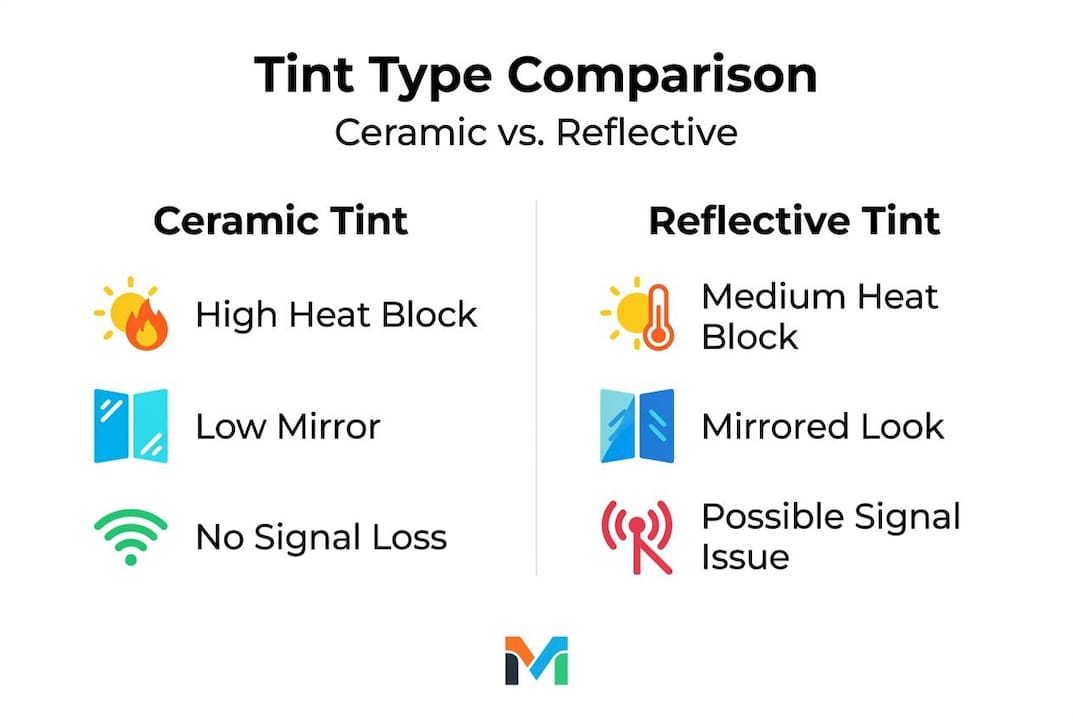
This is where most owners make expensive mistakes. Florida's tinting laws apply statewide, and Miami-Dade officers enforce them actively. The rules vary by window position on your vehicle, and ignoring the details can mean fines or a required film removal.
Under Florida's 2026 tint laws, front side windows must allow at least 28% visible light transmission (VLT), meaning the film plus the glass combined must let in 28% of visible light. Rear side windows and the rear windshield are more flexible, allowing down to 15% VLT for sedans and even darker for SUVs and vans.
| Window position | Sedans (VLT minimum) | SUVs and vans (VLT minimum) |
|---|---|---|
| Windshield | Non-reflective tint top 6 inches only | Non-reflective tint top 6 inches only |
| Front side windows | 28% | 28% |
| Rear side windows | 15% | 15% |
| Rear windshield | 15% | 15% |
| Reflectivity limit | 25% | 25% |
Key compliance details you should know:
- Reflective tints that exceed 25% reflectivity are illegal regardless of VLT, and officers can spot them visually.
- Dual-pane factory glass can affect the final VLT calculation. A certified installer measures this before selecting film.
- Medical exemptions for darker tints exist but require specific documentation from a licensed physician.
- Florida requires tint manufacturers to certify their films. Uncertified films are automatically non-compliant.
For homes and commercial buildings, there are no fixed VLT percentage requirements under Florida residential code, but all window film installations must meet local building permits and safety glazing standards where applicable.
Pro Tip: Print your tint certification card and keep it in your glove box. If you have a medical exemption for darker tint, carry that documentation too. A traffic stop is far less stressful when you hand over paperwork before the officer finishes their walk-around.
For more detail on local car window tint regulations and a breakdown of Miami auto tinting laws, those resources cover enforcement specifics that go beyond the baseline statutes.
With legal boundaries clear, let's compare popular tint types so you can choose the right option that balances performance and compliance.
Comparing ceramic and reflective solar control window tints for Miami vehicles and properties
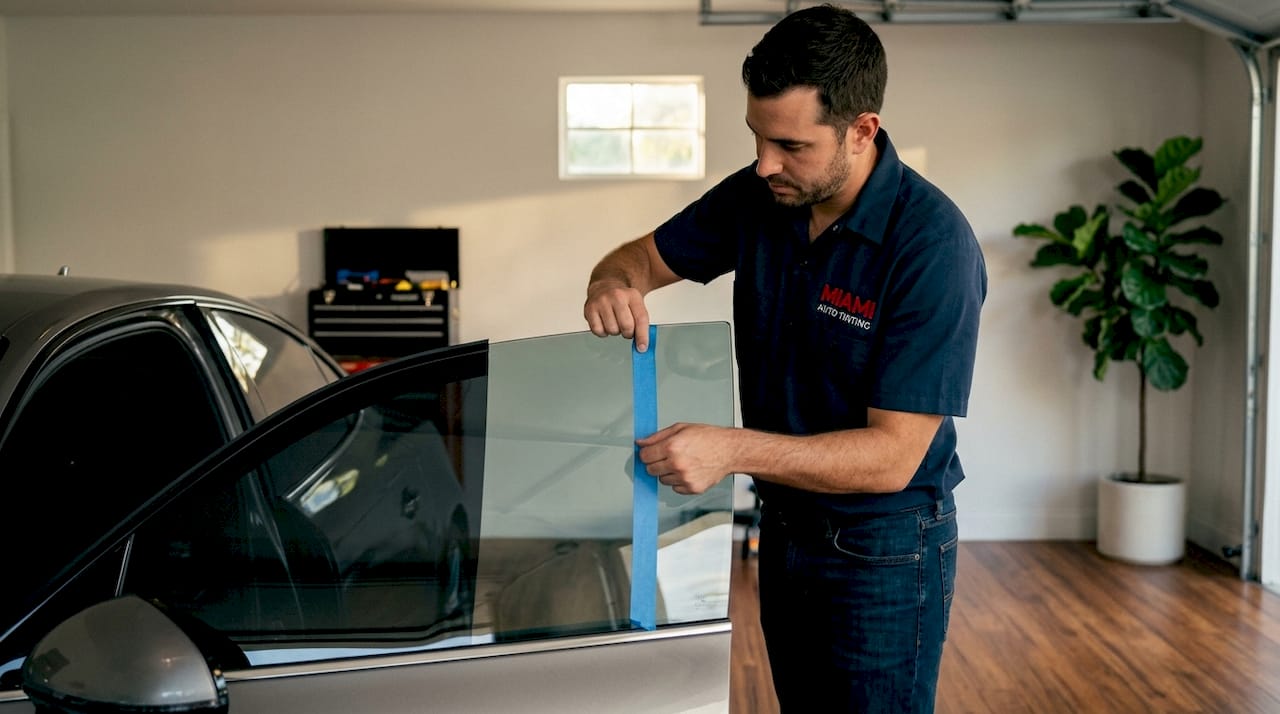
The window tint market is crowded with options, but in Miami's conditions, the choice narrows quickly to two main categories: ceramic films and reflective (metallic) films. They differ in how they handle heat, what they look like from the outside, and whether they create problems for your phone signal, radar detectors, or toll transponders.
| Feature | Ceramic tint | Reflective (metallic) tint |
|---|---|---|
| Infrared heat rejection | Up to 95% | Up to 50 to 60% |
| UV protection | Up to 99% | Up to 99% |
| Signal interference | None | Can block GPS, cell signal |
| Visual appearance | Clear to lightly tinted | Mirror-like from outside |
| Reflectivity compliance | Easy to stay under 25% | Often exceeds 25% limit |
| Typical SUV install cost | $700 to $800 | $300 to $500 |
| Longevity in Florida heat | 10+ years with care | 5 to 7 years typical |
Ceramic films outperform reflective tint by rejecting up to 95% of infrared heat without signal interference or a mirrored look, and full SUV installations typically run $700 to $800. That premium pays off fast in Miami's climate, both in daily comfort and avoided reapplication costs.
Why ceramic wins for South Florida specifically:
- You stay below the 25% reflectivity limit automatically, removing one enforcement risk entirely.
- Your GPS, E-ZPass transponder, and phone signal remain unaffected during highway driving.
- The appearance is natural and sleek rather than chrome-like, which some HOAs also flag as a violation on residential windows.
- 3M IR ceramic films carry manufacturer warranties that protect your investment for the life of the vehicle.
For guidance on choosing the right window tint shade that balances darkness, compliance, and aesthetics, shade selection matters as much as film type.
Pro Tip: Avoid any automotive solar film sold as a DIY kit at big-box stores. In Miami's heat and humidity, those products typically bubble and peel within one to two summers. Professional-grade film and professional adhesion techniques are not the same category of product, even if the box uses similar marketing language.
After seeing how tint types stack up, let's dive into practical installation tips for maximizing benefits and compliance.
Practical tips for installation and maintenance of solar control window tint
Even the best solar window films underperform when applied incorrectly. Miami's climate is one of the most demanding environments for adhesive-based films, and the installation process cannot cut corners.
Professional installation: the correct process step by step
- Glass cleaning: The installer cleans the glass surface completely free of any contaminants, oils, or residue. Any debris trapped under the film creates bubbles and failure points.
- Film cutting: Precision cutting is done either by computer-cut templates or by hand, shaped to the exact contours of each window. Curved rear windshields require heat gun forming to prevent edge lift.
- Slip solution application: A light soapy solution is applied to the glass so the film can be positioned and adjusted before the adhesive fully bonds.
- Squeegee pressing: The installer squeegees from the center outward to eliminate air and moisture pockets. This step separates clean installs from bubbled ones within weeks.
- Heat forming on curves: Florida-trained installers use heat guns to stretch and mold film around curved glass, particularly on sedans with pronounced windshield curves.
- Curing period: Professional installs require 24 to 48 hours of cure time before windows are rolled down or cleaned. Miami's heat actually accelerates curing, but rolling the window down too early tears the film edge.
Routine maintenance for long-term performance:
- Wait at least 72 hours after installation before cleaning tinted windows.
- Use only ammonia-free cleaners. Ammonia degrades the film's adhesive layer over time.
- Clean with a soft microfiber cloth. Abrasive materials scratch the film surface and reduce clarity.
- Inspect edges annually for lifting or peeling, which allows moisture intrusion and bubbling to spread.
How to install window tint professionally versus using a DIY kit is not a minor distinction. DIY films fail under Florida's heat and humidity, peel within months, and void any manufacturer coverage you might have assumed you were getting.
Pro Tip: When hiring an installer, ask specifically whether they have experience with the glass configurations on your vehicle model. Rear windshields on modern crossovers and trucks are increasingly complex shapes. An installer who works with those daily is a different level of skill from one who primarily does standard sedans.
Now that installation is covered, let's reflect on common misunderstandings and what truly matters when selecting solar control tint.
The uncomfortable truth about solar control window tint most owners overlook
After years of working with Miami-Dade car and property owners, the same pattern repeats. Someone buys a vehicle with already-tinted windows, or they get a cheap tint job at an unlicensed shop, and they assume everything is fine. Then they get pulled over. Or the film starts peeling by the following summer. Or they find out the tint on their car is technically illegal under Florida's rules even though it was installed by a professional.
The 25% reflectivity limit is frequently misunderstood, and many shops install reflective films without disclosing that they push right up against or past that threshold. Owners then drive around with a compliance risk they are not even aware of. The fine for illegal tint in Florida can reach $116 or more per citation, and if you are cited multiple times at different stops before fixing it, costs stack up fast.
The hidden cost of cheap tinting is also rarely discussed honestly. A $150 dye film job from an uncertified shop might look acceptable for six months. Then the dye shifts purple, the film hazes over, and your visibility at night degrades. You pay to remove it and start over. The total cost often exceeds what a quality ceramic install would have cost in the first place.
One more oversight: medical exemption documentation. Florida allows darker-than-legal tints for passengers with certain medical conditions. But the exemption is not automatic. It requires a signed letter from a licensed Florida physician specifying the condition. Many owners believe their doctor's verbal approval is enough. It is not, and an officer has no legal obligation to accept an undocumented claim at a traffic stop. For a full breakdown of Miami's tinting laws, knowing exactly what you can and cannot do saves real money.
Ceramic tint from a certified installer with a proper certification card is not a luxury purchase in South Florida. It is the option that costs less over time, performs better in the climate, and eliminates almost every enforcement risk when done correctly.
Explore professional ceramic solar control window tinting services in Miami
Ready to stop fighting Miami's sun and start actually staying comfortable in your car or home?
We offer mobile ceramic window tint installation in Miami using 3M IR, 3M Color Stable, and Iviron Kollmax films, covering everything from daily drivers to full residential and commercial glass. Because we come to you, there is no drop-off, no waiting rooms, and no lost half-days. Our 3M ceramic window tint installations meet Florida's legal requirements and come with manufacturer-backed warranties. Check out mobile tinting prices near you to see current pricing for vehicles and properties across Miami-Dade County. A quick consultation lets us match the right film shade to your legal requirements, your comfort goals, and your budget before a single inch of film is cut.
Frequently asked questions
What are the legal limits for car window tint in Miami?
Florida requires 28% VLT on front side windows and allows 15% VLT on rear side windows and the rear windshield, with a 25% reflectivity cap on all tinted glass.
Is ceramic tint better than reflective tint for Miami vehicles?
Yes. Ceramic films reject up to 95% of infrared heat without interfering with electronics or creating a mirrored appearance, making them the most practical choice for Miami's climate and Florida's reflectivity limits.
Can I install window tint on my own in Miami?
It is not recommended. DIY films peel within months under Florida's heat and humidity, and professional installers use heat-forming techniques and certified film that consumer kits cannot replicate.
Are there legal tint limits for residential windows in Miami?
No specific VLT percentage limits apply to home windows under Florida law, but all residential installations must comply with local building codes and safety glazing standards where required by permit.