

Window film thermal performance measures how well a film reduces heat transfer through glass, blocking solar energy and insulating against heat loss to improve comfort and cut energy costs in homes and vehicles. For homeowners dealing with Miami's year-round heat and automotive enthusiasts watching cabin temperatures spike, this distinction matters more than most product specs suggest. Films like 3M IR and Iviron Kollmax ceramic tint from Southmiamitint are built specifically around these thermal properties, not just aesthetics or privacy. Understanding the science behind them helps you choose the right product for your actual needs.
How do window films reduce heat transfer?
Window films reduce heat transfer through three physical mechanisms: reflection, absorption, and emission control. Each mechanism targets a different part of the solar spectrum, and the best films combine all three.
Reflection is the most straightforward. Metallic and ceramic films reflect incoming solar radiation before it passes through the glass. This is why a film rated for strong solar heat rejection feels noticeably cooler on the interior side of the window on a sunny afternoon.
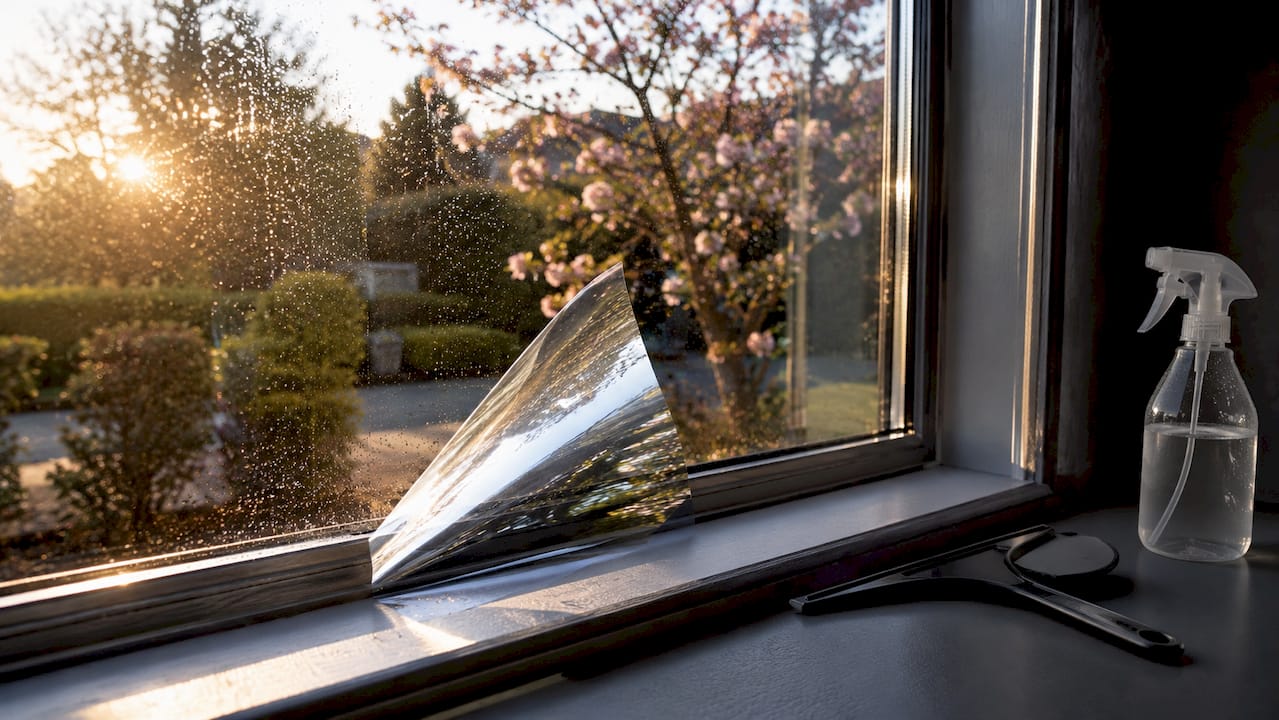
Absorption works differently. Some films absorb solar energy within the film layer itself, then re-emit it outward rather than inward. This slows heat transfer into the room or cabin without requiring a reflective coating.
Low-emissivity (low-E) coatings add a third layer of control. These coatings reflect radiant heat back toward its source, which means they work in both directions. In summer, they push solar heat back outside. In winter, they reflect interior heat back into the room. Low-E window film improves insulation on single-pane windows by roughly 50%, cutting the U-value from about 5.7 to 3.0–3.5 W/m²K. That is a meaningful shift in how much heat escapes through your glass on a cold night.
Key performance technologies in modern films include:
- Near-infrared (NIR) blocking: Infrared radiation carries the majority of solar heat. Films that block NIR reduce heat gain without darkening the glass significantly.
- Ultraviolet (UV) blocking: UV radiation causes fading and skin damage. High-performance films block up to 99% of harmful UV rays as a secondary benefit.
- Spectrally selective coatings: These target specific wavelengths, blocking heat-carrying infrared while passing visible light. This is the technology behind ceramic and nano-composite films.
Pro Tip: Do not confuse infrared rejection ratings with total heat rejection. A film can claim high IR rejection at a specific wavelength while performing poorly across the full solar spectrum. Always ask for the Total Solar Energy Rejected (TSER) figure.
What are the key performance metrics?
Four numbers define the thermal properties of window films: SHGC, TSER, U-value, and VLT. Reading them together gives you a complete picture of how a film will perform.
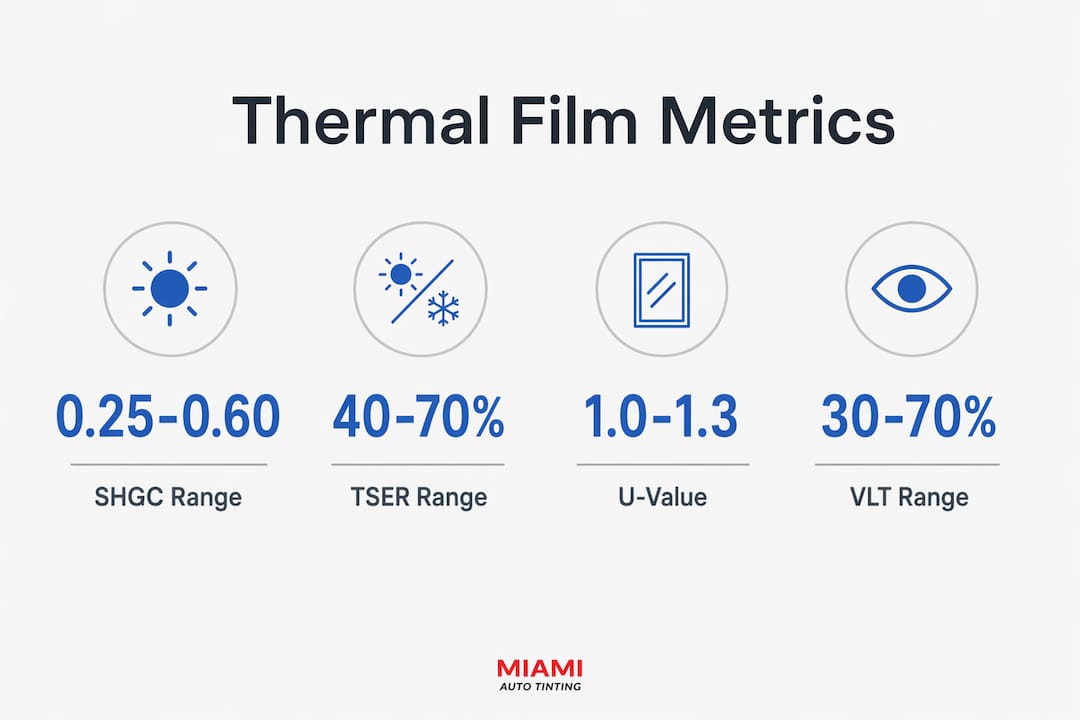
Solar Heat Gain Coefficient (SHGC) measures the fraction of solar energy that passes through the glass into the interior. A lower SHGC means less heat enters. A film with an SHGC of 0.30 blocks 70% of solar energy. That is the direct inverse of TSER.
Total Solar Energy Rejected (TSER) expresses the same relationship from the other direction. A TSER of 70% means the film blocks 70% of incoming solar energy. Higher is better for heat reduction. TSER is the more reliable metric because it accounts for the full solar spectrum, not just peak infrared wavelengths.
U-value measures insulation performance, specifically how much heat flows through the glass when there is a temperature difference between inside and outside. A lower U-value means better insulation. This metric matters most in cold climates where heat retention is the priority, not just heat rejection.
Visible Light Transmission (VLT) tells you how much daylight passes through. Lower VLT means a darker film. The challenge is that films with very low VLT can make interiors feel dim and reduce visibility, especially at night in vehicles.
| Metric | What it measures | Better value | Typical range |
|---|---|---|---|
| SHGC | Fraction of solar heat transmitted | Lower | 0.20–0.70 |
| TSER | Percentage of solar energy blocked | Higher | 30%–80% |
| U-value | Heat flow through glass (W/m²K) | Lower | 1.5–5.7 |
| VLT | Visible light passing through | Depends on use | 15%–70% |
Homeowners should balance SHGC below 0.40 with VLT above 40% on south and west-facing windows. This keeps heat out while preserving natural light and views. Dropping VLT too low to chase heat rejection creates a dim interior that most people find uncomfortable after a few weeks.
What types of window films offer the best heat reduction?
Film technology has advanced considerably, and the right choice depends on whether you prioritize insulation, solar rejection, or dynamic control.
Low-E films
Low-E films are the standard for insulation performance. They use a microscopically thin metallic coating to reflect radiant heat in both directions. On single-pane windows, they cut heat loss by roughly 50% and save approximately £40–£60 yearly on heating bills for a typical 10 m² window. In Miami's climate, the summer cooling benefit is even more significant than the winter heating savings.
Spectrally selective ceramic and nano-composite films
These films represent the current peak of window film heat rejection performance. Advanced spectrally selective nano-composite films reduce indoor temperature by up to 10.2°C while maintaining over 60% visible light transmission. They block more than 90% of near-infrared radiation and more than 95% of ultraviolet radiation. That combination of heat control and light transmission is what separates ceramic films from older dyed or metallic options.
Southmiamitint installs 3M IR and Iviron Kollmax ceramic tint, both of which fall into this spectrally selective category. 3M window films reduce up to 78% of solar heat gain through windows. That figure translates directly into lower air conditioning loads and more consistent interior temperatures.
Smart PDLC films
Smart polymer-dispersed liquid crystal (PDLC) films offer dynamic light control. They switch between transparent and opaque states on demand. However, their thermal profile is different from ceramic or low-E films. Smart PDLC films modulate visible light transmittance between 87.68% and 61.07% and reduce SHGC by 16.16%, but they provide minimal improvement in U-value. They are a solar management tool, not an insulation solution. For automotive enthusiasts interested in smart film technologies, the light control benefit is real, but do not expect the same heat rejection as a quality ceramic tint.
Key differences between film types at a glance:
- Dyed films: Low cost, moderate heat absorption, fade over time, no insulation benefit
- Metallic films: Good solar rejection, can interfere with GPS and cell signals in vehicles
- Ceramic films: High NIR and UV blocking, no signal interference, longest lifespan
- Low-E films: Best insulation performance, ideal for cold climates and single-pane windows
- Smart PDLC films: Dynamic light control, limited thermal insulation, highest cost
How does window film improve energy efficiency in homes and vehicles?
The practical impact of window film insulation benefits shows up in two ways: lower energy bills and a more comfortable interior temperature throughout the day.
In homes, the mechanism is straightforward. Films reduce solar heat gain in summer, which cuts the cooling load on your air conditioning system. In winter, low-E films reduce heat loss through the glass, which reduces heating demand. The payback period for quality window film on residential windows typically runs 1–3 years, depending on climate, window area, and local energy costs.
For vehicles, the effect is even more immediate. A car parked in direct Miami sun can reach interior temperatures that make the first few minutes of driving genuinely unpleasant and force the AC to work at maximum capacity for an extended period. Ceramic tint reduces cabin temperature significantly before you even start the engine. That reduction in thermal load means the AC reaches a comfortable temperature faster and runs less aggressively, which saves fuel.
Here are the practical steps for evaluating window film energy efficiency for your situation:
- Identify your primary problem. Is it summer heat gain, winter heat loss, glare, or UV exposure? Each problem points to a different metric priority.
- Check window orientation. South and west-facing windows receive the most direct sun in the Northern Hemisphere. These benefit most from high TSER films.
- Match film to glass type. Single-pane windows benefit most from low-E films. Double-pane windows already have some insulation, so solar rejection films add more value than additional insulation.
- Consider climate. Hot climates like Miami prioritize low SHGC and high TSER. Mixed climates benefit from films that balance both solar rejection and insulation.
- Factor in VLT for comfort. A film that blocks all heat but makes your living room feel like a cave is not a good solution. Check the tinting terms for your state's legal VLT limits for automotive applications before choosing a film.
Pro Tip: For automotive use, check your state's legal VLT minimum before selecting a film. Florida law sets specific limits by window position, and a film that is too dark on the front side windows will fail inspection regardless of its thermal performance.
Beyond energy savings, window films block up to 99% of UV radiation, which protects interior furnishings, car upholstery, and skin from long-term damage. Glare reduction also improves driving safety and reduces eye strain in home offices facing bright windows.
Key Takeaways
The thermal performance of window films depends on matching the right film technology to your specific climate, window type, and comfort priorities rather than chasing a single high-spec metric.
| Point | Details |
|---|---|
| TSER beats IR rejection | Always evaluate total solar energy rejected, not just infrared rejection at peak wavelengths. |
| Low-E films improve insulation | Low-E coatings cut U-value by roughly 50% on single-pane windows, reducing both heat loss and gain. |
| Ceramic films lead on heat rejection | Spectrally selective ceramic films block over 90% of near-infrared while keeping visible light above 60%. |
| Smart PDLC films have limits | PDLC films manage light dynamically but provide minimal insulation improvement. |
| Payback is fast | Quality window film typically pays back its cost within 1–3 years through energy savings. |
What I have learned from years of watching people choose the wrong film
People consistently make the same mistake when shopping for window film. They fixate on a single number, usually infrared rejection, and assume the highest number wins. That is not how thermal performance works in practice.
I have seen homeowners install a film with a headline IR rejection figure, then wonder why their south-facing living room still heats up by midafternoon. The reason is almost always that the IR rejection figure was measured at a narrow wavelength, not across the full solar spectrum. TSER tells the real story. A film with 70% TSER will outperform a film claiming 95% IR rejection at a single wavelength every time.
The other mistake is ignoring climate. A film optimized purely for solar rejection in Miami will underperform in a mixed climate where winter insulation matters as much as summer cooling. Low-E films solve a different problem than ceramic solar rejection films, and the best installations often combine both principles in a single product.
Professional installation also matters more than most people expect. A film installed with air bubbles, lifted edges, or improper surface preparation loses thermal contact with the glass and performs below its rated specs. The film itself is only part of the equation. The ceramic tint benefits you read about in product specs assume a clean, professional installation on properly prepared glass.
My honest advice: define your primary problem first, then find the film that solves it. Do not let a single impressive number on a spec sheet drive the decision.
— Jose
High-performance window film options from Southmiamitint
Southmiamitint installs 3M IR, 3M Color Stable, and Iviron Kollmax ceramic tint for both residential and automotive applications across Miami-Dade. These films are selected specifically for their thermal performance in South Florida's climate, where solar heat gain is the dominant problem for most of the year.

The ceramic window tint options start at $249 and cover vehicles, homes, and commercial spaces. The mobile service means installation happens at your location, whether that is your driveway or your office parking lot. No drop-off, no waiting. If you want to compare film options or get a quote based on your window count and orientation, the team at Southmiamitint can walk you through the right choice for your specific situation.
FAQ
What is the thermal performance of window films?
Thermal performance of window films measures how well a film reduces heat transfer through glass by blocking solar energy and improving insulation. Key metrics include SHGC, TSER, and U-value.
What is the difference between SHGC and TSER?
SHGC measures the fraction of solar heat that passes through the glass; TSER measures the percentage blocked. A film with SHGC of 0.30 has a TSER of 70%.
How much can window film reduce indoor temperature?
Advanced spectrally selective nano-composite films reduce indoor temperature by up to 10.2°C while maintaining over 60% visible light transmission.
Do window films work in both hot and cold climates?
Low-E films improve insulation in cold climates by reducing heat loss, while solar rejection films address heat gain in hot climates. The best film choice depends on your dominant seasonal problem.
How long does it take for window film to pay for itself?
Quality window film typically pays back its installation cost within 1–3 years through reduced heating and cooling energy use, depending on window area and local energy prices.