
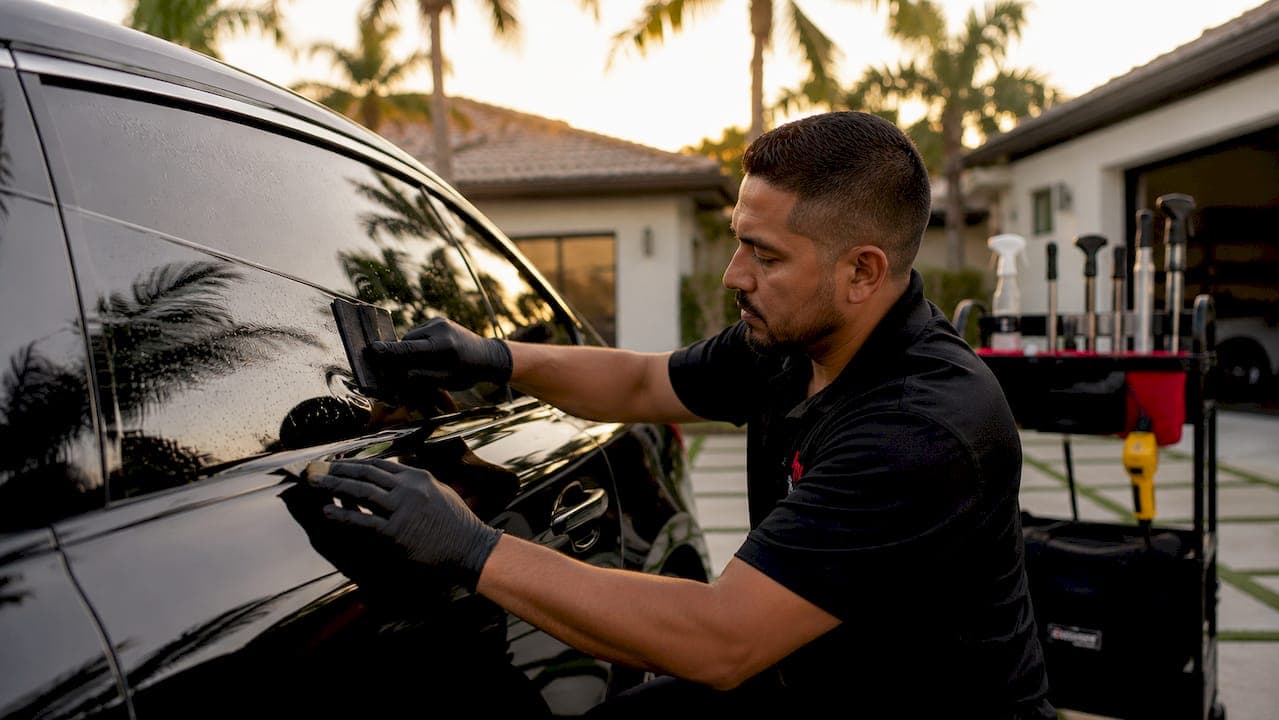
Ceramic window film is the top-rated automotive tint for Kendall, FL, blocking 99% of UV radiation and rejecting 55–65% of total solar energy in a climate where the UV index regularly exceeds 11. Understanding window film types kendall weather conditions demand requires more than picking a shade. Florida law sets a minimum of 70% visible light transmission (VLT) for front windshields and 28% VLT for front side windows, so every film choice must balance performance with legal compliance. Carbon and dyed films offer lower price points but fall short of ceramic's durability and heat rejection in South Florida's relentless sun.
1. Window film types for Kendall weather: why ceramic leads
Ceramic window film is the clear performance standard for Kendall vehicles. It rejects 55–65% of total solar energy while maintaining excellent visible clarity, which means your car stays cooler without looking like a blacked-out vehicle. That combination is rare in lower-tier films.
The film's non-metallic composition is a major practical advantage. Because ceramic film contains no metal particles, it does not interfere with GPS signals, keyless entry systems, or in-car Wi-Fi. Drivers with modern vehicles, including those with advanced driver-assistance systems, can install ceramic tint without worrying about signal disruption.
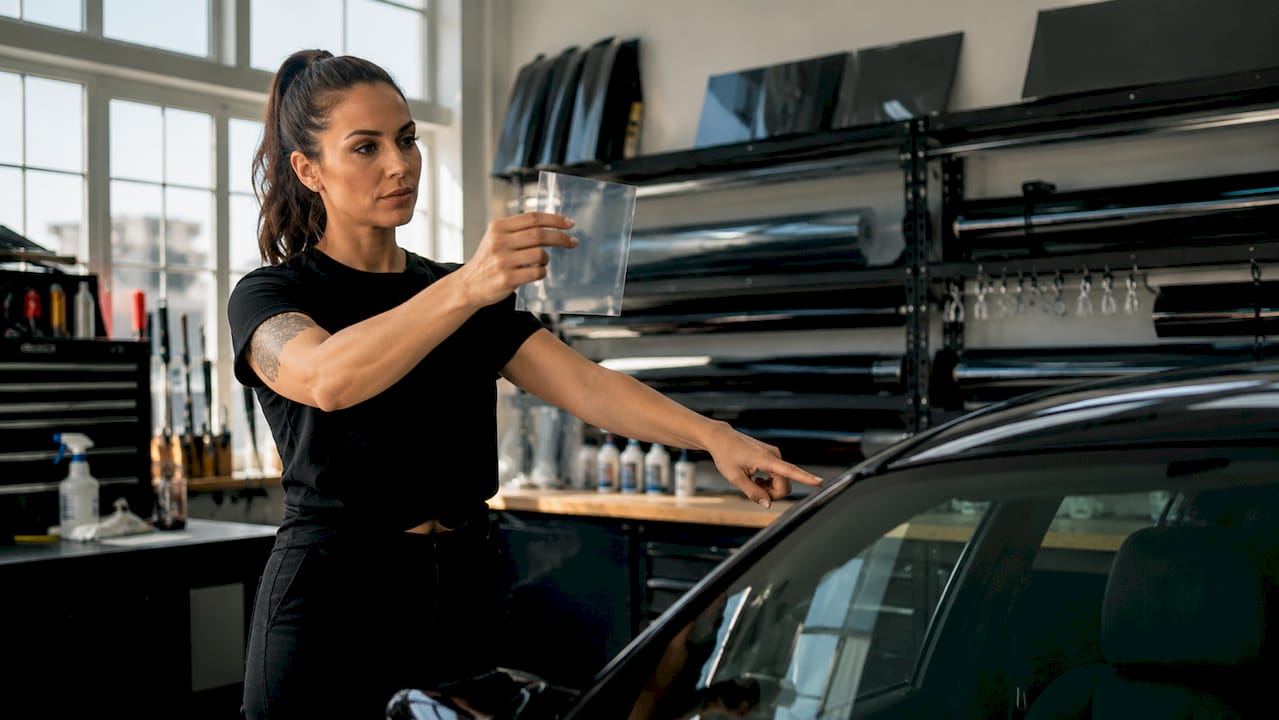
Ceramic film also lasts 7–10 years under South Florida conditions. That lifespan matters in Kendall, where UV exposure is intense year-round and cheaper films degrade visibly within two to three seasons.
Pro Tip: Ask your installer for the product's technical spec sheet before committing. Verified VLT and Total Solar Energy Rejected (TSER) ratings tell you exactly what you're getting, not just a salesperson's estimate.
2. How ceramic film protects your car's interior and occupants
Interior fading is one of the most underestimated costs of driving in South Florida. Dashboards crack, leather dries out, and upholstery loses color when UV rays hit unprotected surfaces daily. Ceramic film blocks 99% of UV-A and UV-B radiation, which is the threshold professional installers consider the minimum acceptable standard for high-UV environments.
Skin protection is equally real. Dermatologists classify UV-A as a primary driver of skin aging and a contributor to skin cancer risk. A film that blocks 99% of UV-A cuts that exposure significantly during daily commutes and long drives on the Florida Turnpike.
The interior protection extends to electronics too. Screens, navigation units, and upholstery all last longer when cabin temperatures stay lower. Ceramic film's heat rejection directly reduces the thermal stress on every surface inside your car.
3. Carbon window films: a solid middle-ground option
Carbon film offers moderate heat rejection of 45–55%, which places it well above dyed film but below premium ceramic. For Kendall drivers who want meaningful heat control without the top-tier price, carbon film is a legitimate option worth considering.
Carbon film is also non-metallic, so it shares ceramic's advantage of no signal interference with GPS or keyless entry. That makes it compatible with virtually every modern vehicle on the road. Its fade resistance is moderate, meaning it holds its color longer than dyed film but will show wear before ceramic does in high-UV conditions.
The practical ceiling for carbon film is its TSER rating. In Kendall's summer heat, a 45–55% rejection rate still allows a meaningful amount of solar energy into the cabin. Drivers who park outdoors for extended periods daily will notice the difference compared to ceramic.
- Heat rejection: 45–55% TSER
- Signal compatibility: Non-metallic, no interference
- Fade resistance: Moderate, better than dyed
- Best for: Older vehicles, budget-conscious drivers, shaded parking situations
4. Dyed window films: the budget option with real trade-offs
Dyed film is the entry point of the automotive tint market. It blocks 30–40% of solar heat, which provides some relief but falls well short of what Kendall's climate demands for genuine comfort. The film works by absorbing solar energy rather than reflecting or rejecting it, which causes it to heat up and transfer warmth into the cabin over time.
The durability problem is significant. Dyed films fade within 2–3 years under South Florida's UV index, which regularly exceeds 11. That means a film installed today may look purple or blotchy by the time you're ready for your next service appointment.
- Heat rejection: 30–40% TSER
- Lifespan: 2–3 years under intense sun
- UV protection: Lower than ceramic or carbon
- Best avoided when: Your car parks outdoors more than 4 hours daily
Vehicles parked outdoors for more than four hours daily should not use dyed film. The combination of heat absorption and UV degradation accelerates fading and reduces the film's effectiveness faster than any other film type.
5. Kendall's climate and local regulations: what shapes your choice
Kendall sits in Miami-Dade County, where the subtropical climate delivers intense UV radiation, high humidity, and temperatures that push cabin heat to dangerous levels without protection. The UV index exceeds 11 on most summer days, which is classified as "extreme" by the World Health Organization. That rating places Kendall in the same category as high-altitude tropical regions.
Florida law sets firm limits on how dark your tint can be. Front windshields require 70% VLT, and front side windows must allow at least 28% VLT. Rear windows and the back windshield have more flexibility. These rules exist to maintain driver visibility and law enforcement sightlines.
Pro Tip: Before installation, check your film's VLT rating against Florida's legal limits using the spec sheet. A film labeled "35% tint" refers to the film's own VLT, not the combined VLT with your factory glass. Factory glass already absorbs some light, so the final combined VLT will be lower.
The table below summarizes Kendall's legal VLT requirements by window position:
| Window position | Minimum VLT required |
|---|---|
| Front windshield | 70% |
| Front side windows | 28% |
| Rear side windows | No restriction |
| Rear windshield | No restriction |
Spectral selectivity is the performance concept that matters most in this environment. The best films block infrared heat while allowing visible light through, so you stay cool without going dark. That's the technical reason ceramic outperforms dyed film even at the same VLT level.
6. Understanding TSER, VLT, and what the numbers actually mean
Total Solar Energy Rejected (TSER) measures how much of the sun's total energy a film blocks, including infrared heat, visible light, and UV radiation. VLT measures only how much visible light passes through. These two numbers together tell the full story of a film's performance.
A common mistake is choosing a film based on darkness alone. A very dark film can have a low TSER if it absorbs rather than reflects solar energy. Darker tints do not automatically mean more heat rejection. Spectral selectivity is what separates a high-performing film from one that just looks dark.
Poor-quality films show their limits quickly in Kendall. Bubbling, purple discoloration, and peeling are signs of dyed or low-grade carbon films breaking down under UV stress. These failures are not just cosmetic. A bubbled film reduces visibility and can create glare that affects driving safety.
Always verify film specs through the manufacturer's technical data sheet before installation. VLT and TSER ratings should be specific to the film product, not general marketing claims. Reputable installers provide this documentation without being asked.
| Film type | TSER | UV blocking | Lifespan | Signal safe |
|---|---|---|---|---|
| Ceramic | 55–65% | 99% | 7–10 years | Yes |
| Carbon | 45–55% | High | 5–7 years | Yes |
| Dyed | 30–40% | Moderate | 2–3 years | Yes |
7. Situational recommendations: matching film type to your driving life
The right film depends on how and where you use your car in Kendall. Not every driver has the same needs, and the best films for one situation may be overkill or insufficient for another.
Daily outdoor parking: Ceramic film is the only practical choice. If your car sits in an open lot at work or at home for more than four hours a day, the UV and heat exposure demands the highest-performing film available. The 7–10 year lifespan also means you won't be replacing it every few years.
Budget-conscious drivers: Carbon film offers a meaningful upgrade over dyed at a moderate price increase. The trade-off is a shorter lifespan and slightly lower heat rejection, but it still outperforms dyed film significantly in Kendall's conditions.
Older vehicles without modern electronics: Carbon film works well here. Since older vehicles often lack GPS antennas embedded in glass or keyless entry systems, the non-metallic advantage of ceramic matters less. Carbon delivers solid performance at a lower cost.
Electric vehicle owners: Ceramic film is the clear winner. Ceramic tint reduces AC load by keeping the cabin cooler, which directly preserves battery range in South Florida heat. For EV drivers, the film pays for itself in reduced energy consumption over time. Southmiamitint installs ceramic tint on EVs regularly and the difference in cabin temperature is immediate and measurable.
For drivers who want to understand Florida tint legality before booking an installation, reviewing the VLT rules by window position is a smart first step.
Key takeaways
Ceramic window film is the most effective choice for Kendall vehicles because it combines 55–65% heat rejection, 99% UV blocking, and a 7–10 year lifespan without interfering with vehicle electronics.
| Point | Details |
|---|---|
| Ceramic film leads in Kendall | Rejects 55–65% of solar energy and blocks 99% of UV rays for 7–10 years. |
| Legal VLT limits apply | Florida requires 70% VLT on windshields and 28% VLT on front side windows. |
| Dyed film fades fast | Dyed films degrade within 2–3 years under Kendall's UV index above 11. |
| Darkness does not equal heat rejection | Spectral selectivity, not tint shade, determines how much heat a film blocks. |
| EV owners gain extra value | Ceramic film lowers cabin heat, reducing AC load and preserving battery range. |
What I've learned after years of tinting cars in Kendall
The biggest misconception I see from drivers is that a darker tint means a cooler car. It doesn't. I've tested films side by side, and a light ceramic film at 35% VLT will outperform a dark dyed film at 20% VLT on heat rejection every single time. The physics are in the film's composition, not its color.
The second thing I tell every customer is to ask for the spec sheet. Any installer who can't produce a manufacturer's technical data sheet for the film they're selling is not someone you want touching your car. VLT and TSER ratings are not opinions. They are measured values, and you deserve to see them before you pay.
Ceramic film for EV owners is still underappreciated. I've had Tesla and Rivian owners come back after installation and tell me their range improved noticeably on hot days. That's not marketing. That's physics working in your favor.
Finally, window tint longevity in Miami-Dade depends heavily on installation quality, not just film quality. A premium ceramic film installed poorly will fail faster than a mid-grade carbon film installed correctly. Choose your installer as carefully as you choose your film.
— Jose
Southmiamitint brings ceramic tinting to your driveway in Kendall
Southmiamitint specializes in mobile ceramic window tinting for car owners across Miami-Dade, including Kendall. The service uses 3M IR, 3M Color Stable, and Iviron Kollmax ceramic films, all of which meet the 99% UV blocking standard and deliver verified TSER ratings.
The mobile setup means a certified installer comes to your home, office, or parking lot. No drop-off, no waiting room, no wasted afternoon. If you're ready to protect your car with ceramic tint starting at $249, Southmiamitint handles everything on-site with professional-grade materials and a clean installation. You can also review mobile tinting prices before booking to find the right package for your vehicle.
FAQ
What is the best window film type for Kendall, FL?
Ceramic window film is the best choice for Kendall because it rejects 55–65% of total solar energy, blocks 99% of UV rays, and lasts 7–10 years under South Florida's intense sun.
Is window tint legal in Kendall, FL?
Florida law requires a minimum of 70% VLT on front windshields and 28% VLT on front side windows. Rear windows have no VLT restriction.
How long does window tint last in South Florida?
Ceramic film lasts 7–10 years, carbon film lasts approximately 5–7 years, and dyed film fades within 2–3 years under Kendall's UV index above 11.
Does window tint interfere with GPS or keyless entry?
Ceramic and carbon films are non-metallic and do not interfere with GPS, keyless entry, or Wi-Fi signals. Metallic films can cause signal disruption and are not recommended for modern vehicles.
Does darker tint mean better heat rejection?
No. Heat rejection depends on a film's spectral selectivity and TSER rating, not its darkness. A light ceramic film consistently outperforms a dark dyed film on heat rejection in real-world conditions.