
Factory tint is pigment dyed directly into the glass during manufacturing, while aftermarket window film is a polymer or ceramic layer applied to the interior glass surface after purchase. The factory tint vs aftermarket film debate matters because these two options perform very differently. Factory tint gives you privacy and a clean look. Aftermarket film gives you real protection from UV radiation, infrared heat, and even shattered glass. Most car owners assume dark glass means strong protection. That assumption is wrong, and it costs them comfort and skin health every time they drive.
1. What does factory tint actually do?
Factory tint offers visual privacy, not performance protection. The pigment baked into the glass reduces visible light transmission to a range of 15–26% VLT, which is why rear windows look dark from the outside. That darkness creates the impression of sun protection, but the reality is different.
The pigment blocks only 15–25% of UV radiation. Standard clear automotive glass already allows 70–80% VLT, so factory tint is a modest step down in light, not a meaningful barrier against harmful rays. UV-A radiation, which causes skin aging and contributes to skin cancer risk, passes through factory glass almost unchecked.
Heat rejection is another weak point. Factory tinted glass absorbs heat and then radiates it into the cabin. On a hot Miami afternoon, that dark rear glass can actually make your back seat warmer, not cooler. The glass acts like a slow-release heat source rather than a barrier.
The one genuine advantage is permanence. Factory tint is baked into the glass, so it never peels, bubbles, or fades. You will never clean it off by accident or scratch it with a squeegee. That durability is real, but it applies only to the cosmetic layer, not to any protective function.
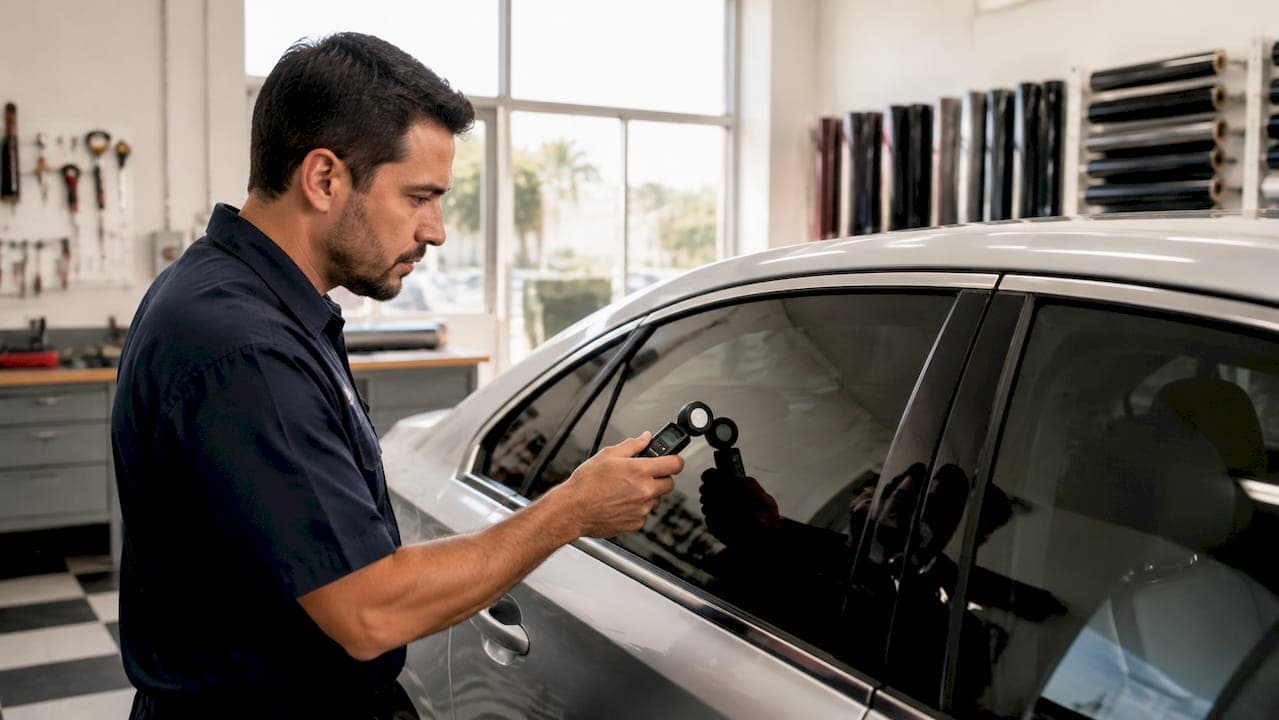
Pro Tip: If your vehicle has factory tint on the rear windows, check the actual VLT with a light meter before assuming you have legal compliance on the front windows. Many states set different limits for front and rear glass.
2. How aftermarket window film enhances protection and comfort
Aftermarket window film is where performance actually lives. High-quality ceramic films block up to 99% of UV rays and reject 50–90% of infrared heat, depending on the film type. That level of protection is not achievable with factory glass alone, regardless of how dark it looks.
Film technology falls into three main categories:
- Dyed film: The most affordable option. Absorbs some heat and reduces glare, but offers limited infrared rejection and fades faster over time.
- Carbon film: No metal content, so it does not interfere with GPS or cell signals. Rejects more heat than dyed film and holds color well.
- Ceramic film: The top performer. Blocks the most infrared heat, rejects nearly all UV radiation, and stays clear in lighter shades. Products like 3M IR and Iviron Kollmax ceramic tint fall into this category.
Aftermarket film also protects your interior. UV radiation degrades leather, fades dashboards, and cracks vinyl. Window tinting can preserve your car's interior from that slow, expensive damage. Glare reduction is another real benefit, especially on Florida highways where low-angle sun hits your windshield at the worst possible moment.
One underappreciated advantage is flexibility. Aftermarket film offers shades from 5% to 90% VLT, letting you choose exactly how much light you want to block while staying within your state's legal limits. Factory tint gives you no such choice.
Pro Tip: Ceramic film rejects heat without going dark. A 70% VLT ceramic film on your front windshield can cut infrared heat dramatically while keeping your view completely clear. You do not need a dark tint to stay cool.
| Film type | UV rejection | Infrared heat rejection | Signal interference |
|---|---|---|---|
| Dyed | Moderate | Low | None |
| Carbon | High | Moderate | None |
| Ceramic | Up to 99% | 50–90% | None |
For a deeper look at why ceramic outperforms other options in hot climates, ceramic tint for Miami drivers breaks it down with local context.
3. Can you layer aftermarket film over factory tint?
Yes, and most car owners with factory-tinted rear windows do exactly this. The key is understanding how the math works. Layering tint multiplies VLT values rather than adding them. A 50% VLT film applied over glass with 70% VLT results in approximately 35% total light transmission, not 20%.
That multiplication effect matters for legal compliance. Most states set a minimum VLT for front side windows, commonly 35% or higher. If your factory rear glass sits at 20% VLT and you add a 50% film, the result is 10% VLT. That is illegal in most jurisdictions and nearly impossible to see through at night.
Before layering, follow these steps:
- Measure your factory glass VLT with a tint meter.
- Check your state's legal limits for each window position.
- Calculate the combined VLT by multiplying the two values.
- Choose a film shade that keeps the result above the legal minimum.
- Have a professional installer verify compliance before the job is done.
Calculating combined VLT is counterintuitive for most car owners because the numbers do not behave the way you expect. A professional installer handles this calculation as a standard part of the job. Attempting to guess the right shade without measuring first is how owners end up with illegal tint and a citation.
4. Durability, maintenance, and safety features compared
Factory tint wins on maintenance. Because the pigment lives inside the glass, no cleaning product, window scraper, or car wash can touch it. It looks the same on day one as it does ten years later. That is a genuine advantage for owners who want zero upkeep.
Aftermarket film requires more care but delivers more in return. Professionally installed film lasts 10–15 years or more and typically comes with a manufacturer's warranty. Poor installation or low-quality film leads to bubbling, peeling, and color shift. Quality film from brands like 3M or Iviron Kollmax, installed correctly, holds up through years of Miami sun without issue.
The safety difference is significant. Aftermarket film holds shattered glass together after an impact, acting like a laminate layer. In an accident, that film keeps broken shards from spraying into the cabin. Factory tint adds no such protection. The glass breaks the same way it would without any tint at all.
Pro Tip: When evaluating film warranties, look for coverage that includes both the film itself and the installation labor. A film warranty without labor coverage means you pay for reinstallation if something goes wrong in year two.
Aftermarket film can also be removed or replaced by a professional. If you sell the vehicle, upgrade to a better film, or move to a state with different tint laws, the film comes off cleanly. Factory tint is permanent. You cannot remove it, upgrade it, or adjust it.
5. Which option fits your situation?
Factory tint is sufficient for car owners who want basic privacy and a factory-clean look with no maintenance. If you park in a garage, drive short distances, and live in a mild climate, the factory glass does its job.
Aftermarket film is the right choice in these situations:
- You live or drive in a hot, sunny climate like South Florida.
- You have skin sensitivity or a medical reason to limit UV exposure.
- You want to protect leather seats, a wood-grain dash, or expensive interior materials.
- You want glare reduction on long highway drives.
- You want the added safety of shatter-resistant glass.
- You want to customize darkness and performance to match your preferences and local laws.
Window tinting in Miami's climate is not a luxury. The combination of year-round sun, high humidity, and intense UV index makes aftermarket film a practical investment, not an upgrade. A Miami driver without quality film is absorbing UV radiation through their side windows on every commute.
The cost difference is real but manageable. Ceramic film installation from a professional service like Southmiamitint starts at $249. That cost covers years of UV protection, heat rejection, and interior preservation. Compare that to the cost of reupholstering a cracked leather interior or treating sun-damaged skin, and the math favors the film. For a full picture of tinting pros and cons, the tradeoffs are worth reviewing before you decide.
Pro Tip: Many car owners believe darker tint means better protection. UV and heat rejection depend on film technology, not darkness. A light ceramic film outperforms a dark dyed film on every performance metric. You can read more about common tinting myths that lead owners to make the wrong choice.
Key Takeaways
Aftermarket ceramic window film outperforms factory tint on every protective measure, including UV rejection, heat reduction, and glass safety, while factory tint delivers only cosmetic privacy.
| Point | Details |
|---|---|
| Factory tint limits | Factory glass blocks only 15–25% of UV radiation and offers minimal heat rejection. |
| Aftermarket film performance | Ceramic films block up to 99% of UV rays and reject 50–90% of infrared heat. |
| Layering requires math | Combining film with factory tint multiplies VLT values; always calculate before installing. |
| Durability tradeoff | Factory tint is permanent but upgradeable; quality aftermarket film lasts 10–15 years with a warranty. |
| Safety advantage | Aftermarket film holds broken glass together; factory tint provides no shatter resistance. |
What I've learned after years of seeing both options up close
Most car owners come to me after they've already been disappointed. They bought a vehicle with factory tint on the rear windows, assumed they were protected, and then spent three summers wondering why their cabin felt like an oven and their dashboard started cracking.
The misconception runs deep. Dark glass looks protective. It feels like it should block heat and UV. But UV and heat rejection depend on technology, not darkness. A nearly clear ceramic film does more for your skin and your interior than any factory-tinted rear window.
What I tell every car owner is this: factory tint is a starting point, not a solution. It gives you privacy on the rear glass. That's it. If you want real protection, you need a film that was engineered for that purpose. Professional ceramic films achieve heat rejection without requiring you to go dark on windows where visibility matters.
The owners who get the most value from aftermarket film are the ones who treat it as a health and comfort decision, not just an aesthetic one. Your skin absorbs UV through your side windows every single day you drive. That exposure adds up. A quality ceramic film on your front side windows is one of the most practical things you can put on your vehicle.
— Jose
Southmiamitint can protect your car the right way
Factory tint leaves real gaps in UV and heat protection. Southmiamitint fills those gaps with professional-grade aftermarket film, installed at your location across Miami-Dade.
Southmiamitint installs 3M IR, 3M Color Stable, and Iviron Kollmax ceramic tint on cars, trucks, and SUVs. Ceramic window tint in Miami starts at $249, and every job comes with a manufacturer's warranty. The mobile service means no shop visit. A technician comes to your home, office, or anywhere in Miami-Dade and completes the installation on your schedule. If your vehicle has factory tint and you want to upgrade its performance, Southmiamitint calculates the right film shade to keep you legal and comfortable. Check mobile tinting prices and book directly online.
FAQ
What is the main difference between factory tint and aftermarket film?
Factory tint is pigment dyed into the glass during manufacturing and provides only visual privacy. Aftermarket film is a polymer or ceramic layer applied to the glass surface that actively blocks UV radiation and rejects infrared heat.
Does factory tint protect against UV rays?
Factory tint blocks only 15–25% of UV radiation, which is not enough to protect skin or interior materials. Aftermarket ceramic films block up to 99% of UV rays, making them far more effective for sun protection.
Can I add aftermarket film over my factory-tinted windows?
Yes, but the combined VLT is calculated by multiplying the two values, not adding them. A professional installer should measure your factory glass and select a film shade that keeps the total within your state's legal limit.
How long does aftermarket window film last?
Professionally installed aftermarket film lasts 10–15 years or more and typically comes with a manufacturer's warranty. Film quality and installation technique are the two biggest factors in longevity.
Is aftermarket tint worth it if my car already has factory tint?
Factory tint handles privacy on rear windows but does not reject heat or UV effectively. Adding a quality aftermarket film, especially ceramic, gives you real protection that factory glass cannot provide on its own.