
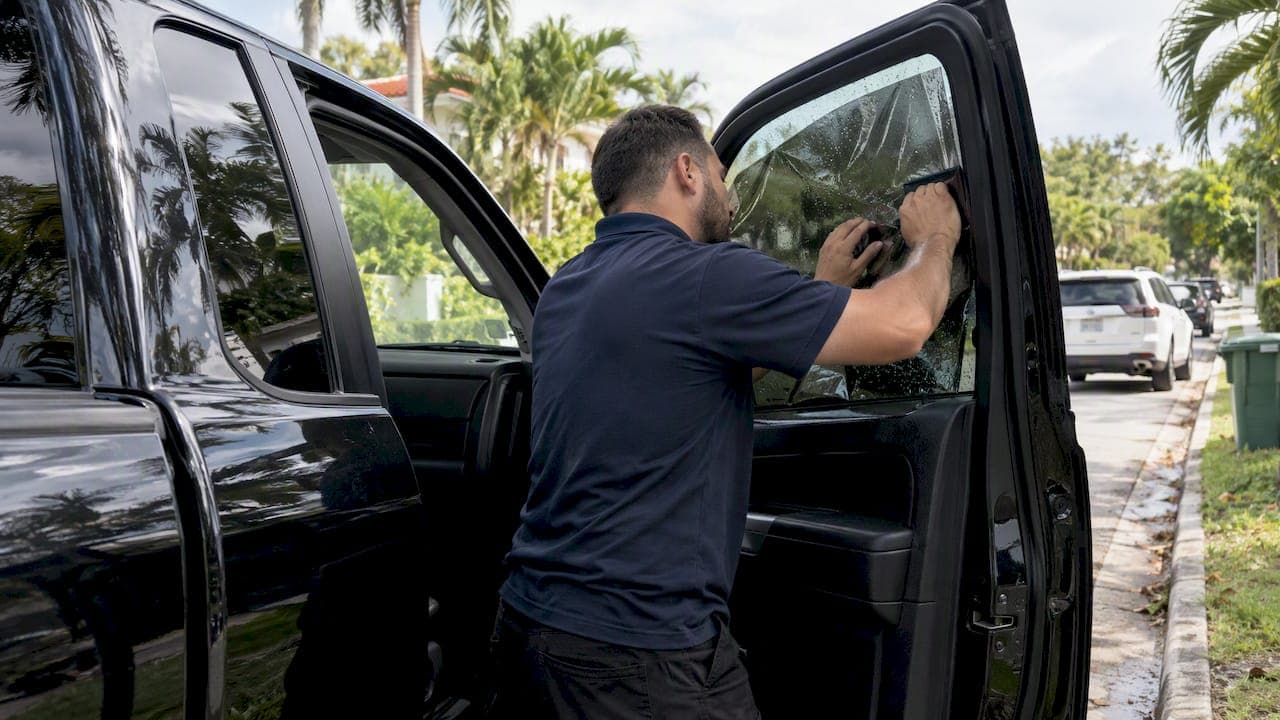
Yes, high-performance ceramic, infrared-rejecting films are among the options that can help cut heat in a truck cab. Manufacturer data for products like 3M Ceramic IR and 3M Crystalline backs this up, and NHTSA's FMVSS No. 205 guidance still requires 70% light transmittance on glass requisite for driving visibility. For trucks, that means considering ceramic film on front windows and a windshield visor strip, then letting a professional installer like SouthMiamiTint handle the fit.
TL;DR:
- Compare the exact film and shade by IRER and TSER, since VLT measures visible light and darkness alone does not predict heat rejection.
- Keep glazing needed for driving visibility at or above 70% light transmittance under the federal baseline, and verify stricter state limits before installation.
- Dyed film can darken glass and reduce glare, but compare product data for heat rejection and durability rather than choosing by appearance.
- If your truck relies on GPS, toll transponders, or ELD, ask about signal compatibility, computer cut fitting, and warranty coverage before booking.
Table of Contents
- Which film types actually reduce heat
- How window film actually cools your cabin
- Choosing tint window by window for your truck
- Legal and safety considerations for truck tint
- Why professional installation matters for heat performance
- Recommended films and questions to ask an installer
- What I tell truck owners dealing with constant sun exposure
- How SouthMiamiTint can help with mobile installation
- FAQ
- Sources
Which film types actually reduce heat
Not every tint earns the word "cooling." Dark film blocks glare and adds privacy, but darkness alone does not tell you how much heat it keeps out. Heat control comes down to film construction, and that is where ceramic and infrared-rejecting films separate from the rest.

Ceramic and nano-ceramic films can use non-metal, nano-particle construction. These films are designed to manage heat and visible light, so films with the same tint shade may perform differently in direct sun.
3M Crystalline reports infrared energy rejection and total solar energy rejected figures that vary by VLT option, along with UV block up to 99.9%. Those product figures can help compare heat-control performance, alongside the visible shade.
- Ceramic and IR-rejecting films: some product data reports heat-rejection performance, so compare the manufacturer's figures for the specific film.
- Carbon films may offer a different balance of heat control and appearance than dyed or ceramic options; compare product data before choosing.
- Dyed films can darken glass and reduce glare; check product data for heat rejection and durability.
If you want proof before you buy, ask to see the manufacturer's data sheet rather than relying on the tint sample's color. Our ceramic versus dyed comparison breaks this down in more detail.
How window film actually cools your cabin
Three numbers predict how a film performs, and none of them is "how dark it looks." Visible Light Transmission (VLT) tells you how much light passes through. Infrared Energy Rejection (IRER) tells you how much of the sun's infrared heat the film blocks. Total Solar Energy Rejected (TSER) combines both along with reflected energy into one overall heat score.
Glass and film can absorb or reject solar energy in different ways, affecting cabin heat. Compare the product's infrared and total solar energy rejection data rather than judging performance by darkness alone.
- VLT measures visible light passing through, which affects how dark the glass looks and your nighttime visibility.
- IRER reports a product's infrared energy rejection; compare the figure for the specific film.
- TSER reports total solar energy rejected and can help compare overall heat performance across products.
Truck cab comfort can depend on glass area and sun exposure. Comparing IR rejection figures for the specific films under consideration can help assess their potential heat-control performance.
Choosing tint window by window for your truck
Consider where your vehicle receives the most sun when deciding where to apply film. A windshield visor strip may help with glare; our windshield tint guide discusses that application.
- Consider ceramic IR film for front side windows, taking your local rules and driving needs into account.
- Add a windshield visor strip in the same ceramic family to cut glare and heat at eye level.
- Choose carbon or ceramic film for rear windows based on your budget and privacy preference.
- Confirm the VLT percentage on each window complies with your state's rules before scheduling install.
A common question is how to choose between lighter and darker VLT options. Darker film adds privacy and glare reduction, but it does not automatically mean better heat rejection. Check the infrared rejection figures for each film before assuming that a darker shade provides more heat rejection. Our VLT guide walks through how VLT interacts with legal limits.
If your truck relies on GPS, a toll transponder, or an ELD system, ask the installer whether the specific film could affect those signals. Ceramic construction is described as non-metalized in the 3M Ceramic IR bulletin.
Pro Tip: Ask your installer for the IRER and TSER numbers on the specific film and VLT you're considering, not just the general product name.
Legal and safety considerations for truck tint
Before you tint anything, know the federal baseline. NHTSA's interpretation of FMVSS No. 205 says glazing requisite for driving visibility must maintain at least 70% light transmittance. The interpretation explains how the standard affects manufacturers and repair businesses; check applicable state rules and ask an installer about your vehicle.
- Federal rules under FMVSS No. 205 set the 70% light transmittance floor for glazing requisite for driving visibility.
- States set their own operating and registration rules on top of that federal baseline, so your local VLT limit may differ from a neighboring state.
- Always check your state's specific tint law before choosing a VLT for your front windows.
- Choose film with visibility in mind, and check the applicable rules for your vehicle and location.
Ask an installer about applicable rules and visibility before choosing a VLT for your front glass.
Why professional installation matters for heat performance
Installation quality can affect how film sits against glass; for advanced vehicle heat control techniques beyond window film, consider options like downpipe heat management. Ask the installer about their process and how they address bubbles, haze, and clarity.
Consumer adhesive kits sold for DIY installation often fall short here. DIY installation can be challenging; ask about the tools and techniques needed for the specific film, and consider professional installation.
- Ask for proof of manufacturer certification or a current product bulletin for the film being installed.
- Ask whether the installer offers a warranty and what it covers.
- Ask whether they use computer-cut templates rather than hand-cutting on your vehicle.
- Ask about prior truck installations, since windshield curves and tailgate glass require different handling than a sedan.
Pro Tip: A computer-cut template means the installer isn't trimming film against your glass freehand, which reduces the chance of scratches or gaps at the edges.
Recommended films and questions to ask an installer
When you are ready to get quotes, bring a short checklist so you can compare apples to apples. Non-metalized, IR-rejecting ceramic products, including 3M Ceramic IR and 3M Crystalline, are options to compare for heat reduction. Ask about signal compatibility for the specific film and your vehicle.
One industry source reports that ceramic and infrared films can block up to 99% of UV radiation while lowering cabin temperature and reducing A/C load. Ask installers for product-specific UV performance information when comparing quotes.
- Ask for the IRER or percent IR rejection figure for the exact film and VLT you're considering.
- Ask for the TSER number to compare overall heat performance across film options.
- Confirm the film is non-metalized if you rely on GPS, ELD, or toll transponder signals.
- Ask what VLT options are available and whether they meet your state's legal limits.
- Ask about warranty coverage and whether installation uses mobile computer-cut fitting.
What I tell truck owners dealing with constant sun exposure
If you drive a truck in a hot climate, IR-rejecting ceramic film is one option to consider for cabin comfort. It is not a cure-all. Film works best paired with regular A/C maintenance and parking in shade when you can, since no window film replaces a working cooling system.
Bring your checklist to every quote. If an installer cannot give you IRER or TSER numbers for the film they are proposing, that is worth a second conversation before you commit.
— Jose
How SouthMiamiTint can help with mobile installation
We install premium, non-metallic ceramic films, including 3M Ceramic IR, 3M Crystalline, and Iviron KoolMax, with mobile service that comes to your location in Miami-Dade County. We use computer-cut templates fitted to your truck, which can help achieve a clean fit.
When you book, we walk through the film's IR and TSER figures with you, confirm the VLT that fits your state's rules, and discuss warranty coverage before any install begins.
- 2 Front Windows, Windshield Tint, and Full Car + Windshield packages, with two front windows and windshield tint from $150 and a full car plus windshield from $500.
- 3M Ceramic IR and Crystalline options for front windows and windshield strips.
- Mobile ceramic tint service installed at your home or office.
Request a quote through our site, and we will confirm your film choice, VLT, and appointment window before we show up ready to install.
FAQ
What tint blocks out the most heat?
Ceramic, infrared-rejecting films block the most heat because they target IR energy directly rather than just darkening the glass. 3M Crystalline's technical data sheet lists infrared energy rejection and total solar energy rejected figures that vary by VLT, which is the metric to check before buying.
Are commercial trucks allowed to have tinted windows?
Commercial trucks can be tinted, but the glazing requisite for driving visibility, meaning the windshield and front side windows, must maintain at least 70% light transmittance under NHTSA's FMVSS No. 205 interpretation. State rules add further limits on top of that federal baseline, so check your state's specific requirement before installing.
Should I get 35 or 50 tint?
Neither percentage automatically means better heat rejection, since VLT measures visible light, not infrared energy blocked. Compare the IRER and TSER figures for each film at your chosen VLT, and confirm the percentage complies with your state's legal limit for front windows.
How do you tint truck windows?
Professional installers can explain how they apply film to curved glass, finish the edges, and address the risk of peeling. We recommend considering professional installation; ask about the installer’s process and how they address bubbles, adhesion, and clarity.
Does tint interfere with GPS or toll transponders?
Ask the installer whether the specific film could affect GPS, ELD, or toll transponder signals. Confirming a film is non-metalized is worth asking about directly if your truck relies on any of these systems.
Sources
- Interpretation ID: 17440.drn
- Multimedia
- 8 Benefits of Window Tint for Truck Owners in Florida for 2026