
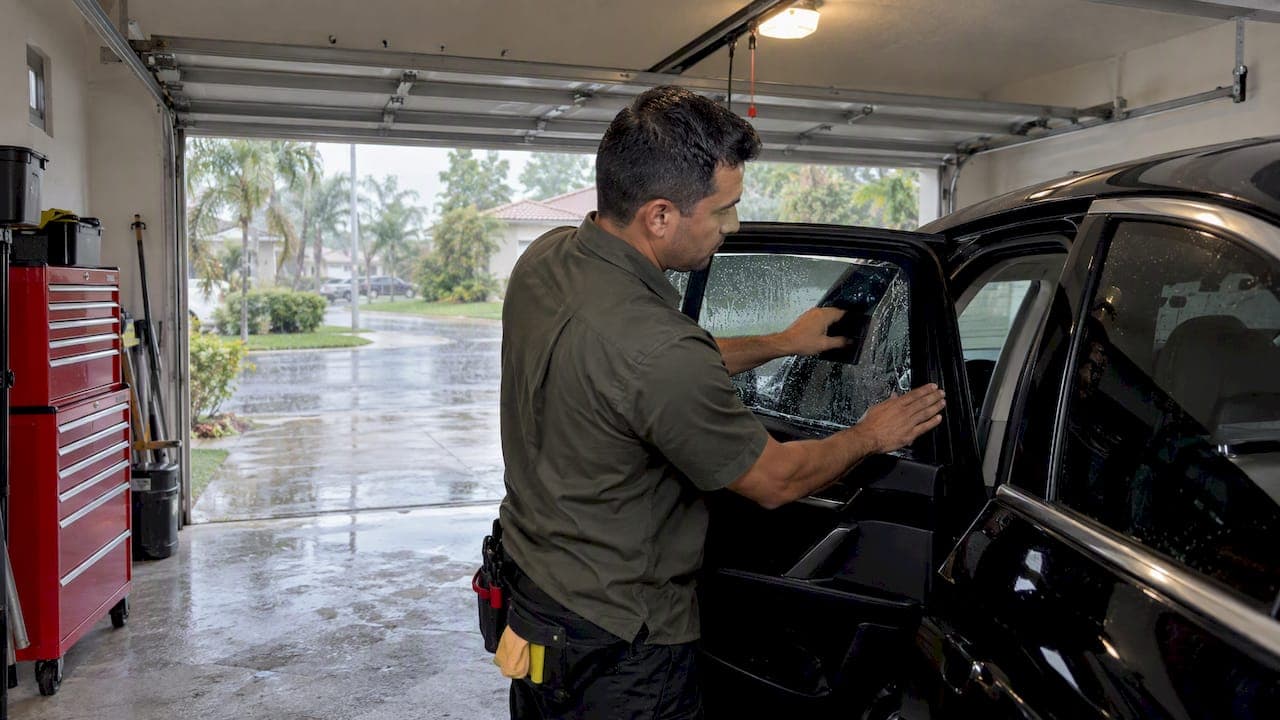
Yes, mobile window tinting can sometimes be done on a rainy day, but only if the car is sheltered from wind, dust and drips. Film goes on the inside of the glass, so rain does not hit the work directly. Open air in a downpour is a different story. If the car sits in a driveway under blowing rain, a good installer will move the job to a garage or carport, or reschedule.
Below, we explain what rain really changes, how Miami humidity affects curing, and when you should postpone.
TL;DR
- Film is applied to the inside of the glass, so light rain alone does not ruin a job. IWFA confirms this.
- The real risks are wind, dust and water getting into door seals and dripping onto fresh film. Shelter solves most of it.
- Rain and high humidity slow curing. Expect hazy spots for days, and keep your windows up.
- Postpone if the car cannot be kept covered, or if you washed it in the last 48 hours.
- In Miami-Dade, we come to you. Tell us where you can park under cover and we will plan around the forecast.
Table of Contents
- The short answer: rain is not the problem, exposure is
- Why film goes on the inside, and what that means on a wet day
- What rain, wind and humidity actually do to an install
- Where a mobile tint job should happen when weather is iffy
- Miami's weather: afternoon storms, humidity and your schedule
- Does rain affect how long tint takes to cure?
- What to do after a mobile install on a wet day
- When you should postpone
- Our perspective: weather decides how, not whether
- Book mobile tint that fits Miami's weather
- What else to consider before you book
- FAQ
- Sources
The short answer: rain is not the problem, exposure is
People search "mobile tinting in rain" because they picture water on the glass. That is not how tint works. According to the International Window Film Association, automotive film is installed on the inside of the vehicle windows, not the outside. Rain falling on the outer glass does not touch the adhesive side of the film.
What matters is the air and the space around the car while the film is being positioned. A calm, covered spot makes a clean job whether it is sunny or pouring. An open driveway with gusty wind makes a poor job even on a dry day.
So the better question is not "is it raining?" but "can the car be worked on in a clean, protected space?"
Why film goes on the inside, and what that means on a wet day
The installer cleans the interior side of each window, sprays a soapy-water solution, and floats the film into position. The IWFA explains that this solution lets the film be positioned without sticking too early. Then the installer squeegees out the liquid and the adhesive starts to bond.
That means the job already involves water by design. A little humidity in the air is not a threat to the process. What is a threat is uncontrolled water in places it should not be:
- Rain blowing into the cabin through an open door or window
- Water dripping from the roof edge, door frames or weatherstripping onto the glass
- Wet door panels and seals that shed droplets onto the film
The IWFA installation guidelines note that excess moisture under the film can cause pooling or hazy patterns. Controlling where the water goes is the whole game.
What rain, wind and humidity actually do to an install
Wind and dust
Dust is the biggest enemy of a clean finish. The IWFA Automotive Installation Guidelines say a clean environment is vital and that airborne dust can ruin an otherwise clean installation. A trapped speck under the film looks like a small bump you will see every time the sun hits the glass.
Rain days are often windy, especially with South Florida storm fronts. Wind lifts grit off the pavement and carries it right into an open door. The guidelines also stress controlling open doors and windows and having good overhead lighting. A dim, breezy carport is worse than a bright, still garage.
Moisture and drips
TrueLine Automotive, a film supplier, advises waiting at least 48 hours after washing the car because water can hide in the door seals and drip onto fresh film. The same logic applies to rain. A car that has sat in a heavy downpour for hours may carry water in its seals and door cavities. When the installer lowers a window or opens a door, that water can run out at the worst moment.

Temperature swings
The same TrueLine guide says an outdoor install should only be attempted on a still day with shade, and that results are noticeably worse otherwise because dust, wind and temperature swings all work against the installer. A cold, wet day makes the problem bigger. In Miami, our usual issue is the opposite: strong heat and sudden storms.
Where a mobile tint job should happen when weather is iffy
An enclosed, clean space is the ideal. TrueLine describes a closed-door garage as ideal, and that matches what the IWFA guidelines ask for: a clean, dust-free work area. If you have a garage, you are already set. Clear enough floor space for the installer to open doors fully, and sweep out loose dust.
If you do not have a garage, these are the options, in order of preference:
- Garage or enclosed parking bay. Best for any weather.
- Covered parking structure. Works well if the floor is not dusty and wind does not whip through.
- Carport with side protection. Acceptable on calm days with light rain.
- Open driveway. Fine only on still, dry days with shade. Not recommended during rain or wind.
For apartment and condo owners in Miami, Kendall, Pinecrest, Cutler Bay or Homestead, a covered level in the parking garage is often the best answer. Ask your building if mobile service providers are allowed there before you book.
Miami's weather: afternoon storms, humidity and your schedule
Miami-Dade has a wet season with frequent afternoon thunderstorms, and humidity stays high most of the year. We see this every day on the job. A few practical points:
- Book mornings in summer. Storms tend to build later in the day, so a morning slot often gives you the calmest window.
- Watch the radar, not just the percentage. A "40% chance of rain" can mean a short shower somewhere else in the county, or a stuck cell over your street.
- Humidity slows drying, not the quality of the film. The film is fine, but water under it takes longer to leave.
For more local detail, see our guides on humidity and tinting for Miami drivers, what happens to your windows when tinting in rain and how Miami weather affects your car's tinting needs.
Does rain affect how long tint takes to cure?
Yes, weather changes curing speed. The IWFA says the adhesive needs time to fully cure and bond, and that drying time varies with temperature and humidity. Film maker Gila says film cures over the next week to 10 days, with dry, sunny weather speeding it up and wet, cold weather prolonging it.
Here is what that looks like in practice:
| Condition after install | What to expect |
|---|---|
| Warm, dry, sunny days | Faster drying, haze clears sooner |
| Humid or rainy days | Slower drying, haze and small water pockets last longer |
| Cold, wet weather | Slowest curing (less common in Miami) |
Supplier guidance on timing varies: TrueLine says its film needs 3 to 5 days, Gila says up to 10 days. Both agree on the main point. Small hazy spots or bubbles can be normal while the film cures. They are not a defect unless they persist well past the cure window.
We go deeper on timelines in our guide to tint cure time and professional fixes.
What to do after a mobile install on a wet day
The first days decide how the film looks long term. Follow these steps:
- Keep the windows up. Gila says the film may look hazy or cloudy during curing and says not to roll windows down in that period. Our page on the wait before rolling down tinted windows covers it.
- Park under cover if you can. Heavy rain will not hurt cured film, but a covered spot helps the first days go smoothly.
- Do not clean the inside glass right away. Gila says to wait at least 3 days, then use application solution and a low-lint cloth or paper towel. For a gentle, streak-free method, read this guide to streak-free car glass cleaning.
- Skip the car wash at first. Our wash rules after tint explain timing for the outside and inside of the car.
- Do not poke at bubbles. Moisture pockets often disappear on their own as the film dries.
A broader care routine is in our step-by-step window film care guide.
When you should postpone
Not every rainy day needs a reschedule, and not every dry day is safe. Use this checklist:
| Situation | Go ahead? |
|---|---|
| Light rain, car in a garage | Yes |
| Light rain, covered parking with little wind | Usually yes |
| Heavy rain or thunderstorm, open driveway | No, reschedule |
| Strong wind, any weather, no shelter | No, reschedule |
| Car washed in the last 48 hours | Wait, water may be hiding in the seals |
| Standing water or mud around the car | Move the car or reschedule |
If the forecast looks rough, call or message us the day before. A short delay is cheaper than redoing a window with trapped dust or moisture.
Our perspective: weather decides how, not whether
We have tinted vehicles in South Florida for more than 25 years, and weather is part of every week. Our view is simple.
Rain does not make tint impossible. Dirty air, wind and stray water do. When a customer has a garage or a covered spot, we can usually work with the forecast. When the car is parked in the open and a storm is coming, we would rather talk about moving the appointment than rush a job you will look at every day.

We also think customers should know what is normal afterward. Some haze in the first days, especially after a humid week, is part of curing. The cure is slower in wet air, and that is a good reason to keep your windows up and be patient.
Tell us the address, where the car parks, and what the sky looks like. We will tell you honestly whether to go ahead.
— Jose
Book mobile tint that fits Miami's weather
We bring premium film to your home, office or parking garage anywhere in Miami-Dade, including Kendall, Homestead, Cutler Bay and Pinecrest. Published starting prices are from $150 for 2 front windows, from $150 for a windshield, and from $500 for a full car plus windshield. Film options include 3M Ceramic IR, 3M Color Stable and Iviron KoolMax ceramic.

See options and request a quote on our mobile tinting page, or compare our 3M window tinting films. Tell us about the weather and your parking situation when you ask, and we will plan the visit around it.
What else to consider before you book
Weather is one factor. These are the others that decide whether you are happy a year from now:
- Film type. Ceramic films are chosen mainly for heat rejection, which matters in Miami's sun. Carbon is another popular option. Our pros and cons guide lays out the tradeoffs.
- Old tint. If your current film is bubbling or purple, removal comes first and adds time to the visit.
- Prep. Clean the interior, clear out the door pockets, and avoid washing the car right before the appointment.
- DIY or pro. Rain and wind are exactly where DIY jobs go wrong. Read DIY vs. professional tinting for Miami drivers.
- Other planning. Our list of things to consider before tinting covers legal limits and expectations.
FAQ
Can you tint car windows when it is raining?
Often yes, if the car is under cover. Film goes on the inside of the glass, so the rain itself is not the issue. Wind, dust and water dripping from door seals are, so an open driveway in a storm is a poor choice.
Will rain ruin my new window tint?
Cured film handles rain without trouble. Fresh film is more sensitive, so keep the windows up and expect some haze for the first days. Wet and humid weather can stretch the cure time, which is normal.
How long should I wait to wash my car after tinting?
It depends on the film and the installer's guidance. Our wash rules after tint give a range for the outside of the car and a longer one for the inside glass. Before the install, wait at least 48 hours after a wash so hidden water does not drip onto the film.
Why does my tint look hazy after a rainy install?
A thin layer of application solution remains between film and glass after installation, and it needs time to evaporate. Humidity slows that. Small hazy spots usually clear within days to a couple of weeks. If they remain after the cure window, contact your installer.
Should I reschedule if rain is forecast?
Reschedule if the car has to sit uncovered, if the wind is strong, or if storms are expected during the appointment. If you have a garage or covered spot, you can usually go ahead.
Sources
- IWFA: Automotive Installation Process
- IWFA Automotive Installation Guidelines (PDF)
- TrueLine Automotive: How to Prepare Your Vehicle for Window Tint Installation
- Gila Window Film: Automotive FAQ
- Diamondbrite: Clean car glass