
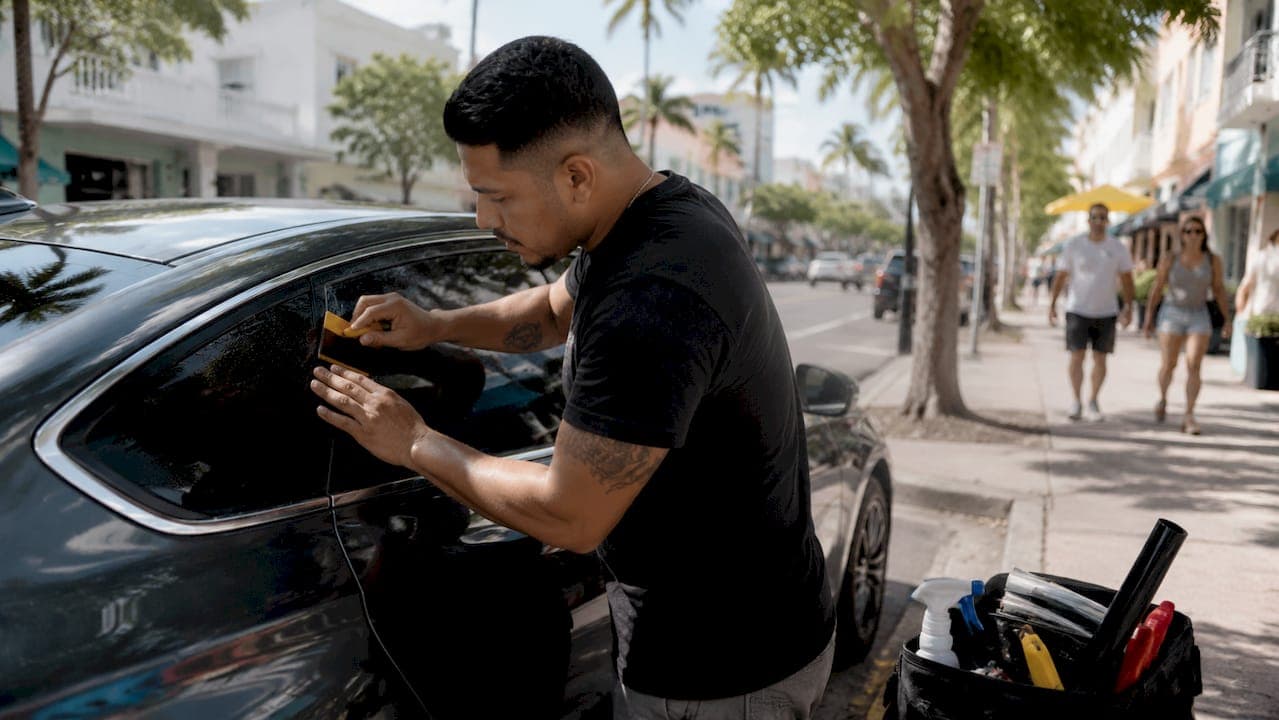
Humidity is the single biggest environmental factor controlling how well window tint adheres and cures on car glass. In Miami, where relative humidity regularly climbs above 70%, the moisture in the air slows the evaporation process beneath the film, extending curing times and raising the risk of bubbling, haze, and edge lifting. Understanding humidity considerations for tinting before your appointment means fewer surprises, better results, and a film that lasts. Films like 3M IR, 3M Color Stable, and Iviron Kollmax ceramic tint all behave differently in high moisture, and knowing what to expect protects your investment.
What is the ideal humidity range for window tint application?
Ideal curing conditions sit at 70–80°F with 30–70% relative humidity. That range gives the adhesive enough warmth to set while allowing trapped installation moisture to evaporate at a steady pace. Humidity above 70% traps moisture beneath the film, which is the direct cause of haze and bubbles that frustrate car owners in places like Miami, Fort Lauderdale, and Hialeah.
Professional installers target a tighter sweet spot. Balanced humidity around 40–60% avoids two separate problems: moisture retention on the high end and static electricity or dust attraction on the low end. Both extremes create defects, just different ones.
Here is what controlled conditions actually mean for your car:
- Temperature: Keep the glass surface between 70°F and 80°F during and after installation.
- Humidity: Target 40–60% relative humidity for the fastest, cleanest cure.
- Wind and dust: Avoid open garages or outdoor installs on breezy days. Airborne particles stick to wet adhesive.
- Direct sunlight: Beneficial after installation to warm glass and speed evaporation, but avoid it during the install itself to prevent premature drying of mounting solution.
Pro Tip: Check the Miami weather forecast the morning of your appointment. If humidity is above 75% and rain is expected, reschedule or ask your installer about a shaded indoor bay. A one-day delay beats a two-week cure problem.
How does high humidity affect curing time and film performance?
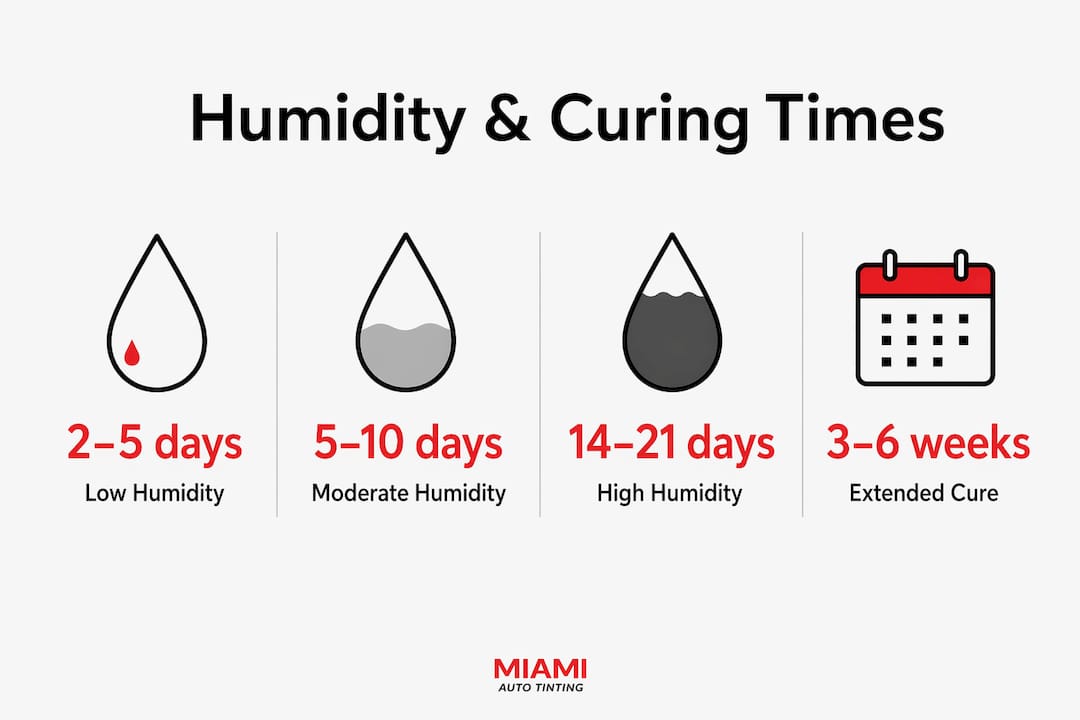
High humidity extends curing time significantly. In low humidity (0–30%), tint cures in 2–5 days. Moderate humidity (31–60%) pushes that to 5–10 days. High humidity (61–100%) stretches the cure window to 14–21 days, even when the film looks dry to the eye within the first few days.
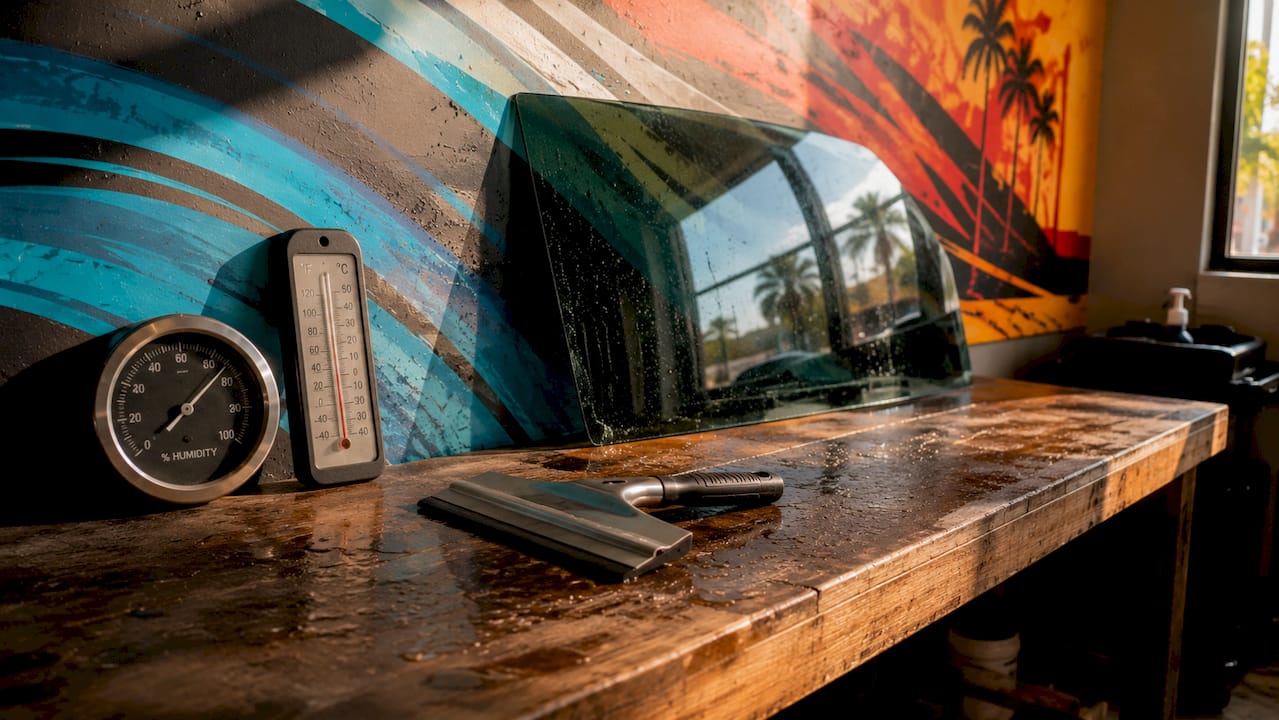
The mechanism is straightforward. Window tint is applied with a water-based mounting solution. That moisture needs to evaporate through or around the film for the adhesive to bond fully to the glass. High humidity slows that evaporation because the surrounding air is already saturated. The adhesive stays soft longer, which is why the film is vulnerable to damage during this period.
| Humidity Level | Range | Typical Cure Time |
|---|---|---|
| Low | 0–30% | 2–5 days |
| Moderate | 31–60% | 5–10 days |
| High | 61–100% | 14–21 days |
| Very high + cold | Above 60% below 50°F | 3–6 weeks or more |
In high humidity climates, full cure can take 3–6 weeks, compared to 2–4 weeks in drier regions. Miami sits in that extended range for most of the year, particularly from june through october.
Cold air compounds the problem. Installation below 40°F is not recommended because cold slows molecular evaporation on top of what humidity is already doing. Miami rarely hits that extreme, but cool, humid winter nights can still slow curing noticeably. Film type also matters. Thicker security films can require 60–140 days to fully cure in humid conditions, compared to roughly 30 days for standard solar films. If you choose a thicker ceramic or security film, plan your aftercare timeline accordingly.
How to tint your car windows when humidity is high
High humidity does not make tinting impossible. It makes preparation and aftercare more important. Follow these steps to protect your results.
-
Check conditions before the appointment. Look at the forecast for temperature and humidity. Aim for a day below 70% humidity if you have flexibility. Miami's dry season from december through april offers the best natural conditions.
-
Choose a professional with indoor bay access. Outdoor installs in humid air expose wet adhesive to moisture-laden air for longer. An indoor, climate-controlled space gives the film a better start.
-
Use the right mounting solution volume. Experienced installers use the minimum effective amount of mounting solution in humid conditions. Excess water takes longer to evaporate when the air is already wet.
-
Park in direct sunlight immediately after installation. Solar heat warms the glass surface and accelerates moisture evaporation from beneath the film. A car parked in a shaded garage cures noticeably slower than one left in the sun.
-
Keep windows up for the full recommended period. In warm weather, wait 2–4 days before rolling windows down. In humid or cold conditions, extend that to 5–7 days. Rolling windows down too early causes edge lifting and peeling that requires replacement.
-
Delay cleaning the glass. Wait at least two weeks before cleaning tinted windows with any product. Ammonia-based cleaners like Windex damage film adhesive, especially during the cure phase.
-
Avoid car washes for the first month. High-pressure water and brushes stress the film edges before the adhesive has fully set.
Pro Tip: After your tint is installed, drive the car in direct sunlight for 30–60 minutes each day for the first week. That daily solar exposure is the single most effective free tool for speeding up the cure in Miami's humid air.
Common mistakes car owners make during humid-weather curing
Most tint problems in humid climates are not installation defects. They are curing-phase symptoms that car owners misread and then make worse.
- Pressing or poking at bubbles. Avoid any attempt to press or pierce curing haze or water pockets. Hands-on interference damages the adhesive layer and creates permanent defects. Leave the film alone.
- Assuming haze means bad work. Visible haze and small water pockets during curing are normal. They clear on their own as moisture escapes. Judging the install quality before the cure is complete leads to unnecessary disputes and replacements.
- Rolling windows down too early. This is the most common and most damaging mistake. The film edge is the weakest point during curing. Even a single premature roll-down can lift the edge permanently.
- Parking in a covered garage for weeks. Shade slows the cure. If you park indoors every night, the film takes longer to reach full adhesion. Balance indoor parking with daily sun exposure during the cure window.
- Ignoring persistent defects after full cure. Film that looks dry is not necessarily done curing. Adhesion continues developing for weeks. But if bubbles, haze, or lifting persist well beyond the expected cure window, that signals a real defect. Contact your installer for an inspection.
"The most common call we get is from car owners who rolled their windows down on day two and now have a lifted edge. Humidity extended their cure window, but nobody told them. That one mistake costs a full reinstall."
Understanding the difference between a normal curing symptom and a real installation flaw saves money and frustration. Miami's climate makes the tinting weather effects more pronounced than in drier cities, which is why local knowledge matters more here than anywhere else.
For a full breakdown of moisture-related film defects and how to address them, the guide on common tinting installation issues covers the most frequent problems and their fixes.
Key Takeaways
High humidity extends window tint curing to 14–21 days or longer, requiring strict aftercare to protect adhesion and prevent permanent film defects.
| Point | Details |
|---|---|
| Ideal conditions | Target 40–60% humidity and 70–80°F for the fastest, cleanest cure. |
| Curing timeline | High humidity (61–100%) pushes cure time to 14–21 days; humid plus cold can reach 3–6 weeks. |
| Window operation | Wait 5–7 days before rolling windows down in humid or cool conditions to prevent edge lifting. |
| Post-install parking | Park in direct sunlight daily to accelerate moisture evaporation beneath the film. |
| Normal vs. real defects | Haze and water pockets during curing are normal; persistent defects after full cure need professional inspection. |
What 10 years of tinting in Miami taught me about humidity
The most important thing I have learned working in Miami is that patience is the actual product. Car owners see haze on day three and panic. They call, they press on the film, they roll the window down to check the edge. Every one of those actions turns a temporary curing symptom into a permanent problem.
Miami's humidity is not a dealbreaker for window tinting. It is a variable you manage. The installers who get consistent results here are the ones who account for the forecast, use the right amount of mounting solution, and set clear expectations with the car owner before the job starts. Films like 3M IR and Iviron Kollmax ceramic tint are built to handle heat and moisture long-term. The cure window is the vulnerable period, not the film's lifespan.
The advice I give every customer is simple. Park in the sun. Keep the windows up. Do not touch the film for two weeks. If you follow those three rules, Miami's humidity becomes a minor inconvenience rather than a reason for a reinstall. The film will look perfect. It just needs time to get there.
— Jose
Window tinting in Miami done right, the first time
Miami's humidity makes professional installation more than a convenience. It makes it the difference between a film that lasts a decade and one that peels within a year. Southmiamitint offers mobile ceramic window tinting using 3M IR, 3M Color Stable, and Iviron Kollmax ceramic films, with installation at your home, office, or anywhere in Miami-Dade.

Every Southmiamitint installation accounts for local weather conditions, film type, and aftercare guidance specific to humid climates. You get a professional who knows Miami's air, not a generic installer following a manual written for Phoenix. Mobile service means no waiting rooms, no dropping your car off, and no exposure to uncontrolled outdoor conditions during the install. Check mobile tinting prices and book a time that works for you.
FAQ
What is the optimal humidity for tinting a car?
The optimal humidity for window tint application is 40–60% relative humidity at 70–80°F. Humidity above 70% increases the risk of haze, bubbles, and extended curing times.
Is humidity a factor in how long tint takes to cure?
Yes. High humidity (61–100%) extends cure time to 14–21 days, and combined with cold temperatures, full cure can take 3–6 weeks. Low humidity allows cure in as little as 2–5 days.
How long should I wait to roll my windows down after tinting in humid weather?
Wait at least 5–7 days in humid or cool conditions before rolling windows down. Rolling them down too early lifts the film edge and can require a full replacement.
Why does my new tint look hazy or have bubbles?
Haze and small water pockets are normal during the curing phase. They result from trapped installation moisture evaporating slowly in humid air. They clear on their own. Do not press or pierce the film.
Does parking in the sun help tint cure faster in humid climates?
Yes. Direct sunlight warms the glass surface and accelerates moisture evaporation beneath the film. Daily sun exposure during the first week is one of the most effective ways to speed up curing in Miami's humid conditions.