
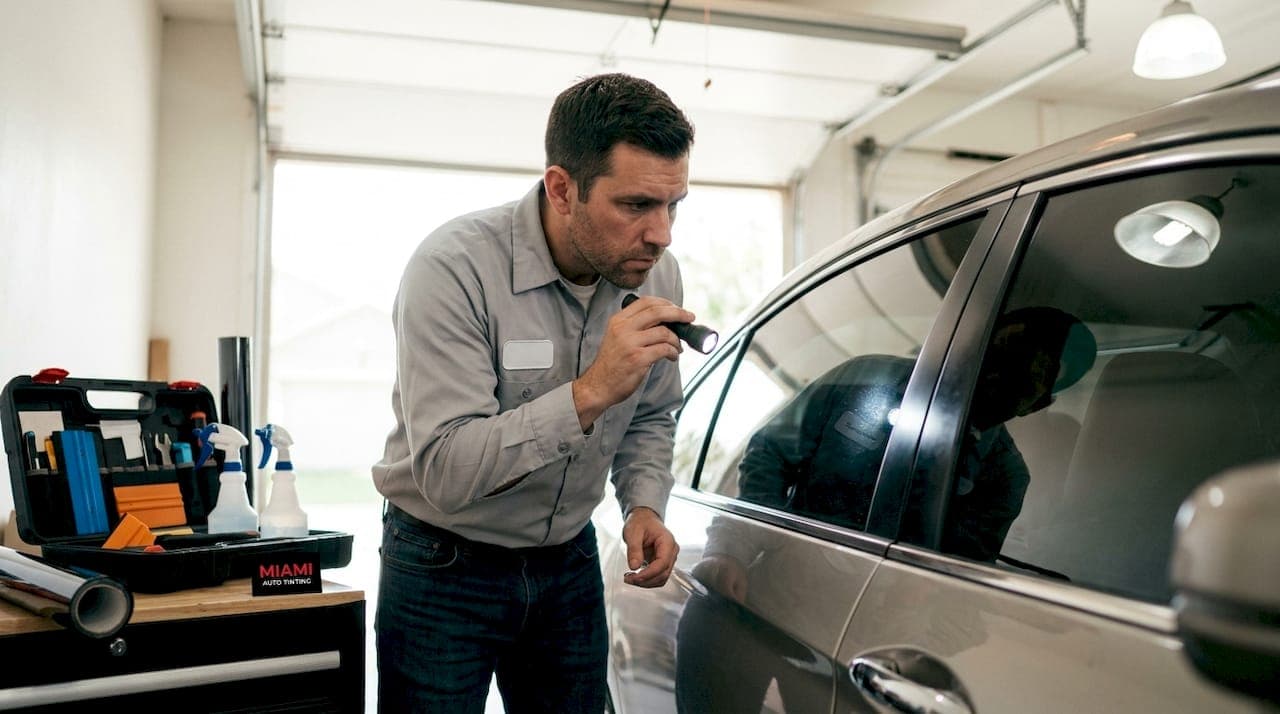
Common tinting installation issues are defined as recurring defects, including peeling, bubbling, discoloration, and gapping, that result from improper surface preparation, poor technique, or substandard film materials. These problems are not random. Each one traces back to a specific, identifiable error made before, during, or after the film goes on the glass. V-KOOL's warranty policy makes this point clearly: installation faults like bubbling are explicitly excluded from coverage, meaning the cost of a bad install falls entirely on you. Whether you're dealing with a fresh tint job gone wrong or trying to prevent problems before they start, this guide covers every major failure point and what to do about it.
1. Common tinting installation issues: peeling film
Peeling is the most visible sign that something went wrong during installation. It almost always starts at the edges, where adhesive contact is weakest, and spreads inward if left unaddressed.
The root cause is almost always surface contamination. Invisible oils or residues on glass, even on a window that looks clean, prevent the adhesive from bonding properly. Silicone from interior protectants, fingerprints, and dust particles all compromise that bond. A single missed spot during prep can cause a corner to lift within days.
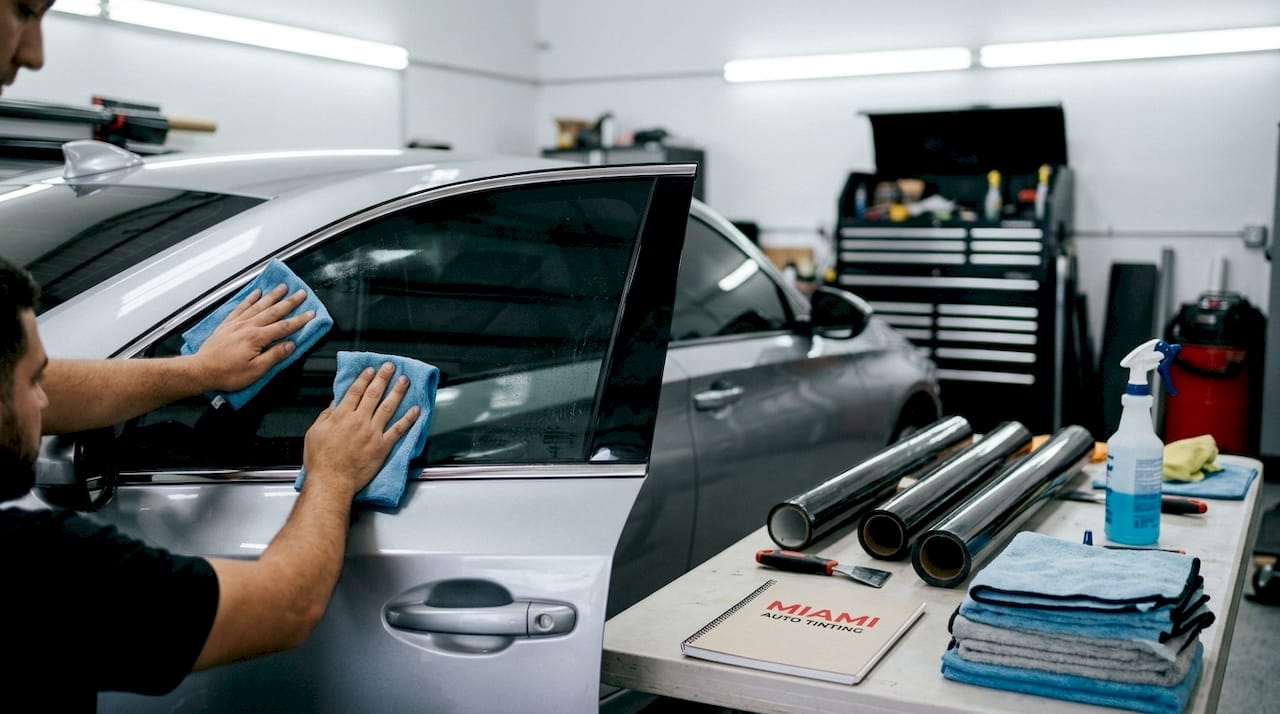
Slip solution errors are the second major culprit. Excessive soap or hard water minerals in the spray bottle trap moisture between the film and glass, delaying or preventing adhesion. The film floats instead of bonding, and peeling follows once the moisture evaporates unevenly.
Curing violations are equally damaging. Ceramic films typically require 2 to 4 weeks to fully cure, with optimal conditions at 70 to 80°F and 30 to 70% humidity. Rolling down windows before the adhesive sets stretches and separates the film from the glass, creating lift points that grow over time.
Pro Tip: Check the bottom edge of your rear window 48 hours after installation. If you see any lifting or a thin white line forming, press it back with a soft squeegee and avoid rolling that window down for at least two weeks.
2. Why window tint bubbles and how to fix it
Bubbling is the second most common window tinting problem, and it has two distinct forms. Small water bubbles that appear right after installation are normal and typically disappear during curing. Large air bubbles that persist past two weeks are a sign of a real installation error.
Trapped air and moisture under the film come from inadequate squeegeeing during application. If the installer does not work the film from the center outward with consistent pressure, air pockets get locked in. These do not self-correct.
Here is how to identify and address bubbling by type:
- Water bubbles (days 1 to 14): These appear milky or hazy and shift slightly when pressed. They are part of the normal curing process and require no intervention. Park in a warm, dry area to speed up evaporation.
- Air bubbles (persistent after 2 weeks): These feel firm and do not move. They require professional correction, typically by lifting the film edge, repositioning, and re-squeegeeing.
- Edge bubbles from slip solution residue: These form along the perimeter and indicate the slip solution was not fully worked out. A professional can often fix these early by applying heat and pressure.
- Bubbles from contamination: If debris was trapped under the film during installation, the film must be removed and reapplied. There is no shortcut here.
Pro Tip: Never try to pop a bubble with a pin. Puncturing the film creates a permanent defect and voids most installer warranties. Always contact your installer first.
3. Discoloration, fading, and adhesive breakdown
Discoloration is not just a cosmetic problem. When tint film changes color or fades unevenly, it signals that the film's UV-blocking and heat-rejection properties are also degrading. You are losing performance, not just appearance.
Low-quality film and harsh maintenance chemicals are the two leading causes of premature discoloration. Ammonia-based glass cleaners, which are found in most household window sprays, attack the adhesive layer and break down dye-based tints from the inside out. The result is a purple or brown tint that no amount of cleaning will reverse.
UV and heat exposure accelerate this process significantly. Heat cycles cause adhesive expansion and contraction that stress the film at its weakest points, typically the edges and any area where the adhesive bond was incomplete during installation. Cars parked outdoors in Miami's climate face this stress daily.
The fix starts with material selection. Ceramic films like 3M Crystalline and Iviron Kollmax use nano-ceramic particles instead of dyes, so they do not fade the same way dye-based films do. Pair quality film with ammonia-free cleaners, and you eliminate the two biggest discoloration triggers before they start. For more on choosing the right film, the material type matters more than the brand name alone.
4. Gapping and uneven coverage
Gapping occurs when the tint film does not reach the full edge of the glass, leaving a visible strip of untinted window. It looks unprofessional and creates a direct entry point for UV exposure and heat along the window's perimeter.
The causes break down into two categories: cutting errors and environmental stress.
- Imprecise edge trimming leaves film short of the gasket or frame, creating an immediate visible gap that no amount of curing will close.
- Film shrinkage from heat causes tint to pull away from edges after installation, particularly in high-temperature climates where the glass heats and cools rapidly each day.
- Humidity fluctuations affect adhesion speed at the edges. In Miami's humid climate, film can slide slightly before the adhesive sets, creating uneven coverage that is only visible once the car dries out.
- Complex window shapes on curved rear windows or windows with deep channels require precise plotter-cut patterns. Hand-cut film on these surfaces almost always results in gaps or overlaps.
| Cause | Prevention |
|---|---|
| Imprecise hand cutting | Use plotter-cut patterns matched to the vehicle's exact window template |
| Heat-related shrinkage | Select dimensionally stable ceramic film rated for high-heat environments |
| Humidity-driven slippage | Control installation environment or allow extended curing time before use |
| Deep window channels | Pre-fit film with extra overlap, then trim after initial adhesion |
Professional fitting eliminates most of these variables because experienced installers use vehicle-specific templates and control their installation environment. Poorly cut edges are one of the most cited causes of tint lift and gaps, and they are entirely preventable with the right tools.
5. Squeegee technique errors
Squeegee pressure is one of the most underestimated variables in tint installation. Too little pressure leaves moisture and air trapped under the film. Too much pressure stretches the film, distorts the adhesive layer, and creates thin spots that fail early.
The correct technique starts at the center of the film and moves outward in overlapping strokes toward each edge. This pattern pushes air and slip solution toward the perimeter where it can escape. Skipping this step or using random stroke patterns is one of the most common tint installation mistakes made by inexperienced installers.
Hard squeegee edges also scratch the film surface during application if the tool is not wrapped in a protective sleeve. Scratches from installation are permanent and are not covered under most film warranties. Always confirm your installer uses felt-wrapped or rubber-edged squeegees on the film surface.
6. Curing environment and aftercare mistakes
The curing period is where most post-installation problems originate. Installers complete the job, but what happens in the following two to four weeks determines whether the tint lasts two years or ten.
Avoiding premature window operation and using ammonia-free cleaners are the two aftercare steps that most directly extend tint lifespan. Rolling down a window before the adhesive fully bonds stretches the film at the bottom edge, creating a crease or lift that is nearly impossible to reverse without reapplication.
Temperature extremes during curing also cause problems. Parking a freshly tinted car in direct sun in a Miami summer accelerates moisture evaporation, which sounds helpful but actually causes the film to cure unevenly. The center dries faster than the edges, creating stress lines. Parking in a shaded garage for the first week produces a more uniform cure. For additional guidance on protecting your car's finish during this period, winter detailing practices offer transferable advice on chemical-safe cleaning methods that apply year-round.
7. Best practices that prevent most tint problems
The majority of common window tint issues are preventable. The following protocols, when followed consistently, eliminate the conditions that cause peeling, bubbling, gapping, and fading.
- Glass preparation: Clean with isopropyl alcohol and a lint-free cloth before any film contact. Follow with a final wipe using a clean, dry microfiber to remove any remaining residue.
- Slip solution ratio: Use distilled water with two to three drops of baby shampoo per quart. Hard tap water introduces minerals that interfere with adhesion.
- Squeegee pattern: Work center to edge, overlapping each stroke by 50%. Apply firm, even pressure without dragging the tool across the film surface.
- Curing time: Allow 2 to 4 weeks before rolling windows down or cleaning the glass. Ceramic films sit at the longer end of this range.
- Cleaner selection: Use only ammonia-free glass cleaners after curing is complete. Products containing ammonia degrade both dye-based and some ceramic adhesives over time.
- Material quality: Professional installation with quality materials produces better adhesion, faster curing, and longer longevity than DIY methods using budget film.
High-quality tint materials still fail when installation procedures are not followed precisely. The film is only as good as the process behind it.
Key takeaways
Preventing common tinting installation issues requires correct surface preparation, proper slip solution ratios, consistent squeegee technique, and strict adherence to curing protocols before any aftercare begins.
| Point | Details |
|---|---|
| Surface prep is non-negotiable | Invisible oils and residues cause adhesive failure even on visually clean glass. |
| Curing time determines longevity | Ceramic films need 2 to 4 weeks to fully bond; rolling windows down early causes peeling. |
| Material quality drives performance | Dye-based films fade and discolor faster than ceramic films under UV and heat exposure. |
| Gapping starts at the cutting stage | Plotter-cut templates matched to your vehicle prevent edge gaps that hand cutting cannot. |
| Aftercare extends tint life significantly | Ammonia-free cleaners and avoiding premature window use are the two highest-impact aftercare steps. |
What I've learned after years of tinting cars in Miami
Miami is one of the hardest environments for window tint in the country. The combination of intense UV, high humidity, and daily heat cycles puts every installation under stress that installers in cooler climates simply do not face. After years of working with 3M IR, 3M Color Stable, and Iviron Kollmax ceramic films, I can tell you that the problems I see most often are not caused by bad film. They are caused by rushed installs and ignored aftercare.
The single most common mistake I see from car owners who had their tint done elsewhere is rolling down their windows too soon. It seems like a small thing, but it is the fastest way to destroy an otherwise good installation. The adhesive is still soft, and that one action creates a crease at the bottom edge that never fully recovers.
The second thing I would push back on is the idea that any tint job is a tint job. Ceramic film and dye-based film are not interchangeable. In Miami's climate, dye-based film starts showing color shift within a year on cars that park outside regularly. Ceramic film, applied correctly, holds its appearance and performance for years longer. The upfront cost difference is real, but so is the difference in what you are actually getting.
If your tint is already showing problems, do not wait. Early peeling and edge lifting can often be corrected without full reapplication if caught in the first few weeks. The longer you wait, the more the adhesive degrades and the more glass area needs to be redone.
— Jose
Get professional ceramic tint that lasts in Miami's climate
Most of the window tinting problems described in this article are avoidable with the right installer and the right film. At Southmiamitint, we use 3M IR, 3M Color Stable, and Iviron Kollmax ceramic tint on every vehicle, applied with professional-grade tools and vehicle-specific cutting templates. Our ceramic window tint service starts at $249 and comes to your location anywhere in Miami-Dade. No shop visit, no waiting. We handle prep, application, and aftercare instructions so your tint cures correctly from day one. If you want a tint job that holds up to Miami heat without peeling, fading, or gapping, book your mobile appointment today.
FAQ
What causes window tint to peel so quickly?
Peeling almost always traces back to poor glass preparation or curing violations. Invisible oils, silicone residues, or rolling windows down before the adhesive fully bonds are the three most common triggers.
How long do window tint bubbles take to go away?
Small water bubbles from moisture trapped during installation typically disappear within 2 to 4 weeks as the film cures. Persistent air bubbles that remain firm after two weeks require professional correction and will not resolve on their own.
Can I fix tint discoloration myself?
Discoloration caused by ammonia-based cleaners or UV degradation is permanent. The film must be removed and replaced. Switching to ammonia-free cleaners after replacement prevents the problem from recurring.
Does window tint film quality affect how long it lasts?
Ceramic films like 3M IR and Iviron Kollmax resist fading and adhesive breakdown significantly longer than dye-based films, particularly in high-UV, high-heat environments like Miami. Material choice is one of the highest-impact decisions in the installation process.
How soon can I roll down my windows after tinting?
Wait at least two weeks for standard films and up to four weeks for ceramic films before rolling windows down. Premature operation stretches the adhesive layer and creates edge lifting that is difficult to reverse.