
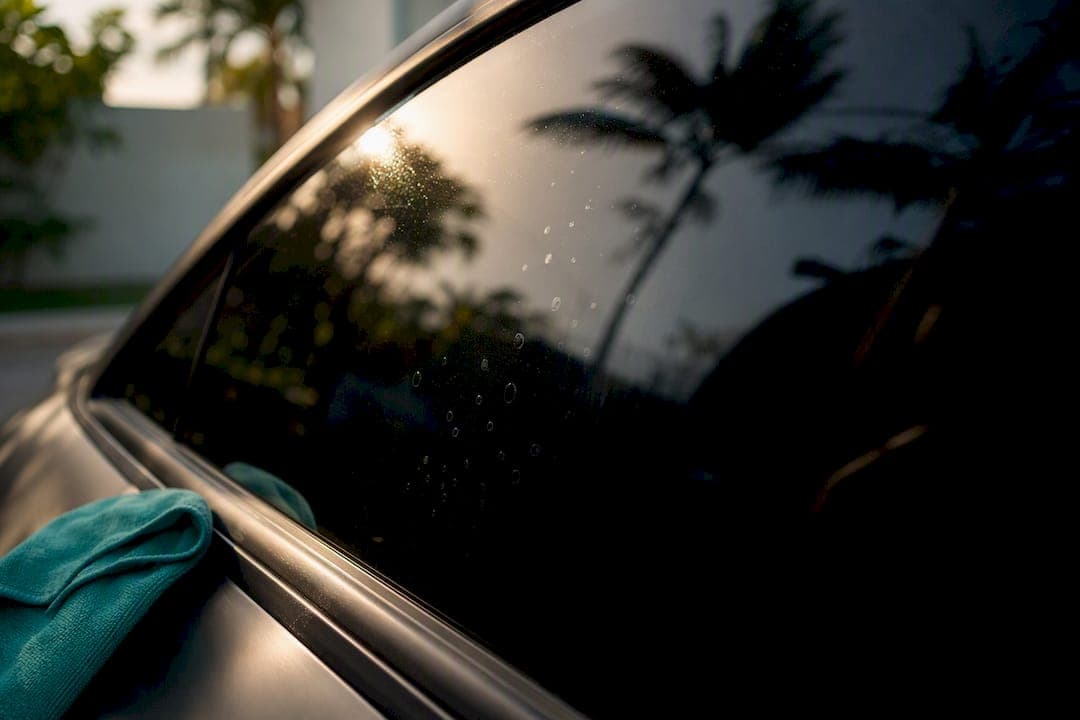
Exterior washing is usually safe within 24 to 72 hours after tinting, as long as you skip high-pressure spray near the window edges. Interior glass needs much longer, typically 7 to 30 days depending on your climate. Rolling your windows down should wait 48 to 72 hours at minimum, longer in cold or humid weather. When in doubt, ask your installer before you touch anything.
TL;DR:
- Exterior washing is safe within 3 to 5 days in warm and dry climates but can extend up to 14 or 30 days in humid or cold conditions due to longer curing times.
- Avoid pressure-washing window edges and never aim high-pressure jets directly at the seals during the first week, using a wide fan spray instead.
- Interior glass should not be cleaned or touched for at least 7 to 30 days, with ammonia-free cleaners and gentle wiping to prevent damage.
- Rolling windows down before 48 to 72 hours can cause shifting or lifting of the tint, especially in colder or humid weather, so plan accordingly.
- Small bubbles and haze are normal during curing and will typically disappear within one to two weeks, but persistent large bubbles or peeling indicate adhesion issues requiring professional attention.
Table of Contents
- Quick Do and Don't Checklist for the First Week
- How Tint Cures and Why Climate Changes the Timeline
- Washing the Exterior Safely in the First Week
- Cleaning Interior Tinted Windows After Full Cure
- Which Car Wash Type Is Safest for Tinted Windows?
- Rolling Windows, Defrosters, and Other Everyday Cautions
- Bubbles, Haze, and Other Curing Symptoms: What's Normal?
- How Often You Wash Your Car Affects How Long Tint Lasts
- Spot-Cleaning vs. Full Washes on Tinted Windows
- What Installers Actually Tell Customers to Do
- How Southmiamitint Handles Tinting and Aftercare
- Sources
- FAQ
Quick Do and Don't Checklist for the First Week
Fresh tint film is still bonding to the glass, so the first week is when small mistakes turn into expensive fixes. Keep this list handy and you'll avoid most of the trouble.
Do:
- Choose a hand wash or touchless wash over anything with brushes
- Tell your detailer or car-wash attendant the tint is fresh
- Park in direct sunlight when possible to help the film cure
Don't:
- Roll windows down for at least 48 to 72 hours
- Clean the interior side of tinted glass for at least 7 days
- Use ammonia-based glass cleaners on the film
- Aim a pressure washer directly at window seals or edges
If you're not sure whether an action is safe, wait another day and check with the shop that installed your film. A short delay costs nothing. A lifted edge or trapped moisture bubble can cost a full reinstall.
How Tint Cures and Why Climate Changes the Timeline
Window tint doesn't just stick to the glass. Installers apply the film with a soapy mounting solution called "slip solution," which lets them position the tint precisely before it sets. That liquid has to evaporate completely before the adhesive can form a permanent bond, and that process takes days, not minutes.
Once the water starts leaving, the adhesive underneath begins curing chemically. This isn't instant. It's a slow reaction that depends heavily on heat and humidity in your area.
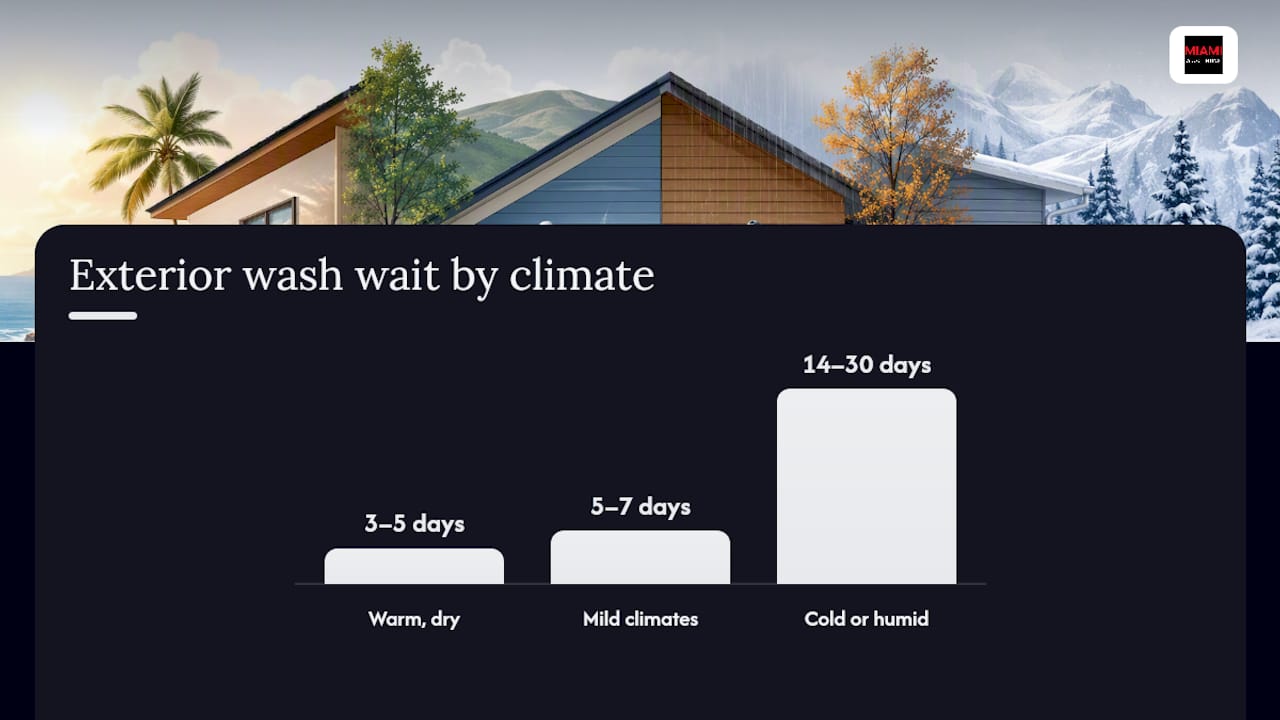
In warm, dry climates, exterior washing is often fine within 3 to 5 days. Mild climates push that closer to 5 to 7 days. If you're dealing with cold or humid conditions, full cure can stretch to 14 or even 30 days, since moisture has nowhere fast to go.
This is also why you'll sometimes see small, flat water bubbles right after installation. That's leftover moisture working its way out from under the film, and it's completely normal. Most of these bubbles flatten out within one to two weeks as the trapped liquid evaporates through the edges. Leave them alone and they typically resolve on their own.
Washing the Exterior Safely in the First Week
The outside of your tinted windows can handle a wash sooner than the inside, since the film sits on the interior surface of the glass. A gentle hand wash or a touchless automated wash within the first 24 to 72 hours is generally fine, because neither method puts direct mechanical pressure on the film itself.
Pressure washers are where people run into trouble. The water pressure itself isn't usually the problem. The angle is.
- Keep the nozzle at least a foot away from the glass
- Never aim directly at the top edge of the window or the door seals
- Use a wide fan spray instead of a narrow, concentrated jet
- Work top to bottom in smooth passes rather than lingering in one spot
Pro Tip: If you're using a coin-op or driveway pressure washer, treat the window edges the way you'd treat a fresh paint job. Spray past them, not at them.
If you're dropping the car off with a detailer or running it through a commercial wash, say something. A quick heads up like "the tint is fresh, please skip the interior glass and avoid the edges" takes five seconds and saves the attendant from guessing. Most shops handle this request every week and will adjust without issue.
Cleaning Interior Tinted Windows After Full Cure
The inside of your tinted windows needs the most patience. Because the adhesive cures for that interior glass surface, wiping it too soon can shift the film before it's locked in. Most guidance points to waiting 7 to 30 days depending on your climate, with humid or cold regions landing on the longer end.
You'll know it's ready when any remaining haze has cleared and the film feels fully adhered with no soft or slippery patches near the edges.
Once you're past that window, stick to a routine that won't scratch or streak the film:
- Use an ammonia-free glass cleaner made for tint, never a standard blue window spray
- Spray the cleaner onto a microfiber cloth first, not directly onto the glass
- Wipe with light, straight passes instead of circular scrubbing
- For water spots or adhesive residue, use a dedicated tint-safe remover and a soft cloth, applying gentle pressure only
Skipping the ammonia rule matters more than people expect. It doesn't just streak. Over time it can break down the tint's dye and adhesive layers, leading to discoloration you can't reverse.
Which Car Wash Type Is Safest for Tinted Windows?
Not all washes treat your film the same way, and the right choice depends on whether the tint is still curing or fully set.
| Wash type | During cure (first week) | After full cure |
|---|---|---|
| Touchless automatic | Generally safe | Safe, often the best default |
| Hand wash | Preferred, gentlest option | Safe |
| Brush-style tunnel | Avoid | Generally fine |
| High-pressure self-serve | Avoid near edges | Safe with careful aim |
Touchless washes and gentle hand washing are the safest picks while your film cures, since neither one puts a brush or a concentrated jet directly against the glass. Brush-style tunnels are the biggest risk during this period. The bristles can catch a still-soft edge and start peeling it before the adhesive has grip.
If you use a monthly membership wash, check what cycle it runs. Many locations offer both touchless and brush options, so choose the touchless setting for at least the first week, then switch back to your normal routine once the film has cured.
Rolling Windows, Defrosters, and Other Everyday Cautions
Rolling your windows down too early is one of the most common ways people damage new tint, because the film can shift or lift at the top edge before it's fully bonded. Plan on waiting 48 to 72 hours at minimum, and closer to 5 to 7 days if you're in a cold or humid climate.
If you absolutely have to roll a window down before then, lower it only an inch or two and bring it back up right away rather than leaving it down.
Your defroster and heater are fine to use normally. In fact, gentle heat helps the curing process along. What you want to avoid is shocking the glass with sudden extreme temperature swings, like blasting ice-cold AC on hot glass. Skip suction-cup mounts, parking permits, or any adhesive stickers on the tinted glass until the film has fully cured. They can pull at a bond that isn't ready to hold.
Bubbles, Haze, and Other Curing Symptoms: What's Normal?
Small, flat bubbles and a light haze in the first one to two weeks are part of the process, not a defect. As moisture trapped under the film evaporates, these bubbles typically shrink from the edges inward and disappear on their own.
What's not normal: large raised bubbles that don't shrink after two to three weeks, film peeling away at the corners or edges, or cloudiness that persists well past your climate's expected cure window. Those point to an adhesion problem rather than routine curing.
Resist the urge to poke a bubble or scrape at it with a fingernail or card. That almost always makes things worse and can tear the film. If symptoms don't improve on the expected timeline, contact your installer rather than trying a fix yourself. Most tint shops handle trapped-moisture issues with a simple reheat and resqueegee, not a full reinstall.
How Often You Wash Your Car Affects How Long Tint Lasts
Once your tint is fully cured, washing itself isn't the enemy. How you wash matters far more than how often.
Frequent hand washes or touchless cycles with mild soap won't shorten your film's lifespan in any meaningful way. What does wear tint down over time is repeated exposure to abrasive brushes, harsh chemical cleaners, and aggressive scraping tools used to remove stickers or grime near the edges.
Coastal areas add another variable. Salt air and road grime build up faster in humid, salty climates, which tempts owners to scrub harder to cut through the film. That's exactly the habit to avoid. A weekly gentle wash with a soft mitt or touchless cycle does less cumulative damage than an occasional aggressive scrub-down every few months.
Edge care deserves special attention long term. The perimeter of the tint, where it meets the window frame, is the most vulnerable spot on the entire installation. Every time you wash, treat those edges with a lighter touch than the rest of the glass, and dry them with a clean microfiber towel instead of letting water sit and seep in.
Well-maintained ceramic and carbon films can hold their color and clarity for many years, but that longevity depends on consistent, gentle care rather than how many total washes the car sees. A car washed weekly with the right method will usually outlast one washed monthly with the wrong one.
Spot-Cleaning vs. Full Washes on Tinted Windows
Not every smudge needs a full wash cycle. Knowing when to spot-clean saves time and reduces how often your tint gets handled at all.
Spot-cleaning works well for isolated marks: a fingerprint on the inside of a rear window, a small water spot on the exterior glass, or dust settled on a static cling decal you've added post-cure. For these, a microfiber cloth lightly dampened with an ammonia-free glass cleaner, wiped in one direction, handles it without disturbing the rest of the film.
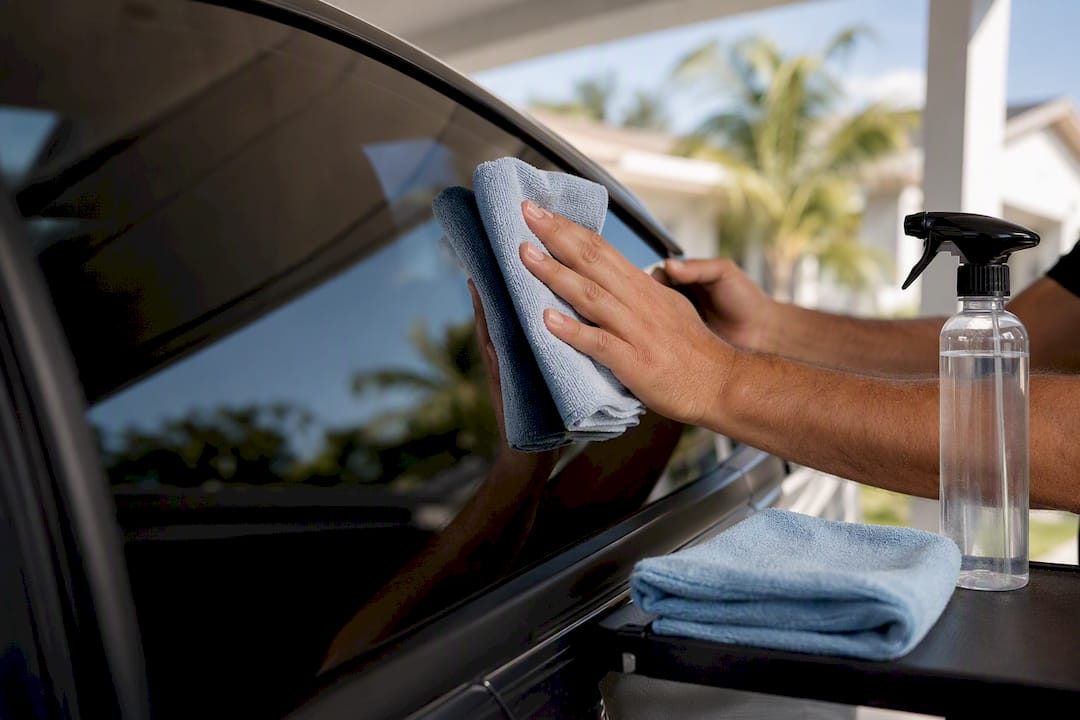
A full wash makes more sense after road trips, pollen season, or when grime has built up across the whole vehicle rather than in one spot. In these cases, work the exterior glass the same way you'd treat the rest of the paint, using the two-bucket method to keep grit off your mitt and away from the glass surface.
One habit worth building either way: always check your cloth or mitt for embedded grit before it touches the window. A single piece of trapped sand can scratch tint film in one pass, and unlike paint, tint scratches don't buff out. Spot-cleaning more often with a clean tool beats a deep scrub with a dirty one.
What Installers Actually Tell Customers to Do
Right after installation, we walk every customer through the same short checklist: skip interior cleaning for at least a week, avoid rolling windows for 48 to 72 hours, and park in the sun when you can. When customers head to a detailer or car wash during that window, we tell them to say one sentence: "The tint is fresh, please avoid the edges and skip the interior glass." That one line prevents most of the calls we get about edge lifting or streaking.
— Jose
How Southmiamitint Handles Tinting and Aftercare
Southmiamitint installs on your schedule and at your location, which means you get the same cure timeline and aftercare guidance without a shop drop-off. We use premium films, including 3M Ceramic IR and Crystalline, 3M Color Stable, and Iviron KoolMax ceramic tint, all chosen for Miami-Dade heat and humidity.

After installation, customers receive aftercare instructions tailored to their film type and local weather, along with support for any bubble or edge issues during the curing process. We also handle old tint removal if you're replacing a worn film rather than starting fresh. Ready to get your vehicle tinted or get a straight answer on your cure timeline? Request a mobile quote and we'll get you scheduled.
Sources
- Window Tint Aftercare: When You Can Wash, Defrost & Roll Windows Down
- Can You Wash Your Car After Tint? Wait Times & Care Guide
- Can You Wash a Car After Window Tinting? Best Practices & Timeline
FAQ
Can You Get Your Car Wet After Tinting?
Rain or a light exterior rinse within the first day or two generally won't harm fresh tint, since the film sits on the interior glass surface, but avoid directing a hose or pressure washer straight at the window edges.
Is 3 Days Enough for Tint to Cure?
Three days is usually enough for exterior washing in warm, dry climates, but full cure, including interior cleaning and rolling windows, often takes a week or longer and can stretch to 30 days in cold or humid weather.
Is Dawn Dish Soap Safe for Tinted Windows?
Plain dish soap without ammonia is generally safer than an ammonia-based glass cleaner, but a dedicated ammonia-free automotive soap or tint-specific cleaner is a better long-term choice for both the film and your paint.
What Should You Avoid Doing After Getting Your Windows Tinted?
Avoid rolling windows down for at least 48 to 72 hours, skip interior glass cleaning for a week or more, never use ammonia-based cleaners, and keep pressure washers pointed away from window seals and edges.