
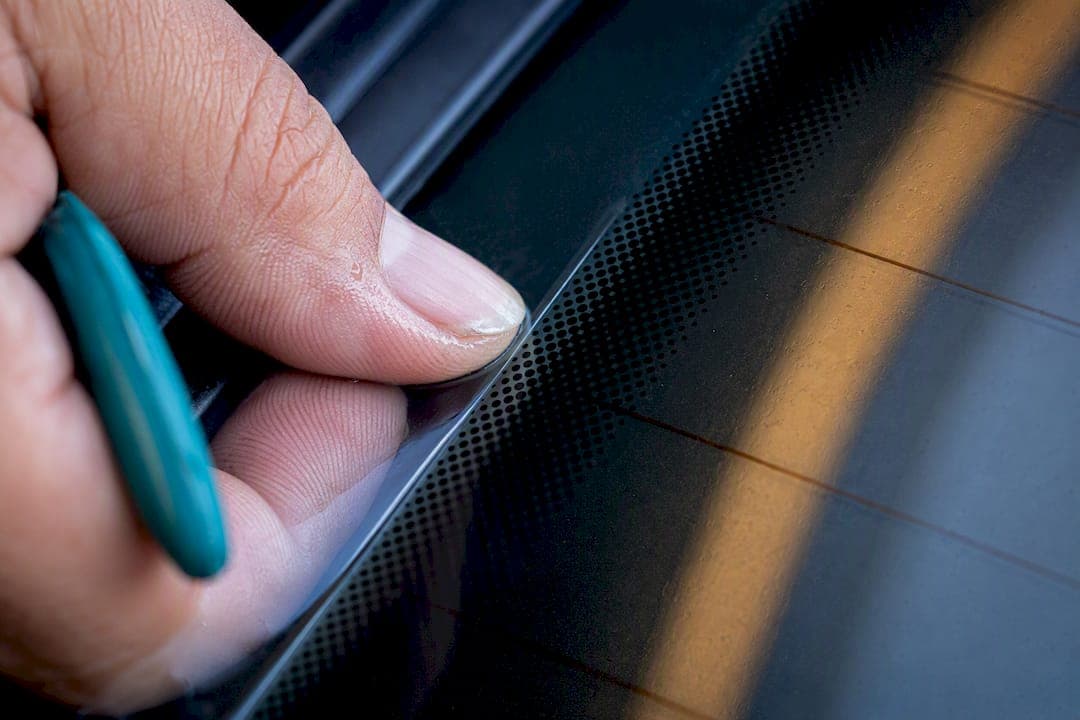
Yes, you can tint over dot-matrix glass, but the black dot band along your rear window fights film adhesion harder than any other part of the glass. Skip the fix and you'll see silvering within days. The best results come from a tack solution applied to the dot band, paired with proper curing, or a non-destructive DOTRIX vinyl cover when a flawless blackout matters more than anything else.
TL;DR:
- Applying a tack solution directly over the dot band is essential for proper adhesion, as slip solution alone creates micro-gaps and silvering.
- Full curing of at least 48 hours, ideally with infrared heat, helps eliminate moisture and reduces haze or lift issues in dot matrix tinting.
- Professional techniques involve careful cleaning, edge sealing, and applying directed post-cure pressure with a soft-wrapped squeegee for best results.
- Non-destructive options like DOTRIX vinyl provide guaranteed blackout without risking damage from sanding or glue fixes, but they come at a higher cost.
- DIY attempts risk inconsistent results and damage, making professional installation preferable for vehicles with complex dot-matrix patterns.
Table of Contents
- Dot Matrix Window Tint: A Quick Checklist Before You Start
- Why Does Dot Matrix Glass Resist Window Tint?
- Professional Step-by-Step Workflow for Dot-Matrix Window Tint
- Sanding, Glue Sticks, DOTRIX, or Paint: Which Fix Actually Holds Up?
- DIY or Professional Install for Dot-Matrix Windows?
- What Southmiamitint Sees on Dot-Matrix Rear Windows in Miami-Dade
- An Installer's Honest Take on Dot-Matrix Tint
- Book a Mobile Dot-Matrix Tint Install With Southmiamitint
- Sources
Dot Matrix Window Tint: A Quick Checklist Before You Start
Before you touch a heat gun or squeegee, run through this short list. It covers the fixes that actually hold up, in the order most installers try them.
- Use a tack solution on the dot band itself, and keep your regular slip solution on the clear glass around it.
- Give the film a full cure window (at least 48 hours) before judging the result, and consider infrared curing if you have access to a lamp.
- Apply directed post-cure pressure with a squeegee wrapped in a soft towel to help the film settle into the dot texture.
- Look at DOTRIX dot-matrix vinyl if you want a guaranteed blackout without touching sandpaper.
- Leave aggressive sanding or abrading to a professional. It's not a beginner move, and done wrong it damages the defroster grid underneath.
That's the short version. The rest of this guide walks through why the dot band behaves this way and how to work with it instead of against it.
Why Does Dot Matrix Glass Resist Window Tint?
The dot matrix, also called the frit band, is a ceramic or Teflon-like printed strip baked onto the glass around the defroster and antenna wiring. It's designed to resist adhesion by nature, since its job is to protect wiring and hide it cosmetically, not to bond with anything laid on top of it. That resistance is exactly what makes tint film lift.
The raised dot pattern also creates tiny air pockets under the film. Those micro-gaps show up as the cloudy white or silver haze installers call silvering, and it's the number one complaint tied to dot matrix rear window tint jobs. Standard slip solution, the soapy water that lets you float and reposition film everywhere else on the glass, actually works against you here. It lets the film ride on top of the raised dots instead of settling into them.
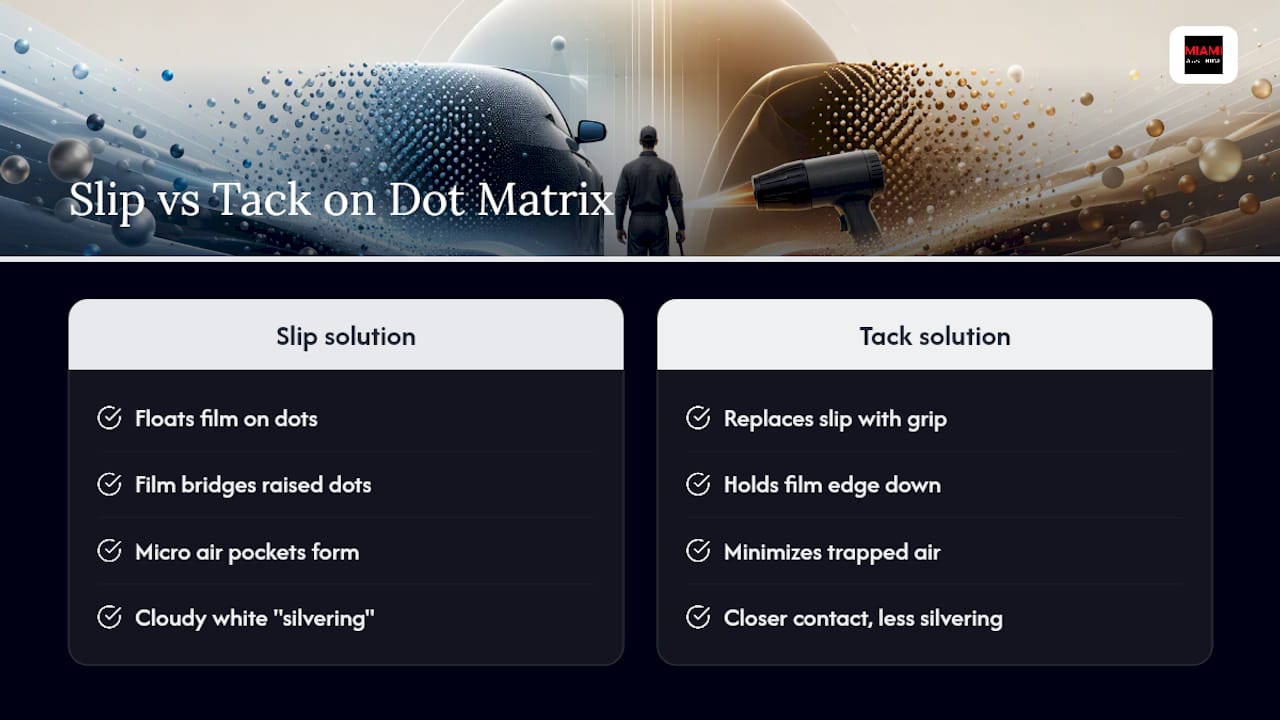
That's where tack solution comes in. It replaces slip with controlled grip, holding the film edge down against the dots instead of letting it float free. One more wrinkle: dot profile varies by make and model, which is why a trick that works on one car's rear glass does nothing on another.
Professional Step-by-Step Workflow for Dot-Matrix Window Tint
Here's the process installers who specialize in dot matrix tint solutions actually follow, from prep to final inspection.
- Clean and prep the glass. Strip oils, release agents, and old adhesive residue around the frit band before any film touches the glass.
- Switch solutions at the dot band. Apply tack solution directly over the dots while keeping slip solution on the clear glass for normal positioning.
- Squeegee from center-out. Work in overlapping strokes and press firmly at the edges, forcing the film down into the tack rather than letting it hover.
- Seal the edges. Keep the perimeter tight so dust and moisture can't work their way under the film while it cures.
- Cure for 48+ hours minimum. Where possible, use infrared curing to pull residual moisture out from behind the film faster than air-drying alone.
- Apply post-cure pressure. Once cured, go back over the dot band with firm, directed pressure to lock the film into the texture.
- Inspect at 24 to 72 hours. Check for any edge lift or haze returning, and address it early before it sets.
Pro Tip: Wrap your squeegee in a soft paper towel before the post-cure pressure pass. It grips better than bare rubber and won't scratch the film while you're pressing it into the dot texture. This post-cure pressure technique is one of the most repeated tips among installers who deal with narrow dot-matrix strips regularly, and it works precisely because it's applied after the film has already set, not while it's still wet.
For a broader look at how this fits into a full install, Southmiamitint's multi-pane tinting workflow guide breaks down how the dot band step slots into a complete job.
Sanding, Glue Sticks, DOTRIX, or Paint: Which Fix Actually Holds Up?
Every dot matrix problem has a dozen forum solutions. Most of them trade one problem for another.
- Sanding the dot band: Roughing up the surface can improve adhesion semi-permanently, but it risks visible scratching and altering the glass's appearance if it's not done carefully.
- Glue stick or Elmer's trick: A cheap, temporary fix some DIYers swear by. It also attracts dirt over time and rarely holds past a season.
- DOTRIX vinyl: A non-destructive cover designed to bond directly to the matrix area for a consistent, seamless blackout. No sanding required, though it adds cost.
- Painting the frit band: Permanent and clean when done by a specialist, but it can affect resale value or void a glass warranty.
If you want the safest bet, start with the tack solution method. Reach for DOTRIX only when a perfect blackout is non-negotiable.
DIY or Professional Install for Dot-Matrix Windows?
A DIY dot matrix tint job needs three things at minimum: tack solution, a quality squeegee set, and ideally a heat gun or infrared lamp for curing. If your rear window has tight curves, premium glass, or you simply want a guaranteed appearance with no comebacks, hiring a professional is the smarter call. DIY outcomes on dot matrix vary widely by vehicle, which is exactly why shops that specialize in it get repeat business.
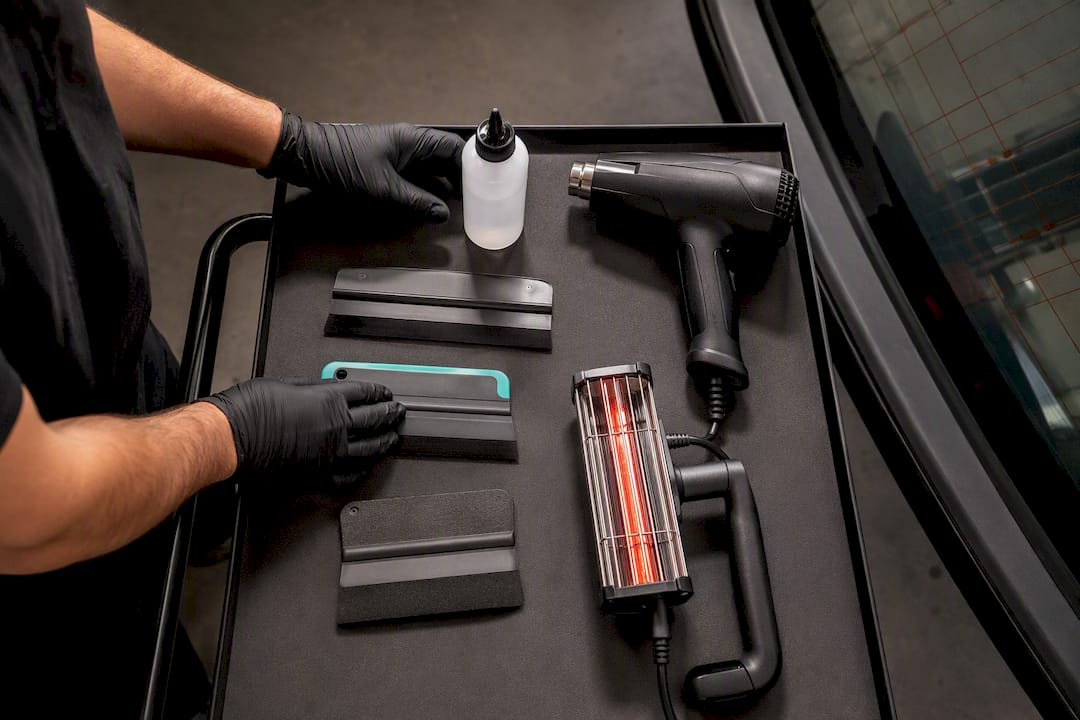
Expect a small time or price bump for dot-matrix work, since it adds a curing step most quotes don't itemize separately. Ask any installer about their tack solution process, cure time, and whether silvering is covered under warranty before you book.
What Southmiamitint Sees on Dot-Matrix Rear Windows in Miami-Dade
Southmiamitint handles mobile window tinting for cars, homes, and businesses across Miami-Dade using 3M Ceramic IR, 3M Color Stable, and Iviron KoolMax ceramic films. Rear windshields with dot matrix bands come up constantly, since nearly every sedan and SUV on the road carries one around the defroster grid.
The blog covers heat rejection and opacity questions specific to South Florida's climate, and the multi-pane workflow guide documents exactly how the tack-and-cure process gets handled on a mobile job site, where controlling dust and moisture during cure matters even more than in a fixed shop.
An Installer's Honest Take on Dot-Matrix Tint
No single trick fixes every dot matrix job on the first try, and any guide claiming otherwise is overselling it. Variability between makes and models is normal, not a sign you did something wrong.
Non-destructive methods, tack solution plus a full cure, give you the best balance of appearance and glass safety in most cases. If you genuinely need zero silvering with no wait involved, that's the conversation to have with your installer about DOTRIX or a similar cover before the job starts, not after.
— Jose
Book a Mobile Dot-Matrix Tint Install With Southmiamitint
Southmiamitint is the alternative to guessing your way through a DIY dot matrix job. We bring the tack solution workflow, infrared curing where the job site allows it, and a 48-hour follow-up check directly to your driveway in Miami-Dade, so you're not driving to a shop and hoping the rear window turns out right.

Every mobile appointment for dot-matrix windows starts with an inspection of your existing frit band and defroster wiring, followed by film selection from our 3M and Iviron KoolMax ceramic lineup. We apply tack solution to the dot band, cure it properly, and check back in within 48 to 72 hours if anything needs a second look. Pricing and scheduling are on our mobile ceramic tint page, starting from $249. Request a quote there and pick a time that works at your location.
Sources
- How to Tint Over Dot Matrix: The Complete Guide for Professional Installers
- The Window Tint Dot Matrix Problem
- DOTRIX - 16" x 50' Dot Matrix Vinyl
- The Window Tint Dot Matrix Problem – The Tint Spot & Auto Spa