
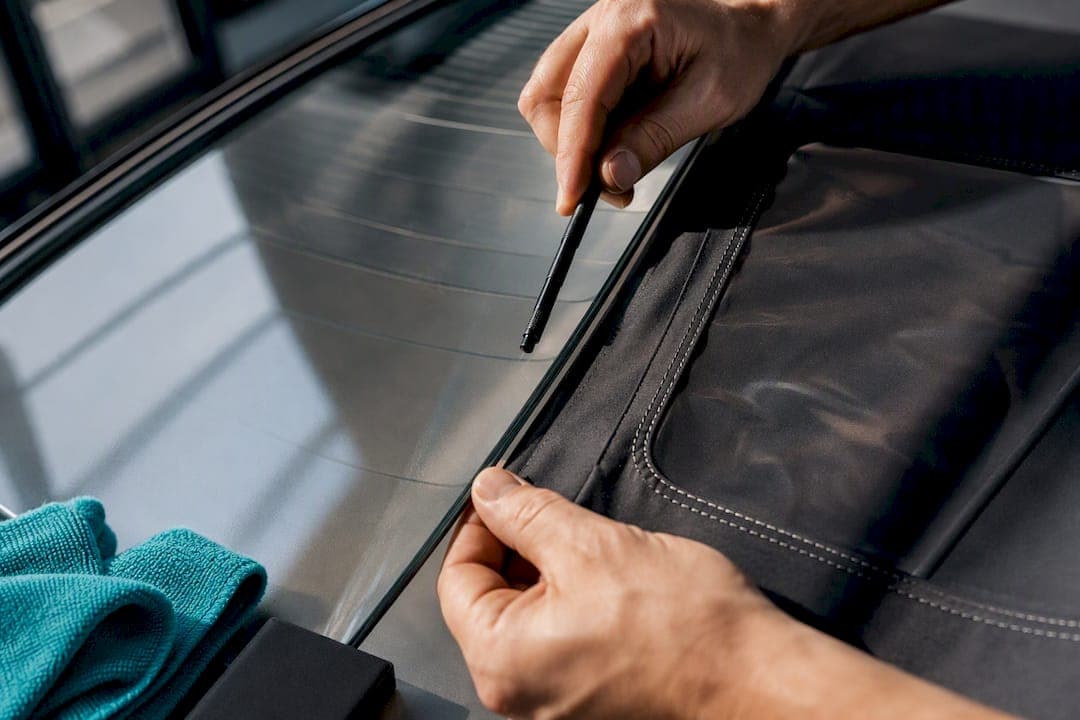
Before choosing a film, identify the panel material: glass takes standard automotive tint, while plastic or vinyl needs a different approach or no film at all. This single check decides everything else about your project. Skip it, and you risk bubbling, distortion, or a ruined rear window. Inspect the panel yourself, or ask a professional to verify the material before any film goes on.
TL;DR:
- For flexible plastic or vinyl rear windows, self-cling or removable films are safer options than adhesive automotive films to avoid distortion and bubbling.
- Confirming whether the panel is made of glass or a soft plastic is essential, as automotive adhesive film should only be used on glass, not on flexible panels.
- Ceramic and nanotechnology films are best for glass panels because they block UV and heat without interfering with electronic signals, unlike hybrid metal-dye films.
- Always verify panel material with a professional before applying adhesive film; improper application on soft panels can cause delamination and optical issues.
- Proper installation involves thorough wetting, gentle handling on curves, and leaving the film undisturbed during curing, with bubbles typically clearing within a few days.
Table of Contents
- Quick Recommended Approach and Decision Checklist
- Why Substrate Matters: Glass vs Acrylic, PVC, and Vinyl
- Best Film Categories When the Panel Is Glass
- Workable Approaches for Flexible Rear Windows
- Installation Best Practices, Cure Time, and Common Failure Modes
- When to Attempt DIY and When to Hire a Pro
- A Mobile Installer's View on Convertible Windows
- Balancing Aesthetics, Heat Control, and Window Longevity
- How South Miami Tint Handles Convertible Window Tinting
- Primary Sources and Further Reading
- Sources
- FAQ
Quick Recommended Approach and Decision Checklist
Once you know what the panel is made of, the rest of the decision moves fast. Run through this checklist before you buy film or book an installer.
- Identify the material: tap the panel and check for flex; glass feels rigid and cold, plastic or vinyl feels warmer and gives slightly under pressure.
- Photograph each window panel in good light, including any stitching or seams where the panel meets the fabric top.
- Check for prior replacements: aftermarket rear windows are sometimes swapped for a different material than the factory panel.
- Confirm your state's legal VLT limit before picking a film shade, since limits vary by state.
DIY removable film works fine for flat, undamaged vinyl or acrylic where you want temporary privacy. It costs less and comes off cleanly, but it will not match the optical clarity or heat rejection of adhesive automotive film. Professional adhesive installation makes more sense for glass, for stitched tops, or for any panel with compound curves.
Pro Tip: If the rear window has visible stitching along its edge, treat it as flexible plastic or vinyl, not glass, no matter how rigid it looks when the top is up.
Why Substrate Matters: Glass vs Acrylic, PVC, and Vinyl
Automotive window film is engineered for glass. It is not designed for the flexible plastics used in many soft-top rear windows, and manufacturers are explicit about it. Gila's installation instructions tell installers not to apply automotive adhesive film to Plexiglas, plastic, or acrylic rear windows, and to confirm the panel material first.
The reason comes down to physics. Glass stays rigid and flat under heat and pressure, so adhesive film bonds evenly and stays put. Flexible plastic or vinyl panels move every time the top goes up or down, flexing at different points than the film bonded to their surface. That mismatch in flexibility is what causes optical distortion, bubbling, and eventual delamination on soft panels.
Manufacturer instructions on curved glass confirm the stakes: curved rear glass often needs a strip-install technique rather than one continuous sheet, cut into narrow strips and overlapped slightly to avoid distortion on compound curves, according to Gila's rear window install guide. That guidance also warns against heat-shrinking film on unknown soft-top materials, since flexible panels respond to heat differently than glass.
A few quick checks help you identify what you are working with:
- Tap the panel gently: glass sounds sharp and feels cold, plastic or vinyl feels warmer and slightly flexible.
- Look for a manufacturer stamp or etching in the corner, which is common on factory glass but rare on plastic replacement panels.
- Check the edges for stitching or a fabric border, a strong sign the panel is a flexible material meant to fold with the top.
When you cannot tell for certain, stop and get a professional opinion before applying anything with adhesive.
Best Film Categories When the Panel Is Glass
Once you have confirmed glass, you have real options, and the differences between them matter for how the finished window looks and performs.
Ceramic and nanotechnology films are the strongest all-around choice for glass convertible windows. Products in this category, like Avery's Encore series, are built to block a high percentage of UV light while staying clear and free of the metallic haze older films had. Because they are non-metalized, they will not interfere with radio, GPS, or toll transponders, which matters on a convertible where antennas often sit close to the rear glass. Always check the specific product's data sheet, since UV-blocking and heat-rejection numbers vary by film.
Metal-dye hybrid films sit in a different lane. They combine a dyed layer with a thin metal layer, and hybrid products like Avery's HP series that offer strong heat and glare protection with low exterior reflectance, so the window does not look like a mirror from outside. The trade-off is that the metal content can occasionally interfere with electronic signals, and the manufacturer notes that suitability for a specific vehicle is the installer's call to confirm.
Matching the film to your priorities makes the decision easier:
- Choose ceramic or nanotechnology film when clarity and device compatibility (GPS, toll tags, phone signal) matter most.
- Choose a metal-dye hybrid film when reducing exterior reflectance and glare is the top priority.
- Read the product data sheet for the exact UV and heat-rejection figures rather than relying on marketing language, since these vary by product line.
If you are weighing film choices for a performance vehicle, comparisons of ceramic and hybrid films for sports cars cover the same trade-offs in more depth.
Workable Approaches for Flexible Rear Windows
Plastic, PVC, and vinyl rear windows call for a completely different toolkit than glass, and sometimes the right answer is no film at all.
Self-clinging vinyl film is the safest widely available option for these panels. It uses static or a light gel adhesive to cling to the surface rather than bonding permanently, which means it will not stress a flexible panel the way automotive adhesive film does. TAP Plastics' installation guide describes self-cling vinyl as reusable and notes it typically requires keeping the window stationary for 10 to 12 hours after application, a different cure window than adhesive automotive film requires.
Beyond self-cling products, a few other paths are worth knowing:
- Removable static film works well for temporary privacy and can be repositioned or removed without residue.
- If the existing plastic window is scratched, yellowed, or already distorted, replacing it with a new tinted panel or an aftermarket tinted rear window often produces a better result than tinting over damage.
- Some owners choose to leave flexible panels untinted entirely and rely on tinted glass elsewhere on the vehicle for privacy and heat control.
Pro Tip: If a rear window is stitched into the top, has visible warping, or is an unknown material, a responsible installer should decline to apply adhesive film rather than risk a failed install.
Adhesive automotive film should be considered off the table for any panel confirmed as Plexiglas, acrylic, or PVC, per manufacturer guidance. That is not a judgment call, it is a compatibility limit.
Installation Best Practices, Cure Time, and Common Failure Modes
Getting a clean result on curved convertible glass takes a different technique than a flat door window, and cure time is where most DIY jobs go wrong.
- Wet the glass and the film liner thoroughly before positioning, then work the film into place with a soft squeegee rather than forcing it flat in one pass.
- On deep or compound curves, cut the film into narrow strips and overlap them slightly instead of trying to lay one piece across the whole panel, which is the technique Gila's rear window instructions recommend to avoid distortion.
- Leave the window fully raised and undisturbed to cure. Self-cling vinyl needs an extended stationary period before the window is rolled, according to TAP Plastics, while adhesive automotive films often need several days before the window should be operated, so follow the specific cure-time guidance for the product installed.
- Avoid washing or rolling the window during the cure period, since moving it too soon is the most common cause of edge lifting.
Small water bubbles that appear during the first day or two are normal and usually clear on their own as the film finishes curing. Bubbles that persist past a week, or that show up as a cloudy patch rather than a clear bubble, usually mean trapped debris or an adhesive failure.
When something does go wrong, the fix depends on the size of the problem. A small bubble near an edge can often be pierced with a pin and smoothed flat. Larger bubbling, visible delamination at the edges, or a cloudy haze across the film are signs the film needs to be pulled and reapplied, which is a job better handled by someone with experience fixing installation issues rather than repeated DIY attempts on the same panel.

When to Attempt DIY and When to Hire a Pro
Some convertible tinting jobs are reasonable weekend projects. Others are not.
- DIY removable or self-cling film makes sense for flat, undamaged vinyl or acrylic panels where you want temporary privacy and are comfortable redoing the job if it does not look perfect the first time.
- Hire a professional for stitched tops, compound-curved glass, or any panel where you cannot confidently identify the material, since a failed adhesive install on the wrong substrate cannot always be undone cleanly.
If you do reach out for a professional quote, come prepared. Installers can give a faster, more accurate quote when you provide your vehicle's year, make, and model, along with photos of each window panel and the VLT percentage you want.
A good installer will also do a few things before ever applying film: verify the substrate on each panel, test a small area when the material is uncertain, and confirm your local legal VLT limit before recommending a shade. Manufacturers place the responsibility for confirming suitability on the installer, which is exactly why these checks matter before a quote turns into an install.
A Mobile Installer's View on Convertible Windows
Every convertible that comes in for tinting gets treated as two separate jobs before a single tool touches the vehicle: the glass panels, and whatever the rear window is actually made of. That distinction changes the plan for the whole vehicle, not just one window.
A typical pre-quote process on a convertible looks like this:
- Photograph every window panel, including the rear, before quoting any film.
- Identify whether the rear panel is glass, vinyl, or plastic, and flag any stitching or seams.
- Recommend a legal VLT percentage based on the vehicle and the owner's preference.
- Provide cure and wash instructions specific to the film and panel type used.
Treat the rear window as its own decision. What works on the glass often has no business on the plastic next to it.
That approach means fewer surprises for the owner and fewer callbacks for bubbling or peeling months later.
Balancing Aesthetics, Heat Control, and Window Longevity
Owners often want the darkest, coolest option available, but on a convertible, that instinct needs a second thought. Pushing adhesive film onto a flexible panel to chase heat rejection can shorten that window's life by years, while a self-cling product gives up a little clarity for a panel that will not delaminate.
The rule that holds up across every convertible I have seen quoted: substrate first, film second. When you are not sure what you are looking at, take a photo and ask before you commit.
— Jose
How South Miami Tint Handles Convertible Window Tinting
Getting a convertible tinted correctly means having someone verify each panel before recommending a film, not after. The company installs premium ceramic window tint films and offers mobile service at customer locations in the Miami-Dade area rather than requiring a shop visit.
For glass panels, that means choosing between ceramic and hybrid options based on your priorities for heat rejection, UV protection, and clarity. For plastic or vinyl rear windows, it means an honest conversation about whether adhesive film belongs on that panel at all.
To get a fast, accurate quote:
- Send photos of each window panel, including the rear window.
- Include your vehicle's year, make, and model.
- Note the VLT percentage you are hoping for.
Explore the 3M window tinting options or request a quote through Southmiamitint to schedule an inspection.
Primary Sources and Further Reading
For readers who want to go straight to the manufacturer guidance, Gila's rear window strip installation instructions cover substrate warnings and curved-glass technique in detail, while TAP Plastics' self-cling vinyl guide walks through application and wait times for acrylic panels. For post-install care on any treated window, a quick anti-fog routine helps keep visibility clear in humid or cold conditions. Always confirm substrate compatibility with the manufacturer before applying any film.
Sources
- Gila rear window strips installation instructions
- Avery Dennison Encore series nanotechnology window film product data sheet
- TAP Plastics: Window tint installation (self-cling vinyl)
FAQ
Can you tint windows on a convertible?
Yes, but the approach depends on what each panel is made of. Glass windows accept standard automotive film, while plastic or vinyl rear windows usually call for self-cling or removable film instead, per manufacturer installation guidance.
What's the hardest car to tint?
Convertibles with flexible plastic or vinyl rear windows are widely considered among the toughest vehicles to tint well, since standard adhesive film is not approved for those substrates. Compound-curved glass on some coupes and sports cars is also difficult, requiring the strip-install technique described in Gila's installation instructions.
What is the darkest legal tint allowed on cars?
Legal tint darkness limits vary by state, so check your specific state's rules before choosing a film shade. A guide to VLT rules and how to pick a legal shade walks through how to verify the limit that applies to your vehicle.
Can soft top windows be tinted?
Soft top rear windows made of vinyl or plastic can be tinted with self-cling or removable film, but manufacturers advise against automotive adhesive film on these materials. If the panel is confirmed as acrylic, Plexiglas, or PVC, a specialty removable product is the safer route, per manufacturer guidance.