
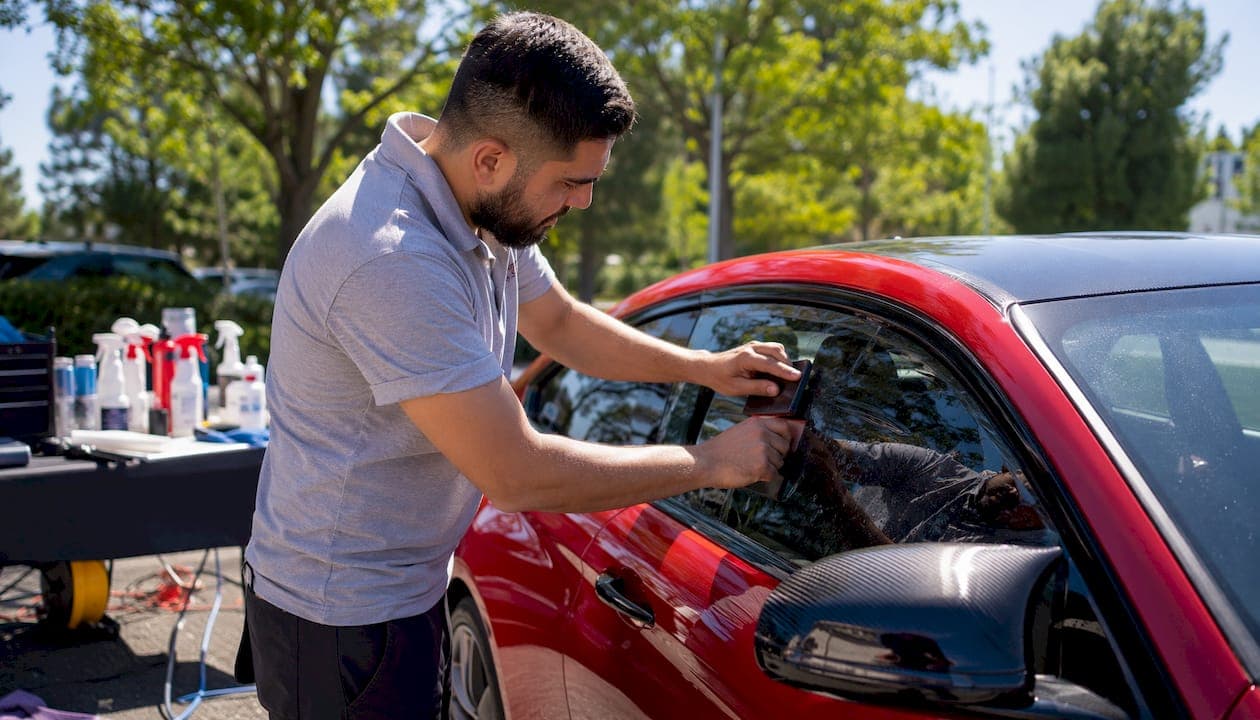
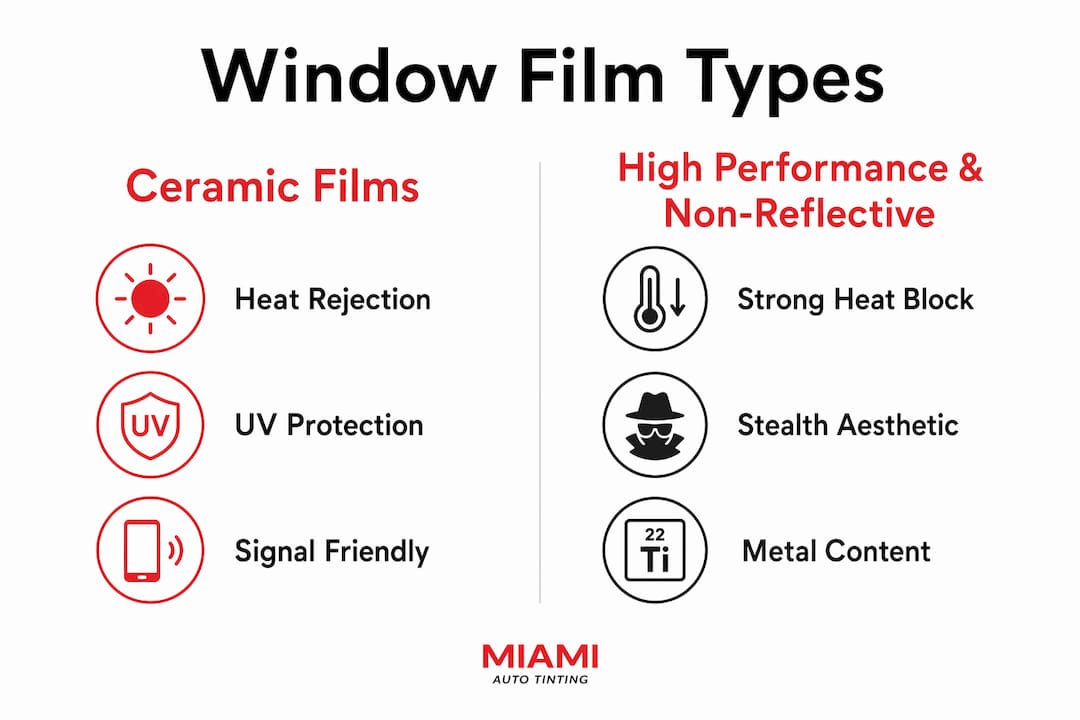
Ceramic window film is the top choice for sports cars, and for good reason. Films like 3M Ceramic Window Film, Iviron Kollmax, and Nanoflex are engineered to block a significant portion of solar energy and reject infrared heat, keeping your cabin cool without touching your GPS or Bluetooth signal. Here is a quick look at what the market offers:
- Ceramic films: Best overall for heat rejection, UV protection, and signal clarity
- High performance films: Metalized or carbon options with strong heat blocking but potential signal trade-offs
- Non-reflective films: Sleek, stealthy look with glare reduction and solid UV protection
- Auto security films: Shatter-resistant layers that protect glass during impacts or break-ins
- Specialty films: Privacy and paint-protection combinations for added coverage
Legal visible light transmission (VLT) limits vary by state, but most front side windows require a minimum level of light transmission to ensure safety and compliance. Rear windows on sports cars often allow darker shades, giving you more flexibility for privacy and style.
Why ceramic window film works best for sports cars
Ceramic films use nano-ceramic particles, not dyes or metals, to block heat and UV rays. That distinction matters because metallic films can disrupt your car's GPS, Bluetooth, and 5G signals, while nano-ceramic technology keeps all of those systems running without interference. For a sports car loaded with driver-assist tech and telematics, that is a real practical advantage.
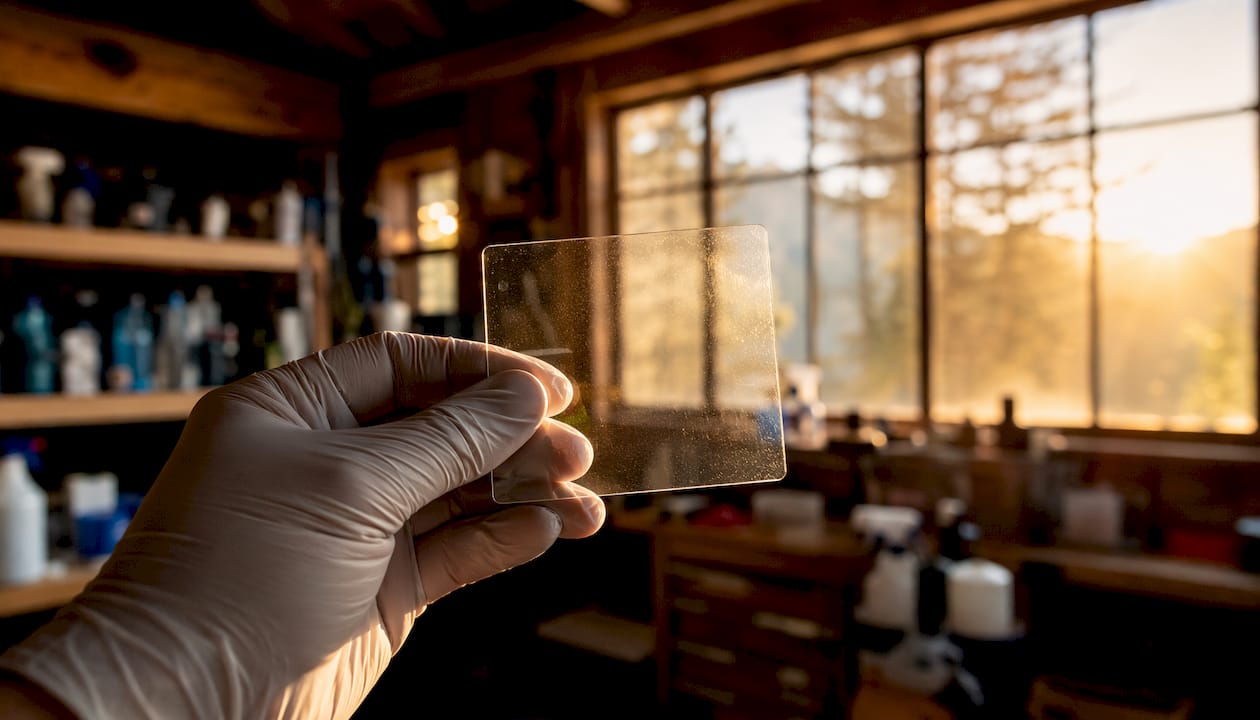
The performance numbers back it up. Top-tier ceramic films block up to 79% of total solar energy (TSER) and up to 94% of infrared (IR) heat, which translates directly to a cooler cabin and less strain on your air conditioning. Less AC load means your engine's full output stays where you want it.
UV protection is another area where ceramic pulls ahead. Quality ceramic films offer excellent UV ray blocking capabilities, shielding leather seats, carbon fiber trim, and dashboard surfaces from fading and cracking. For a sports car with premium interior materials, that protection extends the life of every surface the sun touches.
Three products stand out as industry benchmarks in 2026:
- 3M Ceramic Window Film: Backed by 3M's patented technology, it delivers strong IR rejection, color stability, and a non-metallic construction that won't interfere with electronics
- Iviron Kollmax: A premium nano-ceramic option known for deep heat rejection and long-term clarity without purple discoloration
- Nanoflex: Multi-layer ceramic construction engineered for high-performance vehicles, with excellent optical clarity and durability
Pro Tip: Ask your installer for the film's TSER and IR rejection specs in writing before committing. A reputable product will have documented performance data, not just marketing claims.
How high performance and non-reflective films compare
Not every sports car owner needs the top-tier ceramic option. High performance and non-reflective films occupy a useful middle ground, and understanding the differences helps you pick the right fit.
| Film Type | Heat Rejection | UV Protection | Signal Interference | Appearance |
|---|---|---|---|---|
| Nano-ceramic | High TSER | Excellent UV protection | None | Neutral, clear |
| Carbon/metalized | Moderate to high | Excellent UV protection | Possible | Reflective or dark |
| Non-reflective dyed | Low to moderate | Moderate | None | Flat, matte finish |
| High performance hybrid | High | Excellent UV protection | Low risk | Neutral to dark |
High performance films often combine carbon or metalized layers with ceramic particles, giving you strong heat blocking at a lower price than pure ceramic. The trade-off is a slight risk of signal interference with fully metalized versions. Carbon films avoid that issue and still deliver solid heat rejection, making them a practical choice for daily drivers who want performance without the premium price tag.
Non-reflective films focus on aesthetics. They give your sports car a clean, stealthy look without the mirror-like finish of metalized options. Glare reduction is real, but heat rejection is lower than ceramic or carbon. If your priority is a specific visual style and you live in a mild climate, a non-reflective film can work well. For Miami summers or desert driving, ceramic is the smarter call.
Auto security and specialty films for sports cars
Security films add a layer of protection that heat-blocking films alone cannot provide. These are thicker, shatter-resistant layers applied to your windows to hold glass together during an impact or attempted break-in.
- Shatter-resistant films: Hold broken glass in place after an accident, reducing injury risk from flying shards
- Anti-theft films: Make windows significantly harder to smash quickly, which deters opportunistic break-ins targeting valuables or the car itself
- Privacy films: Darker VLT options that limit visibility into the cabin, protecting gear and personal items
- Paint protection film combinations: Some installers layer window film with paint protection film (PPF) on A-pillars and roof edges for a complete exterior shield
Sports cars are frequent targets for theft, partly because of their value and partly because their low profiles and large glass surfaces can feel accessible. A security film rated at 4 mil or thicker adds meaningful resistance without changing the car's appearance. Paired with a ceramic tint for heat and UV control, you get a complete protection package from a single installation visit.
How to choose the right film for your sports car
Picking the right automotive window film comes down to four factors: legal compliance, heat performance, signal compatibility, and how the film looks on your specific car.
- VLT compliance: Florida law, for example, requires front side windows to allow at least 28% of light through. Check your state's specific rules before selecting a shade, because an illegal tint can result in fines and a required removal
- Heat rejection priority: If you park outdoors in a hot climate, prioritize TSER and IR rejection specs. Ceramic films consistently outperform dyed or basic carbon options here
- Signal compatibility: If your sports car has GPS navigation, a radar detector, or connected-car features, stick with nano-ceramic or non-metallic films to avoid interference
- Durability and maintenance: Ceramic films resist fading and discoloration for years. Dyed films can turn purple within 12–18 months, especially under intense sun exposure
- Professional installation: Sports cars have curved, frameless windows that require heat-shrinking and precise edging. A DIY kit rarely produces a clean result on these surfaces
Pro Tip: Always ask for a warranty in writing. Professional-grade films from brands like 3M and Iviron Kollmax come with manufacturer warranties covering fading, bubbling, and delamination. A warranty is your assurance that the product will perform as advertised.
The best window tint level for daily driving balances privacy with safe nighttime visibility. For most sports cars, a moderate tint on rear windows and rear windshields offers that balance while keeping front windows within legal limits in most states.
Expert installation tips for sports car window films
Sports car windows are not flat. The curved glass on a Corvette, Porsche, or Mustang requires a technique called heat shrinking, where the installer uses a heat gun to mold the film to the glass contour before applying it. Without this step, the film wrinkles at the edges and peels within weeks.
Nano-ceramic films are the professional standard for sports cars in 2026. They reject heat without any signal interference, hold their color for years, and when installed correctly on curved frameless glass, they look factory-fitted. The difference between a quality install and a cheap one shows up within six months.
Micro-edging is the other critical step. After heat shrinking, the installer trims the film to within a millimeter of the window frame, then files the edge smooth. This prevents the lifting and peeling that ruins the look of a sports car's clean window lines. Installers who skip this step leave a visible gap or a raised edge that catches dirt and eventually peels.
After installation, films need several days to fully cure. During that period, keep the windows up and avoid using the rear defroster. Rolling the windows down before the adhesive sets can cause bubbling or lifting at the edges, which is difficult to fix without a full reinstall.
Southmiamitint uses 3M IR, Iviron Kollmax, and Nanoflex films, all installed by trained technicians who specialize in sports car applications. The ceramic tint installation process covers heat shrinking, micro-edging, and a full post-install inspection before the car leaves.
Pro Tip: If you see water bubbles or a slight haze right after installation, do not panic. That is normal. It clears within the curing window as moisture evaporates through the film.
Does window film affect your sports car's resale value?
Quality window film protects the interior materials that buyers inspect first. Leather seats, suede headliners, and carbon fiber trim that have been shielded from UV rays look newer and last longer than unprotected surfaces. Experts note that protecting the interior with window film significantly preserves resale value by preventing the fading and cracking that devalues premium materials.
A sports car with a professional ceramic tint also signals to buyers that the owner cared for the vehicle. Peeling, purple-tinted film sends the opposite message. Choosing a quality product and a professional installer protects both the car and its market value.
What does window film cost for a sports car?
Film type and installation complexity drive the price range. Here is a general breakdown for sports cars in the US market:
| Film Type | Typical Cost Range |
|---|---|
| Basic dyed film | $249 |
| Carbon or high performance | — |
| Nano-ceramic (e.g., Iviron Kollmax, Nanoflex) | — |
| 3M Ceramic Window Film (professional install) | — |
Sports cars cost more to tint than sedans because of their curved glass, frameless windows, and the extra labor required for heat shrinking. Southmiamitint's mobile ceramic tinting service starts at $249 and comes to your location, so you skip the shop wait entirely.
Budget films degrade faster and can interfere with electronics, making the lower upfront cost a false economy for a high-value sports car. Spending more on a ceramic film with a manufacturer warranty pays off over a 5–10 year ownership period.
Which film type performs best in different climates?
Climate is one of the most practical filters for choosing a tint. A film that works well in Seattle may underperform badly in Phoenix or Miami.
Hot, sunny climates (Florida, Texas, Arizona, California): Nano-ceramic films with high TSER and IR rejection are the clear choice. The heat load on a parked sports car in direct sun is intense, and only a film with strong solar energy rejection keeps the cabin manageable. Iviron Kollmax and 3M Ceramic Window Film are both well-suited here. The climate-specific benefits of ceramic tinting are especially pronounced in South Florida, where UV intensity is among the highest in the country.
Mild or overcast climates (Pacific Northwest, Northeast): A carbon or high-performance hybrid film delivers solid UV protection and glare reduction without the premium price of full ceramic. Signal compatibility is still worth prioritizing if your car has connected features.
Variable climates (Midwest, Mid-Atlantic): A mid-range ceramic or carbon-ceramic hybrid handles both summer heat and winter glare well. Look for a film with at least 50% IR rejection and full UV blocking regardless of the season.
For professional installation in Canada, expert tinting services follow the same best practices for curved glass and curing time that apply in any climate.
How film technology affects your sports car's performance and look
Window film does more than block heat. On a sports car, it changes how the car feels to drive and how it reads visually on the road.
Reducing cabin heat directly lowers the demand on your air conditioning system. Less AC load means the engine is not diverting power to cooling, which matters on a hot day when you want full performance. The effect is modest but real, particularly in stop-and-go traffic where the AC runs continuously.
Glare reduction improves driver focus. A ceramic or non-reflective film cuts harsh sunlight without darkening your view at night, which is a genuine safety benefit on fast, winding roads where visibility matters. The interior protection benefits extend to the dashboard and steering wheel, surfaces that warp and crack under prolonged UV exposure.
Visually, a well-chosen tint sharpens the lines of a sports car. Darker rear windows emphasize the car's profile, and a uniform shade across all glass creates a finished, intentional look. The key is matching the VLT to the car's color and body style. A dark gray car with 20% tint looks purposeful; the same shade on a white car can look heavy. Your installer can show you samples on similar vehicles before you commit.
Key Takeaways
Ceramic window film delivers the best combination of heat rejection, UV protection, and signal compatibility for sports cars, making it the right choice for most owners.
| Point | Details |
|---|---|
| Ceramic film leads on performance | Top ceramic films block up to 79% of total solar energy and up to 94% of infrared heat. |
| Signal compatibility matters | Nano-ceramic films like 3M Ceramic Window Film and Iviron Kollmax cause zero GPS or Bluetooth interference. |
| UV protection preserves interiors | Films blocking UV rays prevent fading and cracking in leather and premium trim. |
| Curing takes several days | Keep windows up and avoid the rear defroster for several days after installation to protect the adhesive. |
| Climate drives film choice | Hot climates demand high TSER ceramic films; milder regions can use carbon or hybrid options effectively. |