
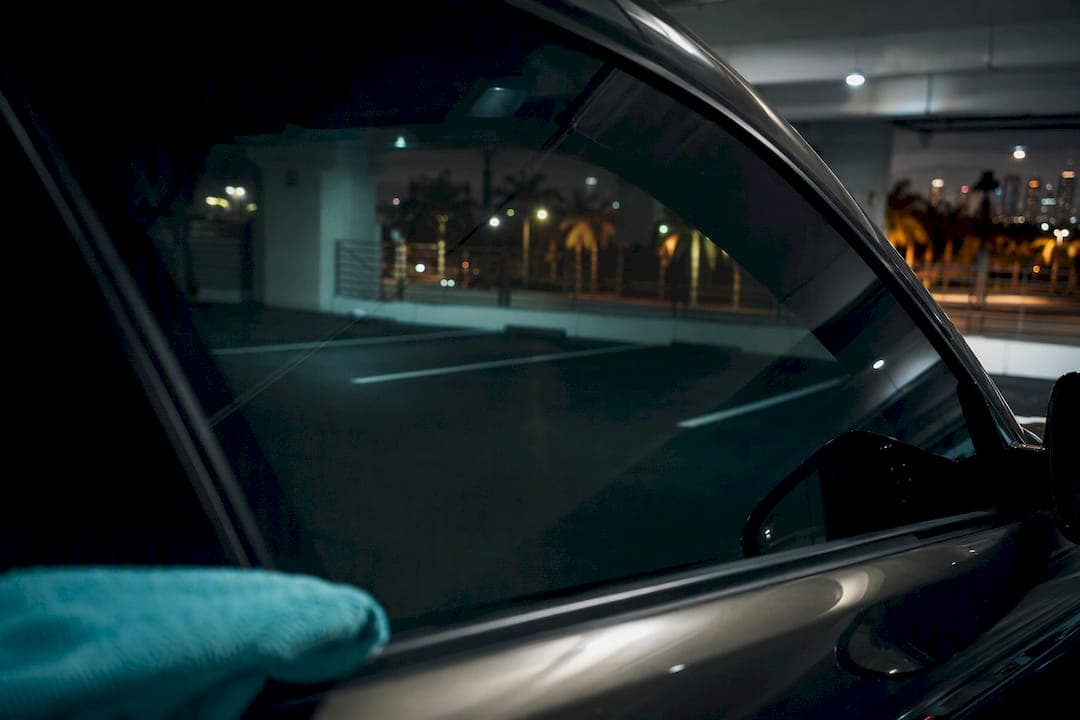
Yes, tinted windows at night are safe when you choose the right VLT and film. Drivers who spend real time on the road after dark should stay in the 35% to 50% VLT range for front windows, paired with a ceramic film that resists haze. Daytime-only drivers have more room to go darker. Clean glass and a professional install matter almost as much as the percentage you pick.
TL;DR:
- Drivers over 50 should consider VLT ratings of 50% or higher for front windows to maintain adequate night visibility, especially on unlit roads.
- Ceramic tint films offer better optical clarity and contrast retention at night compared to dyed or carbon films, even at darker VLT levels.
- Proper installation, including clean glass and headlight maintenance, is crucial to preserve night driving visibility regardless of tint shade.
- Frequent night drivers should keep VLT between 35% and 50%, while daytime-only drivers can opt for lighter tints around 20% to 35%.
- Mobile tint services with high-quality ceramic films start at $249 and can help achieve a balance between privacy, heat rejection, and clear night vision.
Table of Contents
- What VLT Is and How It Affects Night Visibility
- How Film Type Changes Clarity After Dark
- Recommended VLT by Driver Profile
- Keeping Your Night Visibility Sharp After Installation
- Where This Advice Comes From
- Jose's Take: Don't Chase Darkness Over Clarity
- Get Ceramic Tint That Protects Your Night Vision
- Sources
What VLT Is and How It Affects Night Visibility
VLT stands for Visible Light Transmission. It measures the percent of visible light that passes through your window film, and it's the single number that determines how much light reaches your eyes after the sun goes down. A higher VLT means more light gets in. A lower VLT means less light, more privacy, and less heat during the day, but also a darker cabin at night.
Here's how the common shades typically behave once the streetlights come on, based on practical testing from Vinyl Mafia:
- 70% VLT: Nearly indistinguishable from bare factory glass after dark.
- 50% VLT: A slight dimming you'll notice but rarely find bothersome.
- 35% VLT: Noticeably darker, though still workable for most drivers with good vision.
- 20% VLT: Distinctly darker on unlit roads, where shadows and low-contrast objects get harder to pick out.
- 5% VLT: Limo-style tint that significantly reduces night visibility and belongs on rear glass only, if at all.
Pro Tip: Tint looks darker from the outside than it feels from the driver's seat, because your eyes adjust to the cabin's ambient light while an outside observer is comparing it against streetlights or headlights.
Age changes this math. Drivers over 50 need meaningfully more light to read a dark road the same way a 25-year-old does, which is why an older driver running 20% VLT on the front side windows will feel the drop in visibility far sooner than a younger commuter with the same film.
How Film Type Changes Clarity After Dark
Not all tint at the same VLT looks the same at night. The film's construction, not just its darkness rating, decides whether you get a crisp view or a hazy one.
- Dyed film is the most affordable option, but the dye layer scatters light more as it ages, and older dyed tint tends to develop a hazy, purplish cast that noticeably degrades night clarity.
- Carbon film holds up better than dyed over time and blocks more heat, though it still can't match ceramic for pure optical sharpness.
- Ceramic film uses a non-metallic ceramic layer that tends to preserve contrast and clarity better than dyed alternatives as it ages, without needing an extremely low VLT to control heat and glare.
Because ceramic manages heat rejection so efficiently, it lets you stay at a lighter, more visibility-friendly VLT while still getting the comfort benefits that push people toward tint in the first place.
Pro Tip: Ask any installer for the film's optical clarity rating and confirm it's non-metallic. Metallic-backed film can interfere with radio and GPS signal, and reputable brands will always disclose composition on request.
Recommended VLT by Driver Profile
The right percentage depends less on style preference and more on how much of your driving actually happens after sunset. Match your VLT to your real schedule, not just how the car looks in daylight.
- Frequent night drivers (commuters, rideshare, delivery): Stay at 35% to 50% VLT on front windows. The WRP Blog points out that this range still cuts glare from oncoming headlights without dragging down contrast sensitivity on unlit roads.
- Mixed day and night drivers: 35% is the sweet spot most drivers settle on, balancing daytime heat control with usable night visibility.
- Daytime-only drivers: 20% to 35% is workable on front windows since you're rarely relying on them after dark.
- Older drivers or anyone with early cataracts or reduced night vision: Lean toward 50% or higher on the front and rear windshield areas that matter most for hazard detection.
Rear windows and the back windshield can generally run darker than front doors, both for practical visibility reasons and because most state laws set stricter minimum VLT requirements for front side windows specifically. If you notice halos around headlights, trouble judging distance at night, or new difficulty reading street signs, that's worth a conversation with an eye specialist before you pick a shade, not after.
Keeping Your Night Visibility Sharp After Installation
Tint doesn't lose clarity on its own. Neglect does most of the damage.
- Clean glass matters. Use ammonia-free glass cleaner and a microfiber cloth on both sides of tinted windows; ammonia breaks down film adhesive over time and can accelerate haze.
- Cut cabin glare. Dim your dashboard brightness, keep phone screens face down, and avoid stacking reflective items on the dash where they bounce light back into your eyes.
- Check your headlights. Misaimed headlights and yellowed, oxidized lenses cut your usable light before it ever reaches tinted glass, so proper headlight aim and clean lenses do as much for night visibility as the film itself.
- Watch for degraded film. Bubbling, a purple or hazy tint, and peeling edges all signal it's time to replace the film rather than drive around a compromised view.
Pro Tip: If you notice glare that seems worse at night than it used to, check your headlight lenses before blaming your tint. Oxidized plastic lenses scatter light in a way that mimics the symptoms of overly dark film.
Where This Advice Comes From
This guidance draws on published research into VLT performance, film composition, and night driving safety, cross checked against real installation standards. Southmiamitint installs premium film lines including 3M Ceramic IR, 3M Color Stable, and Iviron KoolMax ceramic tint, and works mobile across Miami-Dade County, which means the guidance above reflects what actually gets installed on customer vehicles, not just lab specs.
A few things worth knowing about what goes into a clean, night-friendly install:
- Material quality: 3M Ceramic IR and Iviron KoolMax are non-metallic ceramic films built for heat rejection without sacrificing optical clarity.
- Installer skill: Precise edge sealing and correct handling of curved glass prevent the haze and light scatter that come from a rushed or amateur install.
- Mobile convenience: Installation happens at your home or office, so there's no waiting-room downtime built into getting the film applied correctly.
Jose's Take: Don't Chase Darkness Over Clarity
Most drivers pick a VLT based on how the car looks in a parking lot, then get surprised three months later when they're squinting at a poorly lit intersection. That's backwards. I'd rather see someone run 50% ceramic on their front doors and get real glare control with zero visibility trade-off than watch them install 20% dyed film because it looked sharp on Instagram.
Ceramic film changes this calculation entirely. Because it rejects heat so well on its own, you don't need to go dark to get comfort, which means you can protect your night vision without giving up the privacy and cooling that made you want tint in the first place. If you have any vision concerns, wear glasses that already fight glare, or drive at night more than you'd like to admit, get a real consultation before you commit to a percentage. A five-minute conversation beats a year of squinting at crosswalks.
— Jose
Get Ceramic Tint That Protects Your Night Vision
Consider mobile tint options if you prefer installation at your location instead of a shop visit and want to avoid cheap dyed films. We come to your home or office and install premium ceramic tint, so you skip the drop-off, the waiting room, and the guesswork of a bargain film that hazes over in a year.
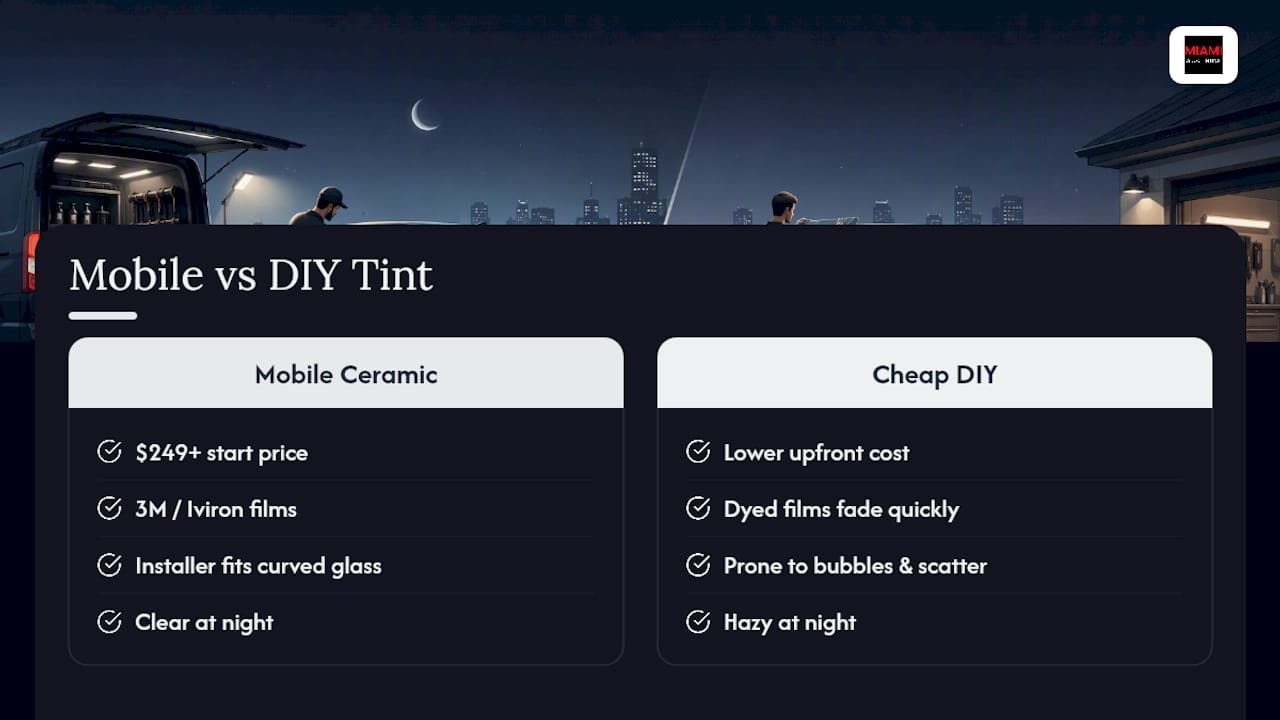
Our ceramic mobile tint installs start at $249, using 3M Ceramic IR, 3M Color Stable, or Iviron KoolMax film applied by installers who handle curved glass and edge sealing correctly the first time. That precision is exactly what keeps a windshield or side window clear at night instead of hazy. A cheap DIY kit can save you money upfront, but bubbling and light scatter show up fast, and you end up paying for a redo anyway.
If you're ready to match a VLT to your real driving habits, check our mobile tint pricing or schedule a mobile consultation and get a straight answer on what shade fits your night driving.
Sources
For more on how film composition affects visibility, read what car owners must know about tint clarity and our breakdown of dyed, carbon, and ceramic film differences. For upkeep, our step by step window film care guide covers cleaning products safe for tinted glass, and drivers weighing windshield-specific options can review GVX 200 windshield film for fitment details.
- Window Tint and Night Driving: Helpful Upgrade or Visibility Risk? | WRP Blog
- 20 Percent Tint At Night: Visibility And Safety - Auto Seeks