

Tint film durability is defined as how long a window tint film maintains its heat rejection, UV protection, and appearance under real driving conditions. For car owners in sun-heavy climates like Miami, this is not a minor detail. The wrong film fails within two years. The right one lasts the life of your vehicle. Film type, installation quality, and maintenance all determine where your tint lands on that spectrum. Southmiamitint installs 3M IR, 3M Color Stable, and Iviron Kollmax ceramic films, each chosen specifically for long-term performance in South Florida's intense UV environment.
What is tint film durability, and how does film type affect it?
Tint film durability is the industry's measure of how long a film holds its functional and visual performance before degrading. The single biggest variable is film composition. Budget dyed films last 3–5 years, metalized films 5–8 years, carbon films 7–10 years, and ceramic films 10–20+ years. That range is not marketing. It reflects real differences in how each film handles UV radiation and heat over time.
Dyed films absorb solar energy using organic dye layers. Those dyes break down under UV exposure, which is why cheap tint turns purple and fades fast. Metalized films use metallic particles to reflect heat, which improves longevity but can interfere with GPS and cell signals. Carbon films skip the metal and use carbon particles instead, giving better color stability and solid heat rejection without signal interference.
Ceramic films sit at the top of the durability scale. They use inorganic nano-ceramic particles that resist UV degradation indefinitely. Unlike organic dyes, these particles do not break down under sunlight. That is why ceramic films can carry lifetime warranties and still perform at year fifteen the same way they did at installation.
| Film Type | Typical Lifespan | Heat Rejection | UV Rejection | Relative Cost |
|---|---|---|---|---|
| Dyed | 3–5 years | 15–30% | Moderate | Low |
| Metalized | 5–8 years | 40–60% | Good | Moderate |
| Carbon | 7–10 years | 50–70% | Very good | Moderate-high |
| Ceramic | 10–20+ years | Up to 97% | 99%+ | Premium |
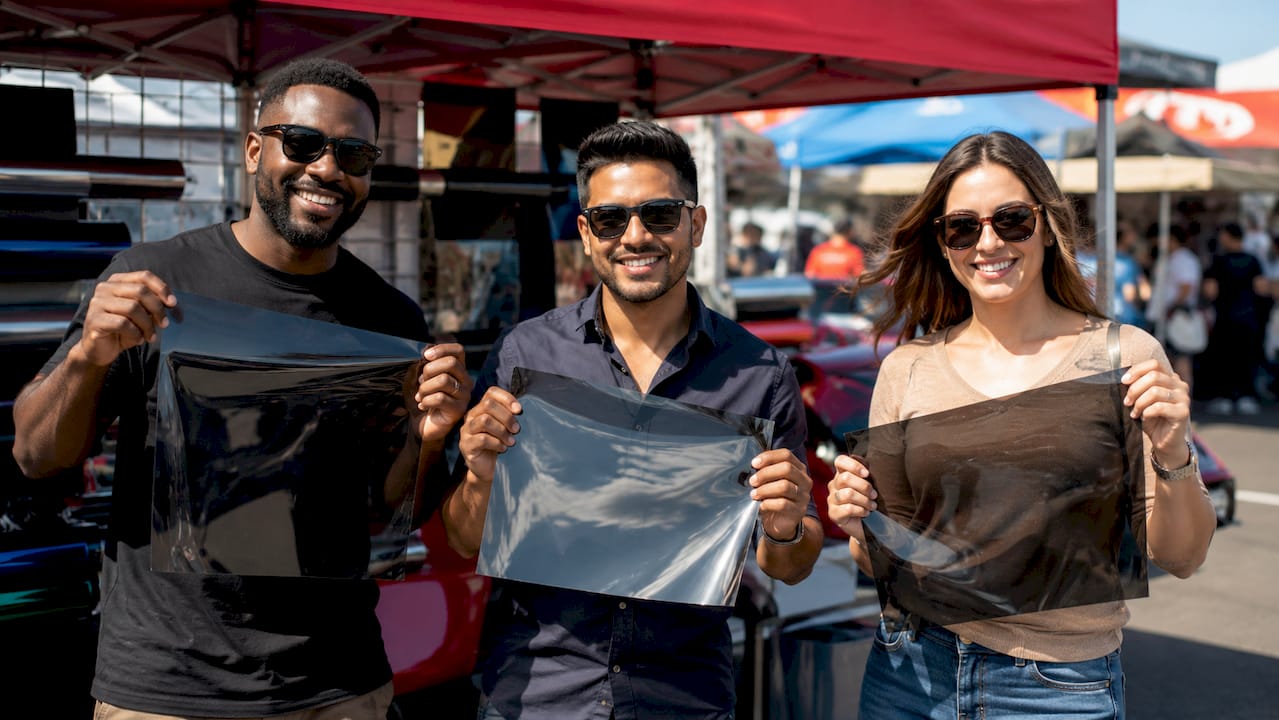
Heat rejection ranges from 15–30% in dyed films to up to 97% in ceramic films. That gap matters every time you park in direct sun. A ceramic film keeps your cabin cooler, protects your interior, and holds that performance for years longer than any dyed alternative.
Pro Tip: If you are comparing films by price alone, divide the total cost by the expected lifespan in years. The math almost always favors ceramic.
How do you know when your tint film is failing?
The clearest sign of tint failure is purple discoloration. UV photodegradation breaks down organic dyes in low-cost films, and the yellow dye molecules degrade first. What remains shifts the film's color toward purple. This process is irreversible and typically appears within 1–3 years on budget dyed films. Once you see it, the film is past saving.
Bubbling is the second major failure mode. Permanent bubbles form when heat and UV exposure degrade the adhesive, causing outgassing beneath the film. These bubbles multiply over time and do not go away on their own. New car owners sometimes confuse these with curing bubbles, which is a critical mistake.
Here is the distinction that matters:
- Curing bubbles: Small, water-based bubbles that appear in the first 2–4 weeks after installation. They are caused by moisture evaporating during the curing process. They disappear on their own.
- Adhesive failure bubbles: Larger, irregular bubbles that appear months or years after installation. They grow and spread. Replacement is the only fix.
- Purple or brown discoloration: Irreversible UV dye breakdown. No cleaning or treatment reverses it.
- Haziness or cloudiness: Film layer delamination or severe UV damage. Reduces both visibility and UV protection.
- Peeling edges: Adhesive bond failure, often caused by improper installation or ammonia-based cleaners.
Check your tint for these signs at UV-related tint damage every six months, especially if you park outdoors regularly in Miami.
Pro Tip: Run your finger along the edge of the tint near the window seal. Any lifting or separation is an early warning sign of adhesive failure, even before visible bubbles appear.
What factors affect tint film durability beyond film type?
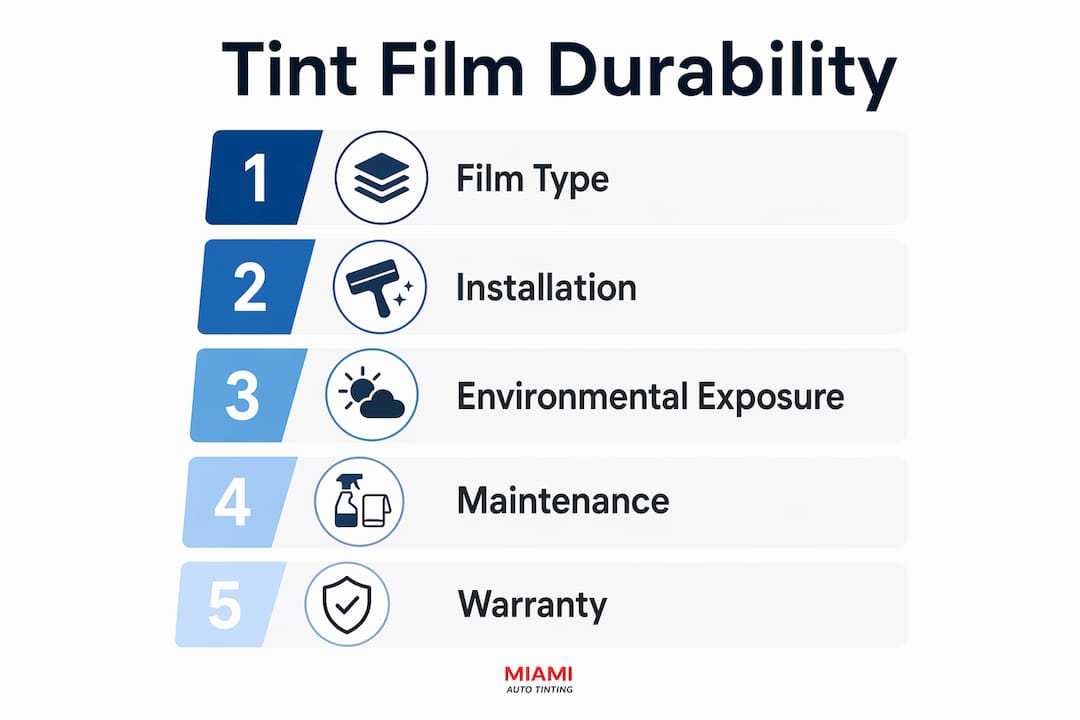
Film type sets the ceiling for durability. Everything else determines whether you reach it. Three factors control the outcome: installation quality, environmental exposure, and maintenance habits.
Professional installation vs. DIY
Professional installation directly influences tint longevity by ensuring proper surface preparation, adhesion, and curing. A poorly prepared surface traps moisture or contaminants under the film. That contamination breaks down the adhesive bond from day one. A film rated for ten years can fail in two if it was installed on a dirty or improperly cleaned surface. The difference between DIY and professional tinting is not just skill. It is the tools, the environment, and the process that a professional controls and a DIY installer cannot replicate in a driveway.
Environmental exposure in South Florida
Miami's climate is one of the most demanding environments for window tint in the country. Intense UV radiation, high humidity, and sustained heat accelerate every form of film degradation. Dyed films exposed to direct South Florida sun degrade faster than the national average lifespan figures suggest. Ceramic films handle this environment far better because their inorganic particles do not react to UV the way organic dyes do. Parking in shade when possible and using a windshield sunshade reduces cumulative UV load on your tint.
Cleaning and maintenance
- Use ammonia-free cleaners only. Ammonia-based products damage tint films by breaking down the adhesive and film layers. Most standard glass cleaners contain ammonia. Check the label before using anything on tinted windows.
- Use soft microfiber cloths. Abrasive materials scratch the film surface, which accelerates UV penetration and visual degradation.
- Wait 30 days before cleaning new tint. The adhesive needs time to cure fully. Cleaning too early disrupts the bond.
- Avoid rolling windows down for the first week. The edge seal is still curing. Rolling the window down too soon lifts the film edge and creates a permanent gap.
- Inspect edges and corners annually. Early edge lifting is fixable. Ignored, it becomes full adhesive failure.
Just as UV resistance matters for automotive components exposed to sun, it is the defining factor in how long your tint holds up under daily driving conditions.
Is a more expensive tint film worth the cost?
The cost-per-year calculation makes the answer clear. Ceramic tint for a four-door sedan runs $350–$700+, while dyed films cost $99–$199. Spread those numbers over actual lifespan and ceramic tint costs $18–$70 per year of use versus $40–$100 per year for budget dyed films. The premium film is cheaper in the long run, and it performs better the entire time.
| Film Type | Typical Cost (Sedan) | Lifespan | Annual Cost |
|---|---|---|---|
| Dyed | $99–$199 | 3–5 years | $40–$100/yr |
| Carbon | $200–$350 | 7–10 years | $25–$50/yr |
| Ceramic | $350–$700+ | 10–20+ years | $18–$70/yr |
Warranty coverage confirms this math. Premium ceramic films commonly carry lifetime warranties covering fading, bubbling, and peeling. Standard films typically carry 5–10 year warranties, which reflects their shorter effective lifespan. A lifetime warranty is not just a marketing promise. It signals that the manufacturer is confident the film will not fail under normal conditions.
The benefits of ceramic window tint extend beyond durability. Blocking 99%+ of UV radiation protects your skin on every drive and prevents your dashboard, seats, and door panels from cracking and fading. That interior protection alone adds resale value to your vehicle over time.
Key Takeaways
Tint film durability depends on film construction, professional installation, and consistent maintenance. Ceramic films deliver the longest lifespan and lowest annual cost of any film type available today.
| Point | Details |
|---|---|
| Film type sets the lifespan ceiling | Ceramic films last 10–20+ years; dyed films fail in 3–5 years under UV exposure. |
| Ceramic films cost less per year | At $18–$70 annually, ceramic tint is cheaper long-term than budget dyed alternatives. |
| Purple tint signals irreversible failure | UV dye breakdown is permanent; replacement is the only solution once discoloration appears. |
| Professional installation prevents early failure | Poor surface prep traps contaminants that destroy adhesive bonds from day one. |
| Ammonia-free cleaning extends film life | Ammonia degrades adhesive and film layers; always use ammonia-free cleaners and microfiber cloths. |
What I've learned after years of watching tints fail
After seeing hundreds of tint jobs in Miami, the pattern is always the same. Car owners choose the cheapest film, it looks fine for a year, and then it turns purple or bubbles up in the Florida heat. They come back frustrated, spend money on removal and reinstallation, and end up paying more than if they had chosen ceramic from the start.
The mistake I see most often is treating window tint like a commodity. People assume all tint is basically the same and that the price difference is just markup. It is not. Low-cost dyed films skip UV stabilizers and HALS additives, which are the compounds that slow organic dye breakdown. Without them, the film degrades fast. You are not saving money. You are prepaying for a replacement job.
The second mistake is DIY installation. I have seen films installed in garages with dust contamination, uneven adhesion, and edges that start lifting within months. The film itself was decent. The installation destroyed it. Professional installation is not optional if you want the film to last.
My honest recommendation is simple. Choose ceramic or carbon. Get it installed by a professional. Clean it with ammonia-free products and a microfiber cloth. Do that, and your tint will outlast most of the other components on your car. Ignore any one of those three, and you are shortening the lifespan significantly. The signs of tint deterioration are easy to spot once you know what to look for. Do not wait until the film is purple and peeling to act.
— Jose
Southmiamitint brings durable ceramic tinting to your driveway
Southmiamitint installs 3M IR, 3M Color Stable, and Iviron Kollmax ceramic films on cars across Miami-Dade, with the full service coming to you. No shop visit, no waiting room.
Every installation uses professional-grade surface preparation and curing techniques that protect your film's adhesive bond from day one. The ceramic window tint options starting at $249 include films rated for lifetime performance, backed by manufacturer warranties covering fading, bubbling, and peeling. For car owners who want 3M's top-tier IR ceramic technology, the 3M ceramic tint service in Miami delivers up to 97% heat rejection and 99.9% UV blocking with mobile installation at your door.
FAQ
How long does window tint last on a car?
Window tint lifespan ranges from 3–5 years for budget dyed films to 10–20+ years for ceramic films. Film type, installation quality, and maintenance all affect the final result.
What causes window tint to turn purple?
Purple discoloration is caused by UV photodegradation of organic dyes in low-cost dyed films. The yellow dye breaks down first, shifting the film's color toward purple within 1–3 years.
Are new tint bubbles normal?
Small bubbles in the first 2–4 weeks after installation are normal curing bubbles caused by moisture evaporation. They disappear on their own. Bubbles that appear later and grow over time signal adhesive failure and require film replacement.
What cleaning products are safe for window tint?
Use ammonia-free glass cleaners and soft microfiber cloths. Ammonia-based products break down the adhesive and film layers, accelerating deterioration and shortening the film's functional lifespan.
Is ceramic tint worth the higher price?
Ceramic tint costs $18–$70 per year of use versus $40–$100 per year for budget dyed films. The higher upfront cost produces a lower annual cost, better heat rejection, and longer-lasting UV protection.