
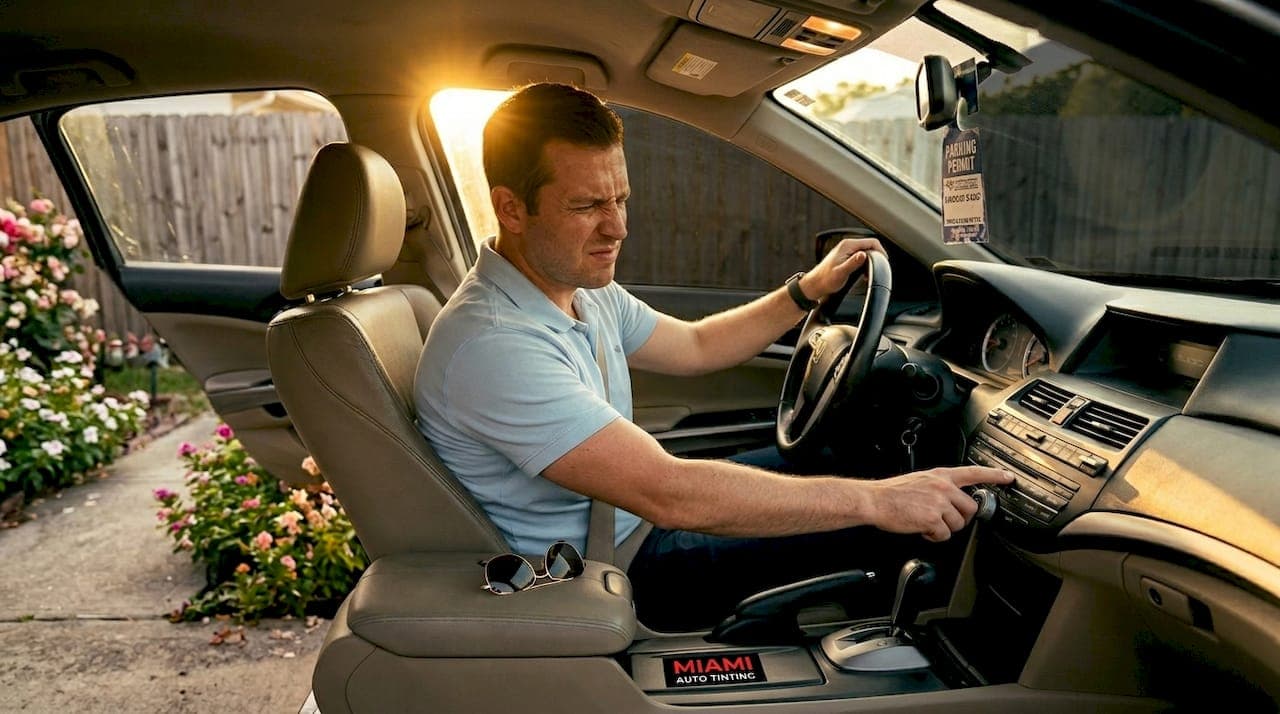
Living in South Florida or any warm climate means your car takes a daily beating from the sun. The signs you need window tinting are often hiding in plain sight. Your interior is slowly cooking, your skin is absorbing UV rays, and your air conditioning is working twice as hard. Most car owners don't connect these frustrations to their window tint until the damage is done. This guide breaks down exactly what to look for, with enough detail that you can make a confident call on whether it's time for new film or a full replacement.
Table of Contents
- Key takeaways
- 1. Excessive heat building up inside despite running the A/C
- 2. Intense sun glare making driving uncomfortable or unsafe
- 3. Visible bubbling, peeling, or color changes in the film
- 4. Your car's interior is fading faster than normal
- 5. Privacy has decreased due to lighter or damaged film
- 6. A summary of signs and what to do about them
- What I've learned from years of watching car tint fail in Miami's heat
- Ready to get your car properly protected?
- FAQ
Key takeaways
| Point | Details |
|---|---|
| Heat buildup is the first warning | If your car stays hot despite running the A/C, your tint's heat rejection has likely failed. |
| Physical damage means lost protection | Bubbling, peeling, or purple discoloration are not just cosmetic. They signal the film no longer blocks UV rays. |
| Glare reduction fades with the film | Aged tint increases driving glare, which is a real safety risk during South Florida's intense sunrise and sunset hours. |
| UV exposure causes interior damage | Faded dashboards and cracked seats often mean your tint has stopped blocking UVA and UVB rays. |
| Legal compliance matters too | Tint that's too dark or too faded may fall outside Florida VLT requirements, creating legal exposure. |
1. Excessive heat building up inside despite running the A/C
One of the clearest signs you need window tinting is when your car feels like an oven even after five minutes of air conditioning. Most people blame it on the heat outside, but the real issue is often that the tint film has stopped doing its job.
Quality window tint works by blocking infrared rays, which are the part of sunlight responsible for heat gain inside a vehicle. When tint heat rejection drops due to film aging or damage, your cabin absorbs significantly more heat. That makes your A/C run longer, burn more fuel, and still leave you uncomfortable.
Here are the key symptoms to watch for:
- The steering wheel and seats are uncomfortably hot to the touch before the A/C kicks in
- You notice it takes significantly longer than it used to for the cabin to cool down
- Your air conditioning seems to run constantly without ever fully stabilizing the temperature
- Rear passengers feel noticeably hotter than those in front, suggesting rear window film has degraded
Pro Tip: Park your car in direct sunlight for 30 minutes with windows up. Then compare the door glass temperature to the feel of the center cabin. A high-performing ceramic tint should make the glass warm but keep the air noticeably cooler inside. If there's almost no difference, the film isn't rejecting heat.
Ceramic tints like those Southmiamitint installs using 3M IR and Iviron Kollmax film are specifically rated for infrared rejection. Standard dyed films, especially older ones, often fail at this task after just a few years in South Florida's climate.
2. Intense sun glare making driving uncomfortable or unsafe
Glare is more than an annoyance. It's a genuine safety concern. When you're driving east in the morning or west in the late afternoon in Miami, the sun can hit your windshield at angles that are nearly blinding. Good tint reduces that significantly. Degraded tint does almost nothing.
Glare from sunlight and headlights is a major contributor to driving discomfort and accident risk, particularly at dawn and dusk. If your tint has aged, you may notice these window tinting signs getting worse over time:
- You're squinting more than you used to on your regular commute
- Oncoming headlights at night seem significantly more intense or scattered
- The glare appears uneven across different windows, suggesting patchy film degradation
- You find yourself using the sun visor constantly even for low-angle afternoon light through side windows
One thing many drivers don't realize is that glare doesn't only come through the front windshield. Side window tint plays a huge role in cutting lateral glare. When that film degrades while the windshield remains intact, you get an inconsistent visual experience that's both distracting and dangerous.
3. Visible bubbling, peeling, or color changes in the film
This is the most obvious of all window tinting signs, yet many car owners put off dealing with it. Physical film degradation is not just ugly. It means you've already lost most of the protective benefits the tint was providing.
There are three main culprits behind film failure:
- UV exposure over time: Even the adhesive layer in tint film breaks down under prolonged UV radiation, causing the film to separate from the glass.
- Heat cycling: In Miami, the temperature inside a parked car can exceed 150°F. Daily expansion and contraction of the film eventually cause micro-fractures and adhesion failure.
- Poor installation or cheap materials: Faulty installation or early window roll-down can trigger peeling within weeks. Budget films skip the UV-stabilized layers that prevent color shifts.
Pro Tip: Check the top and corner edges of every window. Peeling almost always starts there due to seal moisture and abrasion before it spreads to the center. Catching it early means you may only need re-edging on some windows rather than a full replacement.
The color shift to purple is a particularly telling sign. It means the dye in a lower-quality film has broken down, and the film is no longer providing the spectrum blocking it was designed for. Once you see purple, there's no saving it.
| Film issue | What it means | Recommended action |
|---|---|---|
| Bubbling at center | Adhesive failure, trapped moisture | Full window film replacement |
| Peeling at edges | Early-stage delamination | Inspect all edges, likely full replacement |
| Purple discoloration | Dye breakdown, UV protection lost | Replace immediately |
| Fading or haze | Film clarity degraded, reduced performance | Assessment and replacement |
4. Your car's interior is fading faster than normal
Faded dashboards, cracked leather seats, and sun-bleached upholstery are signs that UV rays are getting through your windows unchecked. This is one of the more underappreciated indicators for window tinting. People often attribute interior aging to the car's age rather than connecting it to tint performance.
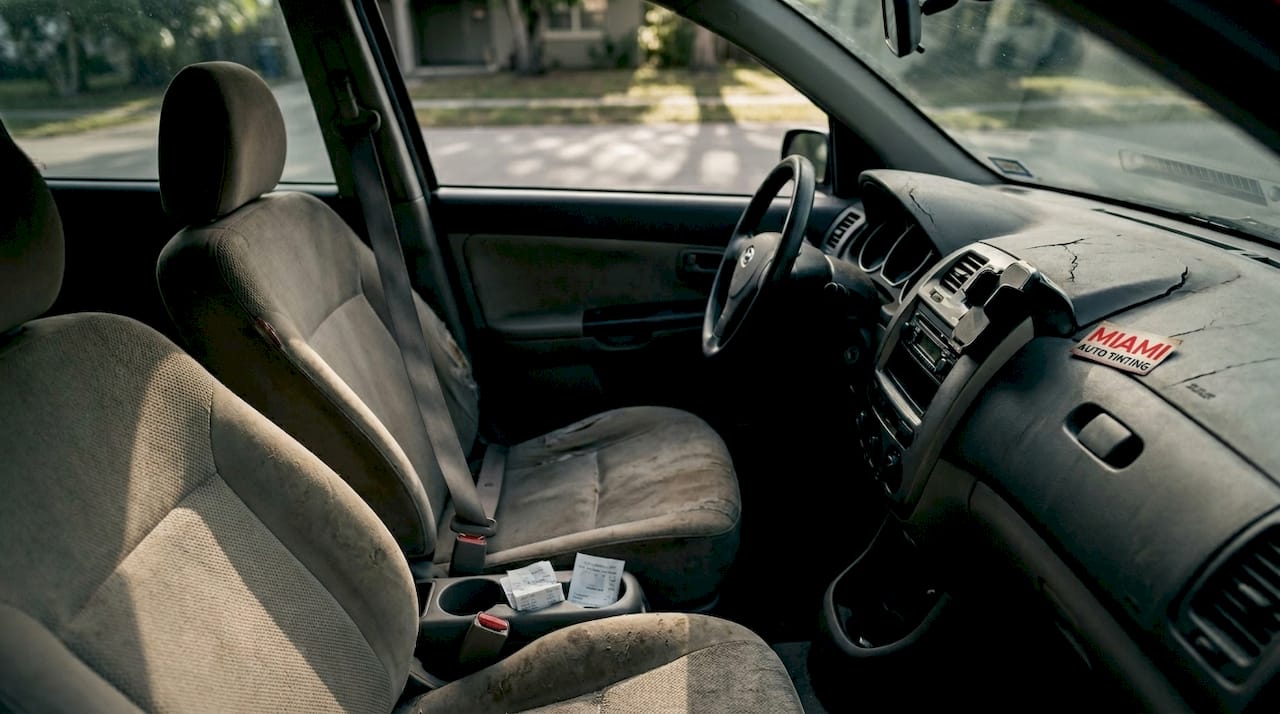
UV radiation causes skin aging and accelerates interior material breakdown. High-quality certified tint films block the majority of both UVA and UVB rays. When that protection drops, you get accelerated fading of plastics, leather, and fabric within months in a South Florida climate.
Watch for these specific signs:
- The dashboard or center console has developed a chalky or bleached appearance
- Leather seats show cracking or stiffness that wasn't present a year ago
- Carpet and fabric near the windows appears lighter than the rest of the interior
- Your rear window shelf or package tray looks noticeably sun-damaged
UV damage to car interiors is largely preventable with properly functioning film, but once the tint has failed, the window is open. Literally. If your car is less than eight years old and you're seeing significant interior fading, that's a strong indicator your tint either wasn't high quality when installed or has degraded past the point of usefulness.
5. Privacy has decreased due to lighter or damaged film
One of the core reasons people tint their vehicles is privacy. If you can clearly see into your car from the outside during daylight hours, your tint has likely degraded or was never dark enough for your needs. This isn't just about comfort. It's about security for valuables left in the car.
Here's how to assess your privacy situation:
- Stand outside your vehicle in direct sunlight and look through a side window. You shouldn't be able to see details inside clearly.
- If your windows look almost clear from the outside, the film has either faded significantly or is the wrong VLT for your needs.
- Tint that was legal and private three years ago may now let in significantly more light as the film loses its density.
There's a legal dimension here too. VLT values for front windows typically range from 25% to 70% depending on the state, with stricter rules for driver-facing glass. Florida has specific requirements, and matching tint to local rules keeps you legal while still getting the privacy and shade you want. Going too dark to compensate for faded film creates a separate legal problem.
For Miami drivers especially, the benefits of window tinting go beyond aesthetics. Tint that keeps prying eyes out also keeps the cabin cooler by reducing direct solar exposure through the glass.
6. A summary of signs and what to do about them
If you're still unsure where you stand, this quick reference should help you prioritize.
| Sign | Primary impact | Urgency |
|---|---|---|
| Excessive cabin heat | Comfort and fuel efficiency | High. Replace film with ceramic-grade option. |
| Increased glare | Driver safety | High. Inspect and replace, especially side windows. |
| Bubbling or peeling | Protection and aesthetics | High. Film is already failing. |
| Interior fading | UV damage to car and occupants | Medium to high. Film needs UV performance test or replacement. |
| Reduced privacy | Security and comfort | Medium. Evaluate VLT and film quality with a professional. |
When multiple signs appear at once, you're not dealing with isolated problems. You're looking at a film that has reached the end of its useful life. Most quality tint films last 5 to 10 years in standard conditions. In South Florida's intensity, lower-quality films often fail in 3 to 5 years. If your vehicle is regularly parked outdoors and your film is more than four years old, a professional evaluation makes a lot of sense regardless of visible symptoms.
What I've learned from years of watching car tint fail in Miami's heat
I've seen a lot of cars come through with the same story. The owner noticed the heat getting worse. Then the glare. Then one day they looked at the window and saw a bubble or a purple tint creeping in from the corner. The thing is, every one of those signs was there months earlier if they'd known what to look for.
The biggest mistake I see car owners make is treating tint as a one-time decision. You get it installed, you forget about it, and you assume it's still doing its job. That assumption costs people money on fuel, on interior repairs, and sometimes on skin health. South Florida is not kind to low-grade films.
What I'd tell anyone with a car parked outside every day in Miami is this: check your edge zones twice a year. Run your hand along the top edge of every window and look at the corners. That's where failure starts. If you catch it there, you might get a targeted repair. If you wait until it's bubbling in the center, you're looking at full replacement across the board.
The other thing that actually matters and most people skip is film certification. Not all tints labeled "ceramic" are the same. Reputable products like 3M IR or Iviron Kollmax are rated and tested for IR rejection and UV blocking. A cheap film with no certification data is just dark plastic. It might look fine on day one and fail completely within two summers.
When you're asking yourself how to know if window tinting is still working, trust your physical experience inside the car more than how the windows look from outside.
— Jose
Ready to get your car properly protected?
If any of the signs above sound familiar, Southmiamitint can assess your current film and recommend the right solution for your vehicle and budget. Southmiamitint offers mobile window tinting across Miami-Dade, which means a certified installer comes to your home, office, or anywhere else that works for you. No sitting in a shop for hours.
Films used include 3M IR, 3M Color Stable, and Iviron Kollmax ceramic tint, all of which are rated for high UV and infrared rejection. These aren't off-brand films bought in bulk. They're certified products that hold up in South Florida conditions. If you're ready to stop cooking in your own car and get real UV protection, check out ceramic window tint options starting at $249, or explore mobile tinting service availability in your area.
FAQ
How do I know if my window tint needs replacement?
Look for bubbling, peeling edges, purple discoloration, or a noticeable increase in cabin heat and glare. Any of these physical or performance changes indicate the film has degraded past its useful life.
How long does window tint last in hot climates?
Quality ceramic films typically last 7 to 10 years even in intense sun. Lower-quality dyed films in South Florida conditions may fail in 3 to 5 years, especially if parked outdoors regularly.
Is window tinting necessary if my car has factory tint?
Factory glass usually offers only minimal UV and heat protection with no actual tint film. Adding aftermarket film from a certified product line significantly improves heat rejection, UV blocking, and privacy beyond what factory glass provides.
Can faded window tint still protect against UV rays?
No. Once tint film shows discoloration or significant fading, its UV-blocking capability has already degraded. Certified films block the majority of UVA and UVB rays when functioning correctly, but a failing film offers little reliable protection.
Will tinted windows get me pulled over in Florida?
Florida has specific VLT requirements for each window position. Front side windows must allow at least 28% visible light transmission. If your tint is too dark or has degraded unevenly, checking Florida tint regulations before your next installation is worth the five minutes.