
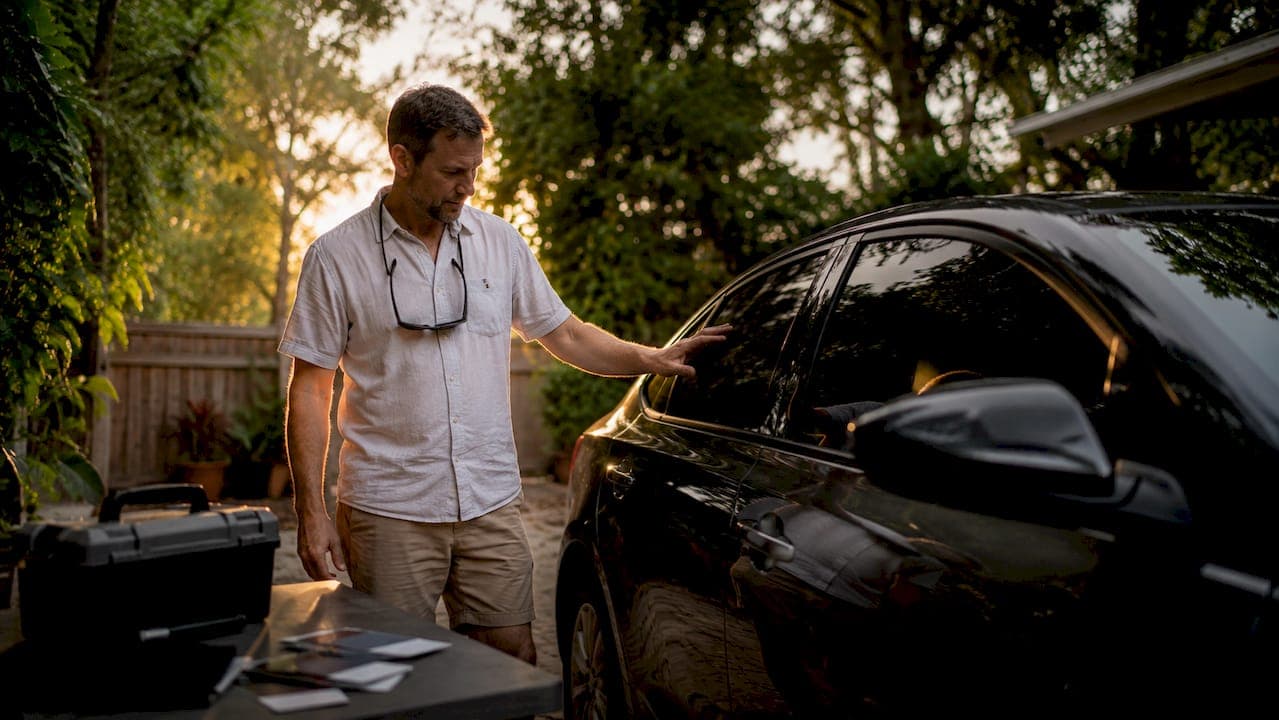
Professional window tint film blocks up to 99.9% of UVA and UVB radiation in the 280–400 nm range, making it one of the most effective UV defenses available for vehicle occupants. Standard automotive glass handles UVB reasonably well but leaves you largely exposed to UVA, the ray type that causes skin aging, skin cancer risk, and interior fading. Understanding the relationship between the UV spectrum and window tinting helps you choose a film that actually protects you, not just one that looks dark. Brands like 3M and Iviron manufacture certified films that meet Skin Cancer Foundation standards, and Southmiamitint installs them across Miami-Dade.
What is the UV spectrum and how does it damage your car and skin?
The UV spectrum covers wavelengths from 100 to 400 nanometers, but two bands matter most for car owners: UVA (315–400 nm) and UVB (280–315 nm). Each behaves differently when it hits your vehicle's glass.
UVA is the silent threat. It penetrates deeply into the dermis, driving photoaging and raising long-term skin cancer risk. UVA passes through clouds and, critically, through standard automotive glass with very little resistance. Standard car glass blocks only 70–75% of UVA, which means roughly one quarter of the most damaging UV rays reach you on every drive.
UVB causes the visible sunburn you feel after a day at the beach. Standard automotive glass blocks most UVB, so this band is less of a concern inside your vehicle. The real problem is the UVA that slips through unimpeded.
Here is what that ongoing UVA exposure does inside your car:
- Skin damage: Drivers who commute daily accumulate significant UVA exposure on their left arm and face, a pattern documented in dermatology research on asymmetric photoaging.
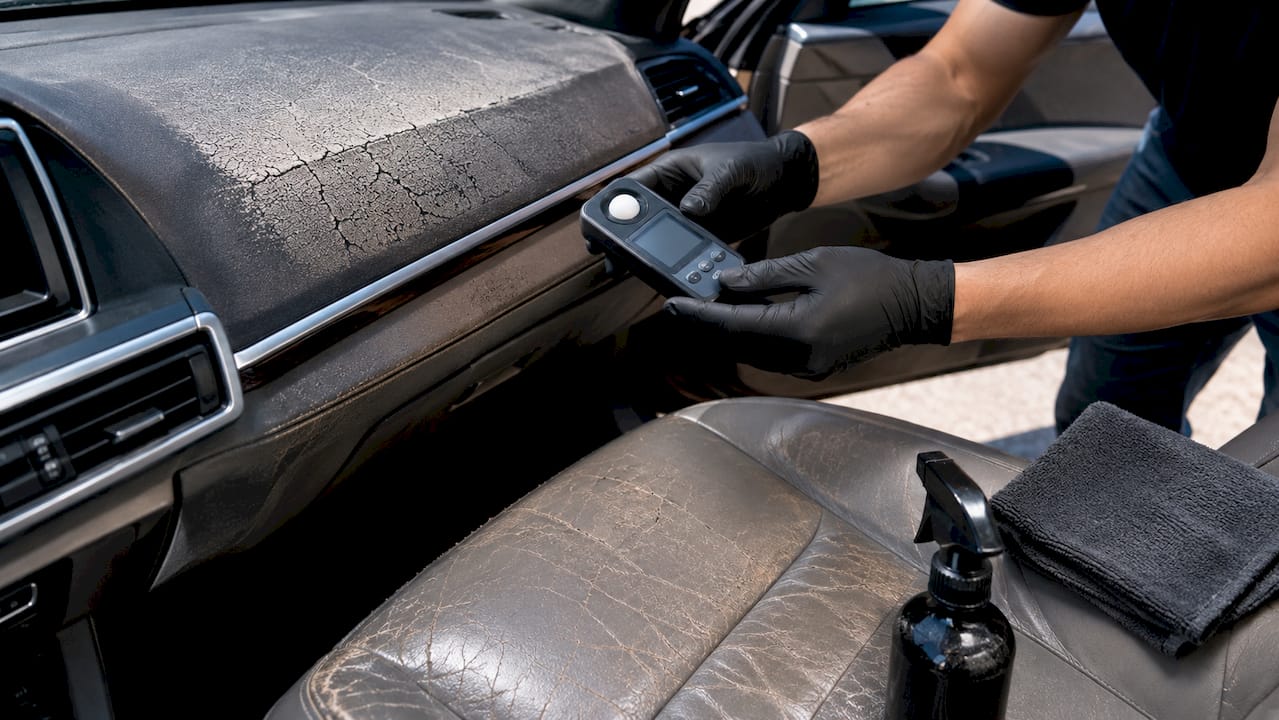
- Dashboard cracking: UV breaks down the polymers in plastic and vinyl, causing surfaces to dry out, crack, and fade within a few years without protection.
- Leather degradation: UVA oxidizes leather dyes and weakens fibers, turning a premium interior into a faded, brittle one.
- Fabric fading: Seat upholstery and carpeting lose color faster under UV exposure than under any other environmental factor inside a vehicle.
Think of UVA as a slow, invisible tax on both your health and your car's value. You do not feel it happening, but the damage compounds every mile.
How do window tinting films actually block UV rays?
UV blocking in window film comes from the film's chemical composition, not its darkness. UV protection depends on film chemistry, which is why a nearly clear ceramic film can match the UV rejection of a dark limo tint. This is the single most important technical fact to understand before buying any film.
Film types differ in how they achieve that blocking:
| Film Type | UV Blocking | IR Heat Rejection | Signal Interference | Lifespan |
|---|---|---|---|---|
| Dyed | Moderate (fades over time) | Low | None | 3–5 years |
| Metallic | High | Moderate | Yes (GPS, radio) | 5–10 years |
| Ceramic | 99%+ | 40–60% | None | 10–15+ years |
| Clear Ceramic | 99%+ | 50–60% | None | 10–15+ years |
Ceramic films block 99% UV and up to 60% of infrared heat while causing zero interference with GPS, Bluetooth, or radio signals. That combination makes ceramic the top-tier choice for modern vehicles loaded with electronics.
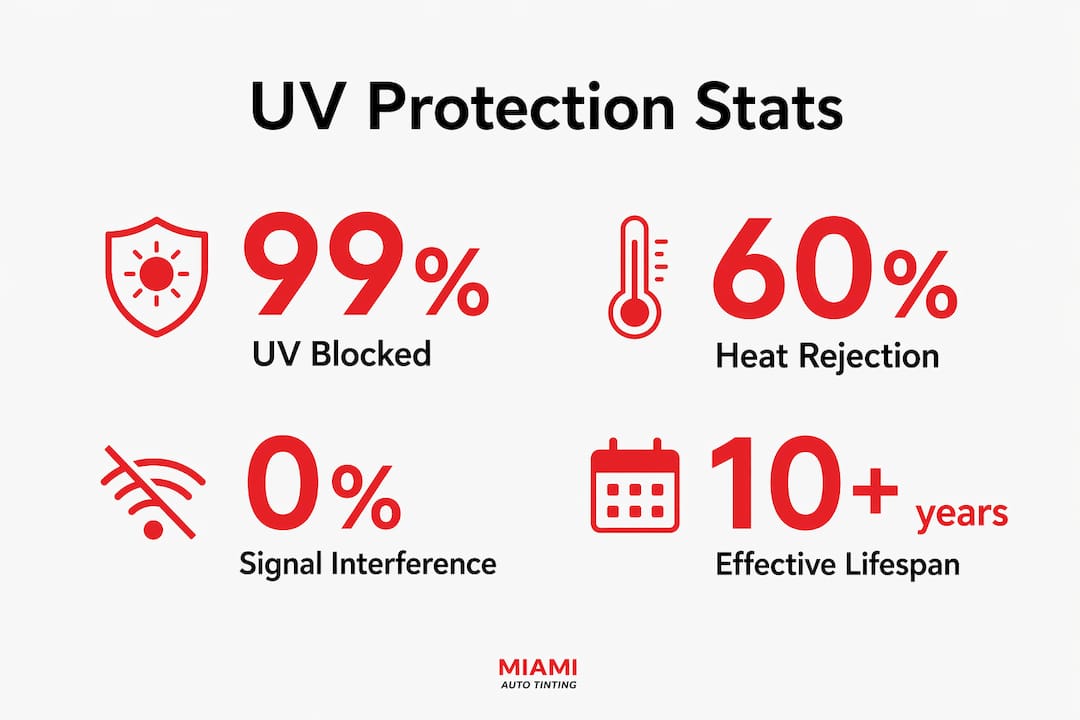
Clear ceramic films deserve special attention. Using nano-ceramic technology, they achieve 99% UV blocking with 70%+ visible light transmission, meaning your windows look virtually untinted while still providing full UV protection. This matters for windshields, where most states prohibit dark tints entirely.
When evaluating any film, look for the Skin Cancer Foundation Seal of Recommendation. Films carrying this seal have been independently tested for 99%+ UV blocking, which separates verified protection from marketing language. Manufacturer claims alone are not a reliable standard.
Pro Tip: Ask your installer specifically whether the film carries the Skin Cancer Foundation Seal. If they cannot confirm it, that film has not been independently verified for UV protection.
What are the real benefits of uv-blocking window tint?
Window tint UV protection delivers benefits that go well beyond skin health. Here are the four areas where car owners see the most measurable impact.
1. Cabin temperature and fuel savings
Professional window tinting reduces cabin temperatures by 35–60°F in direct sunlight. That reduction cuts the load on your air conditioning system significantly. High-quality ceramic tint reduces A/C load by up to 25%, which translates directly into fuel savings over time. In a Miami summer, that is not a small number.
2. Glare reduction and driver safety
Tinted film cuts glare by 18–60%, depending on the film's visible light transmission rating. Reduced glare means less eye strain on long drives and faster visual recovery when facing oncoming headlights at night. That is a measurable safety improvement, not just a comfort preference.
3. Glass safety and theft deterrence
Window tint acts as a laminate that holds shattered glass in place during an accident, reducing the risk of flying shards injuring occupants. The same film makes smash-and-grab theft harder because the glass does not instantly collapse when struck. This safety role is one of the most underestimated benefits of professional-grade film.
4. Resale value and interior preservation
Vehicles with quality window tint report $500–$1,500 higher resale values compared to non-tinted cars. Preserved interiors, protected leather, and intact dashboards all contribute to that premium. The film pays for itself through a combination of fuel savings and retained vehicle value over its 10–15 year lifespan.
Does darker tint mean better UV protection?
No. This is the most common misconception in the window tinting category, and it costs car owners real money. A clear 70% VLT ceramic film blocks the same UV as a 5% limo tint. Darkness is a visible light transmission setting, not a UV protection rating.
The confusion is understandable. People associate darker glasses with more sun protection, and that logic holds for cheap sunglasses. Professional window films operate differently because their UV-blocking properties come from ceramic particles or metallic compounds embedded in the film's layers, not from how much visible light they block.
Several practical problems follow from choosing dark tint for the wrong reasons:
- Low-quality dyed films lose their UV-blocking ability as the dye fades, often within three to five years. You end up with a dark window that no longer protects you.
- Very dark tints may violate your state's VLT laws, resulting in fines and a required removal that wastes your investment.
- Dark rear windows without proper UV certification still allow UVA penetration for back-seat passengers, including children.
Pro Tip: Never judge a film's UV protection by how dark it looks. Always request the film's UV rejection specification in writing before installation.
The effects of UV light on tint quality over time also vary by film type. Ceramic films maintain their UV rejection for over a decade. Dyed films degrade. Choosing based on appearance rather than chemistry is a mistake that shows up years later.
How to choose the best UV window films for your car
Choosing the right film means balancing UV protection, heat rejection, legal compliance, and your specific driving situation. Here is how to think through each factor.
Visible Light Transmission and Legal Limits
VLT is the percentage of visible light a tinted window allows through. Most states set a minimum VLT for front side windows, typically 35% or higher. Florida law requires front side windows to allow more than 28% light transmission. Going darker than your state allows creates legal exposure that outweighs any tinting benefit.
Film Selection by Use Case
| Use Case | Recommended Film | VLT Range | UV Blocking |
|---|---|---|---|
| Windshield | Clear ceramic | 70–90% | 99% |
| Front side windows | Light ceramic | 35–50% | 99% |
| Rear windows | Ceramic IR | 15–35% | 99% |
| Maximum heat rejection | Ceramic IR | 20–50% | 99% |
For Miami drivers, ceramic IR films like 3M IR and Iviron Kollmax ceramic are the practical choice. The heat load in South Florida is extreme, and ceramic films handle both UV and infrared rejection without degrading over time or interfering with your vehicle's electronics.
Clear ceramic films are the right call for windshields everywhere. They provide full UV and significant IR protection while keeping your forward visibility unrestricted and staying within legal limits in every state.
If you drive a fleet vehicle or a commercial van, the UV blocking benefits for commercial vehicles extend to driver health and reduced interior maintenance costs across the entire fleet.
Key takeaways
Effective UV protection from window tint depends entirely on film chemistry, not darkness, making certified ceramic films the only reliable choice for car owners.
| Point | Details |
|---|---|
| UV spectrum basics | UVA passes through standard glass and causes skin damage and interior fading; UVB is mostly blocked by car glass. |
| Film chemistry matters | UV blocking comes from ceramic or metallic compounds in the film, not from how dark the tint appears. |
| Certification is required | Only films with the Skin Cancer Foundation Seal have been independently verified to block 99%+ UV. |
| Real comfort gains | Ceramic tint reduces cabin temperatures by 35–60°F and cuts A/C load by up to 25%, saving fuel. |
| Resale and safety value | Tinted vehicles report $500–$1,500 higher resale values and added glass safety from the film's laminate effect. |
What i've learned after years of installing tint in miami
Most customers who walk in asking for "the darkest tint" are actually trying to solve a UV and heat problem. They just do not know there is a better way to solve it.
I have seen it hundreds of times. Someone gets a 5% limo tint on their rear windows thinking they are fully protected, then wonders why their leather is still fading two years later. The film was low-quality dyed film. It looked dark on day one and offered almost no UV protection by year two.
The shift I have seen in the past few years is real. Nano-ceramic technology has changed what is possible. A clear film on a windshield now blocks as much UV as anything we used to put on rear windows. That is a genuine advancement, and it matters most for the people who spend hours behind the wheel every day.
My honest recommendation: prioritize the Skin Cancer Foundation Seal and choose ceramic over everything else. The benefits of ceramic window tint are not marketing. They are measurable in temperature readings, fuel receipts, and the condition of your interior five years from now. If you are in Miami and you are not running ceramic, you are leaving real protection on the table.
— Jose
Get certified UV protection installed at your location
Southmiamitint installs 3M IR, 3M Color Stable, and Iviron Kollmax ceramic films across Miami-Dade, and we come to you. Every film we use blocks 99%+ UV and delivers the heat rejection your car needs in South Florida's climate. You do not have to choose between protection and appearance. Our ceramic options cover everything from clear windshield films to full ceramic IR packages for maximum comfort.
If you want the best UV window films installed by professionals who understand the science behind the product, explore our ceramic tint options or check out our 3M tint packages for the highest-rated UV and infrared protection available. Mobile installation means zero trips to a shop.
FAQ
Does window tint block UVA and UVB rays?
Professional window tint film blocks up to 99.9% of both UVA and UVB rays. Standard automotive glass blocks most UVB but only 70–75% of UVA, which is the more damaging band for skin and interiors.
Does darker window tint mean more UV protection?
No. UV blocking depends on the film's chemical composition, not its darkness. A clear ceramic film with 70% visible light transmission can block the same percentage of UV as a dark limo tint.
How do i know if a window film actually blocks UV?
Look for the Skin Cancer Foundation Seal of Recommendation. Films carrying this seal have been independently tested and verified to block 99%+ UV, which is a more reliable standard than manufacturer claims alone.
How long does UV protection last in window tint?
Ceramic films maintain 99% UV rejection for 10–15 years or more. Dyed films degrade significantly faster, often losing meaningful UV-blocking ability within three to five years as the dye fades.
Can window tint protect passengers in the back seat from UV?
Yes, provided the film is a certified UV-blocking product. Rear window tint with proper UV certification protects back-seat passengers, including children, from UVA exposure during every trip.