
For most car and homeowners who want strong heat control without a mirrored look, a non-reflective, metal-free film such as ceramic or carbon is the better default. Reflective film still earns its place on sun-heavy commercial facades where daytime privacy matters more than nighttime visibility or a neutral exterior. If your priority is driving safety or electronics compatibility, skip reflective finishes entirely. The buying guide below walks through exactly how to match a film type to your situation.
TL;DR:
- Non-reflective ceramic and carbon films offer high heat rejection without signal interference, making them ideal for vehicles and homes with electronics concerns.
- Metalized reflective films provide superior daytime heat control and privacy but can cause glare, interfere with signals, and become more transparent at night.
- California and other states regulate VLT, so selecting a film with a legally compliant VLT for nighttime visibility is crucial, especially when stacking factory tint.
- Proper installation involves checking glass type and existing tint, requesting full specifications, and avoiding film stacking that can reduce legal VLT levels.
Table of Contents
- What "reflective" and "non-reflective" actually mean
- How to read a window film spec sheet
- Film families compared: heat, reflectivity, and cost
- Pros and cons across the decisions that matter most
- Which film fits your car, home, or business
- How to choose the right film for your situation
- What installers actually watch for on the job
- Quick picks by priority
- Our take: specs matter more than marketing names
- Get the right film installed without the guesswork
- FAQ
- Sources
What "reflective" and "non-reflective" actually mean
Reflective film gets its mirrored look from a thin metal layer, usually aluminum, embedded in the film. That metal layer bounces sunlight away from the glass, which is why reflective tint looks shiny or chrome-like from outside during the day. Non-reflective film skips the metal layer and instead uses dyes, carbon particles, or ceramic nanoparticles to manage light and heat, producing a flatter, darker appearance from both sides of the glass.
The labels on product pages and installer menus map to these two families in fairly consistent ways:
- Metalized or mirrored film: the classic reflective option, often marketed for commercial buildings or privacy-focused vehicle owners.
- Ceramic film: metal-free, non-reflective, and the current standard for heat rejection without glare.
- Carbon film: metal-free, matte, non-reflective, and a step-down in price from ceramic.
- Dyed film: non-reflective, budget-oriented, with the least heat performance of the group.
Knowing which family a product belongs to tells you most of what you need before you even look at a spec sheet.
How to read a window film spec sheet
Every film datasheet lists a handful of numbers, and each one answers a different question about comfort and visibility.
Visible Light Transmission (VLT) tells you how much light passes through the glass and film combined. A lower VLT means a darker film, which also means less light reaching your eyes at night. This is the number most state and local tint laws regulate directly, so it affects both legality and nighttime driving visibility.
Infrared (IR) rejection and total solar energy rejection describe how much heat-carrying energy the film blocks before it reaches the cabin or room. 3M's Ceramic IR series can reject up to 95% infrared rejection and up to 66% of total solar energy, depending on the specific shade level chosen.
Reflectance (listed separately for interior and exterior) is what produces the mirrored look. Higher exterior reflectance means more glare for people outside and a shinier appearance on your glass.
SHGC (solar heat gain coefficient) and UV block round out the picture. SHGC captures total heat gain through the window system, while UV block protects upholstery, skin, and flooring from sun damage.
- VLT controls brightness and night visibility.
- IR rejection and SHGC control how much heat actually reaches you.
- Reflectance controls the mirrored look and outside glare.
- UV block protects your interior from fading and sun exposure.
Film families compared: heat, reflectivity, and cost
Each film type trades off differently between heat performance, appearance, and price, and those trade-offs matter more than any single spec in isolation.
Metalized or reflective films deliver strong daytime heat rejection and a mirrored exterior that many people associate with commercial or luxury tinting. The metal content, however, can interfere with radio, GPS, and toll transponder signals, which is a real concern for daily drivers.
Ceramic films use nanoceramic particles instead of metal, which gives them high IR rejection with low reflectivity and no signal interference. This is why 3M's Ceramic IR product line markets itself on metal-free construction alongside strong solar energy rejection. Ceramic sits at the premium end of the price range.
Carbon films offer a non-reflective, matte finish with mid-to-high heat rejection and notably better fade resistance than dyed film over time, according to an independent window tinting guide. Our own breakdown of ceramic vs carbon tint goes deeper into where the price-to-performance line falls between the two.
Dyed films are the budget option: non-reflective, appearance-focused, and the lowest performer on heat rejection among the four main families.
- Metalized/reflective: strong heat rejection, mirrored look, signal interference risk.
- Ceramic: top-tier IR rejection, metal-free, premium pricing.
- Carbon: matte finish, solid heat rejection, better fade resistance than dyed film.
- Dyed: lowest cost, lowest heat performance, appearance-first.
Security films and clear UV/heat-control films serve narrower needs: shatter resistance for security films, and near-invisible UV and heat protection for buyers who want zero visual change to the glass.
Pros and cons across the decisions that matter most
Reflective and non-reflective films trade strengths depending on what you weigh most heavily.
- Daytime privacy and heat control: reflective film blocks outside views and cuts heat well during daylight hours, which is why it still shows up on sun-exposed storefronts and office towers.
- Nighttime visibility: once the sun goes down, interior lighting can reverse the privacy effect, and reflective film can become easier to see through from outside than buyers expect, according to the same independent tinting guide.
- Aesthetics: reflective film gives a mirrored, metallic exterior appearance, while non-reflective ceramic and carbon films keep a neutral, factory-like look.
- Electronics and signal interference: metalized films carry a documented interference risk for radio, GPS, and toll transponders, while metal-free ceramic and carbon films avoid that risk entirely.
- Maintenance and longevity: carbon and ceramic films resist fading and bubbling better over years of sun exposure than cheaper metalized or dyed alternatives.
Pro Tip: If nighttime driving visibility is a top concern, test a sample film after dark before committing to any reflective product.
Which film fits your car, home, or business
Priorities shift depending on where the film is going, and so should your pick.
For vehicles, nighttime visibility and electronics compatibility usually outweigh the daytime privacy boost of reflective film. That is why most modern cars are better served by metal-free ceramic or carbon film, especially with GPS, toll tags, and satellite radio now standard equipment.
- Automotive: prefer metal-free ceramic or carbon for heat rejection without interference risk.
- Residential: neutral, low-reflective films usually balance daytime privacy and curb appeal better than a mirrored finish.
- Commercial: glare reduction and energy savings can justify reflective architectural film on large, sun-exposed facades, even though it changes the building's exterior look.
For homes, a mirrored exterior often clashes with neighborhood aesthetics, so low-reflective ceramic or carbon film tends to be the more popular pick among homeowners balancing privacy with curb appeal.
How to choose the right film for your situation
Start by naming your single biggest priority: heat reduction, privacy, appearance, or avoiding electronics interference. That one answer eliminates most of the wrong options immediately.
- Set a VLT target first. Darker film cuts more light and heat but reduces nighttime visibility, so check your local legal minimum before picking a shade.
- Check IR rejection and metal content. A metal-free ceramic film avoids the interference risk that comes with metalized reflective products.
- Confirm glass compatibility. Low-E coated, laminated, and double-pane glass all respond differently to film, and the wrong pairing can create thermal stress on the glass itself.
- Ask about warranty and removal. A reputable installer stands behind the film with a warranty and can explain how old tint will be removed before new film goes on.
- Watch for stacking issues. Adding dark aftermarket film over factory-tinted "privacy glass" can push combined VLT below the legal limit even when the new film alone would pass.
For a deeper look at how VLT and SHGC numbers translate into real-world comfort, our guide to non-reflective window tint breaks down the numbers by use case. For a visual sense of what different VLT percentages actually look like on a vehicle, this tint percentage guide is a useful reference point.
Pro Tip: Ask your installer to show you the manufacturer spec sheet for VLT and IR rejection rather than relying on a demo sample alone, since lighting in a showroom can make films look darker or lighter than they test.
Red flags worth noting: an installer who cannot provide a product bulletin, who waves off questions about glass type, or who recommends stacking film over existing factory tint without measuring combined VLT first.
What installers actually watch for on the job
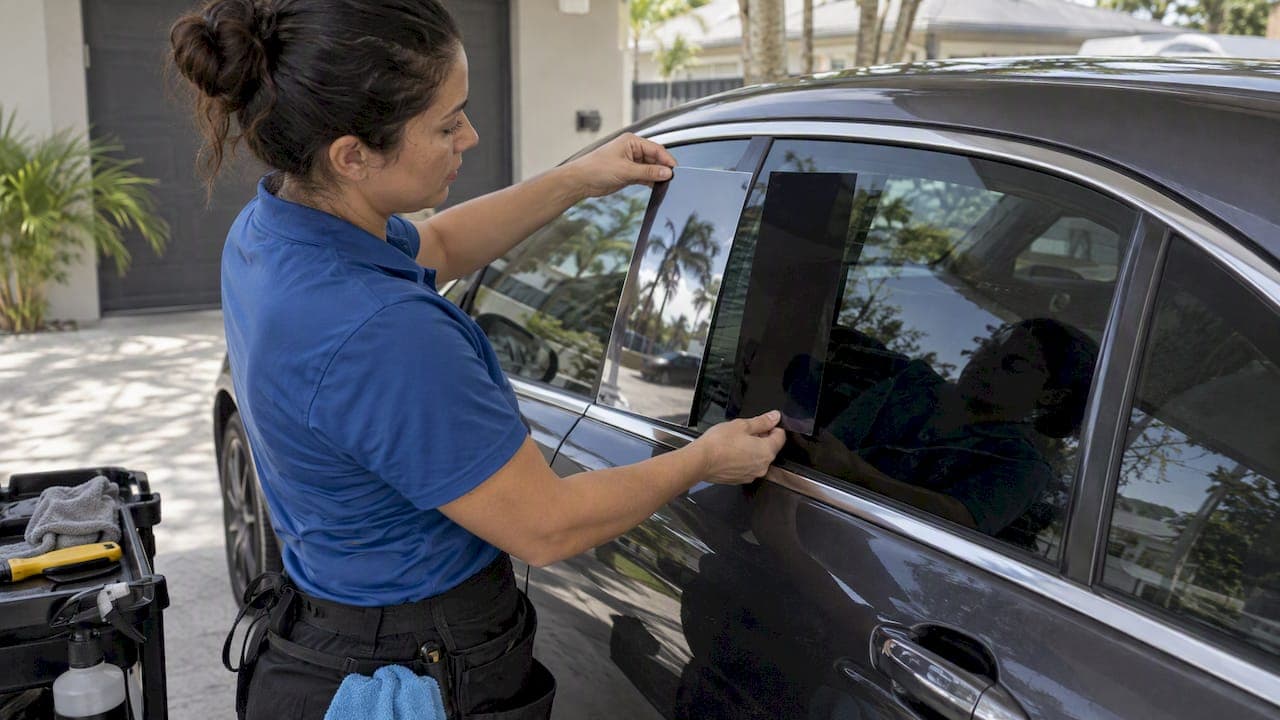
Mobile installation means checking glass type and film fit on site, which is where computer-cut film patterns earn their keep by reducing trimming errors around trim and edges. A careful installer checks whether a vehicle already has factory-tinted glass before adding aftermarket film, since stacking darker film on top of privacy glass can drop combined VLT below the legal threshold even when the new film is legal on its own.
The most common mistakes we see on the job are skipping a glass-type check on homes with low-E or double-pane windows, ignoring existing factory tint on vehicle rear windows, and rushing surface prep before applying film. Our comparison of ceramic and carbon tint for Miami drivers covers more of these real-world installation calls, and our breakdown of tint film clarity explains how factory glass color affects the final legal VLT reading.
Quick picks by priority
If heat rejection is your top concern, go with a metal-free ceramic film for the strongest infrared performance without a mirrored look. If daytime privacy or facade glare control matters most and you can accept the appearance and nighttime trade-offs, reflective film remains a reasonable pick for commercial settings. Budget buyers can start with carbon or dyed film, but always confirm your local VLT rules before installation. Whatever you choose, check your region's legal VLT minimum and talk to a professional installer before buying film.
Our take: specs matter more than marketing names
The window film industry sells on names like "ceramic," "crystalline," and "carbon" as if the label alone settles the question, but the numbers behind those names matter far more than the branding. Two films both marketed as "ceramic" can differ meaningfully in IR rejection and VLT, so the product bulletin, not the category name, should decide your purchase.

The biggest gap in most consumer advice is nighttime visibility. Articles focus heavily on daytime heat rejection and privacy, but reflective film's see-through-at-night effect gets buried or skipped entirely, and it is often the detail that frustrates buyers after installation.
My advice: pick your priority first, heat, privacy, or electronics safety, then ask for the spec sheet before you ask about price. A film that looks great in a showroom sample can perform very differently once it is on your actual glass under your actual lighting conditions. Start with the numbers, not the name on the box.
— Jose
Get the right film installed without the guesswork
We install premium ceramic and carbon window tint films and provide mobile installation service at your car, home, or business. Working with a professional installer means you get correct VLT application for your glass type, a warranty on the film and the work, and a glass-compatibility check before anything goes on.
Our services include mobile window tinting at your location for vehicles, ceramic and carbon tint options matched to your heat and privacy priorities, residential and commercial window tinting, and old tint removal before new film installation.
Get a same-day quote for mobile window tinting and have a professional handle the glass checks, the film choice, and the install in one visit.
FAQ
Is reflective tint better than regular tint?
Reflective tint is not universally better, it trades strong daytime heat rejection and privacy for a mirrored exterior and potential nighttime visibility problems. Non-reflective films like ceramic or carbon usually suit more drivers and homeowners because they deliver comparable heat control without the glare or electronics interference risk tied to metalized film.
Can you see through reflective tint at night?
Yes, reflective tint can become easier to see through after dark once interior lighting outshines the dim exterior light, reversing the daytime privacy effect according to an independent tinting guide. This is one of the main reasons installers steer vehicle owners toward non-reflective, metal-free films instead.
What are the disadvantages of reflective window film?
Reflective film's metal content can interfere with radio, GPS, and toll transponder signals, and its mirrored exterior is restricted in some jurisdictions. It can also create glare for others and may lose its daytime privacy advantage once interior lights are on at night.
What tint has the best visibility?
Films with a higher VLT let more light through, which supports clearer nighttime visibility, and non-reflective ceramic films generally offer this without sacrificing much heat rejection. Checking a specific shade's VLT rating on the manufacturer datasheet is the most reliable way to compare visibility across products.
Sources
- 3M™ Product bulletin: Ceramic IR series (product bulletin)
- 3M™ Automotive Window Film Ceramic IR Series (3M product page)
- Window Tinting Guide: Benefits, Options and Tips (UMATechnology guide)