
Ceramic tint is the higher-performance choice for most drivers, rejecting more heat and staying clearer over time than carbon film. Carbon tint remains the smart pick when you park in a garage, drive a covered lot, or want strong heat control without the ceramic price tag. Your climate, parking situation, and budget should decide the winner, and a local installer like Southmiamitint can walk you through both on your actual vehicle before you commit.
TL;DR:
- Ceramic tint generally rejects more heat, blocking 60 percent or higher of solar energy, compared to 40 to 55 percent for carbon tint.
- Both film types block around 99 percent of UV rays, but ceramic maintains clearer optics at higher VLT percentages and reduces glare better.
- Ceramic films typically cost $100 to $400 more than carbon, but offer longer lifespan and stronger warranties when installed properly.
- The effectiveness of heat rejection depends on TSER ratings, with ceramic providing a noticeable cooling advantage in hot, sunny climates.
- Proper installation quality is crucial, as poor prep or rushing can diminish the lifespan of either film type, regardless of their durability.
Table of Contents
- Ceramic vs Carbon Tint: What Actually Makes Them Different?
- How Much More Heat Does Ceramic Tint Block?
- Do Carbon and Ceramic Tints Protect the Same From UV and Glare?
- What Does Each Tint Cost, and How Long Does It Last?
- How Do You Choose Between Carbon and Ceramic for Your Car?
- Why Does Installation Quality Matter as Much as the Film?
- Does Carbon or Ceramic Tint Hold Its Color Better?
- Which Tint Fits Your Driving Situation?
- Get Ceramic or Carbon Tint Installed at Your Location
- Sources
- FAQ
Ceramic vs Carbon Tint: What Actually Makes Them Different?
The performance gap between these two films comes down to what they're made of, not just how dark they look on your windows.
Carbon film uses carbon particles suspended in the film layer. Those particles absorb infrared energy rather than reflecting it, which cuts glare and blocks some heat while giving the film a flat, matte black finish that resists the purple fading you see on cheap dyed tints.
Ceramic film uses non-metallic ceramic nanoparticles instead of carbon or metal. These particles scatter and reject infrared energy more aggressively than carbon can, which is why ceramic tends to feel noticeably cooler at the same shade level.
Two numbers matter more than most buyers realize:
- VLT (Visible Light Transmission): how much visible light passes through the glass, which determines how dark the tint looks and whether it meets your state's legal limit.
- TSER (Total Solar Energy Rejected): how much total solar heat energy the film blocks, which drives cabin cooling regardless of how dark or light the film looks.
Both film types are non-metallic, so neither interferes with GPS, radio, or cell signal. That signal issue only applies to older metallic tints, which most reputable installers stopped carrying years ago. What separates a good install from a bad one is the brand and film quality your installer chooses, not the raw material category alone.
How Much More Heat Does Ceramic Tint Block?
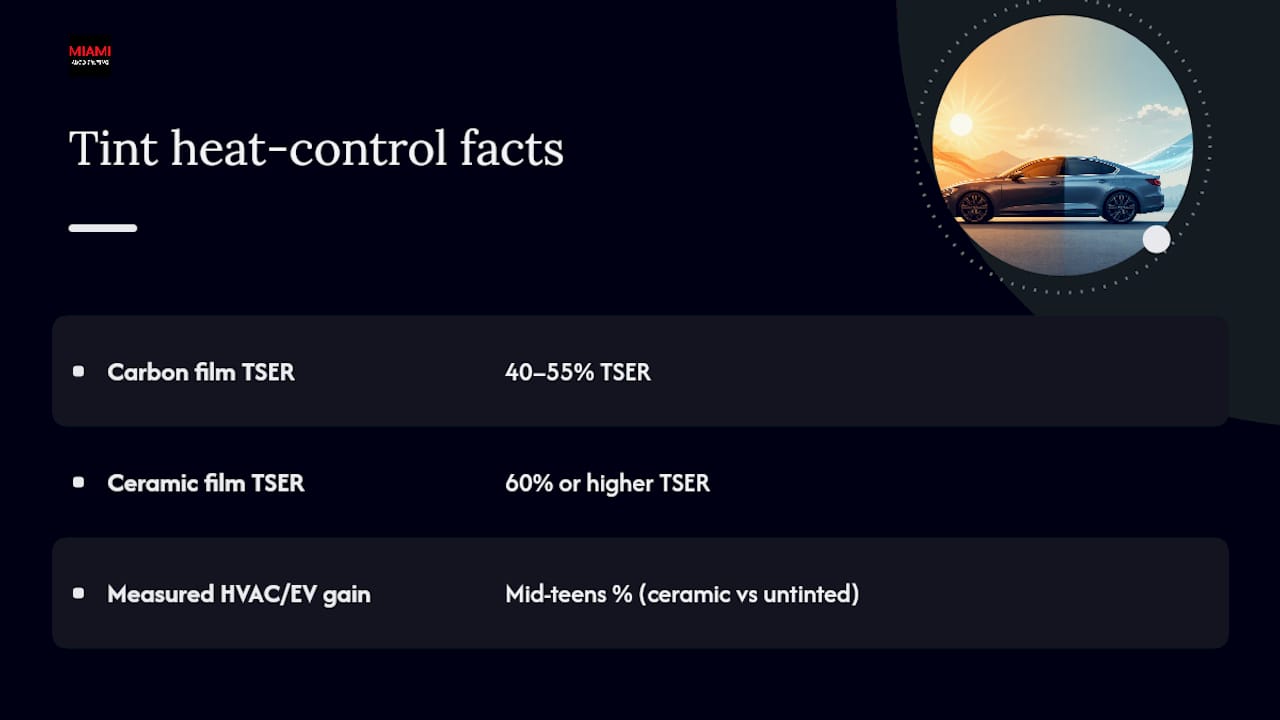
This is where the ceramic vs carbon tint debate gets settled for most buyers. Carbon film typically lands in the 40 to 55 percent TSER range, while premium ceramic film commonly clears 60 percent or higher, depending on the brand and how dark you go. That gap sounds abstract until you sit in the car on a July afternoon.
By the Numbers: Side-by-side thermal tests have shown ceramic-tinted cabins running noticeably cooler than untinted glass, with some controlled tests reporting HVAC energy or EV range improvements in the mid-teens percent range under sustained sun exposure.
The reason ceramic pulls ahead comes down to infrared rejection, not darkness. A ceramic film at 35 percent VLT can outperform a carbon film at 20 percent VLT on heat control, because TSER and VLT measure different things entirely. This matters most on your front windows, where most states cap how dark you can legally go. If your front glass is stuck at a lighter legal VLT, ceramic gives you real cooling power that a darker carbon film can't match at that same legal shade.
For EV owners, this isn't just comfort. Less heat soak into the cabin means the HVAC system works less to cool the interior, which can translate into modest range gains on hot days, an effect explored in more detail here.
Do Carbon and Ceramic Tints Protect the Same From UV and Glare?
UV protection is essentially a tie. Quality carbon and ceramic films both block around 99 percent of UV rays, so don't let a salesperson sell you ceramic purely on sun protection. Where the two split apart is optical clarity and glare handling at lighter shades.
- Ceramic maintains sharper, clearer optics even at higher VLT percentages, which matters if you want a legal front-window shade that still looks nearly clear.
- Carbon can introduce a slightly hazier look at very light tints, though it's barely noticeable at standard darkness levels.
- Both cut glare effectively at typical shop-installed shades, so daytime driving comfort is similar for most drivers.
- Neither interferes with dash cameras, toll transponders, or phone signal, since both are non-metallic films.
If you drive at night often or want your windshield strip tinted for glare without dulling visibility, ceramic's clarity advantage is where it earns its price tag.
What Does Each Tint Cost, and How Long Does It Last?
The price gap between these films exists for a real reason, not just marketing. Carbon jobs typically run $100 to $400 less than a comparable ceramic install, depending on your vehicle size and the specific film line.
- Carbon film generally carries a solid manufacturer warranty and holds its matte black color well, resisting the fade and purple discoloration that plagues old dyed film.
- Ceramic film, when installed correctly, tends to carry the strongest warranty coverage and the longest expected service life among common tint categories.
- A professional install is what actually protects that lifespan. Poor prep or rushed heat-shrinking can shorten either film's life regardless of how much you paid for the material.
- Cheap installation labor is the most common way buyers lose the extra money they spent on premium ceramic film.
The honest takeaway: film quality sets the ceiling, but installation quality decides whether you ever get there.
How Do You Choose Between Carbon and Ceramic for Your Car?
Run through this before you book anything, and you'll walk into your appointment already knowing what to ask for.
- Check your parking reality. If your car sits outside in direct sun most days, ceramic's heat rejection pays for itself in comfort. Garage-kept or covered-lot vehicles can lean carbon and save money.
- Factor in your climate. Hot, sunny regions favor ceramic. Milder climates make carbon's lower TSER less of a daily issue.
- Think about vehicle value and hold time. If you're keeping the car long term or it's a higher-value vehicle, ceramic's longer expected lifespan and stronger warranty often justify the upfront cost.
- Set your real budget. Carbon delivers strong everyday performance for less money, and it's a perfectly sound choice when funds are tight.
Pro Tip: Before you book, ask your installer three things: what's the TSER rating on this specific film, what brand and product line is it, and can I see a sample or a previous install on a similar vehicle? A shop that can't answer the TSER question clearly probably isn't quoting you real ceramic film.
Watch for red flags too: installers who apply new film directly over old tint without removing it first, warranty language that's vague about coverage length, or no willingness to name the actual film brand. Those are signs to keep shopping.
Why Does Installation Quality Matter as Much as the Film?
Even the best ceramic film on the market can fail early in the hands of a rushed installer. Clean glass prep, correct heat-shrinking around curves, tight edge finishing, and proper curing time are what separate a tint job that lasts a decade from one that bubbles within a year.
- Trapped dust or contaminants under the film cause bubbling that no amount of premium film chemistry can fix.
- Incorrect heat-shrinking on curved rear windows leads to fisheye distortion and premature peeling at the edges.
- Rushed curing time, especially in humid South Florida conditions, can trap moisture and cloud the film before it fully sets.
This is exactly why installer experience matters as much as the film brand you pick. A mobile installer working driveways and offices across Miami-Dade sees every glass shape and every curve type repeatedly, which builds the kind of hands-on judgment that catches problems before they start.
Does Carbon or Ceramic Tint Hold Its Color Better?
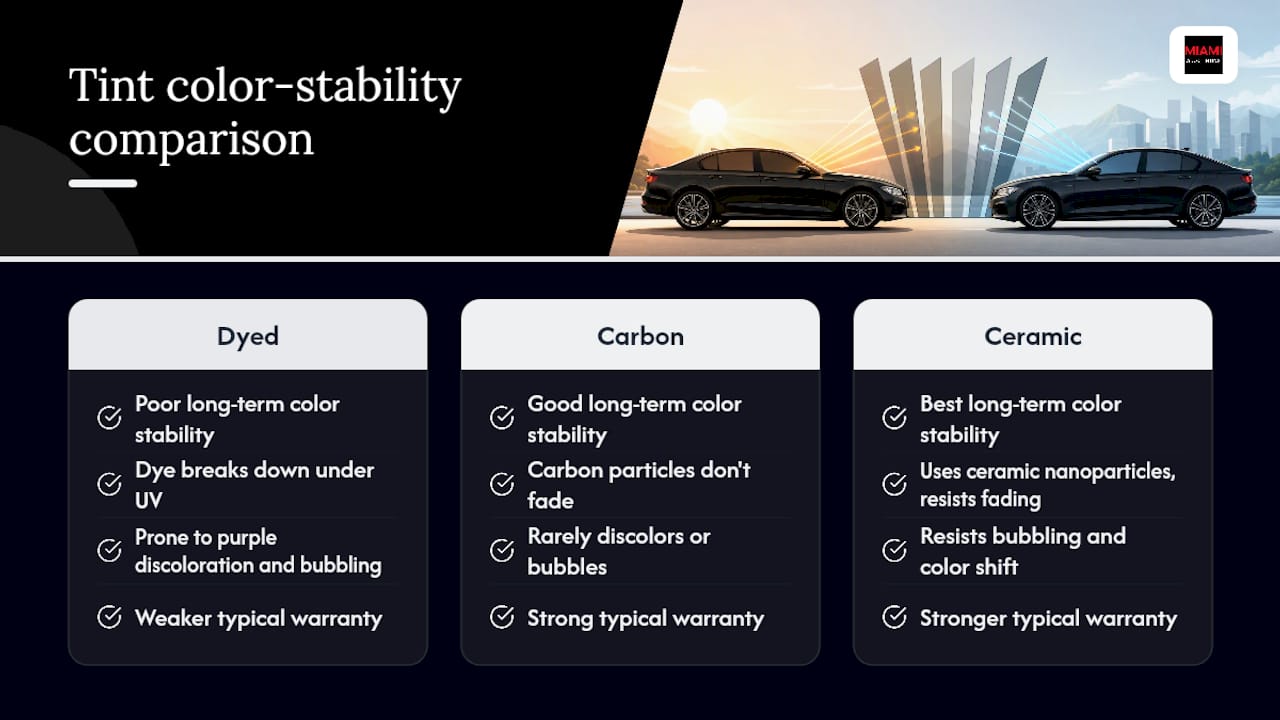
Long-term color stability is where the ceramic vs carbon tint gap becomes visible years down the road, not just on day one. Older dyed films are the ones known for turning purple or bubbling within a few years, because the dye itself breaks down under UV exposure.
Carbon film sidesteps that problem almost entirely. Its carbon particles don't fade the way dye does, so a quality carbon tint holds its neutral black or gray look for years without the discoloration that gives cheap tint a bad reputation.
Ceramic film goes a step further. Because it relies on ceramic nanoparticles rather than any light-sensitive dye layer, it resists fading, bubbling, and color shift for even longer under the same sun exposure, which is part of why ceramic typically carries the stronger factory warranty.
Neither film is fade-proof forever, though. Extreme heat, poor installation, or years of neglect can shorten the life of either one. Regular cleaning with the right products, and avoiding ammonia-based glass cleaners, helps either film hold its finish; simple maintenance steps like treating your glass to resist fogging and buildup can extend the life of whatever film you choose. The real deciding factor over a five-to-ten-year window is whether the film went on correctly the first time.
Which Tint Fits Your Driving Situation?
If you park outside daily and fight real heat, ceramic earns its price. If your car lives in a garage or covered lot, carbon gives you strong performance without overspending. EV owners chasing every bit of range should lean ceramic for the HVAC savings. Budget-first buyers get a legitimate upgrade from carbon over any dyed film. None of that matters if the installer cuts corners, so weigh the shop and the film brand equally.
— Jose
Get Ceramic or Carbon Tint Installed at Your Location
The installer conversation above can be brought straight to your driveway, office lot, or garage in the Miami-Dade County area, so you're not stuck driving around town comparing shops. The lineup includes genuine 3M Ceramic IR and 3M Crystalline, 3M Color Stable film, and Iviron KoolMax ceramic tint, giving you real options across both budget and maximum-performance categories rather than a single house brand.
Computer-cut technology can be used to achieve a precise fit on various vehicles, whether tinting two front windows, adding a windshield strip, or completing a full car plus windshield package. Mobile service involves installers coming to your location instead of requiring you to visit a shop and wait for hours.
Ready to see real numbers for your vehicle? Get a ceramic tint quote or check full pricing details and book same-day availability directly through Southmiamitint.
Sources
For readers who want to dig into the raw test data behind these numbers, Jalopnik's ceramic vs carbon breakdown covers independent heat tests, RVinyl's carbon-ceramic explainer details film construction, and Sun Control of Minnesota's installer guide offers practical buyer-profile advice.
- Ceramic Vs. Carbon Window Tint: Which Is Better For Keeping Your Car Cool? | Jalopnik
- Carbon Ceramic Window Tint Film — RVinyl (blog)
FAQ
Is Ceramic Tint Worth It Over Carbon?
Ceramic is worth the extra cost if you park outdoors regularly, drive in a hot climate, or own an EV where cabin heat affects range. If your car stays in a garage or covered lot most of the time, carbon tint delivers strong heat rejection and glare control for meaningfully less money.
What Are the Disadvantages of Ceramic Tint?
The main drawback is price. Ceramic jobs typically cost $100 to $400 more than a comparable carbon install, and that premium only pays off if you're actually parking in direct sun or holding onto the vehicle long enough to benefit from its longer lifespan.
Are Ceramic Tints Worth the Extra Money?
For most drivers in hot, sunny regions, yes. The higher TSER rating means measurably cooler cabins and less strain on your HVAC system, and the film tends to hold its clarity and color longer than carbon. Budget-conscious drivers with covered parking may not see enough real-world benefit to justify the price gap.
How Can I Tell if I Have Ceramic or Carbon Tint?
Check your installation paperwork or warranty card first, since reputable installers list the exact film brand and product line. Without paperwork, look for extremely clear optics at a lighter shade, which usually signals ceramic, or ask your installer to confirm using a spec sheet rather than guessing by appearance alone.