
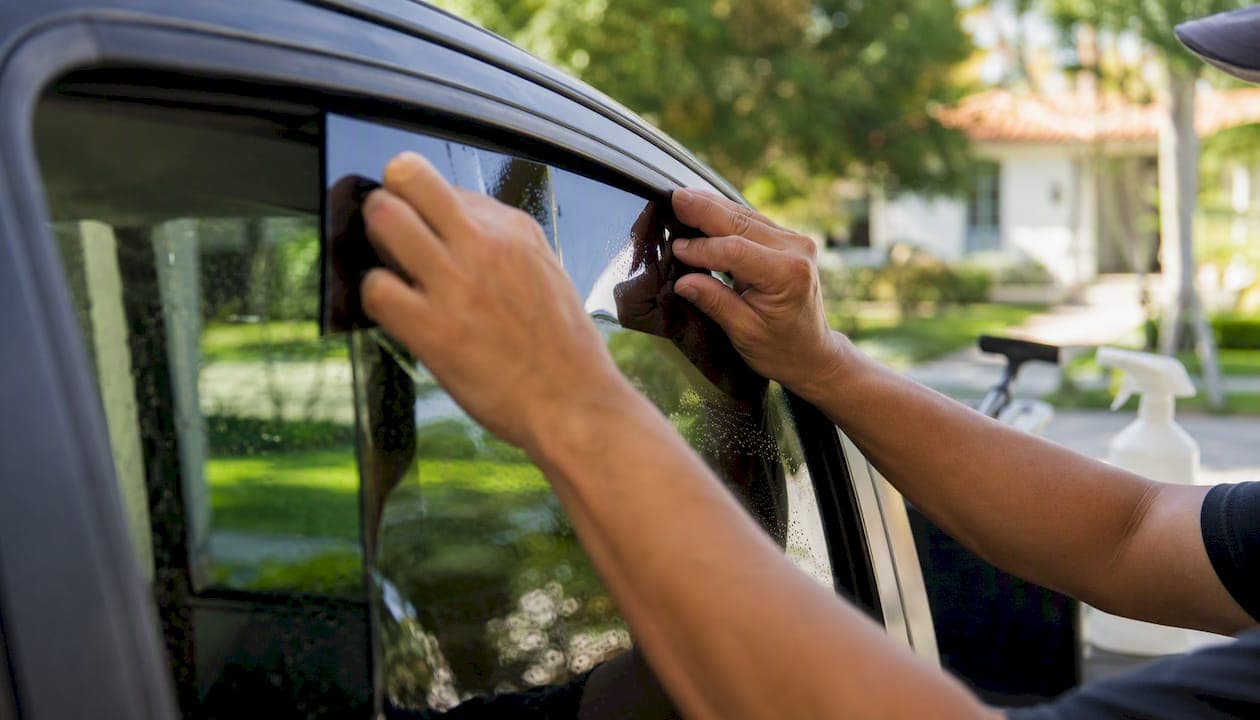
Iviron KoolMax is a non-metallic ceramic automotive window film designed to reject infrared heat, block UV radiation, and maintain optical clarity without interfering with your phone, GPS, or radio signals. For most drivers who want solid heat rejection and UV protection at a more accessible price than top-tier nano-ceramic lines, it's a practical, reliable choice.
Here's what you need to know upfront:
- Heat rejection: KoolMax uses ceramic nanoparticles to target infrared (IR) wavelengths, the part of sunlight responsible for heat buildup inside your vehicle.
- No signal interference: Its non-metallic construction means no disruption to Bluetooth, cellular, or GPS signals.
- Lifespan: With professional installation and basic care, ceramic films like KoolMax typically hold their color and performance for several years without fading or purpling.
Key Takeaways
KoolMax ceramic tint is a non-metallic, value-tier ceramic film that delivers reliable IR heat rejection, near-complete UV blocking, and long-term color stability without signal interference, making it a strong choice for most drivers in hot, sunny markets.
| Point | Details |
|---|---|
| What KoolMax is | A non-metallic ceramic film by Iviron that rejects IR heat and blocks UV without signal interference. |
| Performance tier | Standard ceramic, above dyed and metallic films; below premium nano-ceramic lines like 3M Ceramic IR and XPEL PRIME XR Plus. |
| Cost expectation | Standard ceramic installs run in the low-to-mid hundreds; premium nano-ceramic typically reaches $400–$900+. |
| Key limitation | IR specs don't match top-tier nano-ceramic; installer skill and surface prep significantly affect the result. |
| Southmiamitint option | Southmiamitint installs KoolMax and premium 3M ceramic films with mobile service across Miami-Dade, starting from $249. |
Table of Contents
- What is KoolMax ceramic tint, and how is it made?
- Key features and specs you can expect from KoolMax
- How does ceramic tint actually reduce heat in your car?
- How does KoolMax compare to dyed, metallic, and premium ceramic films?
- What do installers and owners report about KoolMax reliability?
- What does a KoolMax install cost, and what should you expect?
- What are the real limitations of KoolMax ceramic tint?
- How do you choose the right shade and spec for your vehicle?
- Questions to ask your installer before and after the job
- Why KoolMax makes sense for Miami drivers, and when to go premium
- Book a mobile KoolMax install with Southmiamitint
- Sources
What is KoolMax ceramic tint, and how is it made?
KoolMax is manufactured by Iviron and falls into the ceramic window film category. That label matters because it tells you something specific about the material inside the film. Unlike dyed films, which use a layer of colored dye to absorb light, or metallic films, which embed tiny metal particles to reflect heat, ceramic films use microscopic ceramic nanoparticles suspended within polyester layers.
Those ceramic particles are non-conductive and non-metallic. They don't rust, they don't corrode, and they don't block radio waves. Ceramic window tint uses these particles to selectively block infrared heat while allowing visible light to pass through, which is why a ceramic film can keep your car cooler even at a lighter shade.
Where does KoolMax sit in the product spectrum? Think of it as a value-tier ceramic. It delivers the core benefits of ceramic technology, including color stability, UV blocking, and IR rejection, without the premium price of nano-ceramic lines like 3M Crystalline or XPEL PRIME XR Plus. For drivers seeking an upgrade from dyed or carbon film without a premium price, KoolMax provides a practical middle ground.
Pro Tip: When a shop says "ceramic tint," ask specifically whether it's a standard ceramic or a nano-ceramic construction. The two use similar materials but nano-ceramic films typically achieve higher IR rejection percentages and carry longer warranties.
Key features and specs you can expect from KoolMax
KoolMax delivers a practical set of performance characteristics that matter when you're evaluating a film for your vehicle.
Performance metrics:
- UV blocking: Ceramic films in this category commonly block 99% or more of UV-A and UV-B radiation, protecting your skin and preventing interior fading.
- IR rejection: KoolMax targets infrared heat, with performance that varies by shade. Lighter shades still provide meaningful IR rejection because the ceramic particles work across the spectrum, not just at darker VLT levels.
- VLT/shade options: KoolMax is typically available in multiple visible light transmission (VLT) levels, from light shades like 70% down to darker privacy shades around 5%, giving you flexibility to match your state's tint laws.
- Optical clarity: Ceramic films resist the purple or brown color shift that dyed films develop over time. KoolMax maintains a neutral, clear appearance through its lifespan.
- Electronics compatibility: Non-metallic construction means no interference with GPS, toll transponders, satellite radio, or cellular signals.
Warranty and availability:
Ask your installer specifically about the warranty terms for KoolMax. Coverage periods and what's included (fading, bubbling, adhesion failure) vary by installer and region. Southmiamitint carries Iviron KoolMax as part of its mobile ceramic tint service in Miami, so you can confirm warranty details directly at booking.
How does ceramic tint actually reduce heat in your car?
The mechanism behind KoolMax's heat rejection is called spectral selectivity. Sunlight arrives in three forms: visible light, ultraviolet (UV) radiation, and infrared (IR) radiation. Visible light is what you see. UV causes skin damage and fades interiors. IR is what makes your car feel like an oven.
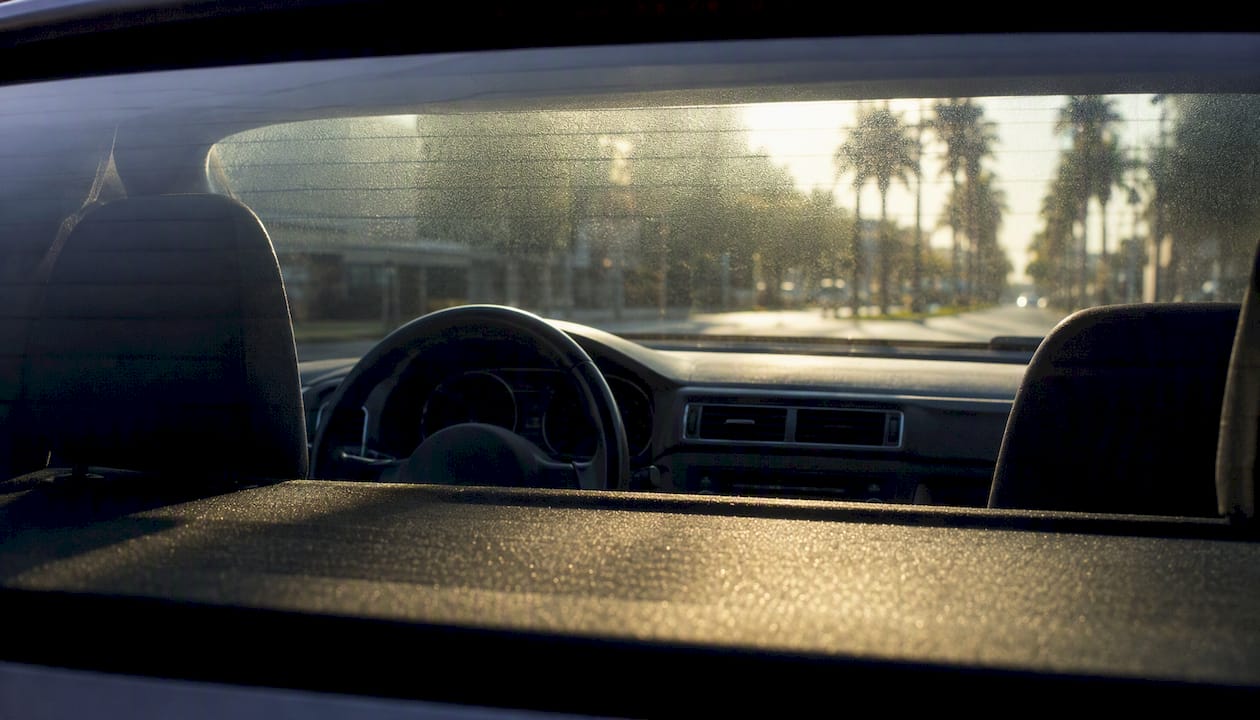
Standard dyed films work mainly by absorbing visible light, which is why they have to be very dark to feel cool. Ceramic films target IR directly. The ceramic nanoparticles absorb and reflect infrared wavelengths before they pass through the glass, regardless of how much visible light the film lets through. A 50% VLT ceramic film can reject significantly more heat than a 20% VLT dyed film, because the two films are working on different parts of the solar spectrum.
Picture it this way: sunlight hits your window, the ceramic particles intercept the IR portion and convert or reflect it, and the visible light continues through so your view stays clear. Your cabin temperature drops not because the window is dark, but because the heat source has been filtered out.
Quality ceramic films achieve IR rejection ranges of roughly 60–98% depending on tier, with premium nano-ceramic products at the top of that band. KoolMax sits within the ceramic tier, delivering real IR reduction without reaching the upper end of nano-ceramic performance.
Ceramic films can block up to 99% of UV radiation while their non-metallic construction keeps them fully compatible with modern vehicle electronics. LLumar's ceramic product explainer confirms that advanced nano-ceramic constructions push IR rejection higher than older film types while remaining signal-friendly.
Pro Tip: Ask your installer to use an IR meter or heat lamp demo before and after installation. A reputable shop will show you the difference in real time. If they can't demonstrate IR rejection, that's a red flag.
For a deeper look at how thermal metrics like TSER and IR rejection are measured, Southmiamitint's thermal performance guide breaks it down clearly.
How does KoolMax compare to dyed, metallic, and premium ceramic films?
Understanding where KoolMax sits relative to other film types helps you decide whether it's the right fit or whether a premium upgrade makes sense.
| Feature | Dyed film | Metallic film | Carbon film | KoolMax (standard ceramic) | Premium nano-ceramic (3M Ceramic IR, XPEL PRIME XR Plus, LLumar IRX) |
|---|---|---|---|---|---|
| IR/heat rejection | Low | Moderate | Moderate | Good | Excellent |
| UV blocking | Moderate | Moderate | Good | ~99% | ~99% |
| VLT range | Wide | Wide | Wide | Wide | Wide |
| Optical clarity | Fades over time | Reflective sheen | Stable | Stable, neutral | Excellent, optically clear |
| Electronics interference | None | Yes (signal blocking) | None | None | None |
| Durability/warranty | 1–3 years typical | 3–5 years | 3–5 years | Several years | 5–lifetime (brand-dependent) |
| Cost (full car) | Low | Low–moderate | Moderate | Mid-range | $400–$900+ |
3M's Ceramic IR series advertises up to 66% total solar energy rejection and up to 95% IR rejection on select SKUs, along with near-complete UV blocking and a Skin Cancer Foundation endorsement. XPEL PRIME XR Plus and LLumar IRX sit in the same premium tier, with high published IR specs and optical clarity that's hard to match at lower price points.
KoolMax won't match those top-end numbers, but it outperforms dyed and metallic films on color stability, UV protection, and signal compatibility. For drivers who want a genuine ceramic upgrade without the premium price tag, it's a solid step up.
Installer roundups consistently treat 3M, XPEL, and LLumar as premium benchmarks and recommend verifying the SKU and product data sheet before any install, regardless of brand.
What do installers and owners report about KoolMax reliability?
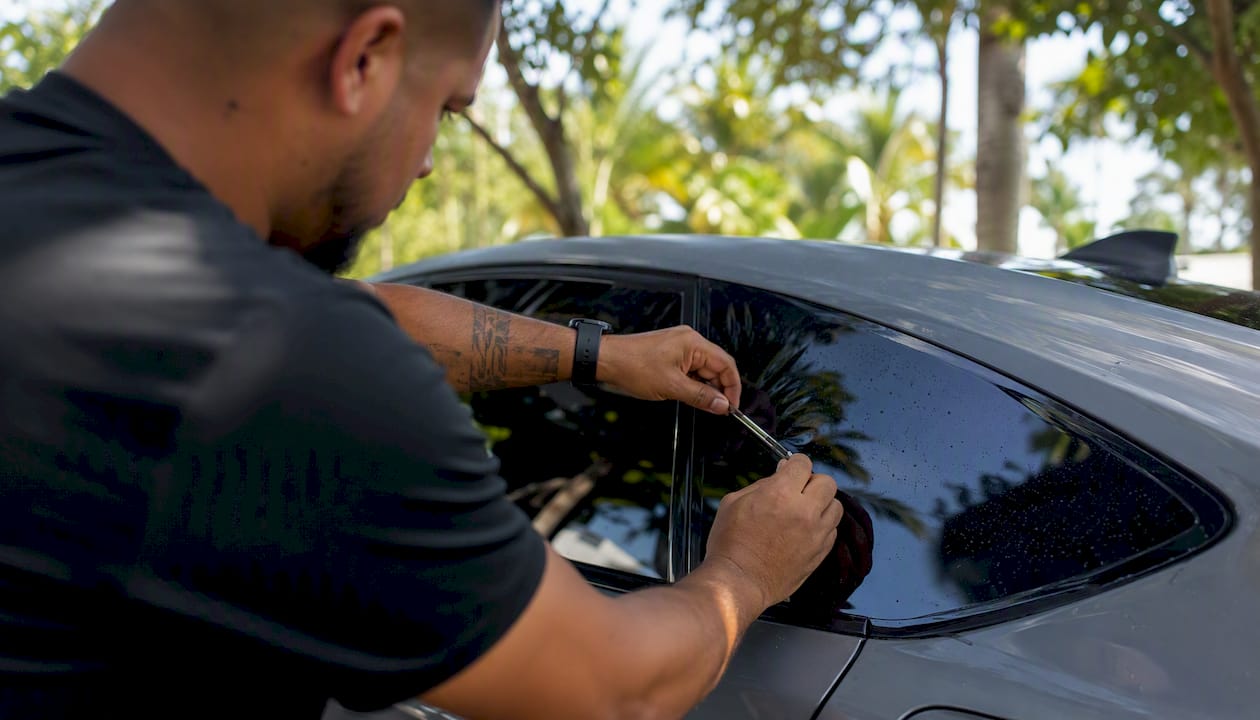
Technicians who work with KoolMax regularly describe it as a cooperative film to install. It cuts cleanly, conforms reasonably well to curved glass, and doesn't require the same level of heat-shrinking effort that some stiffer premium films demand. On complex rear windows with deep curves, any ceramic film requires careful technique, and KoolMax is no exception.
Color stability is one of KoolMax's clearest advantages over dyed films. Owners report that the neutral tone holds over time without the purple or brown shift that dyed films develop after 18–24 months of sun exposure. That stability is a direct result of the ceramic particle construction rather than dye-based absorption.
After 6–12 months, check the edges of your tint for any lifting or peeling, and look at the film surface in direct sunlight for any haziness or color change. A well-installed KoolMax film should look essentially the same as it did on install day.
Pro Tip: Park your car in direct sunlight for 20 minutes after installation, then check the edges and corners. Early edge lifting almost always shows up within the first few weeks, not years later. Catching it early means your installer can fix it under warranty.
What does a KoolMax install cost, and what should you expect?
Pricing for ceramic window tint in the U.S. depends on the film tier, vehicle size, and installer market. Here's what to expect:
- Standard ceramic (including KoolMax tier): Full-car installs for a sedan typically start in the low-to-mid hundreds. SUVs and trucks run higher due to glass surface area.
- Premium nano-ceramic (3M Ceramic IR, XPEL PRIME XR Plus, LLumar IRX): Full-car installs commonly fall in the $400–$900+ range depending on vehicle and market.
- Common upcharges: Rear windshields with deep curves, sunroofs, and multi-layer or tempered glass add to the base price. Ask for an itemized quote.
- Mobile installation: A mobile installer comes to your location, which saves you a trip to a shop. Expect the appointment to take 2–4 hours for a full car, depending on the number of windows and glass complexity.
- What's included in a professional install: Surface cleaning and prep, precise film cutting, edge finishing, and a post-install inspection. A reputable installer will also walk you through the curing period (typically 3–7 days) and what to avoid during that time.
Weather matters for mobile installs. Extreme humidity, rain, or direct sun during application can affect adhesion. A good mobile installer will reschedule rather than rush a job in poor conditions.
What are the real limitations of KoolMax ceramic tint?
Ceramic tint is a strong performer, but it's worth being clear about what it won't do.
- IR specs below top-tier nano-ceramic: KoolMax delivers solid IR rejection for a standard ceramic film, but it won't match the upper-end figures that premium nano-ceramic products publish. If maximum heat rejection is your priority and budget allows, a premium line is worth the extra cost.
- Installer skill matters: The film is only as good as the installation. Variable technique, poor surface prep, or rushed edge work will undercut any film's performance and longevity.
- Upfront cost vs. dyed film: Ceramic tint costs more than dyed film upfront. For drivers in mild climates or those who garage their vehicles most of the time, the heat-rejection benefit may be less noticeable day-to-day.
- VLT laws apply: Your state sets legal limits on how dark your tint can be. A 5% VLT film may be illegal on front side windows in most states. Check your state's rules before choosing a shade.
Ceramic tint is most cost-effective for drivers in hot, sunny markets who park outdoors regularly. In a place like Miami, where UV intensity and heat are year-round concerns, the benefits of ceramic tint for vehicles are easy to feel on the first hot day after installation.
Pro Tip: If a shop advertises "ceramic tint" but can't provide an IR rejection percentage or a product data sheet, treat that as a warning sign. The term "ceramic" is used loosely in the industry, and some films marketed as ceramic contain minimal ceramic content.
How do you choose the right shade and spec for your vehicle?
Picking the right VLT and IR spec comes down to four factors:
- Climate and sun exposure: Hotter, sunnier markets like South Florida justify higher IR rejection specs. If you park outdoors daily, prioritize IR rejection over shade darkness.
- Parking habits: Outdoor parkers benefit most from ceramic's heat rejection. Garaged vehicles still benefit from UV protection but may not need the highest IR spec.
- Interior materials: Leather and light-colored interiors fade faster under UV exposure. Higher UV blocking protects your investment.
- Visibility and legal limits: Front side windows typically have stricter VLT requirements than rear windows. A 35% or 50% VLT on the front with a darker rear is a common setup that balances comfort and compliance.
When reading spec sheets, look for three numbers: VLT (visible light transmission), IR rejection percentage, and TSER (total solar energy rejection). IR rejection tells you how much infrared heat the film blocks. TSER is a broader measure that includes visible and UV solar energy. A film with a high IR rejection but low TSER may be missing part of the picture.
Pro Tip: Don't choose a shade based on how dark you want the car to look. Choose based on IR rejection and your state's legal VLT limit, then pick the darkest legal shade within that spec. You'll get the comfort benefit without risking a fix-it ticket.
Questions to ask your installer before and after the job
Before you commit to any installation, get clear answers to these questions:
- What is the exact product name and SKU? "Ceramic tint" is not enough. Ask for "Iviron KoolMax" by name, or the specific 3M, XPEL, or LLumar SKU if you're going premium.
- What are the published IR rejection and UV blocking specs for that SKU? A reputable installer can pull the product data sheet on the spot.
- What does the warranty cover, and who backs it? Ask whether the warranty is from the manufacturer, the installer, or both, and what the claims process looks like.
- Can you see a demo? Ask for a heat lamp or IR meter demonstration before installation.
- What's the removal and transfer policy? If you sell the vehicle or the film fails, know your options in advance.
After installation, verify the job with a short checklist:
- Request the warranty card or written warranty confirmation.
- Ask for before-and-after photos if the installer took them.
- Get a direct contact for warranty claims, not just a general shop number.
- Inspect edges and corners in daylight before you drive away.
Third-party installers consistently recommend asking for the SKU and spec sheet because brand names alone don't guarantee a specific IR or TSER number. A shop that hesitates on these questions is worth walking away from.
Why KoolMax makes sense for Miami drivers, and when to go premium
From a mobile installer's perspective, KoolMax earns its place in the lineup for drivers who want a real ceramic upgrade without the premium nano-ceramic price. In Miami's climate, any film that blocks UV and reduces IR load is doing meaningful work. KoolMax does both reliably when installed correctly.
That said, there are situations where Southmiamitint recommends stepping up to a premium line. If you drive a luxury vehicle with a light-colored interior, spend long hours in your car, or want the highest possible heat rejection for a vehicle that sits in direct sun all day, 3M Ceramic IR or a comparable nano-ceramic product is worth the additional investment. The gap in IR specs between standard ceramic and top-tier nano-ceramic is real, and in a Miami summer, you'll feel it.
For most drivers, though, KoolMax hits the right balance. It's a genuine ceramic film, not a dyed or carbon product dressed up with a label, and it performs consistently when a skilled technician installs it. Southmiamitint backs every KoolMax install with a post-install inspection and clear warranty guidance so you know exactly what you're covered for.
Book a mobile KoolMax install with Southmiamitint
Southmiamitint brings professional window tinting directly to your location anywhere in Miami-Dade County. The film lineup includes Iviron KoolMax ceramic tint, 3M Ceramic IR, 3M Color Stable, and 3M Crystalline for drivers who want the premium tier. Every install covers full surface prep, precise cutting, edge finishing, and a post-install walkthrough.
Getting a quote is straightforward. Call or fill out the online form, describe your vehicle and preferred shade, and Southmiamitint will confirm availability and pricing. Mobile ceramic tint installs start from $249, and the team handles everything at your home, office, or wherever your car is parked. For drivers considering premium 3M options, the 3M window tint service page covers the full range of available SKUs and pricing.
Sources
- Ceramic Window Tint: Benefits & How It Compares | Madico, Inc.
- Elite Heat Rejection with Ceramic Window Tint | LLumar
- Ceramic Window Tint: Complete Guide to Types, Cost, and Performance (2026) — TintGrade