
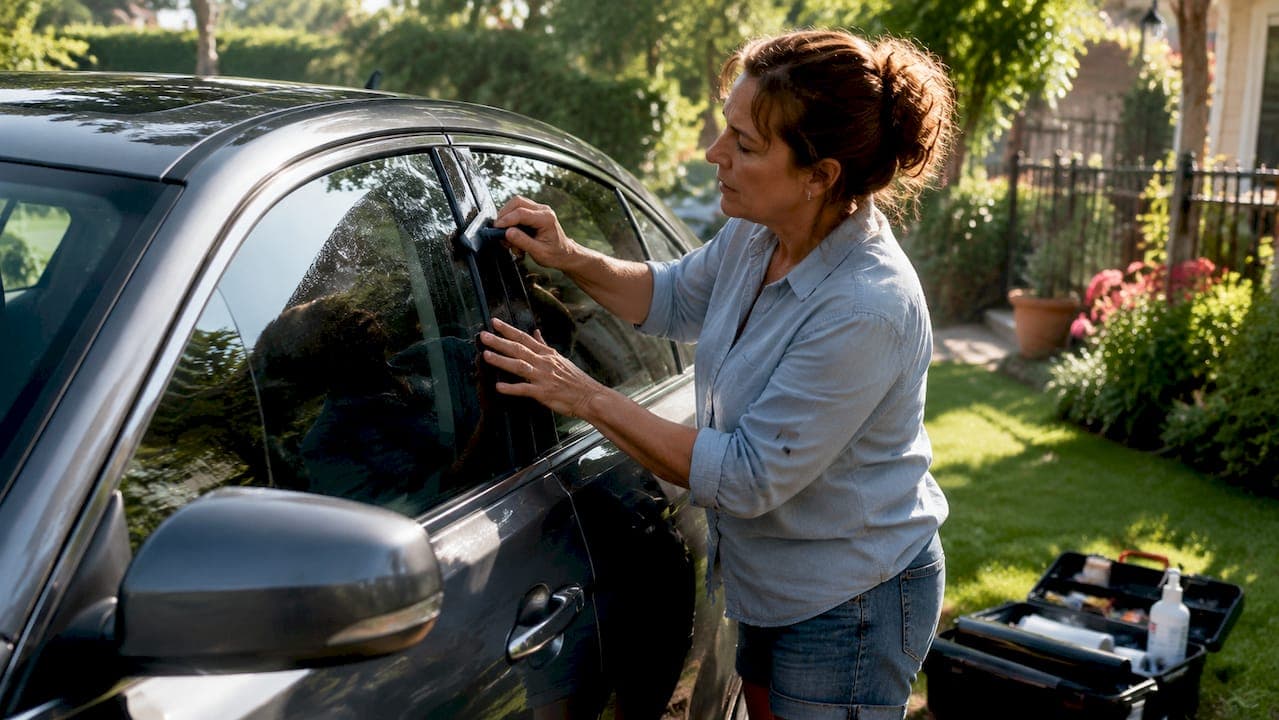
Reflective tint is a specialized window film that uses micro-thin metallic layers to bounce incoming solar radiation away from your vehicle's glass before it can penetrate the cabin. Unlike standard dyed films, reflective window film actively rejects heat rather than absorbing it, which makes it one of the most effective tools for keeping a car cool in intense sun. The film also blocks 99%+ of UV radiation, reduces glare, and creates a mirror-like exterior appearance that delivers strong daytime privacy. For car owners in high-heat markets like Miami, understanding what reflective tint does and how it differs from non-reflective options is the first step toward making a smart tinting decision.
What is reflective tint and how does it work?
Reflective tint works by reflecting solar energy away from the glass surface rather than letting it pass through. The film contains micro-thin metallic layers that act like a mirror for sunlight, bouncing heat and visible light back before they reach the interior. This is the core distinction between reflective and non-reflective films: reflective films reject heat at the surface, while non-reflective films absorb it into the glass and release it slowly over time.
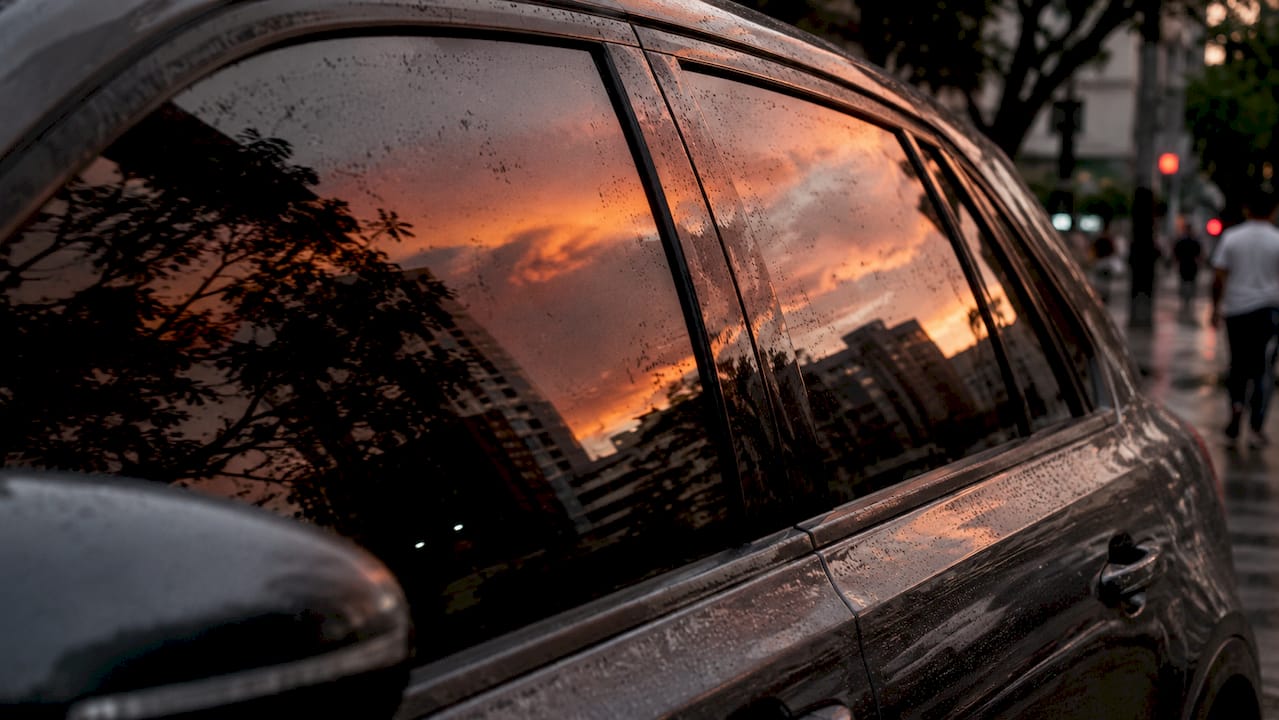
Visible Light Reflectance, commonly called VLR, is the technical measure that defines how much visible light a film sends back. Higher VLR values mean more light is reflected outward, which directly reduces glare inside the cabin and strengthens daytime privacy. VLR is the number you need to understand when comparing reflective films, because it drives both performance and legal compliance.
The heat rejection advantage of reflective films is significant. Reflective films achieve 15–30% better heat rejection than non-reflective alternatives, and high-grade products can reach up to 90% total solar energy rejection (TSER) in demanding applications. That gap matters on a hot summer afternoon when cabin temperatures can spike well above ambient air temperature.
Pro Tip: Ask your installer for the TSER rating of any film you consider, not just the VLT (visible light transmission). TSER tells you how much total solar energy the film rejects, which is the number that actually affects how hot your car gets.
What are the different types of reflective tint?
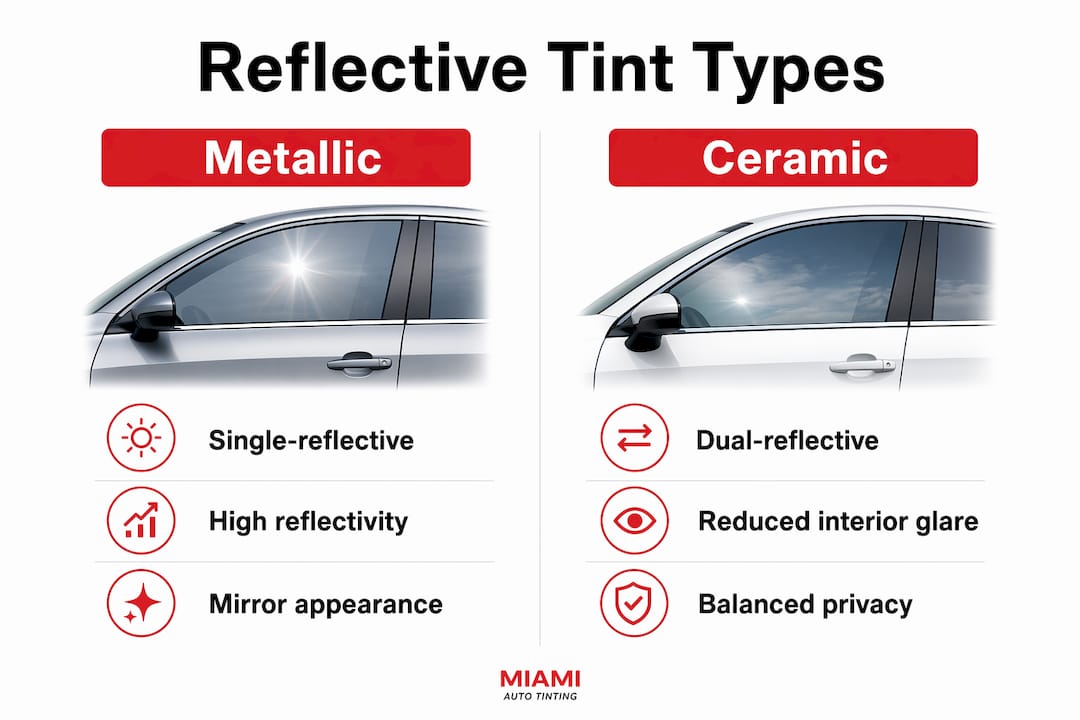
Reflective films fall into two main categories: metallic single-reflective films and ceramic dual-reflective films. Each has a distinct look, a different interior experience, and trade-offs worth knowing before you commit.
Metallic single-reflective films
Metallic reflective films carry similar high reflectivity on both the interior and exterior surfaces. The result is a pronounced mirror effect on both sides of the glass. From outside the car, the windows look like polished chrome. From inside, you see a noticeably reflective surface that can feel like sitting behind a one-way mirror. Daytime privacy is strong, but the interior mirror effect is a real trade-off for drivers who prefer a clear, unobstructed view outward.
Ceramic dual-reflective films
Dual-reflective films are engineered to solve the interior mirror problem. They maintain high exterior reflectivity for solar control while deliberately reducing interior reflectivity. The practical result is that you get strong heat rejection and daytime privacy from outside, but the view from inside the car remains clear and natural. Ceramic dual-reflective films represent the current performance standard for drivers who want both comfort and visibility.
| Feature | Metallic single-reflective | Ceramic dual-reflective |
|---|---|---|
| Exterior appearance | Strong mirror finish | Moderate mirror finish |
| Interior view | Noticeable mirror effect | Clear, natural view |
| Heat rejection | High | Very high |
| UV blocking | 99%+ | 99%+ |
| Best use case | Maximum privacy priority | Balanced performance and clarity |
| Cost | Moderate | Higher |
Pro Tip: If you drive frequently at night or in tunnels, ceramic dual-reflective film is the better call. The reduced interior reflectivity means you won't fight glare from your own windows in low-light conditions.
What practical benefits does reflective tint offer for vehicle owners?
Reflective tint delivers four concrete benefits for car owners: heat reduction, UV protection, daytime privacy, and glare control. Each one has a direct impact on comfort, safety, and the long-term condition of your vehicle's interior.
Heat reduction and interior preservation
A vehicle sitting in direct sun can reach interior temperatures far above the outside air temperature. Reflective film cuts that heat load at the source by bouncing solar energy away before it enters the cabin. Cooler interiors mean your air conditioning works less, which reduces fuel consumption on hot days. Upholstery, dashboards, and trim materials also last longer when they aren't baked by constant solar exposure.
UV protection for passengers and interiors
High-performance reflective films block 99%+ of UV radiation, which is the portion of sunlight responsible for skin damage and interior fading. UV exposure through car windows is a real concern for daily drivers, particularly on the left arm and face for drivers in the US. Blocking UV at the glass level protects both passengers and the vehicle's interior surfaces from long-term degradation.
Reflective tint does more than keep your car cool. It acts as a continuous UV shield for everyone inside, reducing cumulative sun exposure on every commute, every errand, and every road trip.
Daytime privacy and glare control
The mirror-like exterior of reflective film makes it difficult for people outside to see into the cabin during daylight hours. This is a function of lighting contrast: when exterior light is brighter than interior light, the reflective surface acts as a one-way mirror. Tinted windows reduce glare from direct sun and reflected surfaces like wet roads or other vehicles, which reduces eye strain and improves reaction time while driving.
Pro Tip: Reflective tint privacy is strongest mid-day when exterior light is at its peak. Early morning and late afternoon, when sun angles are low, the effect is less pronounced.
How does reflective tint compare to non-reflective tint for automotive use?
Non-reflective tint, which includes ceramic, carbon, and dyed films, works by absorbing solar energy into the film itself rather than bouncing it away. Reflective films prioritize reflection to maximize solar heat rejection, while non-reflective films provide a more natural look by absorbing and releasing heat slowly. The performance gap is real, but so are the aesthetic and legal differences.
| Factor | Reflective tint | Non-reflective tint |
|---|---|---|
| Heat rejection | Very high (up to 90% TSER) | Moderate to high |
| UV blocking | 99%+ | 99%+ (ceramic/carbon) |
| Exterior appearance | Mirror-like | Natural, darker look |
| Interior glare | Low | Low to moderate |
| Daytime privacy | Strong | Moderate |
| Nighttime privacy | Reduced without interior covers | More consistent |
| Cost | Slightly higher | Moderate |
| Legal compliance | VLR limits apply | Generally fewer restrictions |
The nighttime privacy difference is the most important nuance to understand. Reflective tint privacy depends on lighting contrast: when interior light is brighter than exterior light at night, the reflective effect reverses and people outside can see in. Non-reflective films maintain more consistent privacy around the clock because they don't rely on that contrast effect.
Legal compliance is the other major consideration. Local ordinances often impose strict VLR caps to prevent glare complaints from other drivers and pedestrians. High-reflectivity metallic films can fail inspection in states or municipalities with low VLR limits. Checking your local regulations before selecting a film is not optional. You can also explore ceramic vs. carbon film differences to understand where non-reflective options fit in the broader tinting picture.
Pro Tip: Reflective films are slightly more expensive than non-reflective alternatives, but the heat rejection advantage pays off quickly in Miami's climate through reduced AC use and interior preservation.
What should car owners consider when choosing and installing reflective tint?
Choosing the right reflective film requires balancing four factors: performance, appearance, privacy needs, and legal compliance. Getting any one of them wrong means either a failed inspection or a film that doesn't deliver what you expected.
-
Check your state and local VLR limits first. High-reflectivity metallic films can exceed legal thresholds in many states. Florida law regulates both VLT and reflectivity for automotive tint, and violations result in fines and mandatory removal. Know the numbers before you buy.
-
Decide how much interior mirror effect you can tolerate. Metallic single-reflective films give you maximum solar rejection but a noticeable mirror effect inside. If interior clarity matters to you, a ceramic dual-reflective film is the better fit. Tint film clarity is a real performance variable, not just an aesthetic preference.
-
Think about your nighttime driving habits. If you drive frequently after dark, the lighting contrast reversal of reflective films can create interior glare from your own windows. Dual-reflective ceramic films reduce this problem significantly.
-
Prioritize professional installation. Professional installation is critical for maximizing the performance and longevity of reflective window tint. Bubbles, lifting edges, and improper adhesion all reduce heat rejection and shorten film life. A quality install on a quality film is the only combination that delivers the rated performance.
-
Match the film to your climate. In Miami's heat and humidity, maximum solar rejection is a genuine priority. Southmiamitint installs 3M IR, 3M Color Stable, and Iviron Kollmax ceramic films, all of which are engineered for high-heat environments and meet Florida's legal requirements.
Pro Tip: Ask your installer to show you the film's spec sheet before installation. Confirm the TSER, VLR, and UV rejection ratings in writing so you know exactly what performance to expect.
Key Takeaways
Reflective tint is the highest-performing option for heat rejection and daytime privacy, but choosing the right type and confirming legal compliance are what separate a great install from an expensive mistake.
| Point | Details |
|---|---|
| Core function | Reflective tint bounces solar energy away from glass, rejecting up to 90% of total solar energy. |
| Two main types | Metallic single-reflective films maximize privacy; ceramic dual-reflective films balance clarity and performance. |
| UV protection | High-performance reflective films block 99%+ of UV radiation, protecting passengers and interiors. |
| Privacy nuance | Daytime privacy is strong, but lighting contrast reversal reduces privacy at night without interior covers. |
| Legal compliance | VLR limits vary by state and municipality; always verify local regulations before selecting a film. |
What I've learned after years of seeing reflective tint done right and wrong
The most common misconception I see is that reflective tint gives you privacy around the clock. It doesn't. Privacy is entirely a function of lighting contrast, and that reverses at night. Drivers who install high-VLR metallic films expecting permanent one-way glass are always surprised the first time they park under a streetlight and realize the whole world can see in. Understanding that limitation upfront changes how you evaluate the film.
The second thing I've noticed is that car owners consistently underestimate the interior mirror effect of single-reflective metallic films. It looks great from outside. From inside, especially on a bright day, it can feel like wearing sunglasses inside a mirror. Ceramic dual-reflective technology solves this cleanly, and the performance numbers are just as strong. For most drivers, the dual-reflective ceramic option is the right answer.
What I find genuinely impressive is how far ceramic reflective technology has come. Films like 3M IR and Iviron Kollmax ceramic deliver heat rejection numbers that were only possible with heavy metallic coatings a decade ago, but without the interior mirror effect or the radio signal interference that metallic films can cause. The technology has matured to the point where you don't have to trade comfort for performance.
My advice: always verify your local VLR limits before you fall in love with a film. A film that fails inspection is money wasted, and removal damages the glass in some cases. Work with an installer who knows Florida's regulations and can show you compliant options that still deliver serious heat rejection.
— Jose
Southmiamitint's reflective and ceramic tint services for Miami cars
Southmiamitint specializes in mobile window tinting across Miami-Dade, bringing professional installation directly to your location. The team installs 3M IR, 3M Color Stable, and Iviron Kollmax ceramic films, all selected for their heat rejection performance and compliance with Florida's tinting regulations.

Whether you want maximum solar rejection with a reflective finish or the balanced performance of a ceramic dual-reflective film, Southmiamitint can match you with the right product for your vehicle and your climate. Every install is done by trained technicians who know how to apply film without bubbles, lifting, or adhesion failures that cut performance short. Check Miami ceramic tint options and pricing to see what's available for your car, or get a quote for mobile tinting at your location without leaving home or work.
FAQ
What is reflective tint made of?
Reflective tint is a window film constructed with micro-thin metallic or ceramic metallic layers bonded to a polyester base. These layers reflect solar radiation away from the glass rather than absorbing it.
Is reflective tint legal in Florida?
Florida law regulates both visible light transmission and reflectivity for automotive tint. Front side windows must not be more reflective than a standard window, so always confirm your film's VLR rating meets state and local limits before installation.
Does reflective tint work at night?
Reflective tint privacy relies on exterior light being brighter than interior light. At night, when interior lighting exceeds exterior lighting, the reflective effect reverses and visibility from outside increases. Dual-reflective ceramic films reduce this effect compared to metallic single-reflective films.
How much heat does reflective tint actually block?
High-grade reflective films can reject up to 90% of total solar energy, and they consistently outperform non-reflective alternatives by 15–30% in heat rejection. The exact figure depends on the film's grade and the specific product installed.
What is the difference between reflective and non-reflective tint?
Reflective tint bounces solar energy away at the glass surface, while non-reflective tint absorbs heat into the film and releases it slowly. Reflective films deliver stronger heat rejection and daytime privacy; non-reflective films offer a more natural appearance and more consistent nighttime privacy.