
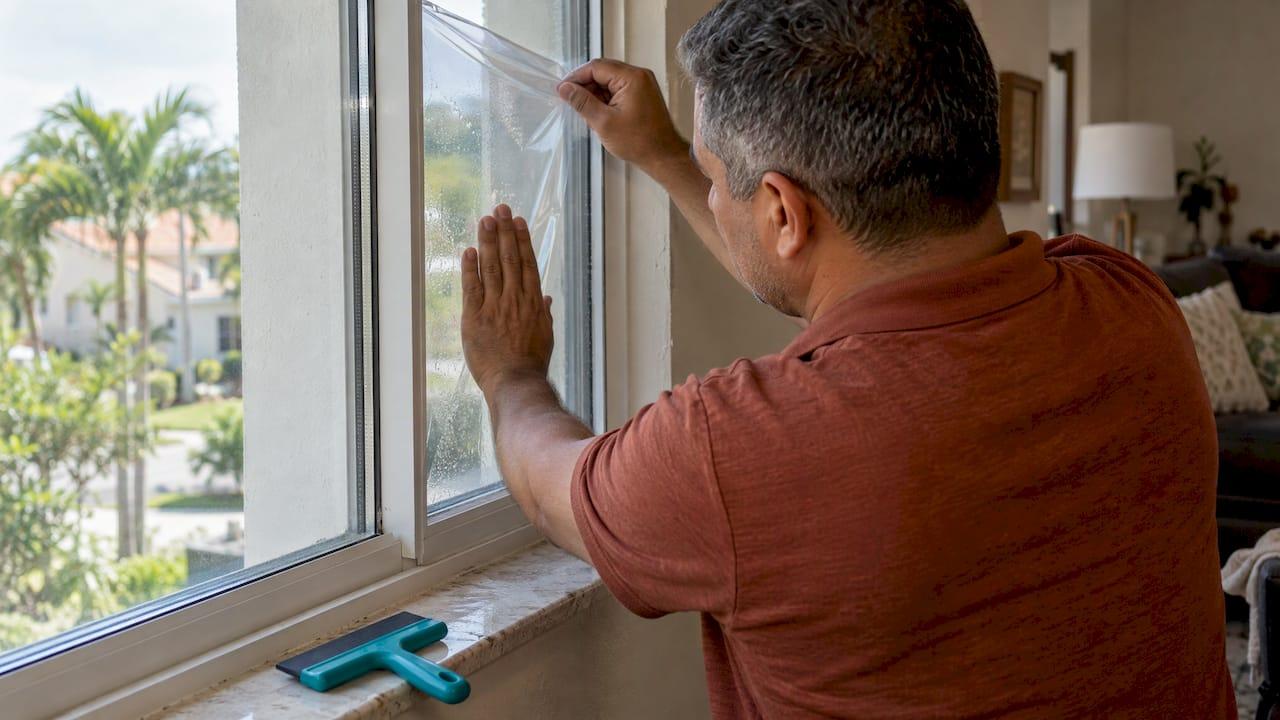
Yes, you can put film on double pane windows, but only the right film on the right glass. Double pane units (also called insulated glass units, or IGUs) have two sheets of glass with a sealed air space. Film on the room side absorbs and reflects sunlight, so it changes how the two panes heat up. Match the film to the glass and check the windows first, and you get less heat, less glare and UV protection without risking the seal.
This guide shows what can go wrong, how to check your windows before you book anyone, which film traits matter, and what Miami-Dade owners should know about hurricane glass.
TL;DR
- Many double pane windows can take film, but the wrong film can cause heat buildup that damages the window. Always confirm compatibility first.
- The main risk is thermal stress: uneven heating between the panes can lead to glass cracks or seal failure.
- Windows with cracks, chips or fogging between the panes are not candidates for film until they are repaired.
- Low-E coatings, glass thickness, tint and shade all change the answer, so the film has to be chosen for your specific glass.
- In Miami-Dade, impact-rated and hurricane glass adds another layer of checks before any film goes on.
Table of Contents
- Why double pane glass needs a different approach
- How likely is a problem?
- Check your windows before you book
- What to look for in a film for double pane glass
- Does reflective film give privacy at night?
- Miami-Dade: hurricane glass and impact windows
- Our perspective
- Why ceramic film is a natural fit for Miami homes
- A simple decision path
- Tinting a car instead? It is simpler
- Get your windows and your car tinted at your door
- FAQ
- Sources
Why double pane glass needs a different approach
A single sheet of glass heats up and cools down as one piece. A double pane unit does not. The outer pane faces the weather, the inner pane faces your room, and the sealed gap between them slows heat moving across.
When you add film to the inside surface, that film absorbs part of the sun's energy. All window films cause some solar heat absorption, which expands the glass. In a dual pane unit, if the inner pane gets much hotter than the outer pane, the two expand by different amounts. That mismatch is what raises the risk of thermal shock fracture or seal failure.
This is why a film that works well on a single pane garage window or a car door can be a poor fit for a large, south-facing double pane patio door. The film is not the problem. The match between film and glass is.

What a failed seal looks like
The seal around the edge of the unit keeps moisture out of the air space. When it fails, moisture condenses between the panes and the glass can turn hazy or fogged. Seals can fail from natural aging or from poor glazing design, with or without film. That is why a pre-existing failure should be found before installation, not blamed on the film afterward.

How likely is a problem?
Breakage is uncommon. A film-to-glass risk chart from a major film manufacturer puts glass breakage after installation at under 0.5% of installations, while stressing that a careful look at the glass and frame is essential to keep it that low.
The window film industry's own association is direct about the other side of this. The International Window Film Association notes that on certain large or complex window units, the risk and cost of breakage can outweigh the benefit of film, so a professional risk assessment matters. In plain terms: most windows are fine, a few are not, and you want someone who can tell the difference before the film goes on.
Check your windows before you book
You can do most of this screening yourself in about ten minutes. Here is the order that makes sense.
- Look for damage. Cracks, chips or seal failure (condensation between the panes) make a window unsuitable for film. Per the IWFA's 2026 guide, these should be fixed first.
- Test for a hidden seal failure. Installers use a freeze-spray test: cool the glass surface and watch for condensation. The method appears in the IWFA architectural installation guidelines.
- Identify the glass. Confirm the construction and where the Low-E coating sits. Many modern double pane windows have a thin coating on one of the inner surfaces, and installers use the same guidelines to confirm it.
- Note thickness, tint and shading. Thermal stress is affected by glass type, thickness, coatings and shading. A window shaded by an awning or a neighboring building behaves differently from one in full afternoon sun.
- Check the window warranty. The NFRC consumer guide to windows advises checking whether adding film interferes with the window manufacturer's warranty, and whether self-installation would meet the film's own warranty terms.
Take photos of the window frame label, any etched markings on the glass spacer or corner, and the overall window. They make a quote faster and more accurate.
Orientation and climate matter too
The same IWFA guide lists glass type, thickness, existing coatings or tints, orientation and climate as the factors that decide compatibility. In South Florida, west and south exposures take the hardest sun for most of the year, so those are the windows to look at most carefully.
What to look for in a film for double pane glass
The number to ask about is total solar absorptance, meaning the share of the sun's energy the film soaks up rather than reflects or lets through. Industry guidance generally recommends films with total solar absorptance of 50% or less for double pane windows to keep thermal stress low.
When you compare films, ask for these figures from the manufacturer's data sheet:
- Total solar energy rejected (TSER): how much solar heat the film keeps out overall.
- Solar absorptance: how much it holds in the film itself. Lower is gentler on double pane glass.
- Visible light transmission (VLT): how much daylight passes through.
- UV rejection: protection for floors, furniture and skin.
- Written glass compatibility: the manufacturer's approval for your type of glass and unit.
Also confirm the film is made for buildings. Automotive film used on architectural glass will not have warranty coverage unless written approval has been obtained. Residential and commercial jobs need architectural-rated products, matched to the glass.
Film versus a better window
Glass itself plays a big part in performance. A typical double pane unit has a solar heat gain coefficient (SHGC) around 0.70. Tint brings that down somewhat, and low-solar-gain Low-E coatings bring it down a lot more. The same Department of Energy guideline notes that low-solar-gain Low-E glass cuts heat gain in summer and heat loss in winter, while blocking a large share of infrared energy and still passing visible light.
If your windows already have a strong Low-E coating, film adds less, and the compatibility check matters more. If your windows are older clear double pane units, film can make a noticeable difference in how hot the room gets, provided the film suits the glass.
Does reflective film give privacy at night?
It depends on which side is brighter. A mirror-like, reflective film gives daytime privacy because the bright outdoors reflects off the film and hides the room. After dark the effect flips: when your lights are on and it is dark outside, people outside can see in, and the film no longer hides much. Only blinds, curtains or a frosted or very dark film that blocks light itself give you privacy at night. Many people pair a daytime-privacy film with window coverings in bedrooms and bathrooms.
For the glass, remember that more reflective and darker films can change how the unit heats up, so privacy shopping should go through the same compatibility check as heat control.
Miami-Dade: hurricane glass and impact windows
Many homes and buildings in Miami-Dade have impact-rated glazing, and the rules there are stricter than in most of the country. The IWFA states that it cannot offer recommendations for safety window films in regions where local codes mandate large missile impact testing. It also notes that some coastal Florida codes require the glazing, frame and attachment to be tested as a total system.
What that means for you:
- Solar film is not hurricane protection. Use it for heat, glare and UV. Do not count on it as storm protection, and do not remove or replace shutters or impact glass because of it.
- Check before you add anything to impact windows. Look at your window manufacturer's paperwork and warranty, and ask the installer to confirm the film is approved for that glass.
- Condo and HOA rules. Many associations set limits on exterior appearance. Ask your management office about reflectivity and color rules before choosing a film.
For a deeper look at how film performs in South Florida sun, see our thermal performance guide for window films and our thermal reduction tinting guide for cars and homes.
Our perspective
We have tinted glass in Miami-Dade for 28 years, and the question we hear most from homeowners is simple: will it hurt my windows? The honest answer is that it will not when the film suits the glass and the glass is sound.
That is why we only install ceramic films. Ceramic films are made to cut heat and UV without the heavy darkness many people expect, and our line-up gives you real choices: genuine 3M Ceramic IR with a lifetime warranty, SunTek CIR with a 5-year warranty, and Uviron KoolMax with a 3-year warranty. You get a film built for Florida sun, backed by a written warranty that matches the product.
We install every job ourselves, and we use computer-cut patterns for an exact fit, so the edges are clean and the film sits where it should. We come to your home or office, so you never have to move a car, a sofa or a desk to a shop. Before we put film on a double pane window, we want to see the glass, the frame and any markings. A few photos and a short conversation usually tell us what we need.
Our advice is to treat the film and the glass as one system. Pick a quality ceramic film, confirm it for your windows, and have it installed by someone who does this every day.
Jose
Why ceramic film is a natural fit for Miami homes
Ceramic films use ceramic particles instead of dye to cut heat and block UV. They are designed to keep heat out while staying clear enough that you do not lose the view or the daylight. For Miami homes with large glass areas, that balance is the point: a room that stays more comfortable without turning into a cave.
If you want to compare options, these pages cover them in more detail:
- 3M Window Tinting: Ceramic IR and Crystalline
- Ceramic window tint
- Why ceramic tint is the best choice for Miami drivers
For offices and storefronts, double pane glass is common, and the same checks apply: damage first, then glass type, then film. Our commercial window tinting page covers what we do for businesses, and our residential window tinting page covers homes.
A simple decision path
| Your situation | What to do |
|---|---|
| Clear double pane, no damage, no condensation | Good candidate. Choose a low-absorptance architectural film and confirm it for your glass. |
| Double pane with Low-E coating | Confirm the coating location and the film maker's approval. Expect a smaller gain than on clear glass. |
| Fogging or moisture between the panes | Repair or replace the unit first. Film is not suitable on a failed seal. |
| Cracks or chips in the glass | Replace the glass first. |
| Large or oversized panes in full sun | Get a professional assessment before any film goes on. |
| Impact-rated or hurricane glass | Check the window maker's paperwork and ask the installer to confirm film approval. |
| Car, SUV or truck glass | Single-layer automotive glass, a different process. See below. |
Tinting a car instead? It is simpler
If you landed here wondering about vehicle glass, car windows are single-layer laminated or tempered glass, so the double pane concerns do not apply. Our mobile window tinting service comes to your home or office anywhere in Miami-Dade. For windshields, we use 60-inch rolls so a large windshield goes on in one piece with no seam, and you can read more in our guide on windshield tint heat reduction.
Get your windows and your car tinted at your door
We come to you in Miami, Kendall, Homestead, Cutler Bay, Pinecrest and the rest of Miami-Dade. Our published car pricing starts at $200 for 2 front windows, $150 for a windshield and $450 for a full car plus windshield, and old tint removal runs $50 to $150. Home and business jobs are quoted individually, so send us photos of your windows and we will tell you what suits the glass.

Ready to book? Request a quote or see all car tinting services and prices.
FAQ
Can you tint double pane windows?
Yes, many double pane windows can be tinted. The film has to be chosen for your glass type, and the windows must be free of cracks, chips and seal failure. A professional should check the glass and compare it with the film maker's guidance before installation.
Will window film break or fog my double pane glass?
Breakage is rare, under 0.5% of installations in one manufacturer's data, and the risk falls further when the film has low solar absorptance and the glass is inspected first. Fogging comes from seal failure, which can also happen from age alone, so checking for it before installation is the safe approach.
Do double pane windows already block UV?
Not fully on their own. A typical double pane unit has an SHGC around 0.70, which means it lets a lot of solar energy through, and low-solar-gain Low-E coatings do much more than plain clear glass. A quality film adds UV protection on top, so check the UV rejection number on the film's data sheet.
Can I use car window tint on my house windows?
No. Use architectural film made for building glass. Automotive film on building glass generally has no warranty coverage without written approval. Residential and commercial jobs need the right product for the glass.
Is window film safe on impact or hurricane windows in Miami-Dade?
Check with your window manufacturer and installer first. Some coastal Florida codes require the whole glazing, frame and attachment system to be tested as one unit. Use solar film for comfort, not as a substitute for storm protection.
Sources
- How to Apply Window Film | Lowe's
- A Professional Guide To Window Film & Glass Compatibility
- Film to Glass Risk Assessment Chart
- Avoiding Glass Failure (IWFA)
- Flat Glass Solar Education Guide 2026 (IWFA)
- Flat Glass-Solar Control Education Guide, January 2023 (IWFA)
- IWFA Architectural Installation Guidelines
- Window Film, NFRC Consumer Guide to Windows
- Measure Guideline: Energy-Efficient Window Performance
- Safety & Security Education Guide 2026 (IWFA)