
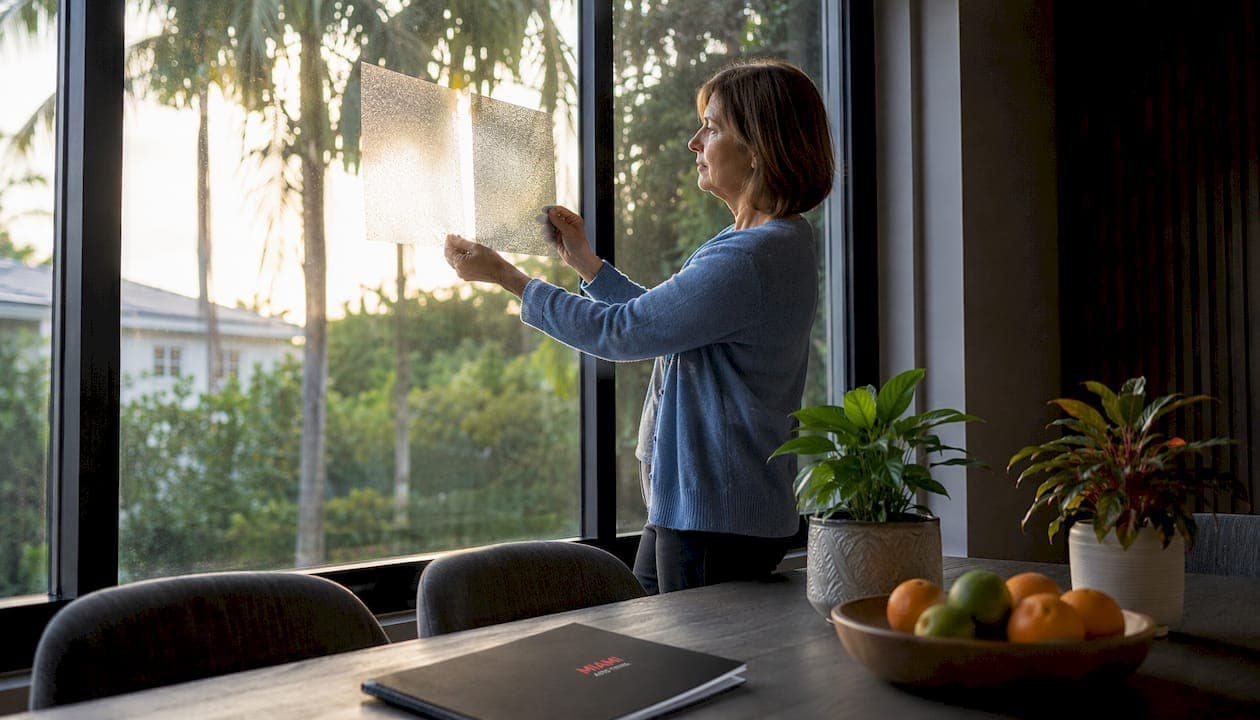
Privacy levels in window film depend on two things: how much light the film lets through and how well it blocks visibility from outside. Visible Light Transmittance (VLT) measures the percentage of daylight passing through glass with film applied. Solar privacy films typically run at a visible light transmittance (VLT) level that balances daytime privacy with enough natural light to keep a room comfortable. Lower VLT means more privacy but a darker interior.
Here is what you need to know before choosing a film:
- VLT is the primary metric. Lower numbers mean less light and more privacy.
- Opacity varies by film type, from nearly clear decorative films to fully opaque blackout options.
- UV protection comes standard with most quality films. Reputable architectural films block over 99% of UV rays and carry a lifespan of 15–20 years.
- Energy efficiency often accompanies privacy films, reducing solar heat gain and cooling costs.
- Daytime vs. nighttime privacy behaves differently. Films that rely on exterior light reflection lose their privacy effect after dark when your interior lights are brighter than outside.
No single film solves every situation. The right choice depends on your room, your schedule, and how much light you want to keep.
What types of privacy window film are available?
Window films cover a wide range of privacy performance, from barely-there diffusion to complete blackout. Understanding each type helps you match the film to the room.
- Blackout films offer near-zero VLT, blocking virtually all light and providing complete two-way privacy around the clock. They work well for bedrooms used by shift workers, nurseries, or any room where total darkness is the goal.
- Frosted films scatter light rather than block it. They diffuse light to obscure shapes while keeping the room bright, making them a natural fit for bathrooms, shower enclosures, and office glass partitions.
- One-way mirror films create a reflective exterior surface during daylight hours. Anyone outside sees their own reflection; you see out clearly. Privacy disappears at night when interior lighting reverses the effect.
- Decorative and patterned films use geometric designs, etched textures, or printed patterns to partially obscure visibility while adding style. Privacy performance varies widely by pattern density.
- Dark tinted films use a gray, brown, or charcoal tint to reduce visibility from outside when exterior light is stronger than interior light. They are popular for ground-floor office windows and living rooms facing a busy street.
- Switchable (smart) films change from clear to opaque with an electrical signal. They are the most flexible option but also the most expensive, typically used in conference rooms or high-end residential spaces.
- Whiteout films function like blackout films in terms of opacity but present a white appearance on both sides, creating a softer look suited to bathrooms and home offices.
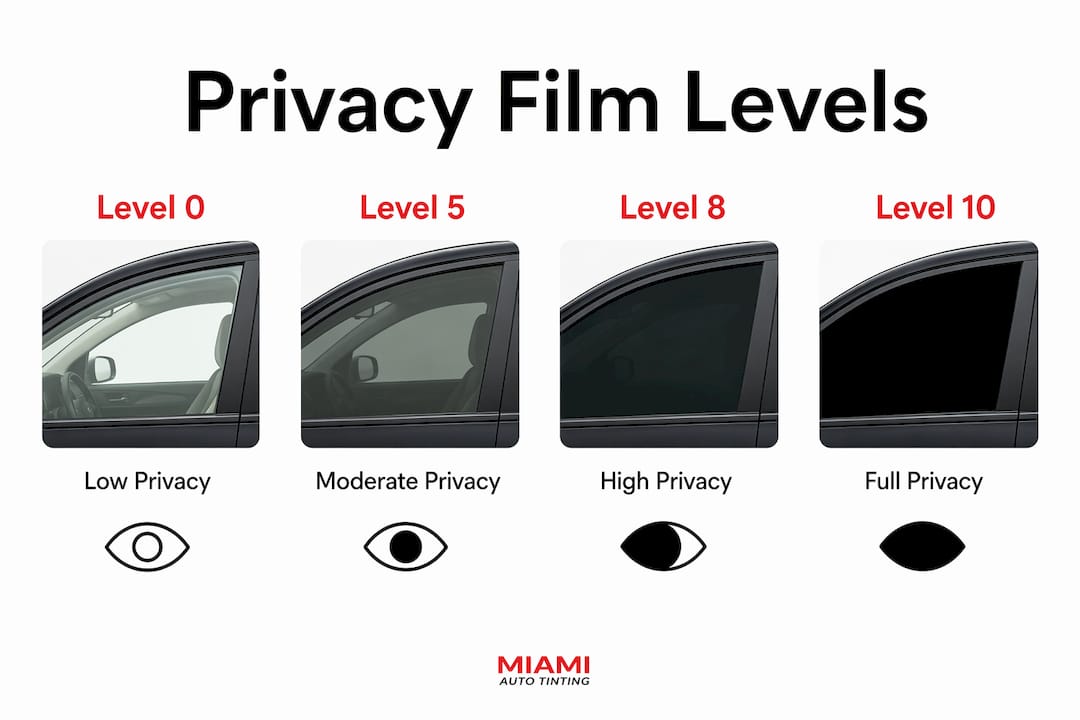
Many manufacturers rate privacy on a scale from 0 (completely clear) to 10 (fully opaque), measuring how difficult it is for an observer standing at least 2 feet from the glass to identify objects on the other side. These proprietary privacy ratings are a useful internal guide but are not standardized across brands, so a "7" from one manufacturer may not match a "7" from another.
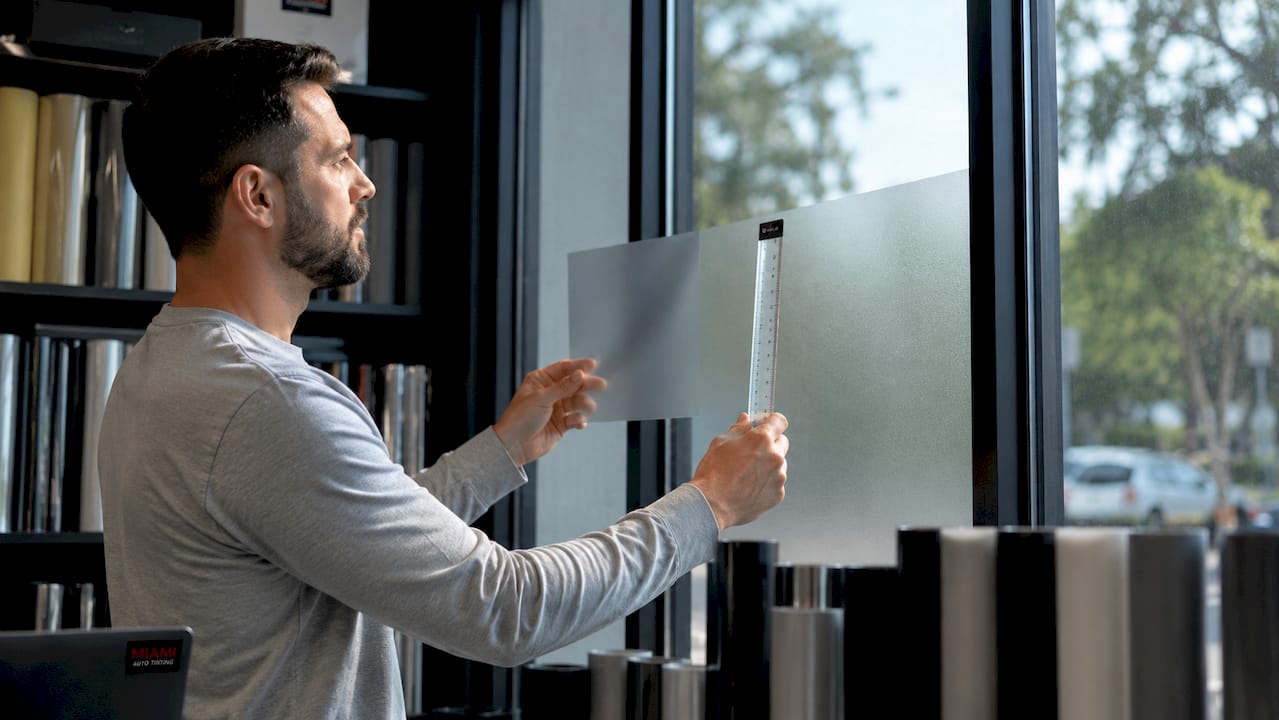
Pro Tip: Before committing to a frosted or decorative film for a bathroom or office, hold a sample against the glass at different times of day. Morning light and afternoon sun can reveal privacy gaps you would not notice in a showroom.
How do privacy films actually work, and where do they fall short?
Privacy films use three physical mechanisms: light diffusion, reflectivity, and opacity. Knowing which mechanism your film relies on tells you exactly when it will and will not protect you.
- Light diffusion scatters incoming light so shapes and movement behind the glass appear blurred rather than clear. Frosted and etched films work this way. They provide consistent privacy day and night because diffusion does not depend on the lighting ratio between inside and outside.
- Reflectivity is the mechanism behind one-way mirror films. The film reflects exterior light back at observers, making the glass look like a mirror from outside. This works only when outside is brighter than inside. Once interior lights come on after dark, the effect reverses and the window becomes transparent from outside.
- Opacity is the straightforward approach used by blackout films. With near-zero VLT, the film physically blocks light in both directions at all times, regardless of lighting conditions.
Film thickness affects security and impact resistance, not privacy. Privacy depends on optical properties like VLT and reflectivity, not on how thick the film is.
One compatibility issue worth knowing: films applied to windows with Low-E coatings can create thermal stress if the film absorbs significantly more heat than the glass was designed to handle. That differential heat absorption can crack the glass. Always confirm film compatibility with Low-E glass before installation.
The bottom line on limitations: only blackout films provide reliable privacy 24 hours a day. Every other film type has at least one condition under which privacy is reduced or lost entirely.
How to choose the right window film for your home or office
Start by defining your primary goal. Experts recommend deciding whether you need daytime privacy, total night privacy, or energy efficiency first, because no single film type covers all three equally well.
Here are the key factors to work through:
- Room function: Bedrooms and nurseries benefit most from blackout films. Bathrooms and shower areas call for frosted or whiteout films. Living rooms and offices facing a street are good candidates for tinted or one-way mirror films during daylight hours.
- Light preference: If you want a bright room with privacy, frosted film is the better choice over a dark tint. If you are comfortable with a darker interior, a lower-VLT tinted film gives stronger daytime privacy.
- Day vs. night use: If the room is used primarily during the day, a reflective or tinted film may be enough. If you need privacy after dark, choose frosted, whiteout, or blackout film instead.
- UV protection and energy savings: Most quality films block over 99% of UV rays and reduce solar heat gain, which lowers cooling costs. This is a meaningful bonus in warm climates like South Florida.
- Legal and HOA considerations: Some homeowners associations and local building codes restrict reflective films on exterior-facing windows. Check your HOA rules and local codes before purchasing a mirror-finish film.
- Window compatibility: Confirm the film is rated for your glass type, especially if you have Low-E or tempered glass. Incompatible films can void your window warranty or cause cracking.
- Durability: Quality architectural films last 15–20 years. Budget films may fail earlier and offer weaker UV protection. The cost difference between a quality film and a budget option is small compared to the labor of reinstalling.
Pro Tip: Test sample films under your actual home lighting before committing to a full installation. A film that looks perfectly private in a bright showroom may disappoint in a dimly lit hallway.
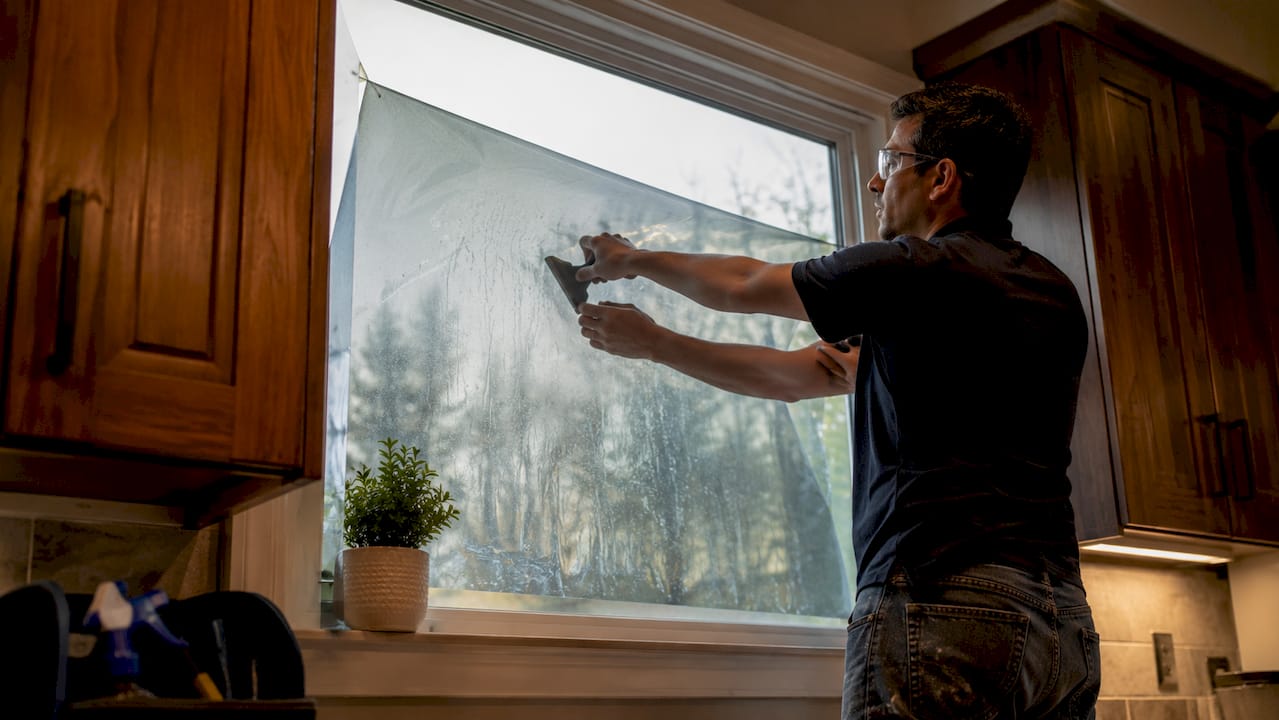
Incorrect installation is one of the leading causes of film failure and glass damage. Professional installation removes that risk and typically comes with a warranty on both materials and labor. For a guide on choosing tint shades that balance privacy and light in residential settings, Southmiamitint's blog covers the decision in detail.
Which window film brands are worth considering in the US market?
Two brands stand out for residential and commercial privacy film in the US market: 3M and Iviron. Both are available through professional installers and offer ceramic-based options with strong technical performance.
3M Window Film
3M Window Films, including the 3M Ceramic Film line, are widely used in both residential and commercial settings. The product range covers three distinct privacy approaches:
- 3M White Matte Translucent Film provides subtle, diffused privacy with a clean aesthetic suited to office environments and conference rooms.
- 3M Blackout Film delivers the maximum privacy level, blocking virtually all light and visibility in both directions.
- 3M Mirror Film uses high exterior reflectivity to create a one-way mirror effect during daylight hours.
3M films balance privacy with energy efficiency and durability. They are a fraction of the cost of replacing glass with etched or sandblasted panels, and they can be cut into custom decorative shapes. Southmiamitint installs 3M IR and 3M Color Stable films for residential and commercial clients across Miami-Dade.
Iviron Kollmax Ceramic Tint
Iviron Kollmax Ceramic Tint uses ceramic-based film technology that improves optical clarity while managing heat. Ceramic films reject solar heat without the heavy darkening that older metallic films required, so you get meaningful privacy and heat control without turning your windows into a cave.
Key features of ceramic film technology include:
- Strong heat rejection without significant VLT reduction
- No signal interference (unlike metallic films, which can affect Wi-Fi and cell reception)
- Good UV blocking performance
- Suitable for residential windows, glass doors, and office partitions
For homeowners in South Florida, ceramic film is particularly practical. The combination of heat rejection and privacy performance addresses two of the most common complaints about unfilmed windows in a hot, sunny climate. Southmiamitint offers mobile installation, meaning a professional comes to your location rather than you transporting windows to a shop.
Proper preparation before installation matters as much as the film itself. Resources like expert PPF preparation guides from professional installers illustrate how surface prep directly affects film adhesion and longevity, a principle that applies equally to residential window film.
Get professional privacy film installation in Miami-Dade
Southmiamitint installs 3M IR, 3M Color Stable, and Iviron Kollmax Ceramic Tint for residential and commercial properties across Miami-Dade. The service is fully mobile: a professional installer comes to your home or office, so you do not need to arrange transportation or take time off work.
Whether you need blackout film for a bedroom, frosted film for a bathroom, or ceramic tint for a sun-facing living room, Southmiamitint can match the right film to your space. Ceramic window tint starts from $249, and every installation comes with professional-grade materials backed by manufacturer warranties.
Contact Southmiamitint today to get a quote for your home or office.
Key Takeaways
The most effective privacy film for your home depends on VLT, room use, and whether you need privacy around the clock or only during daylight hours.
| Point | Details |
|---|---|
| VLT determines privacy level | Solar privacy films typically run 15–20% VLT, balancing daytime privacy with natural light. |
| Blackout films work 24/7 | Near-zero VLT blocks all light and visibility in both directions at any hour. |
| One-way mirror films fail at night | Reflective privacy reverses after dark when interior lighting is brighter than outside. |
| UV protection is standard | Quality architectural films block over 99% of UV rays and last 15–20 years. |
| Professional installation prevents damage | Incorrect application is a leading cause of film failure and glass cracking, especially on Low-E windows. |