
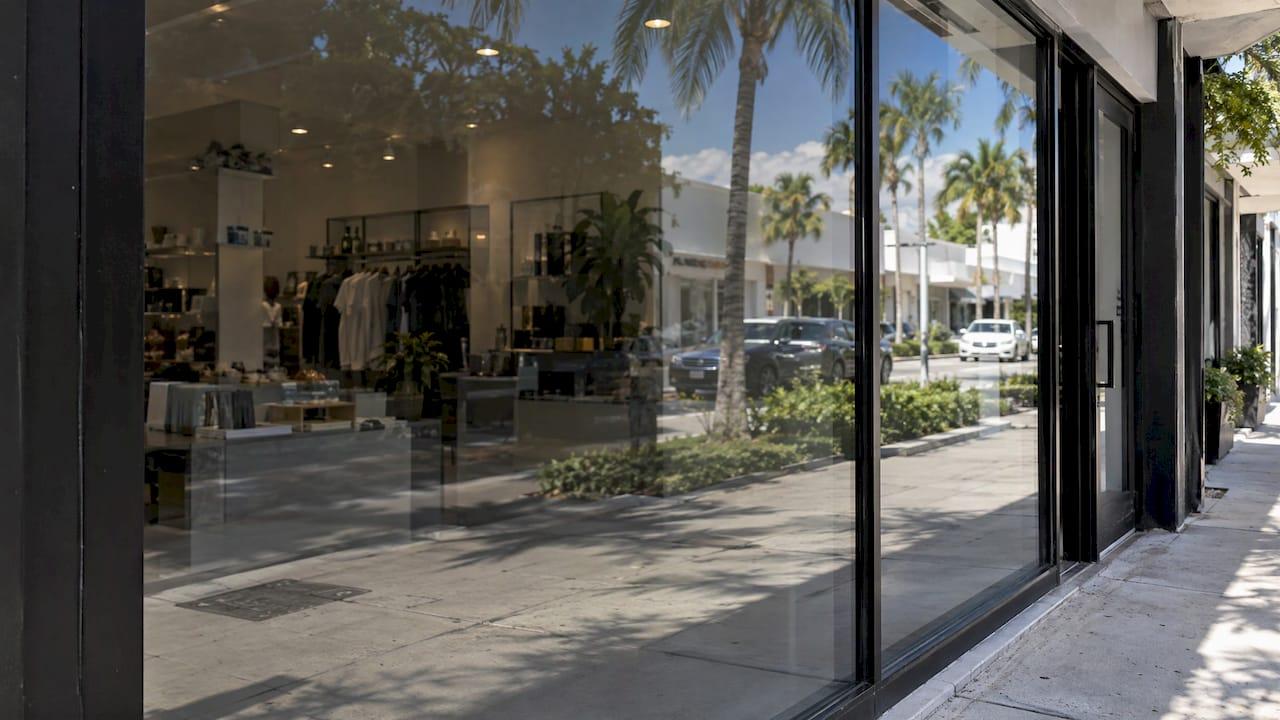
Daytime privacy window film makes glass look like a mirror from the brighter side, so people outside can't see in while you see out. The effect depends on light, not on the film alone. It works when it is brighter outside than inside, and it fades at night. In Miami-Dade, where sun is strong most of the year, a dark ceramic tint on a car or a properly specified film on a home or office gives you daytime privacy, heat control and UV protection in one install. We install it at your location.
TL;DR
- Daytime privacy film works by light difference: the brighter side sees a mirror, the darker side sees through. At night with lights on, the effect reverses.
- Neutral one-way films keep roughly 50 to 65% visible light, so the privacy comes from reflectivity, not from blocking the view.
- On cars, Florida limits how dark and how reflective your windows can be, and the limits differ for sedans and SUVs.
- Dark ceramic tint is the everyday daytime privacy choice for vehicles, with heat rejection and UV protection included.
- We install at your home or office anywhere in Miami-Dade. Front windows start at $200 and a full car with windshield at $450.
Table of Contents
- How daytime privacy film actually works
- Why Miami is a good place for daytime privacy
- Daytime privacy film types compared
- Privacy versus heat: picking the right shade
- Daytime privacy for your car in Florida
- Daytime privacy for your home
- Daytime privacy for your business
- Common mistakes with daytime privacy film
- What we do differently
- Get daytime privacy installed at your door
- FAQ
- Sources
How daytime privacy film actually works
The film does not make glass one-way by itself. It creates a difference in how much light each side of the glass reflects and passes. Whichever side is brighter sees the other side poorly, because the bright side's reflection overpowers the dim view through the glass.
Here is what that looks like in practice:
- Outside, in daylight: the glass looks like a mirror. A passerby mostly sees the street, sky and themselves.
- Inside, in daylight: you see out normally, usually slightly tinted depending on how dark the film is.
- Outside, at night, lights on inside: the room is now the brighter side. The mirror effect reverses, and people outside can see in.
Manufacturers say this directly. Reflectiv, which makes neutral one-way mirror film, states that the film keeps about 50 to 65% visible light transmission, that the one-way effect depends on the light difference between indoors and outdoors, and that it reverses when the interior is lit at night. Contra Vision, a maker of one-way vision film, says the same about perforated types: privacy works only when the outside is brighter than the inside, and it is reduced or lost as it gets darker outside.
That is why "day privacy" is the honest name. It is built for the hours when you most want to be left alone: a car parked at a mall at noon, a ground-floor office facing a sidewalk, a living room facing the street.
Why Miami is a good place for daytime privacy
The effect needs a bright exterior. South Florida delivers that for most of the day, most of the year. A west-facing window in Kendall at 3 p.m. or a car parked in a Homestead lot at midday has far more light outside than inside, which is exactly the condition the film needs.
The same brightness is also why most people here want film in the first place. Privacy is rarely the only reason. The heat on your dashboard, the glare on your screen and the fading of seats and floors all come from the same sunlight. A film that handles privacy and heat together saves you from choosing between them.
Daytime privacy film types compared
Not every privacy film behaves the same. Here is how the main types differ on the things that matter to you.
| Film type | Daytime privacy | Night privacy | Outward view | Heat and UV control |
|---|---|---|---|---|
| Dark ceramic tint | High (the darker, the more private) | Moderate with dark shades; interior lit at night can still be seen from outside | Clear, darker with lower VLT | Strong heat rejection and UV protection |
| Reflective one-way mirror film | High while it is brighter outside | Reverses when interior is lit | Preserved, slightly tinted | Good solar control from reflectivity |
| Frosted or etched film | Full, day and night | Full | Blurred or blocked | Mostly privacy and light diffusion |
| Perforated one-way vision film | Works only when outside is brighter | Reduced or lost | See-through through small openings | Limited |
Three plain takeaways:
- If you only need privacy in daylight and you also want a cooler space, tinted film or reflective film is the fit.
- If you need privacy after dark with lights on (a bathroom, a bedroom), frosted film is the type built for that, because it diffuses light instead of relying on a brightness gap.
- If you are tinting a car, the law sets how dark and how reflective the film can be, so the choice narrows quickly.
Privacy versus heat: picking the right shade
Darkness is measured as VLT, visible light transmission: the percentage of visible light that passes through the glass and film. A 35% film lets 35% of light in. Lower numbers mean more privacy and a darker look. If you want the full explanation, our guide to visible light transmission walks through it.
The key point is that privacy and heat rejection are not the same thing. A light ceramic film can reject a lot of heat while staying clear, and a dark dyed film can look private while doing little against heat. Ceramic films are made to block infrared heat and UV, which is why we install ceramic films only. You choose the shade for privacy, and the ceramic does the heat work at any shade.
We work with three ceramic lines: 3M Ceramic IR with a lifetime warranty, SunTek CIR with a 5-year warranty and Uviron KoolMax with a 3-year warranty. You can read about the 3M options on our 3M window tinting page and about ceramic in general on our ceramic tint page.

Daytime privacy for your car in Florida
For vehicles, daytime privacy comes from how dark you go, and Florida sets the ceiling. Based on Florida's tint rules summarized by Nuvision Auto Glass:
- Sedans: front side windows need at least 28% VLT. Rear side windows and the rear window need at least 15%.
- SUVs, trucks and vans: front side windows need at least 28% VLT. Rear side and rear windows have no VLT restriction.
- Windshield: only non-reflective tint above the AS-1 line, the small marking near the top of the glass.
So an SUV or truck owner can go very dark in the back for strong daytime privacy, while a sedan owner is held to 15% behind the front doors. Mirror-style films are also limited by reflectivity: for windows behind the driver, Florida Statute 316.2954 allows film with no more than 35 percent reflectance. Front side windows have their own, stricter reflectivity cap, so a fully mirrored look is not an option on a Florida car.
Two more legal details matter:
- Every installer or seller of sunscreening film must affix a compliance label to the inside left door jamb, and every percentage measurement carries a tolerance of plus or minus 3 percent, as Florida Statute 316.2955 states.
- People with lupus, an autoimmune disease or another condition that requires limited light exposure can get a medical exemption certificate from the Florida Department of Highway Safety and Motor Vehicles under Florida Statute 316.29545. The certificate is nontransferable and ends when the vehicle is sold or transferred. Applying for it is a step you take with the state and your doctor.
We go deeper on the limits in our guides to the darkest legal window tint in Florida and windshield tint and AS-1. If you already have film on the glass, read why tint over tint can push you below the legal VLT before adding more.
Reading your own car's numbers
Your window already has some tint from the factory, so the film and the glass combine. A 35% film on glass that passes 70% of light does not end up at 35%. That is why a legal-looking number on a box can still measure too dark on your car. We choose the film with your glass in mind, so the finished windows land within the legal limits.
Daytime privacy for your home
Homeowners in Pinecrest, Cutler Bay and Kendall usually want the same thing: stop people seeing into the living room from the street or a neighbor's yard, without living in a dark house. Daytime privacy film fits that, since the brightest hours are the hours when you are using the front rooms.
What to expect:
- Daytime: a mirror-like or darkened look from the outside, with your view out preserved.
- Evening: once lights go on inside, the effect weakens and then reverses. Curtains or blinds, or a frosted film on the specific windows, cover those hours.
- Heat and fading: the same film that gives daytime privacy also cuts solar heat and UV, which helps with cooling rooms and slowing fade on furniture and floors.
A practical way to plan is room by room. Front-facing living areas and home offices suit daytime film. Bathrooms and bedrooms that you light at night suit frosted or decorative film. Large sliding doors facing a pool deck suit a darker, heat-rejecting film. Our residential window tinting page covers what we install for homes.
Daytime privacy for your business
Storefronts, offices and clinics have a different problem. You want staff and customers to be comfortable and a bit shielded from the sidewalk during open hours, and you don't want your glass to look dark or closed.
For offices and ground-floor suites, daytime privacy film keeps computer screens, desks and paperwork from being on display while people walk by, and it cuts glare on monitors. For retail, a lighter film keeps products visible while reducing the heat that hits displays near the glass. Keep in mind that a lit storefront at night is on the bright side, so the mirror look goes away after dark, which is usually what a retailer wants anyway.
See our commercial window tinting page for the properties we handle.
Common mistakes with daytime privacy film
- Expecting night privacy. One-way film depends on the brightness gap. Plan for evenings separately.
- Choosing by darkness alone. A dark film that does not reject heat leaves you hot and still dark. Pick the shade for privacy and the material for heat.
- Ignoring the legal limit on a car. A tint that fails the VLT or reflectivity rules can mean a ticket and a redo.
- Layering new film on old. Old, bubbled or purple film should come off first. Stacking film also lowers VLT in ways that are hard to predict.
- Rushing the install. Dust, a poor cut or a seam on a large windshield shows right away, and it shows most on reflective glass.
If an older reflective film on your glass has started to show a color shimmer, here is how to remove rainbow film from car glass before you replace it. For stripping old tint itself, we offer old tint removal for $50 to $150.
What we do differently
A privacy film is only as good as the install. Here is what is behind ours:
- We come to you. We install at your home or office anywhere in Miami-Dade, so you never wait at a shop. See mobile window tinting.
- 28 years of experience, owner-installed. The person who quotes your job is the person who does it.
- Computer-cut patterns. Each film is cut for an exact fit on your glass.
- 60-inch rolls. Large windshields go in as one piece with no seam.
- Ceramic films only. 3M Ceramic IR carries a lifetime warranty, SunTek CIR 5 years and Uviron KoolMax 3 years.
- Tesla, luxury and exotic vehicles. We have experience with them.
Perspective
People call us asking for "the darkest film you have." What they usually want is a car or a room that feels private and does not cook them. Those are two jobs, and dark alone does only one.
We install ceramic only, because it lets you pick a shade for privacy and still get heat rejection and UV protection. Then we make sure the install is clean: computer-cut patterns, and 60-inch rolls so a big windshield goes in without a seam. On a car, we keep you inside Florida's limits, so the privacy you pay for is privacy you can drive with.
The best result comes when we talk through how you use the glass: where the car parks, which rooms face the street, when the lights go on. Then the film choice is easy, and we do it at your door.
Jose
Get daytime privacy installed at your door
Whether it is your daily driver, your front rooms or your storefront, we bring the film, the cutter and 28 years of experience to your address in Miami, Kendall, Homestead, Cutler Bay, Pinecrest and the rest of Miami-Dade. Our published starting prices are $200 for two front windows, $150 for a windshield and $450 for a full car with windshield. Homes and businesses are quoted for the job.

Get your quote on our mobile window tinting quote page, or see all prices and services on southmiamitint.com.
FAQ
Does daytime privacy window film work at night?
No. It works because the outside is brighter than the inside. When it gets dark and your lights are on, the effect reverses and people outside can see in. For evening privacy, use blinds, curtains or a frosted film on the windows you light at night.
Can people see in through daytime privacy film in the daytime?
In normal daylight they mostly see a reflection of the street and themselves. If you stand right against the glass with a bright light behind you, or the room is much brighter than outside, they may see more. Darker film increases privacy because less light passes through it.
How dark can I legally tint my car windows in Florida?
For a sedan, front side windows need at least 28% VLT and rear side and rear windows at least 15%. For an SUV, truck or van, front sides need 28% and the rest have no VLT limit. Reflectivity is also capped, and there is a plus or minus 3 percent measurement tolerance.
Does daytime privacy film also block heat and UV?
The film's material decides that. Ceramic film is built to reject infrared heat and block UV, so you get privacy, a cooler cabin or room, and less fading from one install. We use ceramic films only.
Can you install it at my house or office?
Yes. We are fully mobile across Miami-Dade County and install at your home or office, for cars, homes and businesses. Tell us the address and the windows when you request a quote.
Sources
- Reflectiv: Neutral One-Way Mirror & Blackout Window Film
- Contra Vision: Frequently Asked Questions
- Nuvision Auto Glass: Florida Window Tint Laws
- Florida Statute 316.2954
- Florida Statute 316.2955
- Florida Statute 316.29545