
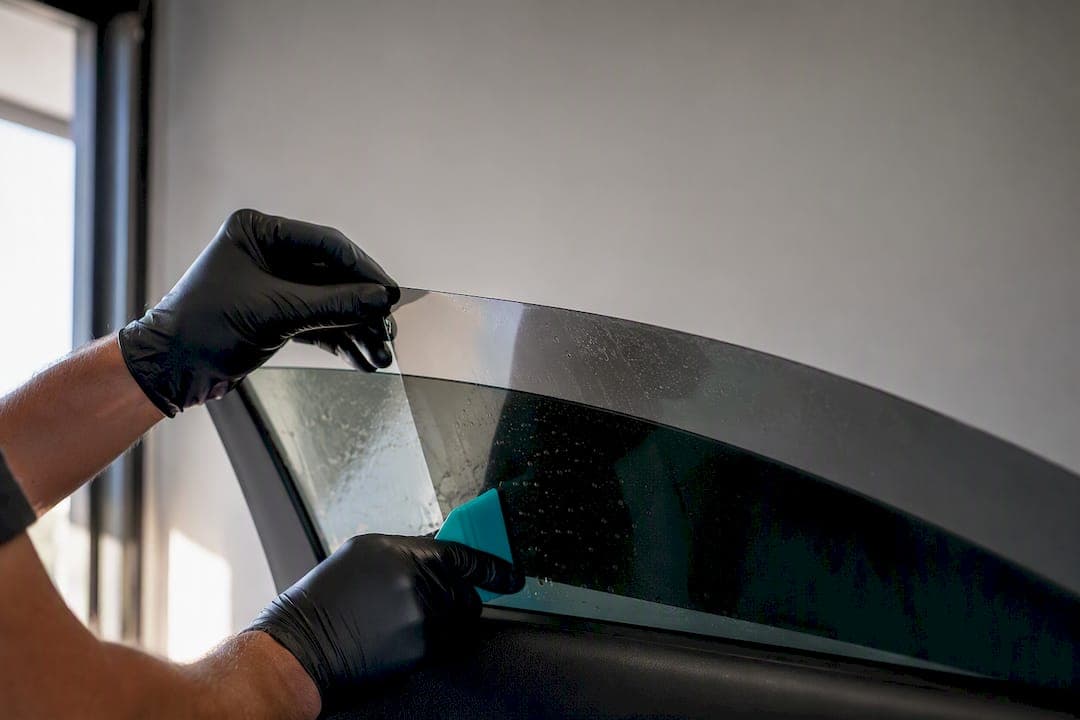
Layering new film over your factory privacy glass is usually fine, since that tint lives inside the glass itself. Layering new film over old aftermarket tint is a different story: most installers will tell you to strip the old layer first. The risk is real, ranging from voided warranties to bubbling adhesive, and Florida's net visible light transmittance (VLT) limits make the decision even less optional.
TL;DR:
- Layering new film over factory privacy glass is generally safe since the tint is embedded in the glass, but over existing aftermarket film it often risks bubbles, haze, and adhesive failure.
- Most installers recommend removing older, worn, or bubbling tint before adding new film, especially if the current layer exceeds two to three years old.
- The net visible light transmittance after layering is what determines legality and performance, often falling below legal limits if multiple layers are stacked.
- Federal law mandates at least 70% VLT on front windows, but state-specific limits vary and are based on the combined light transmission, not the film's rated percentage alone.
- Proper inspection, clean application in controlled environments, and understanding the existing film's condition are key to a successful layered tint job or deciding on removal.
Table of Contents
- Can You Tint Over Tint? It Depends on What "Tint" Means
- Weighing the Pros and Cons of Layering Tint
- Why Layering Changes How Tint Performs
- Is Tint Over Tint Legal? What VLT Rules Actually Require
- How to Prepare for a Layered Tint Install
- When You Should Remove Old Tint Instead
- What Installers Look for Before Recommending Layering
- An Installer's Honest Take on Layering vs. Removal
- Get a Straight Answer on Your Windows From Southmiamitint
- Sources
- FAQ
Can You Tint Over Tint? It Depends on What "Tint" Means
The word "tint" hides two very different products, and that distinction decides whether tint over tint is a smart move or a costly mistake.
Factory privacy glass, the dark tint you see on the rear windows of many SUVs and minivans, is not a film at all. The pigment gets baked into the glass during manufacturing, so there's no adhesive layer, no edge, and nothing to peel. Applying aftermarket film over it is generally permissible because you're bonding new film to bare glass, exactly what the adhesive was designed to do.
Aftermarket film is the opposite situation. It's a separate sheet of polyester bonded to your window with pressure-sensitive adhesive, and that adhesive was formulated to grip glass, not to grip more film. If your existing tint is intact, was installed within the last year or two, and shows zero signs of wear, a skilled technician might agree to layer over it. Anything less than that, and removal is the safer call.
Before any installer layers new film, they should check for:
- No edge lift. Corners and edges should sit flat with no curling.
- No bubbling or haze. Trapped air or cloudy patches signal adhesive breakdown already underway.
- No adhesive residue or tackiness. A tacky surface won't accept a clean second bond.
- Reasonable age. Older aftermarket film, generally past the two to three year mark, tends to have adhesive that's already losing strength.
If your film passes every check, layering can work. If it fails even one, you're better off starting fresh.
Weighing the Pros and Cons of Layering Tint
Layering isn't automatically a bad idea. It's a trade-off, and the right call depends on what you value more: saving money today or avoiding rework later.
- Lower upfront cost. Skipping removal saves labor time, which usually shows up as savings on your quote.
- Faster turnaround. No stripping means no scraping, no adhesive cleanup, and a shorter appointment.
- A real upgrade on factory glass. Adding a quality film over factory privacy glass can boost heat rejection and UV protection well beyond what the OEM tint offers on its own.
- Warranty risk. Most film manufacturers won't honor a warranty claim on a layered install, since they can't guarantee performance over an unknown existing product.
- Visual defects. Bubbling, haze, and uneven color are far more common on film-over-film jobs than on clean, single-layer installs.
- Compliance headaches. Two layers make it harder to know your actual net VLT without a meter, which matters if you get pulled over.
- Shorter lifespan. A compromised bond tends to fail sooner, meaning you could be paying for another install within a couple of years.
The short version: layering saves you money now and can cost you more later. Weigh that trade honestly before you book the job.
Why Layering Changes How Tint Performs
Net VLT is the number that actually matters to you and to law enforcement. It's not the film's rated transmittance alone; it's the combined transmittance of the glass and every layer of film on it. Stack a 20% film over glass that already lets in 70% of light, and your net VLT drops well below either number alone, sometimes below your state's legal floor without you realizing it.

The adhesive problem compounds this. Most film adhesives are engineered for a glass-to-film bond, not a film-to-film bond, which is a big reason professional installers flag layering as higher risk than a standard install.
Watch for these failure signs after a layered install:
- Extended haze. Moisture trapped between two film layers takes longer to cure and can leave a cloudy look for weeks instead of days.
- Water spotting. Trapped moisture sometimes evaporates unevenly, leaving visible spot patterns once the tint fully dries.
- Edge bubbling. Weak adhesion at the perimeter shows up first, usually within the first few months.
Pro Tip: Ask your installer how they plan to manage cure time on a layered job. A shop that controls temperature and humidity during the cure window sees far fewer haze complaints than one that sends you off the same day.
3M's own testing shows how much is at stake performance-wise: some Color Stable series films block up to 99.9% of UV rays and reject a meaningful share of total solar energy. That's the kind of upgrade worth protecting with a clean, well-bonded install rather than risking on a compromised layer.
Is Tint Over Tint Legal? What VLT Rules Actually Require
Federal law sets the baseline through FMVSS-205, which NHTSA interprets as requiring at least 70% visible light transmittance on windows "requisite for driving visibility," typically the front windshield and front side windows. States, though, are the ones who set and enforce the specific limits for tinted windows after the vehicle leaves the factory, and those numbers vary widely.
Here's what trips people up: your state's legal threshold applies to net VLT, the combined reading of glass plus every film layer, not the film's advertised rating on its own packaging. A film box that says "35%" tells you nothing about what your windows will actually measure once it's applied over existing tint.
Before you commit to layering:
- Check your state's specific net VLT limit rather than assuming a percentage you saw online applies to you. Florida's requirements, for example, are outlined here.
- Request a net VLT reading from your installer using a calibrated meter, taken after the install is complete.
- Keep that reading on file. A printed or photographed meter result can save you an argument, and possibly a ticket, during a traffic stop.
How to Prepare for a Layered Tint Install
If you and your installer decide layering makes sense, preparation is what separates a clean result from a redo six months later.
- Inspect every edge by hand. A tactile check catches soft spots, lifting corners, and adhesive breakdown that a visual scan alone can miss.
- Run a small water test. Trapped moisture under old film often reveals itself here, and its presence usually means removal, not layering, is the right call.
- Clean gently. Use mild, ammonia-free cleaners and avoid aggressive polishing, which can scratch or degrade factory privacy glass.
- Confirm film compatibility in writing. Ask whether the manufacturer explicitly approves film-over-film installs; many don't, and a written answer protects you if something goes wrong later.
- Choose a ceramic option when upgrading factory glass. Ceramic films tend to deliver stronger heat and UV performance gains than standard dyed film, making them a better return on a layering job.
- Install in a controlled space. A warm, dust-free bay with managed humidity gives adhesive the best chance to bond properly the first time.
- Follow post-install care exactly. Keep windows up for the full recommended cure window; rolling them down early can shift film before the adhesive sets.
Pro Tip: Fogging is common in the first few days after any tint job, layered or not. A quick anti-fog treatment on interior glass can cut down on the condensation that sometimes gets mistaken for a bad install.
When You Should Remove Old Tint Instead
Some situations don't leave room for debate. Skip layering and go straight to removal when you see:
- Visible bubbling or peeling, which signals the adhesive has already failed and won't hold a second layer.
- Sticky or gummy residue, a sign the old film is degrading from the inside out.
- Film older than two or three years, since adhesive chemistry weakens steadily over time even without visible damage.
Removal costs more upfront and adds time to the appointment, but it resets the clock. You get a clean surface, a real shot at manufacturer warranty coverage on the new film, and a straightforward net VLT reading with no guesswork about what's underneath.
What Installers Look for Before Recommending Layering
Technician judgment matters more here than almost any other part of a tint job. The IWFA's visual inspection guidelines lay out specific criteria for what counts as an acceptable installed film, including which cure artifacts are normal and which signal a real problem, and experienced installers lean on that standard when deciding whether a car is a layering candidate or a removal job.

Mobile crews working with premium ceramic films across Miami-Dade find that cars with intact, recent film sometimes qualify for a careful layer, while anything showing wear generally requires full removal first. Professional removal, followed by a proper net VLT measurement, is what protects both the film manufacturer's warranty and your compliance with Florida's tinting rules.
An Installer's Honest Take on Layering vs. Removal
Layering only makes sense in narrow situations, usually a nearly new factory-adjacent film with no defects at all. The moment I see edge lift, tackiness, or film older than a couple of years, I'm recommending removal, even if it costs the customer more upfront.
My advice: budget for removal from the start if your existing tint is more than a year or two old. It's cheaper to plan for it than to pay for a redo after a layered job fails. If you're not sure which category your car falls into, get it inspected before you assume layering is an option.
— Jose
Get a Straight Answer on Your Windows From Southmiamitint
A professional technician can inspect your existing film in person and advise whether layering or removal is the right call, often handling the work at your home or office instead of requiring travel to a shop.
Our mobile crews across Miami-Dade work with 3M Ceramic IR, 3M Color Stable, and Iviron KoolMax ceramic films, and every job includes proper old tint removal when your current film doesn't pass inspection. A full car plus windshield package starts at $500, and Ceramic Tint installs are quoted after a quick look at your vehicle. If your last tint job is bubbling, hazy, or just old, request a mobile quote through Southmiamitint and get a real inspection before you decide what to do next.
Sources
For the federal rules, see NHTSA's FMVSS-205 interpretation. For installation standards, see the IWFA's education guide and 3M's performance data.
- NHTSA interpretation ID 17440.drn
- IWFA — Automotive installation process
- 3M product performance highlights
FAQ
Is It Okay to Double-Layer Window Tint?
It depends on what's underneath. Layering over factory privacy glass is usually fine since that tint is baked into the glass, but layering over existing aftermarket film is riskier and often voids the film manufacturer's warranty.
Does Tinting Over Tint Make Windows Darker?
Yes, adding a second layer of film reduces net VLT, the combined light transmittance of your glass and all film layers together. That combined number, not the new film's rating alone, is what your state checks for legal compliance.
Is It Worth Getting Ceramic Tint Over Regular Tint?
It's worth it only if the existing film is intact, recent, and free of bubbling or edge lift. Ceramic options like 3M Color Stable deliver strong UV and heat rejection gains, but that performance depends on a clean, well-bonded install, which usually means removing questionable old film first.
Can You Stack Tint on Top of Tint?
You can in limited cases, mainly over factory-embedded privacy glass, but stacking film over film carries a real risk of bubbling and adhesive failure since most adhesives aren't designed to bond to another film layer. A Southmiamitint inspection can tell you within minutes whether your current tint qualifies for layering or needs removal first.