
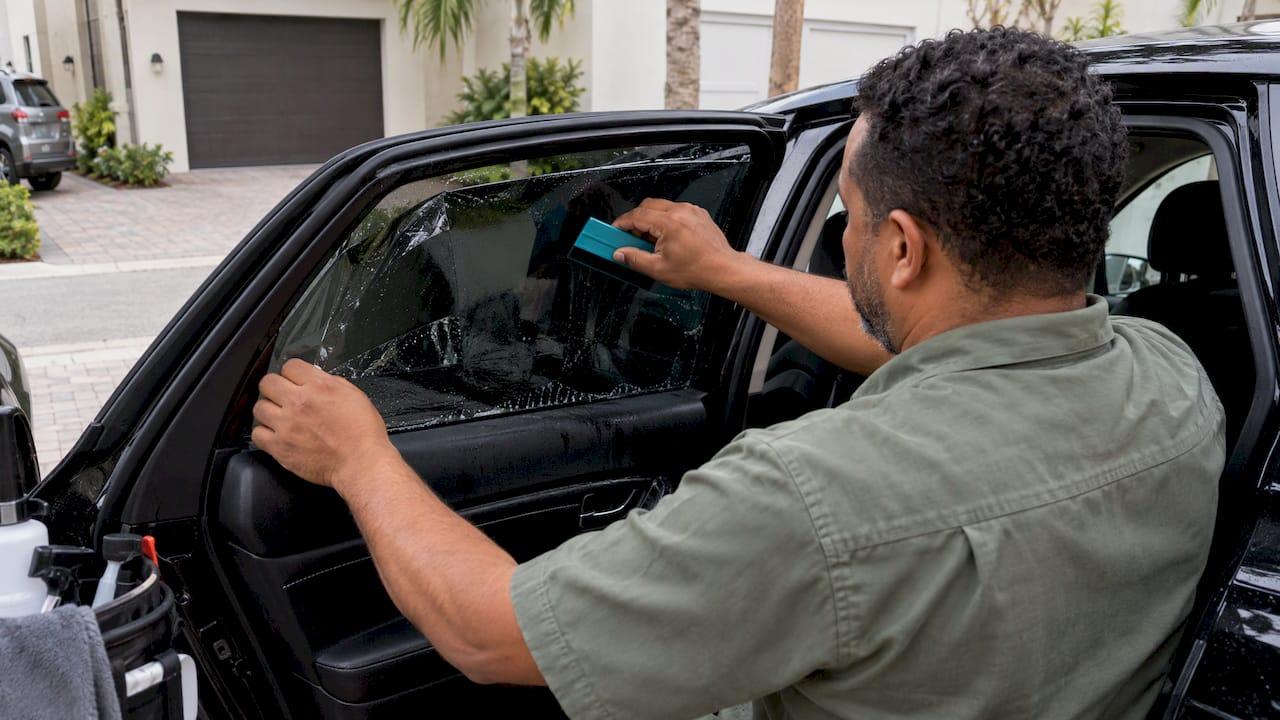
Ceramic tint gives you the strongest heat rejection of the common tint types, blocks 99% of UV rays, cuts glare and does not interfere with your phone, GPS or key fob. In a hot, sunny place like Miami-Dade, those benefits are why most drivers who try it do not go back. Below we explain how each benefit works, what the numbers mean, and how to decide if ceramic is worth the extra cost for your car, home or business.
TL;DR
- Ceramic film targets infrared heat, so your cabin stays cooler and your A/C works less. One major manufacturer lists up to 93% infrared rejection for its nano-ceramic film.
- It blocks 99% of UV rays at every shade, which protects your skin and slows fading of seats and dashboards.
- It has no metal in it, so it does not disrupt cell, GPS, radio or keyless entry signals.
- Ceramic does not have to be dark. You can get strong heat rejection in a light, legal shade.
- It is usually worth it if you park outside, drive in the sun every day, or want a film backed by a long warranty.
Table of Contents
- What ceramic tint actually is
- The main benefits of ceramic tint
- Ceramic vs. regular and carbon tint
- Shade matters: how dark should you go?
- Is ceramic tint worth it?
- Ceramic tint for homes and businesses
- How to keep ceramic tint looking new
- Our perspective
- Book mobile ceramic tint in Miami-Dade
- FAQ
- Sources
What ceramic tint actually is
The word "ceramic" can be misleading. Window film makers explain that it refers to a nitride or oxide coating rather than literal ceramic material. The coating is applied in a thin layer, and the result is a non-metallic compound that is far less reflective than metal-based films and does not conduct.
That last point matters for two reasons. First, there is no mirror-like shine. Second, there is nothing in the film to block radio waves.
Size matters too. Nano-ceramic films use smaller particles spread evenly through the film. According to the same manufacturer, this improves optical clarity and heat rejection, while larger particles can scatter light and add a slight haze. Quality of the film counts as much as the word "ceramic" on the label.
The main benefits of ceramic tint
1. Much better heat rejection
Most of the heat you feel through a window comes from infrared light. Ceramic film is built to stop that part of sunlight. Madico states that its nano-ceramic window tint rejects up to 93% of infrared heat, and a cooler cabin follows.
This is the biggest difference from dyed and basic films. A dyed film mostly soaks up visible light, which is why it looks dark but still lets heat through. Ceramic goes after the heat itself.
What you notice day to day:
- The steering wheel and seat belt buckle are less painful to touch after the car sits in a parking lot.
- The A/C reaches a comfortable temperature faster.
- Your arm and leg do not feel the sun beating through the side glass at a red light on US-1.
For homes and offices the same idea applies to windows. 3M says its Ceramic Architectural Series film blocks up to 55% heat and 61% IR using nano ceramic particles, while keeping glass clear. Figures differ by product and by glass, so treat any percentage as a property of that specific film.
2. 99% UV protection
UV rays are the main cause of faded dashboards, cracked leather and sun damage to skin on long drives. Madico reports that its ceramic film blocks 99% of UV rays, and that every shade from 3% to 90% VLT carries the same 99% protection. So a light shade protects as well as a dark one.
In a home, the same benefit protects floors, art and furniture. 3M notes that its ceramic architectural film helps extend the life of furnishings by cutting UV, the largest cause of fading.
3. Less glare, same clear view
Glare from the sun, wet roads and headlights tires your eyes. Madico says its film cuts up to 94% of glare. You get a calmer view on bright afternoons without squinting.
People often ask whether ceramic makes you see better or makes windows darker. Neither is automatic. AutoZone notes that ceramic film reduces glare without darkening your windows further. How dark the glass looks depends on the shade you pick, not on the ceramic technology. We cover that in the shade section below.
4. No signal interference
Older metallic films could weaken cell reception, GPS and key fobs. Ceramic has no metal. Autotrader states that ceramic tint does not interfere with keyless entry, GPS, mobile phone or radar detector signals. 3M describes its architectural ceramic film the same way, as non-metallized and not interfering with broadband signals.
This matters more every year. Toll transponders, phone mounts with wireless charging, backup cameras and driver-assist sensors are all part of modern cars. If you drive a Tesla or another connected vehicle, a metal-free film is the safe choice.

5. Privacy and a finished look
A darker shade gives privacy and hides items on the seats. Ceramic films come in a wide range of shades, and they keep a neutral color that does not turn purple or brown over time when the film is a quality one. Privacy is your choice of shade, within the law.
6. Durability and warranty
Ceramic films are generally made to last. Autotrader notes that most manufacturers provide a warranty against bubbling, cracking and peeling. The warranty is part of the value, so read the terms before you book.
The films we install carry these warranties:
| Film | Warranty |
|---|---|
| 3M Ceramic IR | Lifetime |
| SunTek CIR | 5 years |
| Uviron KoolMax | 3 years |
Ceramic vs. regular and carbon tint
The table below compares film types by what you feel in the car. It is a general guide to how the technologies differ. Exact numbers depend on the film line.
| What you care about | Dyed film | Carbon film | Ceramic film |
|---|---|---|---|
| Heat rejection | Basic | Good | Strongest |
| UV protection | Good | Good | 99% in quality films |
| Signal interference | None | None | None |
| Clarity | Fair | Good | Excellent |
| Typical price | Lowest | Middle | Highest |
Carbon film is a solid middle option and gives a flat, dark finish. But if your main goal is to stay cooler, ceramic is the film built for it. That is why we install ceramic films only.
Shade matters: how dark should you go?
Ceramic is a type of film. VLT, or visible light transmission, is how much light passes through. A lower number is darker: a 20% film looks darker than a 35% film, according to a tint guide. Some ceramic films range from very light, around 70%, to very dark limo shades around 5%.
The good news is you can get high heat rejection in a lighter shade. If you want a clear look at night, a lighter ceramic gives you most of the comfort without hurting visibility. Our guides on what tint percentage means and on VLT for car owners go deeper.
Florida shade limits
Florida sets minimum VLT levels. According to a summary of the state rules, front side windows must let in at least 28% of light on sedans and SUVs. Back sides and the rear window must be at least 15% on sedans and 6% on SUVs and vans. Rules can change and medical exemptions exist, so confirm with the state before you pick a shade. We help you choose a legal option when we quote.

Is ceramic tint worth it?
For most Miami-Dade drivers, yes. Worth depends on how you use the vehicle. Here is a simple way to decide.
Ceramic is a strong fit if you:
- Park outside at home, work, a school or a beach lot.
- Drive in the middle of the day or sit in traffic.
- Have leather or light-colored seats that show sun damage.
- Own an EV and want the cabin to stay cool without using extra battery on A/C.
- Want a long warranty and a film that holds its color.
Ceramic matters less if you:
- Keep the car in a garage nearly all the time and drive mostly at night.
Even then, the UV protection and signal-safe construction still apply. The extra cost is usually a fraction of the car's value, and the daily comfort adds up over years.
What it costs with us
Our published starting prices are:
| Service | Price |
|---|---|
| 2 front windows | from $200 |
| Windshield tint | from $150 |
| Full car + windshield | from $450 |
| Old tint removal | $50-$150 |
The final price depends on your vehicle, the film you choose and the condition of the glass. Removal is only needed when old tint is peeling or bubbled. Our mobile window tinting prices page has more detail.
Ceramic tint for homes and businesses
Cars are not the only place the sun hurts. Large glass in a living room, a storefront or an office gets hot and fades what is inside. Ceramic architectural film addresses both, and it keeps the view clear. 3M says light options transmit nearly all visible light so interiors stay bright, while darker options reduce glare.
If you want to cool a home or workplace, see our pages on residential window tinting and commercial window tinting.
How to keep ceramic tint looking new
Good care protects your investment:
- Wait for the film to cure. Avoid rolling the windows down for the first few days, as your installer instructs.
- Clean the inside with an ammonia-free glass cleaner and a soft microfiber cloth.
- Do not scrape or use abrasive pads on the film.
- Keep the outer glass clear and clean. A ceramic coating for glass helps the outside surface shed water and dirt, which keeps your view sharp while the film does its work inside.
A clean installation also matters. Dust under the film shows up as specks. That is one reason we install in a controlled way at your location and use computer-cut patterns for an exact fit.
Our perspective
We have tinted vehicles in Miami-Dade for 28 years, and the question we hear most is whether ceramic is worth the money.
Our answer comes from the sun here. Heat is the problem every customer describes, and ceramic is the film designed for heat. That is why we install ceramic films only. We would rather put one good film on your car than offer a cheaper option that you will replace.
The film brand matters, so we offer three: 3M Ceramic IR with a lifetime warranty, SunTek CIR with a 5-year warranty and Uviron KoolMax with a 3-year warranty. We use 60-inch rolls, so large windshields go on in one piece with no seam. We cut each pattern by computer for an exact fit, and the owner does the install.
We also come to you. You should not lose half a day in a waiting room to get tint, so we work at your home or office anywhere in Miami-Dade. Tesla, luxury and exotic owners have trusted us with their cars for years.
Jose
Book mobile ceramic tint in Miami-Dade
We bring the film, the tools and the experience to your driveway or parking lot. You choose the film and shade, and we handle the rest. We serve Miami, Kendall, Homestead, Cutler Bay, Pinecrest and the rest of the county.

See our ceramic tint page for film options, or get a fast quote for mobile tinting. You can also start from our home page to see starting prices. Call now or request a quote online.
FAQ
Is ceramic tint worth it?
For most drivers in a hot climate, yes. You get stronger heat rejection, 99% UV protection in quality films, clear visibility and no signal interference. It pays off most if you park outside or drive daily in the sun, and the warranty adds long-term value.
Can you see better through ceramic tint?
Often yes, especially in bright sun, because it cuts glare. Clarity at night depends on the shade, not on the ceramic technology. A lighter shade keeps visibility high after dark. See our guide to tint film clarity.
Does ceramic tint make windows darker?
No. Ceramic describes the film technology, and the VLT number sets how dark it looks. You can pick a light ceramic film and still get strong heat rejection. A darker shade only appears if you choose a lower VLT.
Will ceramic tint affect my phone, GPS or key fob?
No. Ceramic film contains no metal, so it does not block radio signals. This is true for keyless entry, GPS and mobile phones, and it is why ceramic suits modern and electric vehicles.
Sources
- Ceramic Window Tint: Heat Rejection & Specs, Madico
- 3M Sun Control Window Film Ceramic Architectural Series
- Ceramic Vs. Regular Tint, AutoZone
- Ceramic Window Tint: Is It Worth the Cost in 2025?, Autotrader
- Ceramic Tint Percentages: 5% to 70% Compared
- Florida Tint Laws