
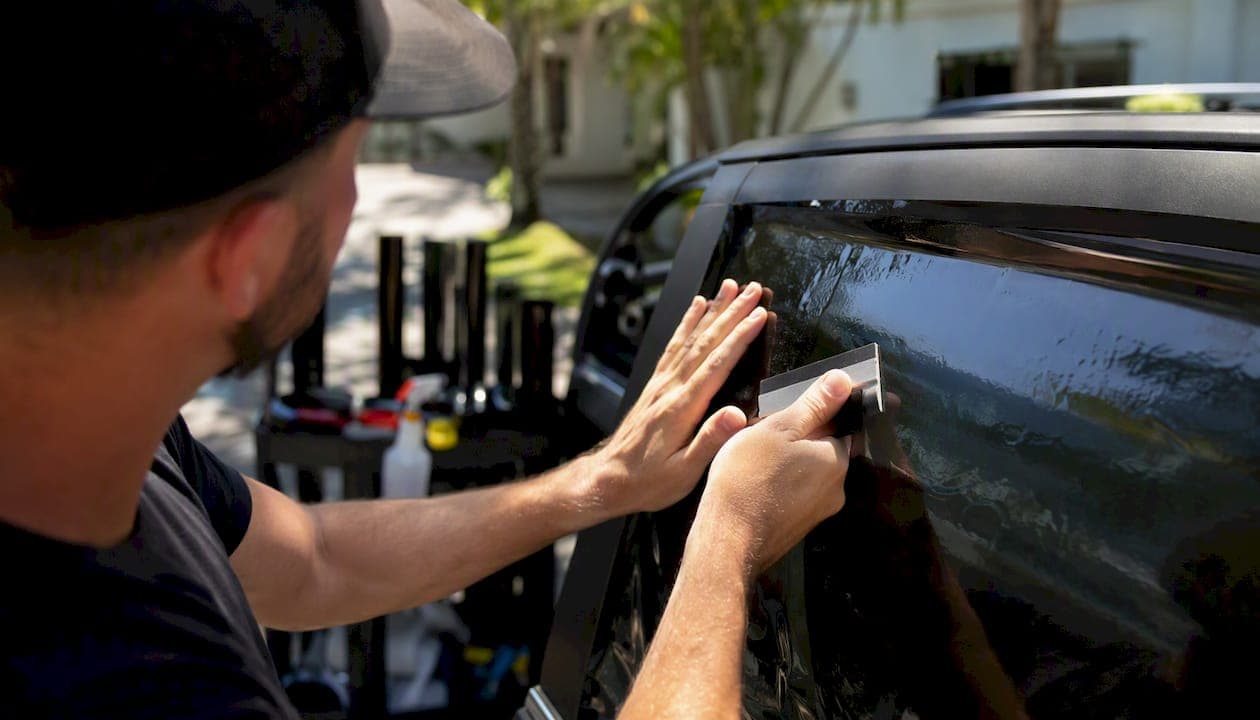
Color stable window film is a non-metalized automotive tint engineered to hold its deep charcoal shade for years without turning purple or reddish, while blocking up to 99.9% of UV light and rejecting meaningful solar heat. It sits above basic dyed film in both technology and durability, and below premium multi-layer ceramic in price. Three things set it apart right away:
- Fade resistance: Stabilized dyes and ceramic nano-particles prevent the purple shift that ruins ordinary dyed films within a few years.
- UV and heat protection: Significant total solar energy rejection (TSER) and near-total UV blocking protect your interior from cracking, fading, and heat buildup.
- Electronics-friendly: Non-metalized construction means no interference with GPS, cell signals, or toll transponders.
Key Takeaways
| Point | Details |
|---|---|
| Fade resistance is the core benefit | Stabilized dyes and ceramic nano-particles prevent the purple shift that ruins basic dyed films. |
| UV and heat specs | Up to 99.9% UV blocking and up to 64% TSER per 3M's manufacturer bulletin; typical shop figures run 40–50% TSER. |
| Non-metalized construction | No interference with GPS, cell signals, or toll transponders, unlike metalized films. |
| Lifespan and warranty | Field durability of 10–15 years; limited lifetime warranty requires authorized installer activation. |
| Southmiamitint installation | Southmiamitint installs 3M Color Stable with mobile service across Miami-Dade and handles warranty registration. |
Table of Contents
- What are the key performance specs of color stable film?
- How does color stable film work to prevent fading and reject heat?
- How does color stable film compare to other film types?
- What are the real benefits and limitations of color stable film?
- How long does color stable film last, and what does the warranty cover?
- What should you check before and after installation?
- How do you choose the right color stable film for your vehicle?
- Installer notes: what professionals see in the field
- Southmiamitint brings 3M Color Stable to your driveway
- Sources
What are the key performance specs of color stable film?
The numbers below come from 3M's Color Stable Series product bulletin (Revision C, May 2024) and represent manufacturer-rated maximums. Real-world performance varies by VLT level and glass type.
| Spec | Manufacturer Rating |
|---|---|
| Total Solar Energy Rejection (TSER) | Up to 64% |
| Infrared (IR) Rejection | Up to 64% |
| UV Blocking | Up to 99.9% |
| VLT Options | 5%–70% |
| Construction | Non-metalized |
What each number means for your daily drive:
- TSER up to 64%: Less solar heat enters the cabin, so your AC works less hard on hot days.
- IR rejection up to 64%: Infrared is the part of sunlight you feel as heat; blocking more of it keeps seats and dashboards cooler.
- 99.9% UV block: Protects leather, fabric, and dashboard plastics from the UV rays that cause fading and cracking.
- VLT 5%–70%: Darker shades (lower VLT) give more privacy and slightly more heat rejection; lighter shades keep visibility high.
In practical shop experience, installers report that color stable films typically deliver total solar energy rejection in the range of approximately 40% to 50%, representing a solid improvement over unfilmed glass.
How does color stable film work to prevent fading and reject heat?
The "color stable" label describes a performance outcome, not a single ingredient. Two technologies work together to deliver it.
Stabilized dye core: Standard dyed films use basic organic dyes that oxidize under prolonged UV exposure, shifting from charcoal to purple or brown. Color stable film uses engineered dye formulations and stabilizers designed to resist that oxidation. Hindered amine light stabilizers (HALS) are commonly embedded in the dye layer to interrupt the chemical chain reaction that causes color breakdown.
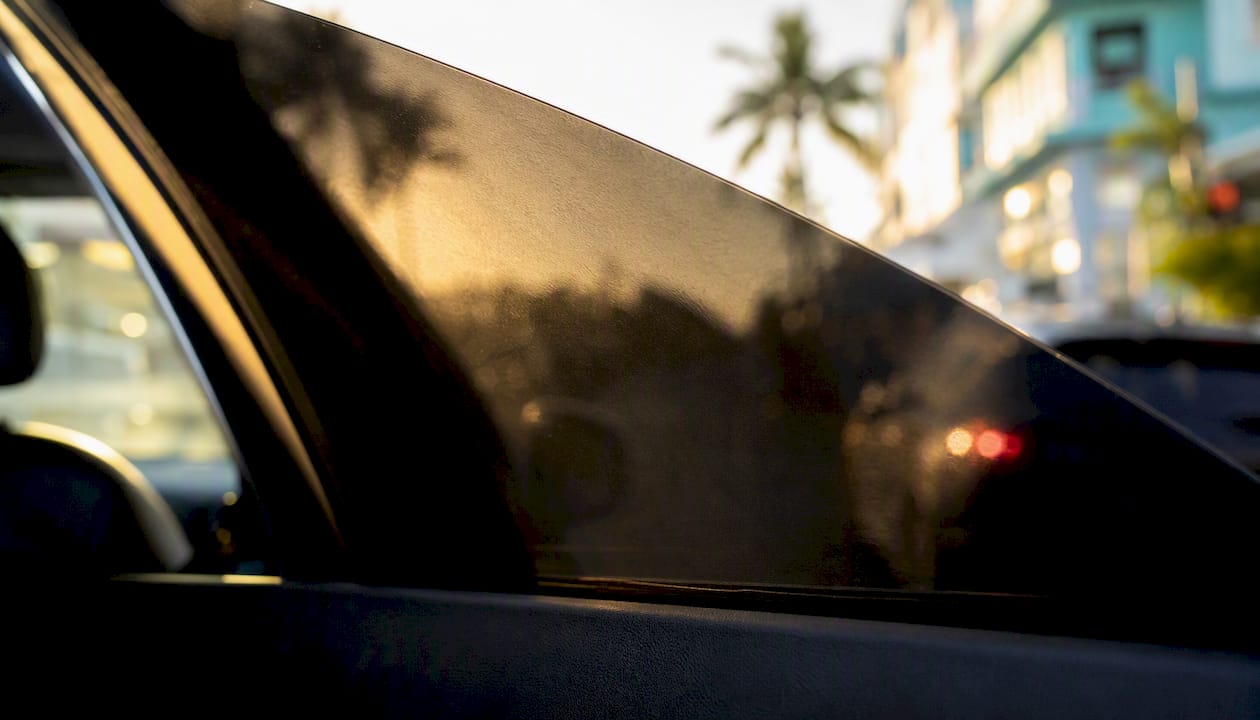
Ceramic nano-particles: Layered into the film alongside the dye, these particles scatter and absorb infrared and UV radiation physically rather than relying solely on chemical absorption. Because they are non-metallic, they do not reflect radio frequencies, so your phone, GPS, and key fob all work normally. 3M's Color Stable Series specifically combines IR-rejecting ceramic nano-technology with a patented dye process to achieve both heat rejection and long-term color retention.
A typical color stable film has four functional layers:
- Hard topcoat: Scratch resistance and surface protection.
- Ceramic/dye core: The heat-rejecting and color-stabilizing layer.
- Pressure-sensitive adhesive: Bonds the film to glass; adhesive quality directly affects long-term clarity and edge adhesion.
- Release liner: Removed during installation.
Pro Tip: Ask your installer what adhesive system the film uses and whether they heat-shrink the film before applying it to curved glass. Proper heat-shrinking prevents finger wrinkles at the edges and is a reliable sign of professional technique.
How does color stable film compare to other film types?
Color stable film is an upgraded dyed film — better than basic dyed, but distinct from metalized, carbon, and premium ceramic options. Here is how the main categories stack up:
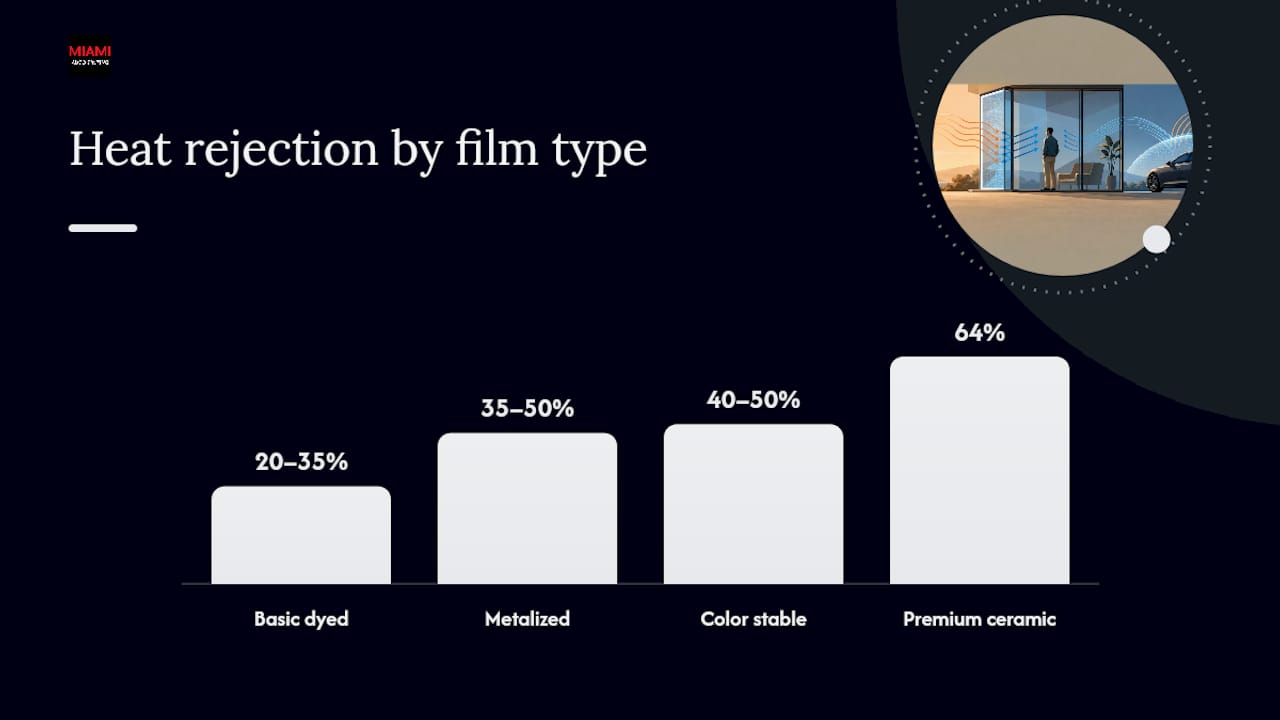
| Film Type | Color Stability | Heat Rejection (TSER) | UV Blocking | Electronics Safe | Price Range | Typical Lifespan |
|---|---|---|---|---|---|---|
| Basic dyed | Poor (purples) | Low (20–35%) | Moderate | Yes | Lowest | 2–5 years |
| Metalized | Good | Moderate (35–50%) | Good | No (signal interference) | Low–mid | 5–10 years |
| Hybrid | Good | Moderate (40–50%) | Good | Partial | Mid | 5–10 years |
| Carbon | Very good | Good (40–50%) | Very good | Yes | Mid | 10–15 years |
| Color stable | Excellent | Up to 64% (40–50% typical) | Up to 99.9% | Yes | Mid | 10–15 years |
| Premium ceramic (e.g., 3M Crystalline) | Excellent | Highest (64%) | Up to 99.9% | Yes | Premium | 15+ years |
Buyer profile takeaways:
- Budget-first buyer: Basic dyed costs least upfront but often needs replacement within a few years due to purpleing.
- Electronics-sensitive driver: Metalized films can disrupt GPS and toll readers; color stable and carbon avoid that entirely.
- Best value for appearance + protection: Color stable hits the sweet spot of fade resistance, solid UV/IR rejection, and mid-range pricing.
- Maximum heat rejection: Premium ceramic like 3M Crystalline outperforms color stable on IR rejection, especially on the windshield.
If you are weighing factory tint against aftermarket film, note that OEM privacy glass typically blocks very little heat or UV despite its dark appearance.
What are the real benefits and limitations of color stable film?
Benefits you will notice:
- Sustained dark charcoal appearance that holds its color for years, not months.
- Near-total UV protection that slows interior fading, cracking, and discoloration of leather and plastics.
- Meaningful heat rejection that reduces cabin temperature and HVAC load, per 3M's brochure data.
- Privacy without sacrificing electronics performance.
- Wide VLT range (5%–70%) to match your state's legal limits and personal preference.
Limitations to know before you buy:
- Top-tier ceramic films still outperform color stable on raw IR rejection, especially on windshields where heat load is highest.
- Performance varies by VLT: a 70% VLT shade rejects noticeably less heat than a 20% shade on the same film line.
- Mid-range pricing means it costs more than basic dyed film, though the longer lifespan usually offsets that difference.
For drivers in hot climates like South Florida, the combination of fade resistance and strong UV blocking often matters more than chasing the absolute highest IR number. A film that looks great and holds its performance for a decade delivers more daily value than one that peaks on a spec sheet.
How long does color stable film last, and what does the warranty cover?
Modern color stable films can sustain near like-new performance for 10–15 years in field conditions, according to industry data on nano-ceramic and multi-layer polymer constructions. The 3M Color Stable Series carries a limited lifetime warranty when installed by an authorized dealer. "Limited" typically means coverage against bubbling, peeling, delamination, and color change under normal use, but excludes damage from abrasive cleaners, improper installation, or physical damage.
Factors that shorten film life:
- High UV exposure without regular cleaning (salt and grime accelerate edge lift).
- Abrasive cleaners or rough cloths that scratch the topcoat.
- Rolling windows down within the first 48–72 hours after installation before the adhesive cures.
Maintenance basics:
- Wait at least 48–72 hours before rolling windows down after installation.
- Clean with a soft microfiber cloth and follow the streak-free method for UK owners using an ammonia-free cleaner.
- Avoid razor blades or abrasive pads on tinted glass.
- Inspect edges annually for any lifting or bubbling.
Pro Tip: Photograph your installation date, the film brand and VLT, and your installer's warranty card the day of installation. Store these digitally. If you ever need a warranty claim, that documentation speeds up the process significantly.
What should you check before and after installation?
Choosing the right installer matters as much as choosing the right film. A quality installation on a mid-range film will outlast a poor installation on a premium one.
Installer qualifications to confirm:
- Authorized dealer status for the film brand (required for manufacturer warranty activation).
- Clean, dust-controlled workspace or a professional mobile setup.
- Uses heat-shrinking technique on rear curved glass, not cut-and-fold shortcuts.
- Can provide the film's technical data sheet (TDS) with TSER, UV, and IR numbers on request.
- Offers warranty registration assistance after installation.
Post-install quality checks:
- No visible adhesive haze or milky patches (these usually clear within a few days, but large areas suggest poor adhesive).
- Edges lie flat with no lifting or gaps at the corners.
- Consistent shade across all windows with no visible seams on rear glass.
- Windows operate smoothly without film catching on door seals.
One practical note: confirm your state's legal VLT limits before selecting a shade. Most states regulate front side windows separately from rear glass. Your installer should know the local rules, but verifying them yourself takes two minutes and avoids a fix-it ticket.
How do you choose the right color stable film for your vehicle?
Work through these steps before you commit to a shade or product:
- Define your primary goal. Privacy, heat rejection, UV protection, or appearance? Color stable delivers all four, but your priority affects which VLT makes sense.
- Check your state's legal VLT limits. Front side windows in most states require 28%–35% VLT or higher. Confirm the exact rule for your state before choosing a shade.
- Request the film's TSER, UV, and IR numbers in writing. Any reputable installer can provide the manufacturer's TDS. If they cannot, that is a red flag.
- Confirm non-metalized construction if you use GPS, a toll transponder, or a dashcam with wireless features.
- Ask about warranty activation. A limited lifetime warranty is only valid through an authorized installer who registers the installation.
- Match the film to your vehicle's glass. Darker factory privacy glass already absorbs some heat; adding a very dark aftermarket film on top can stress the glass in extreme heat.
For a sports car where appearance is a priority, a consistent charcoal shade across all glass looks factory-clean and holds that look for years.
Questions to ask your installer:
- What is the film's TSER at this VLT level?
- Is this an authorized installation that activates the manufacturer warranty?
- How do you handle heat-shrinking on the rear window?
- What cleaning products should I avoid?
Installer notes: what professionals see in the field
Color stable film is one of the most consistently requested products in professional shops, and for good reason. It is easier to heat-shrink than thick multi-layer ceramic films, which means fewer installation errors on curved rear glass. The charcoal shade is uniform across VLT levels, so a vehicle with mixed window sizes still looks cohesive. Warranty claims are predictable because the film's failure modes (if any) are well-documented.
Vehicles that benefit most: daily drivers in high-UV climates, vehicles with light-colored interiors prone to fading, and any car where the owner wants a clean dark look without the premium price of top-tier ceramic.
For buyers who want the absolute maximum IR rejection, especially on a windshield, a premium ceramic option is worth the extra cost. But for the majority of vehicle owners, color stable film delivers the right combination of appearance, protection, and value.
Pro Tip: On installation day, plan to leave your car with the installer for 2–3 hours and avoid rolling windows down for the rest of that day. Bring your warranty card home and register it online the same day if the manufacturer offers online registration.
A note from Jose
Color stable film is the product I recommend most often to everyday drivers, and the reason is straightforward: it solves the problem most people actually have. Basic dyed film looks great for a year, then turns purple and becomes an eyesore. Color stable holds that deep charcoal look for a decade or more, blocks nearly all UV, and rejects enough heat to make a real difference in a hot car. For most people, that combination is exactly what they need, at a price that makes sense.
Southmiamitint brings 3M Color Stable to your driveway
Skip the shop wait. Southmiamitint installs 3M Color Stable film at your home, office, or anywhere in Miami-Dade County. You get manufacturer-backed UV and heat protection, a consistent charcoal finish that won't purple, and a limited lifetime warranty activated through an authorized installer.
The process is simple: get a quote online or by phone, pick your VLT, and we come to you. No shop drop-off, no waiting room. Warranty registration is handled as part of the service. If you want to compare Color Stable against ceramic options, ceramic mobile tint starts at $249 and covers the full range from color stable to 3M Crystalline. Call or book online to get your quote today.
Sources
- 3M™ Automotive Window Film Color Stable Series - product bulletin (Revision C, May 2024)
- 3M™ Automotive Window Film Color Stable Series | 3M United States
- Modern window-film technology: color-stable window tint | Protector Automotive
- 3M Window Tint Film Review: Crystalline, Color Stable, and FX Series | La Wrap & Tint School