
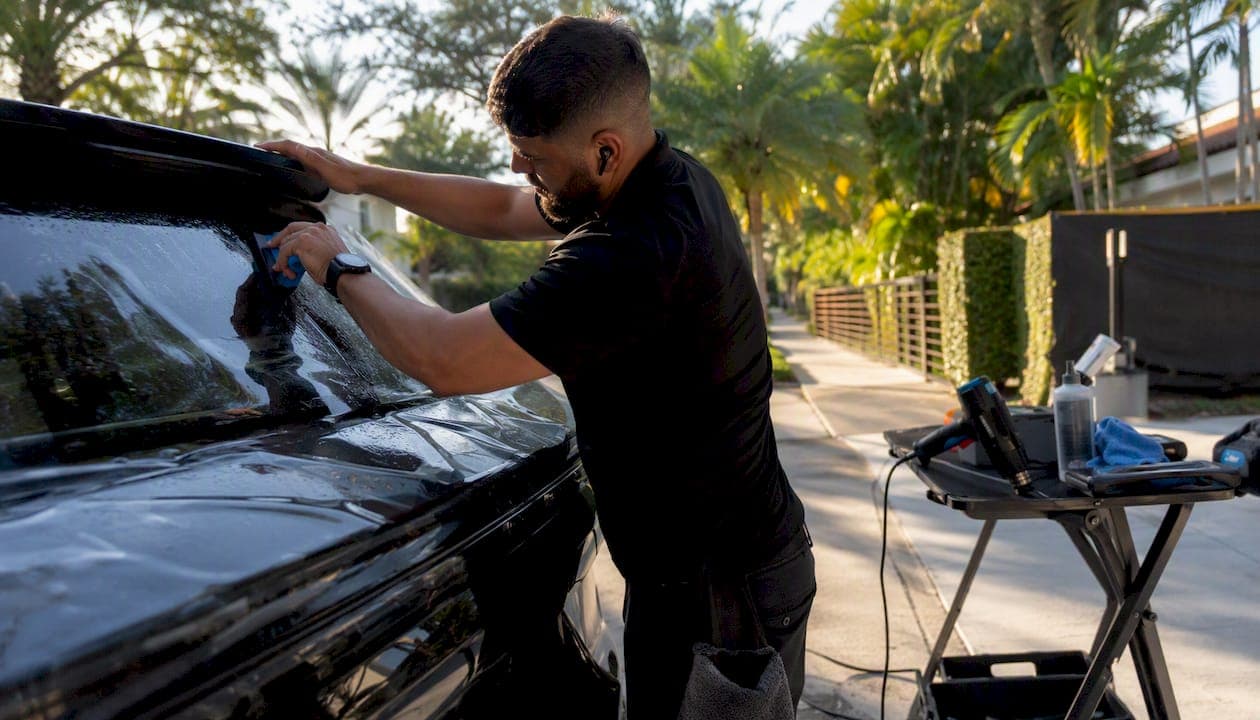
The most effective fading prevention workflow for Miami-Dade vehicles, homes, and businesses starts with one decision: ceramic or spectrally selective film. Ceramic window tint starting from $249 using 3M Ceramic IR, 3M Color Stable, or Iviron KoolMax blocks over 99% of UV rays and rejects significant infrared heat. The core mobile workflow is straightforward: book your appointment, prepare a shaded site, let the technician clean, cut, and apply the film, pass the final inspection, then follow the 3–7 day cure protocol. Most car appointments take 2–3 hours. Book your mobile slot before the next South Florida sun cycle starts.
Table of Contents
- Which film gives you the best fading protection?
- Step-by-step mobile installation workflow
- What you should do before the technician arrives
- When should you schedule to reduce fading fastest?
- Key Takeaways
- Why Miami-Dade demands a mobile workflow built around UV and heat
- Southmiamitint brings the full fading-prevention workflow to your door
- Useful sources
Which film gives you the best fading protection?
Your vehicle type and daily sun exposure determine the right film. The three factors that matter most are UV rejection, infrared heat rejection, and visible light transmission (VLT).
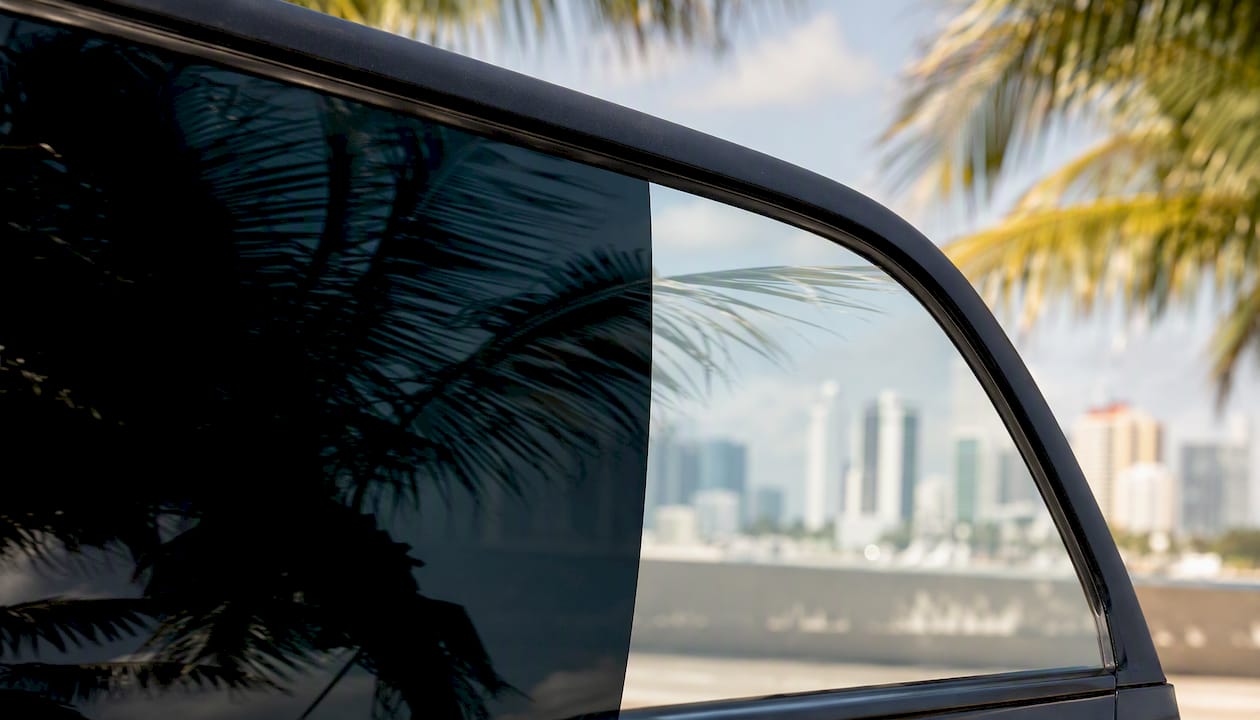
Spectrally selective films reject infrared wavelengths and cut heat without sacrificing daylight. That makes them ideal for sedans and SUVs parked outdoors all day. For maximum UV and heat blocking on dark-tinted vehicles, 3M Ceramic IR delivers both. 3M Color Stable suits owners who want a lighter VLT with reliable UV control. Iviron KoolMax ceramic film is a strong choice for trucks and commercial vehicles that need non-metallic, interference-free performance. Ceramic films resist discoloration over time, which matters in coastal South Florida where salt air and intense UV accelerate film degradation. Learn more about coastal tinting considerations specific to Miami-Dade.
Before selecting VLT, check Florida's legal limits. Residential and commercial glass have different rules than automotive glass. A quick review of things to consider before tinting keeps you compliant.
Step-by-step mobile installation workflow
Professional mobile installs match shop quality when the site is shaded and wind-free. Here is the full sequence:
- Window cleaning — thorough wash with professional solution removes dust, oils, and residue. Proper prep is critical for adhesion and bubble-free results.
Troubleshooting tip: Small water bubbles during the first week are normal and disappear as the film cures. Persistent large bubbles or lifting edges signal a prep or adhesion issue and should be reported to your installer immediately.
What you should do before the technician arrives
Your prep directly affects the result. Complete this checklist the day before your appointment:
- Clear your garage or covered carport — the install area must be shaded and protected from wind.
- Wash your vehicle's exterior, especially the windows, but avoid waxing the glass.
- If your windows have old tint, ask your installer about professional removal — adhesive residue left behind causes bubbles.
- Check for chips or cracks in the glass. Damaged glass should be repaired before film goes on.
- Confirm power and water access at your location for the mobile van.
- Remove any window stickers or decals yourself, or flag them for the technician.
When should you schedule to reduce fading fastest?
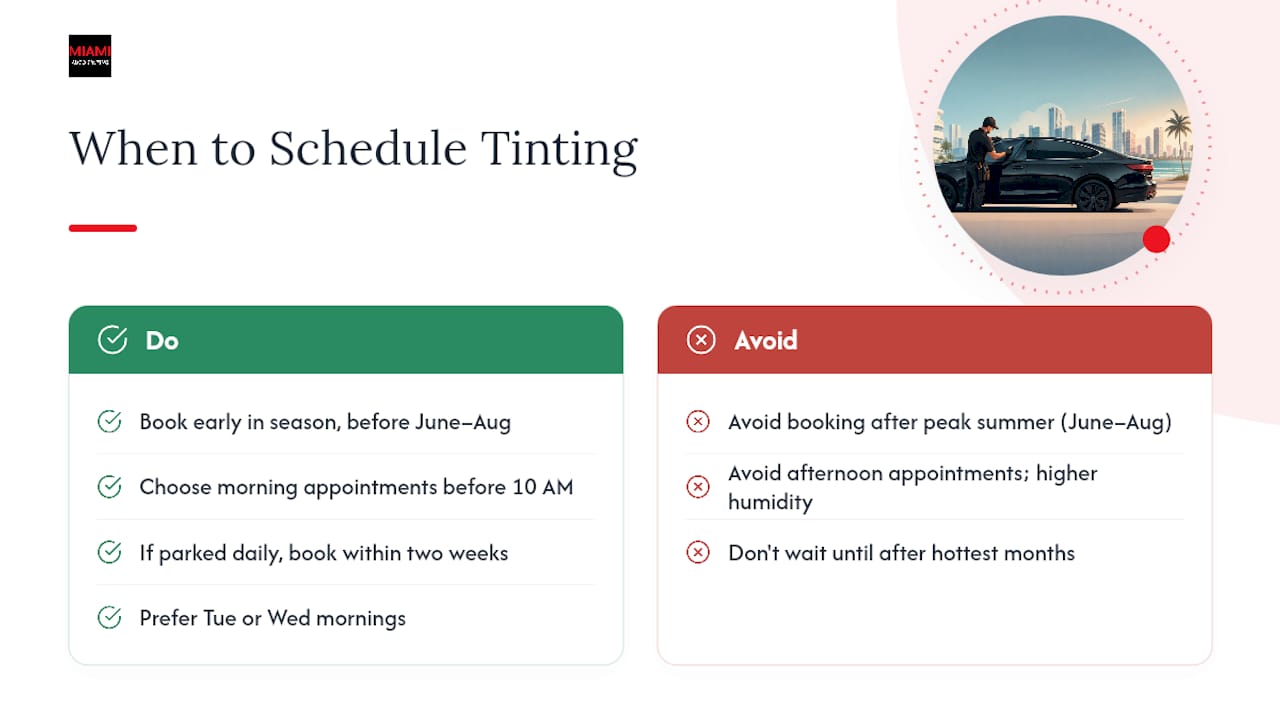
Window tint reduces interior temperatures and blocks UV, so every day without film is a day of cumulative fading. Schedule your appointment as early in the season as possible, before peak summer UV intensity in June through August. Morning appointments (before 10 AM) give the technician cooler, lower-humidity conditions, which improves film adhesion. If your vehicle sits in direct sun daily, prioritize booking within the next two weeks. Residential and commercial installs benefit from the same timing logic: protect furnishings and flooring before the hottest months, not after.
Pro Tip: Schedule your mobile appointment for a Tuesday or Wednesday morning. Demand is lower, the technician has more time for a careful install, and morning humidity in Miami is typically more stable than afternoon conditions.
Key Takeaways
A ceramic or spectrally selective film installed through a proper mobile workflow is the most reliable fading prevention method available for Miami-Dade vehicles, homes, and businesses.
| Point | Details |
|---|---|
| Film selection | Choose 3M Ceramic IR, 3M Color Stable, or Iviron KoolMax for maximum UV and IR rejection. |
| Site requirements | A shaded garage or covered carport with power and water access is required for mobile installs. |
| Cure period | Do not roll windows for 3–7 days; use only ammonia-free cleaners after the first two weeks. |
| Scheduling | Book before June for peak protection; morning appointments improve adhesion conditions. |
| Southmiamitint | Offers mobile ceramic tint installation across Miami-Dade starting from $249 with a final inspection and workmanship warranty. |
Why Miami-Dade demands a mobile workflow built around UV and heat
Most tinting guides treat film selection as a preference. In Miami-Dade, it is a performance requirement. South Florida's UV index regularly hits extreme levels, and coastal salt air accelerates the degradation of lower-grade dyed films. Ceramic films are non-metallic, which means they resist corrosion and electronic interference — two real concerns near the coast. Spectrally selective films go further by rejecting infrared heat while keeping visible light high, which matters for residential and commercial installs where aesthetics count.
The mobile workflow adds a layer of complexity that most guides ignore. A shaded garage is not a luxury; it is a technical requirement. Wind-blown dust during application causes debris inclusions that no amount of squeegeeing fixes. Power access runs the heat gun for shrinking film to curved automotive glass. These are not optional site conditions.
The best time to schedule is early morning, before 10 AM, when temperatures are lower and humidity is more stable. For homeowners, a covered carport or shaded driveway works. For business owners with multiple windows, coordinate access so the technician can move efficiently without sun exposure shifting mid-install.
One signal of a quality installer: they arrive with branded film rolls (3M or Iviron), use computer-cut patterns, and hand you a written inspection checklist at the end. If they cannot name the film they are installing, that is a problem worth addressing before the job starts.
Southmiamitint brings the full fading-prevention workflow to your door
Southmiamitint is Miami-Dade's mobile ceramic tint service for cars, SUVs, trucks, residential windows, and commercial glass. You get the full fading-prevention workflow at your location: 3M Ceramic IR, 3M Color Stable, and Iviron KoolMax films, computer-cut patterns, professional cleaning, edge sealing, and a final inspection checklist before the technician leaves.
Mobile ceramic tint starts from $249. Most car appointments finish in a few hours. No shop visit, no waiting room. Check mobile tinting prices or request a quote at southmiamitint.com/mobile-car-window-tinting-miami to book your appointment today.
Useful sources
| Source | What it supports |
|---|---|
| EWFA Advanced Solar Control Education Guide | Spectrally selective and low-E film performance; IR rejection without visible light loss |
| Window Tinting — Wikipedia | UV filtering (over 99% UV rays); ceramic vs. dyed film tradeoffs; energy transmission data |
| TintDirectory — Mobile Window Tinting | Mobile install quality requirements; 3–7 day curing guidance |
| Tint Station Tech — How Window Tint Reduces Heat | Interior temperature reduction and UV blocking outcomes |
| Tinterz — Mobile Window Tinting: What to Expect | Step-by-step installation process; aftercare and no-roll rule |
| RightChoice Mobile Detailing — Professional Installation Process | Prep, cleaning, old-film removal, and adhesion best practices |