
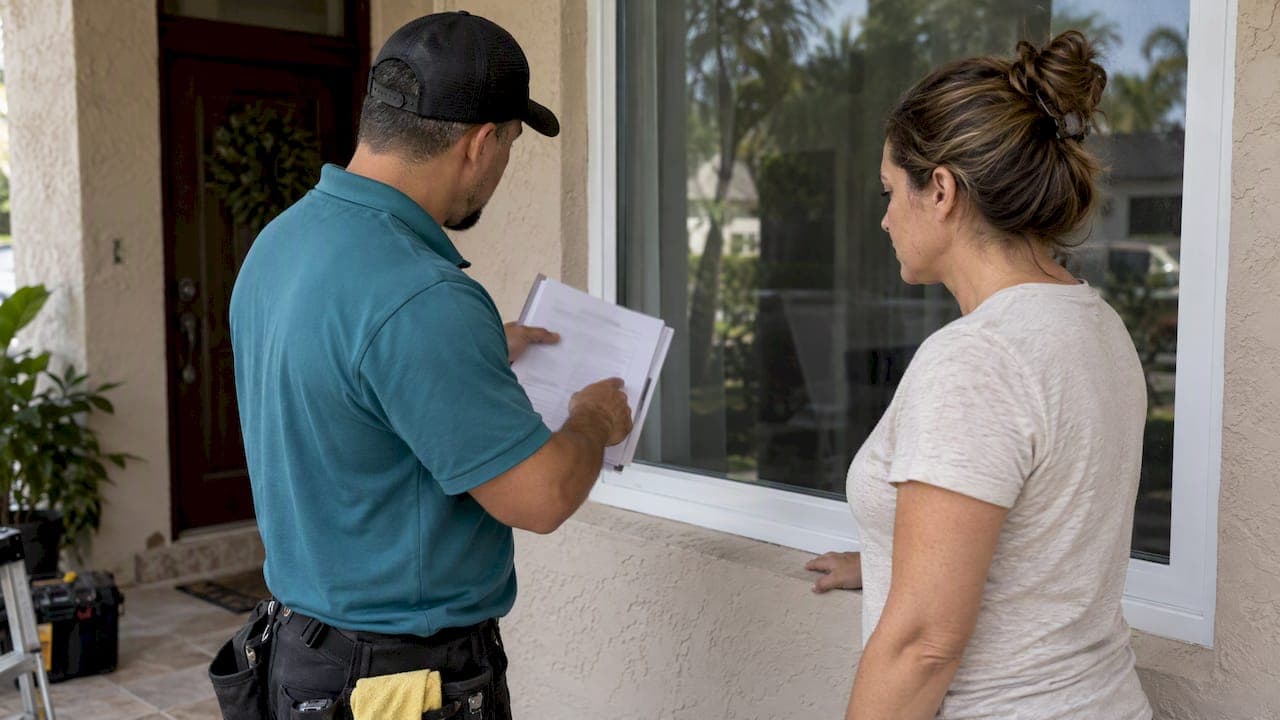
Yes, you can tint impact windows in most cases, and it is a common upgrade for homeowners who want better heat control without replacing their glass. The result depends on the film you choose and how it is installed. The one caveat that matters most: use a film with AHJ or NOA approval for your glazing type, installed by someone experienced with laminated glass. Before you book anyone, check the installer checklist below.
TL;DR:
- Impact window films with AHJ or NOA approval are essential to maintain impact certification and avoid voiding warranties.
- Ceramic films offer the best balance of heat rejection, durability, and visual clarity, making them ideal for impact-rated windows.
- Applying film to laminated impact glass can cause thermal stress or moisture issues if not installed properly by experienced professionals.
- DIY tinting on impact windows is risky, especially if automotive or exterior-grade films are used, which can damage the glass or void warranties.
- The cost of professional tinting varies by film grade, window size, and access difficulty, with ceramic films costing more initially but providing longer-lasting protection.
Table of Contents
- Types of Tint and Film Best for Impact Windows
- Is Tinting Safe for Laminated Impact Glass?
- Should You Hire a Pro or DIY the Installation?
- What Does Tinting an Impact Window Cost?
- What Installers Recommend for Film Choice and Upkeep
- When Tinting Makes Sense and When Replacement Does
- Get a Tint Quote From South Miami Tint
- FAQ
- Sources
Types of Tint and Film Best for Impact Windows
Not all window film is built the same, and impact windows are pickier than standard glass about what goes on them.
Ceramic films use nano-ceramic particles instead of metal or dye to block infrared heat and UV rays. They hold up well over time, do not interfere with radio or GPS signals, and keep visible light transmittance (VLT) high enough that the glass does not look dark from outside. Metalized films reflect heat using microscopic metal layers, which makes them strong performers for solar control but occasionally a problem for signal reception in homes with weak cell service. Dyed films are the cheapest option and reduce glare, but they fade faster and reject less heat. Low-e and solar-control films add a metallic or ceramic coating aimed specifically at cutting the solar heat gain coefficient (SHGC), a metric also used to compare tinted windows against full replacement glazing. Clear protective or hurricane films are a different category altogether: they are designed to add shatter resistance to non-impact glass, not to tint impact-rated windows that already meet that standard.
Automotive-grade films deserve a specific warning. They are formulated for curved, tempered automotive glass with different adhesive systems and heat tolerances than residential laminated glass. Applying a car film to a flat laminated impact window can cause adhesive failure or uneven heat absorption across the pane, which is the same reasoning covered in the difference between factory tint and aftermarket film.
For impact windows, the practical shortlist looks like this:
- Ceramic films for the best balance of heat rejection, clarity, and long-term durability.
- Metalized films when maximum heat rejection matters more than signal strength.
- Low-e solar control films when the goal is lowering SHGC without darkening the glass much.
- Dyed films only for budget glare control on windows with low sun exposure.
Is Tinting Safe for Laminated Impact Glass?
Impact windows are built from laminated glass: two or more panes bonded to an interlayer, usually a flexible polymer, that keeps the glass from flying apart on impact. That construction behaves differently from the single-pane tempered glass found in most cars and older residential windows. Film applied to the interior surface of laminated glass does not change the lamination itself, but it does change how the glass absorbs and releases heat.
Darker or more reflective films absorb more solar energy at the glass surface, which raises the temperature differential between the center and the edge of the pane. Over repeated heat and cool cycles, that differential is a known contributor to thermal stress, and in rare cases it can contribute to cracking at the edge of the glass. Films that trap moisture near the interlayer can also raise the risk of condensation between layers over time.
Mounting configuration and glazing construction often affect impact resistance and long-term durability more than glass thickness or film choice alone, according to testing on thin specialty glass. This is also why Miami-Dade County requires specific product testing before a film is approved for use on an impact system. A sample Notice of Acceptance for a film system documents the test reports, acceptance scope, and expiration date that allow a given film to be installed on approved glazing without voiding its impact certification. If your installer cannot point to an NOA or written manufacturer guidance covering your exact glass type, treat that as a stop sign, not a formality.

Should You Hire a Pro or DIY the Installation?
Professional interior installation is the standard recommendation for laminated and impact-rated windows, and for good reason: the margin for error is smaller than on ordinary glass. A poorly trimmed edge or the wrong adhesive can create a weak point exactly where the window is designed to flex under wind pressure.
Before hiring anyone, run through this checklist:
- Ask for proof of experience specifically with laminated or impact-rated glazing, not just automotive or standard residential tint.
- Request the exact film product number so you can verify it against any NOA or manufacturer list.
- Confirm the film has NOA or AHJ approval for your glazing system, or get written manufacturer sign-off.
- Ask how they handle perimeter sealing near the frame, since improper sealing is a common failure point.
- Get the installation warranty in writing, separate from the film manufacturer's warranty.
- Confirm the installer carries liability insurance in case of accidental glass damage.
DIY tinting is possible on standard windows but risky on impact glass. The most common mistakes are picking an automotive film instead of a residential-rated one, using exterior-grade adhesive on an interior-only film, and trimming too close to the frame, which can leave gaps that trap moisture. DIY might be acceptable for a single small, low-visibility window where replacement cost is low, but most homeowners are better served by a professional on anything facing direct hurricane exposure.
Pro Tip: Ask the installer to show you the NOA evidence page for your specific film and glazing combination before any work begins, not after.
What Does Tinting an Impact Window Cost?
Cost depends on film grade, the number and size of windows, and how easy the site is to access. A single-story home with standard-size impact windows costs less to tint than a multi-story property with large or hard-to-reach panes, since access time and staging add to labor.
• Film grade is the biggest cost driver: ceramic films cost more upfront than dyed films but last longer and perform better.
- Window count and shape matter, since large or oddly shaped impact panes take more time to fit precisely.
- On-site access and mobilization affect labor time, especially for upper floors or tight window wells.
Most residential tint jobs are typically completed within a day, though larger homes with many windows may require more time. Films typically need a short cure period afterward, often a few days, before you clean or roll down adjacent shading, a timeline similar to post-installation curing windows used for automotive film. Using an unapproved film, or having it installed incorrectly, can void both the film warranty and, in some cases, the window manufacturer's warranty.
What Installers Recommend for Film Choice and Upkeep
Installers who work regularly with impact glazing tend to favor a short list of proven film families rather than experimenting with unknown products. Ceramic options like 3M Ceramic IR and Iviron KoolMax are common choices because they combine strong infrared rejection with a clear, non-reflective look that does not change the appearance of the glass from the street. 3M Color Stable is another frequently used option, chosen specifically because it resists fading and color change over years of direct sun exposure, which matters for south- and west-facing impact windows that take the most heat.
Maintenance is simple but easy to get wrong:
- Clean tinted glass with a soft cloth and a mild, ammonia-free cleaner.
- Avoid abrasive pads or scrapers, which can scratch the film surface.
- Inspect the perimeter seal once a year for lifting edges or bubbling.
- Keep an eye out for discoloration near the frame, which can signal early adhesive failure.
The most common failure mode installers see is edge lifting, usually caused by trimming the film too close to the frame or applying it in high humidity. A proper installation accounts for both, using correct trim margins and controlled application conditions, and reduces the odds of a callback. For homes in high-UV, high-heat climates, the film selection matters as much as the installation itself, a point covered in more detail in this guide to coastal UV and heat exposure.
When Tinting Makes Sense and When Replacement Does
Tinting is the right call when your impact windows are structurally sound and the goal is comfort: less glare, lower heat gain, more privacy, and UV protection for furniture and flooring. It is a fraction of the cost of replacement and can be done in a day. Replacement makes more sense when the glazing itself is outdated, when you want built-in high-performance coatings from the factory, or when the frame or seal is already showing wear. Before you commit to either path, confirm the film or replacement glass carries proper NOA or AHJ approval, hire someone with specific impact-glass experience, and get the installation warranty in writing.
— Jose
Get a Tint Quote From South Miami Tint
If you want impact-rated windows tinted without guessing which film is actually approved for your glass, a professional installer can handle that assessment as part of the quote, not as an afterthought. Some services offer premium films including 3M Ceramic IR, 3M Color Stable, and Iviron KoolMax, and provide mobile, on-site installation rather than requiring you to haul windows anywhere.
What you get when you request a quote:
- A site assessment of your current glazing and window condition.
- A film recommendation matched to your sun exposure and privacy needs.
- A check for NOA or AHJ approval before any film goes on the glass.
- A written installation warranty separate from the film manufacturer's coverage.
| Service | What's included |
|---|---|
| Residential Window Tinting | Interior film installation for homes, including impact-rated glazing |
| Commercial Window Tinting | On-site tinting for business properties |
| 3M Window Tinting (Ceramic IR and Crystalline) | Premium ceramic film installation with manufacturer-backed options |
| Mobile Window Tinting | On-site service at your home or business, no drop-off required |
Request a quote through our main booking page or see pricing details on our ceramic mobile tint page, and we will confirm film options and scheduling directly with you.
FAQ
Can you put tint on impact windows?
Yes, most impact windows can be tinted as long as the film is approved for use with laminated glazing and installed correctly. Check for NOA or manufacturer approval before installation to avoid voiding your window's certification or warranty.
How much does switchable smart film cost?
South Miami Tint does not currently list switchable smart film as a service, so pricing for that specific product is not publicly available through us. For standard ceramic or color-stable film options, cost depends on film grade and window count, and is available on request through a quote.
What are the drawbacks of impact windows?
Impact windows cost more upfront than standard windows and can be heavier, which sometimes limits frame and hardware options. They also require careful handling when adding treatments like film, since the laminated construction behaves differently from ordinary tempered glass.
What are the drawbacks of window tinting?
Tinting can reduce visible light transmittance more than some homeowners expect, and lower-quality films can fade or bubble over time. On impact glass specifically, using an unapproved film or poor installation technique can affect the window's certification and void warranties.
Sources
These are the primary documents referenced for the approval and testing claims in this article, useful if your building official asks for evidence.
- Miami‑Dade County Notice of Acceptance (NOA) — Lumenesse Films, LLC (sample NOA)
- Thin specialty glass for reliable thin-film PV modules (poster)