
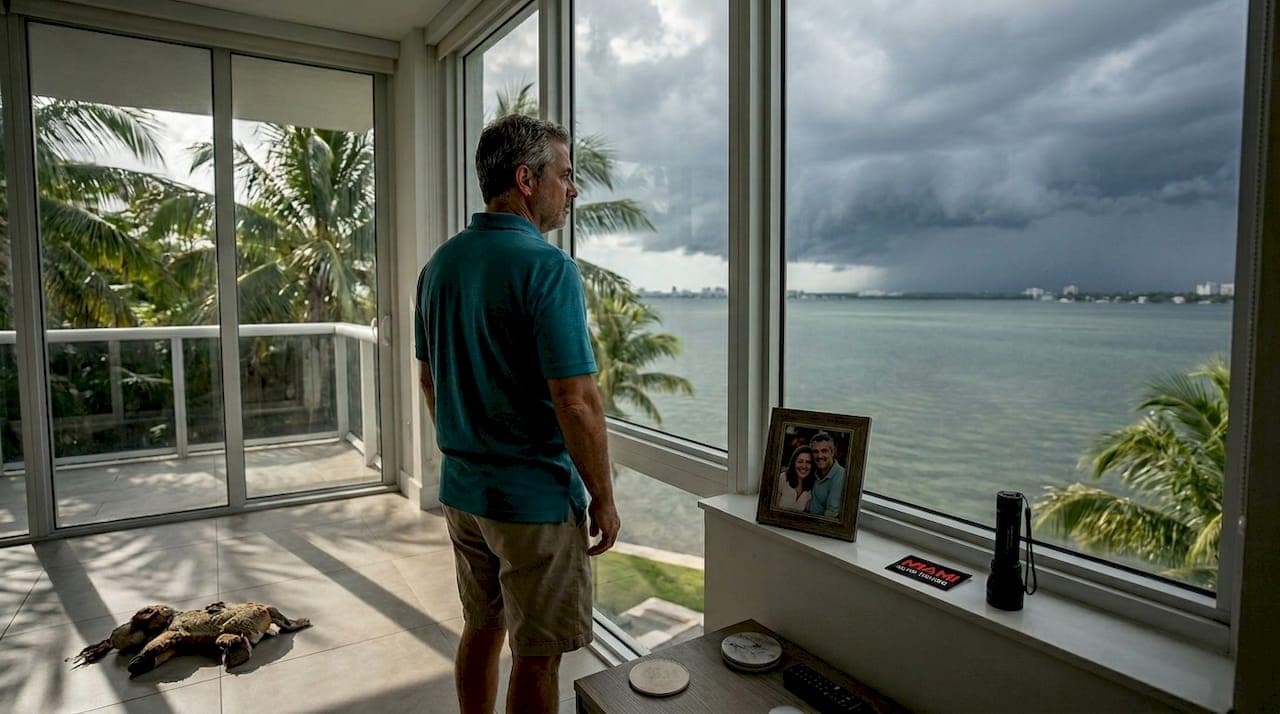
Every hurricane season, Miami-Dade homeowners scramble to protect their homes, and window tint often lands on the list of "solutions." It makes sense on the surface. Tint blocks heat, it looks like a protective layer, and some companies market it as storm protection. But here's the problem: that idea can leave your home dangerously exposed when a real storm arrives. This guide walks you through what Florida law actually says, what window tint can and cannot do during a hurricane, and what your real options are for protecting your home this season.
Table of Contents
- Why window tint is not hurricane-resistant by law
- What window tint actually does during hurricanes
- Comparing window tint, impact glass, and shutters for hurricane safety
- Practical safety steps: How to prepare your windows for hurricane season
- What most Miami homeowners miss about window tint and hurricane safety
- Next steps: Protect your home with expert-approved window solutions
- Frequently asked questions
Key Takeaways
| Point | Details |
|---|---|
| Tint isn't hurricane protection | Florida law forbids claiming window tint as hurricane-resistant and it does not replace impact-rated glass or shutters. |
| Understand real tint benefits | Tint may keep broken glass together but won't prevent debris penetration or window failure in severe storms. |
| Use code-approved solutions | Only products meeting Florida Building Code standards provide genuine hurricane protection. |
| Plan layered safety | Combine impact glass, shutters, and optional tint for a complete approach, but never rely on film alone. |
Why window tint is not hurricane-resistant by law
Florida takes hurricane safety seriously, and the law reflects that. If you've seen window film marketed as "hurricane resistant" or "storm protection," that claim is not just misleading. In most cases, it's illegal.
"It is unlawful to market window film as 'hurricane resistant'" in Florida, including Miami-Dade's High Velocity Hurricane Zone (HVHZ). Window film cannot substitute for impact-rated glazing or shutters that meet Florida Building Code standards.
This statute exists because the distinction matters enormously during a real storm. Window film, no matter how thick or how premium the brand, has never been tested or certified to meet the debris impact standards required by the Florida Building Code (FBC). That certification process involves firing a 9-pound 2x4 lumber at 34 feet per second at a window assembly. Window film does not change how your glass performs under that kind of force.
Here's what actually qualifies as hurricane protection under Florida law:
- Impact-rated glazing: Glass assemblies tested and labeled to FBC and Miami-Dade Product Control standards, designed to hold under debris impact.
- Code-compliant shutters: Accordion shutters, roll-down shutters, or panel systems that meet HVHZ requirements and are permitted through your local building department.
- Impact-resistant doors and frames: Entire opening assemblies that maintain structural integrity under pressure differentials caused by broken windows or doors elsewhere in the home.
Understanding local window tinting laws in Miami-Dade is the first step before any window film installation, and it helps you ask the right questions when a contractor is pitching their product.
The rules don't vary much across South Florida, but they do carry different enforcement teeth. You can see how comparing tinting regulations across counties reveals where marketing claims are most often abused and where homeowners are most at risk of being misled.
The bottom line: if a product isn't tested to FBC standards for debris impact, it is not hurricane protection, regardless of what the packaging or salesperson says.
What window tint actually does during hurricanes
Now that you know what window tint can't legally claim, let's talk about what it actually does in a storm scenario. Because it's not nothing. It's just not what some companies imply.
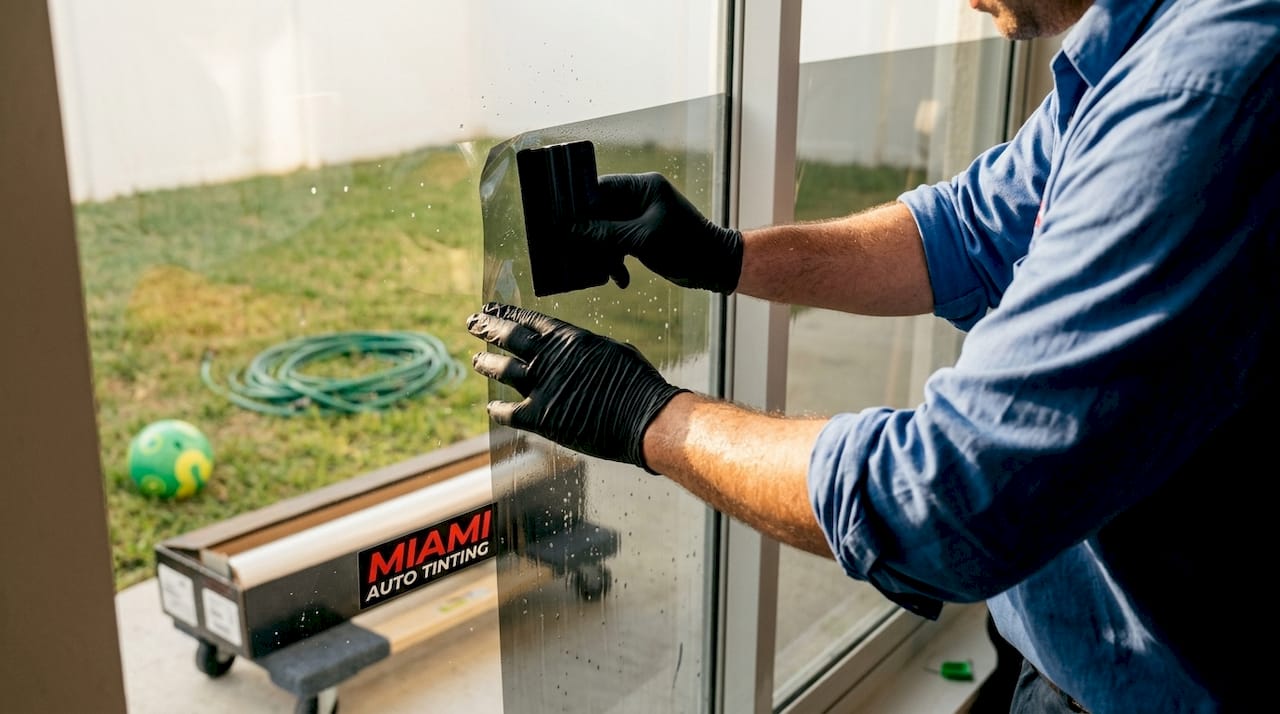
Window tint, particularly high-quality ceramic or safety film, is designed to bond to glass. When a window breaks, that bond can hold the shattered pieces together rather than letting them fly as projectiles through your home. That matters. Glass fragments traveling at speed inside a house are a serious injury risk, and even partial containment is better than none.
Here's a data comparison of what window tint actually provides versus what it does not:
| Feature | Window tint/film | Impact glass | Hurricane shutters |
|---|---|---|---|
| Holds shattered glass together | Yes (partial) | Yes (laminated) | N/A |
| Blocks UV rays | Yes (up to 99%) | Partial | No |
| Reduces heat gain | Yes (significantly) | Partial | No |
| Stops hurricane debris | No | Yes | Yes |
| Meets FBC HVHZ standards | No | Yes | Yes |
| Prevents pressure failure | No | Yes | Yes |
| Can reduce insurance costs | Unlikely | Often | Often |
The gap between "holds glass together" and "stops debris" is the critical failure point. A Category 4 storm doesn't just crack glass. It drives objects through it with explosive force. The real danger after that isn't the glass itself. It's the pressure differential from Cat 4/5 impacts that opens your home to catastrophic structural failure. Once a window fails completely and your home interior is exposed to outside pressure, roof uplift and wall failure become real risks within seconds.
Film cannot prevent that chain of events. FEMA's research confirms that film used as the sole protection creates false security for homeowners in high-wind zones, particularly during major storms.
Pro Tip: Think of window tint as your car's crumple zone, not its roll cage. It reduces harm in minor events but isn't designed to absorb the full force of a serious impact. Use it alongside real hurricane protection, not instead of it.
The tinting benefits for Miami homes are real and significant when it comes to heat, UV protection, and everyday energy savings. Those benefits don't disappear just because tint isn't hurricane-rated. You simply need to be honest about what job each product is doing.
Comparing window tint, impact glass, and shutters for hurricane safety
Let's put the three main options side by side in a way that makes your decision-making easier. Each of these has a legitimate role. The question is which role each one plays in your specific home's safety plan.
| Protection type | Hurricane-rated | Miami-Dade code approved | Removes after storm | Estimated cost range | Energy savings |
|---|---|---|---|---|---|
| Window film/tint | No | No | No | $8 to $20 per sq ft | High |
| Laminated impact glass | Yes | Yes | No (permanent) | $40 to $80 per sq ft | Moderate |
| Accordion shutters | Yes | Yes | No (stays retracted) | $20 to $40 per linear ft | None |
| Panel shutters | Yes | Yes | Yes (stored off-season) | $10 to $20 per sq ft | None |
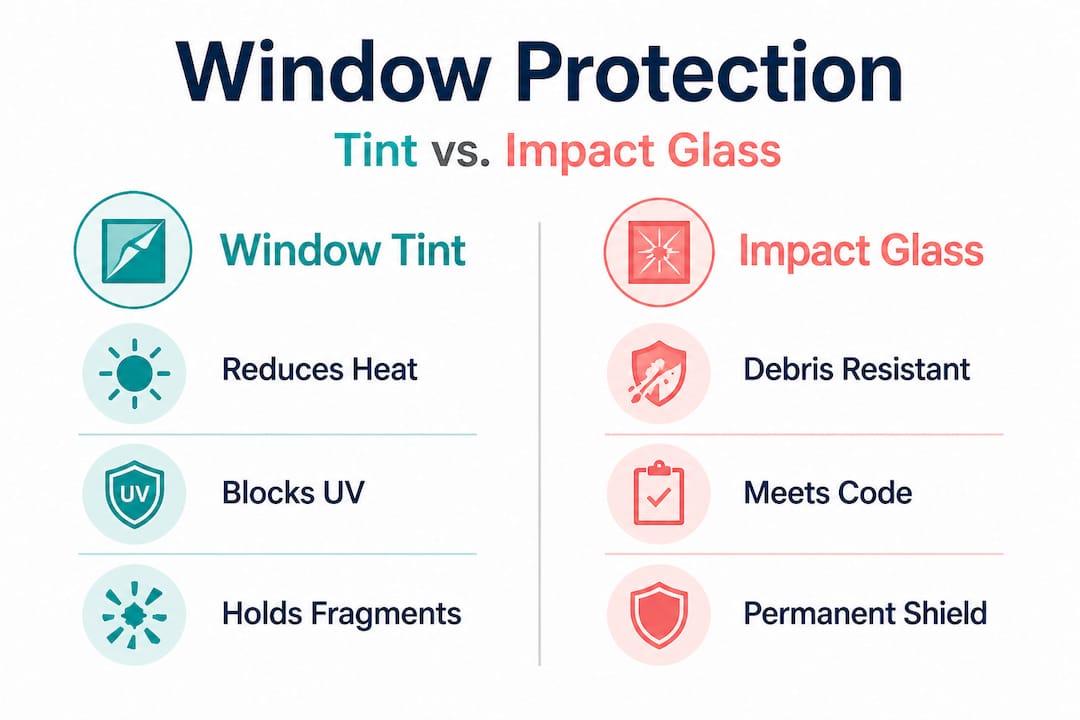
Impact glass is engineered specifically for the HVHZ. It uses a laminated interlayer (similar to windshield construction) that keeps the glass intact after impact, preventing pressure failure inside the home. It's permanent, requires no action before a storm, and often qualifies for homeowner insurance discounts in Florida.
Shutters offer a code-compliant, tested barrier. Accordion and roll-down shutters are the most convenient since you can deploy them quickly as a storm approaches. Panel shutters are more affordable but require storage and labor to install before each storm. All of them must be permitted and installed to FBC standards to count toward your hurricane protection plan.
Here's where window tint fits honestly into that picture:
- Tint reduces solar heat gain, which matters enormously for Miami homes during the other 10 months of the year.
- Tint can help hold broken glass in place after a minor impact, reducing injury risk.
- Tint provides UV protection that impact glass alone doesn't always match.
- Tint is not tested, not rated, and not legally substitutable for impact glass or shutters.
- For a full picture of how film creates false security as the sole protection, FEMA's guidance is clear.
If you're researching all the window-related rules for your property, including vehicles, it's worth reviewing Miami auto tinting regulations to understand the full regulatory landscape in this county.
The smart approach isn't to choose between tint and impact glass. It's to use impact glass or shutters as your primary hurricane defense, and tint as a year-round comfort and secondary safety layer.
Practical safety steps: How to prepare your windows for hurricane season
You now have the full picture. Here's how to translate it into action before the next storm threatens Miami-Dade.
-
Start with code-approved impact solutions first. If your home doesn't have impact windows or permitted shutters, that's your top priority. Nothing else substitutes for it in HVHZ. Contact a licensed contractor and pull permits through Miami-Dade's building department.
-
Inspect window frames every season. Frames and seals fail independently of the glass. Cracks, gaps, or loose fasteners can allow water infiltration and weaken the entire assembly. Walk your home's perimeter before June 1 each year and note any issues.
-
Use residential window film as a secondary layer. Once your home has code-compliant primary hurricane protection, quality film like 3M IR or ceramic options adds real value. It reduces heat, holds glass in minor events, and cuts UV exposure. Just remember that film alone increases risk if it's your only line of defense in a major storm.
-
Review local codes before scheduling any window service. Some films and installation methods require permits or inspections. Your installer should know this. If they don't ask about it, that's a red flag.
-
Have film installed by certified professionals only. Bubbling, peeling, or incorrectly applied film can actually create additional hazards during a storm by releasing adhesion unevenly. Professional installation on clean, properly prepped glass is non-negotiable.
-
Plan installations before peak season. Demand for impact windows, shutters, and tinting services spikes dramatically from May onward. Scheduling in late winter or early spring means faster turnaround, better availability, and less stress when the first named storm appears on radar.
Pro Tip: Check your homeowner's insurance policy specifically for "opening protection" credits before choosing your hurricane window solution. Impact glass and certain shutter systems can reduce your annual premium meaningfully, which can help offset the upfront cost.
When thinking about prepping for extreme weather, the same seasonal preparation mindset that applies to vehicles applies to your home. Don't wait until a storm watch is issued to start asking questions.
What most Miami homeowners miss about window tint and hurricane safety
Here's the honest take, drawn from working with homeowners across Miami-Dade: the biggest gap isn't knowledge. It's trust in marketing language.
Most homeowners who believe window tint protects against hurricanes didn't arrive at that belief carelessly. They were told it by someone selling them something, or they saw language in a product description that sounded convincing. "Shatter-resistant," "storm-ready," and "safety film" are all real terms with legitimate meanings, but they stop well short of hurricane protection. The confusion is understandable. The consequences are not.
The uncomfortable truth is that film used as sole protection doesn't just fall short in a Category 4 or 5 storm. It actively misleads homeowners into believing they've done enough. That false confidence may mean they don't invest in shutters, don't check their frames, and don't evacuate when they should. That's the real danger.
We've seen this play out on both sides. Homeowners who added quality window tint benefits for Florida homes after already installing impact glass or shutters love the results. Lower energy bills, better comfort, and reduced glare without any of the false promises. Contrast that with homeowners who were sold film as a storm solution and found themselves scrambling after a brush with a major storm.
The regulation and the science say the same thing. Film has real, measurable value in Miami's climate. That value is in energy management, UV blocking, and secondary glass containment. It is not in structural hurricane protection. Being clear about that distinction isn't pessimism. It's the only honest way to prepare your home.
Next steps: Protect your home with expert-approved window solutions
You've done the right thing by reading this far. You now know what window tint can and can't do, what Florida law requires, and how to build a layered, honest hurricane protection plan for your Miami-Dade home.
At South Miami Tint, we install premium residential window film, including 3M ceramic window tint and Iviron Kollmax ceramic options, as part of a smart, layered approach to home comfort and safety. We're transparent about what our films do: they block heat, cut UV exposure, and provide secondary glass containment. They work beautifully alongside impact glass and shutters. Explore our full range of ceramic window tint options and schedule your mobile installation before the season heats up. We come to your home, so there's no hassle and no downtime.
Frequently asked questions
Can window tint protect my windows during a hurricane?
No, window tint cannot protect against hurricane debris. Only impact-rated glass or shutters meet Florida Building Code standards for hurricane protection in Miami-Dade.
Will window tint hold glass together if broken?
Window tint may help hold shattered glass fragments in place after a minor impact, but it does not prevent breakage or protect against Category 4 or 5 debris forces.
Is it legal to advertise window film as hurricane protection in Miami-Dade?
No. Florida law explicitly prohibits marketing window film as hurricane-resistant, particularly in the High Velocity Hurricane Zone that covers Miami-Dade County.
What is the best way to protect home windows during hurricane season?
Use impact-rated glass or shutters that meet FBC and HVHZ standards as your primary protection, and treat window tint as a valuable but secondary layer for heat and UV reduction.