
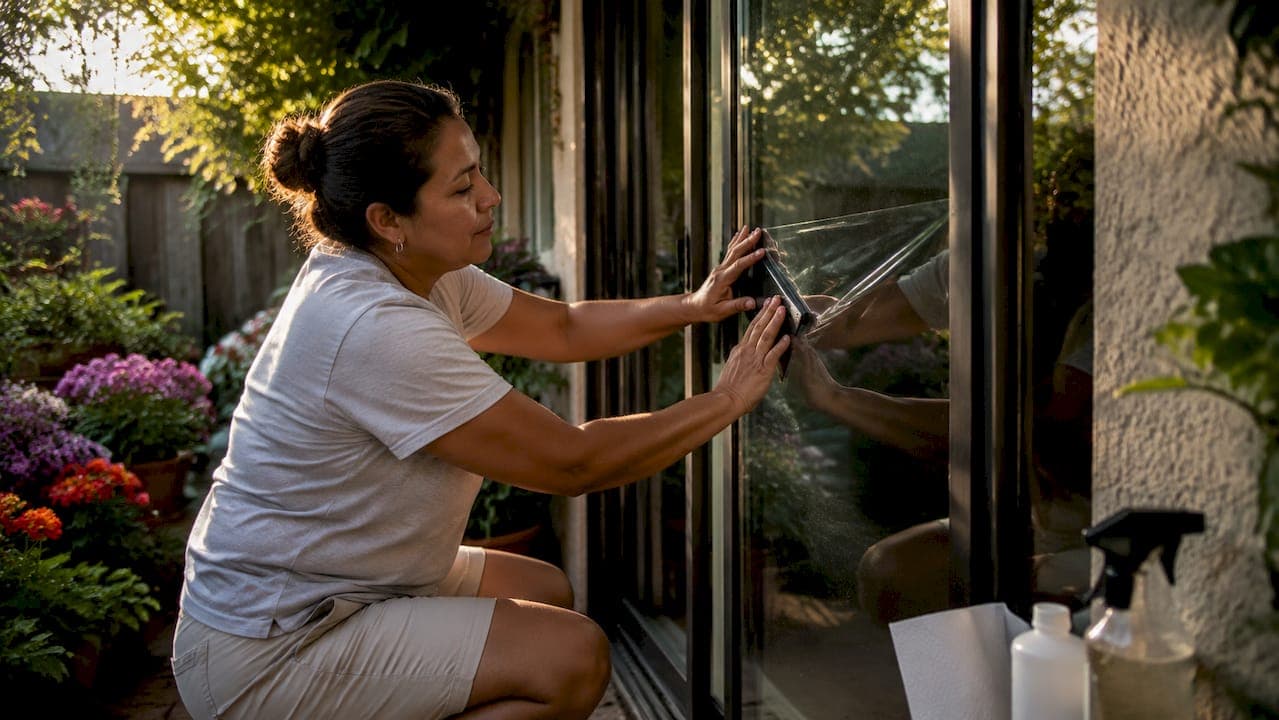
Tinting sliding glass doors means applying a specialized window film that blocks solar heat, filters UV rays, reduces glare, and adds privacy while keeping your view and natural light intact. The industry term for this product is solar control window film, and it is one of the most cost-effective upgrades a homeowner can make to a glass-heavy space. Solar films can reject solar heat by up to 82%, which directly cuts your cooling costs and makes rooms near large glass panels far more comfortable. If you have been asking why tint sliding glass doors, the short answer is this: your sliding door is one of the largest heat and UV entry points in your home, and film stops that at the source.
Why tint sliding glass doors in the first place?
Sliding glass doors are large, continuous glass surfaces. That makes them beautiful, but it also makes them the biggest source of solar heat gain in most homes. Significant heat enters through untreated glass, raising indoor temperatures and forcing your air conditioner to work harder. Window film addresses this directly by intercepting solar energy before it converts to heat inside your home.
Quality solar control films also block 99% of UV rays, which is the single most damaging factor for hardwood floors, rugs, and upholstered furniture. UV exposure causes fading within months on untreated glass. Film stops that degradation without requiring you to close blinds or block your view.
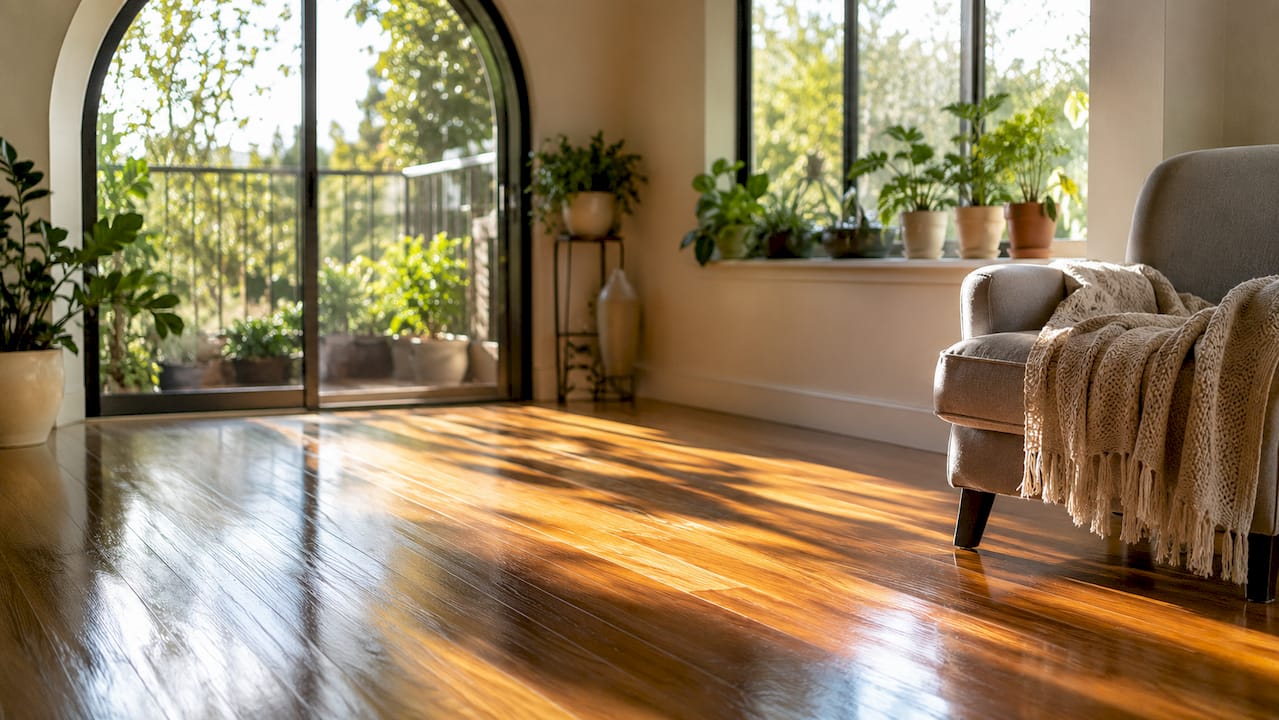
The third reason is privacy. Standard clear glass gives neighbors and passersby a full view into your living space during the day. Daytime privacy films let you see out clearly while making it difficult for anyone outside to see in. That is a meaningful quality-of-life improvement, especially for ground-floor rooms.
How does window film technology actually work?
Window films work by absorbing or reflecting specific wavelengths of solar energy before they pass through the glass. The film sits on the interior surface of the glass and acts as a filter. Different film technologies achieve this in different ways, and the differences matter when you are choosing what to put on a large sliding door.
Ceramic films
Ceramic-based films use nano-ceramic particles to reject heat without relying on metal layers. They deliver high solar rejection and excellent optical clarity, meaning your view stays sharp and your room stays bright. Ceramic film also carries a neutral charcoal appearance that most homeowners find clean and modern. Southmiamitint installs Iviron Kollmax ceramic tint and 3M IR ceramic film, both of which fall into this high-performance category.
Metalized and dyed films
Metalized films use thin metallic layers to reflect solar energy. They perform well on heat rejection but can interfere with cell signals and carry a more reflective, mirror-like look. Dyed films absorb heat rather than reflect it, making them the most affordable option. They fade faster than ceramic or metalized films and offer lower heat rejection overall.
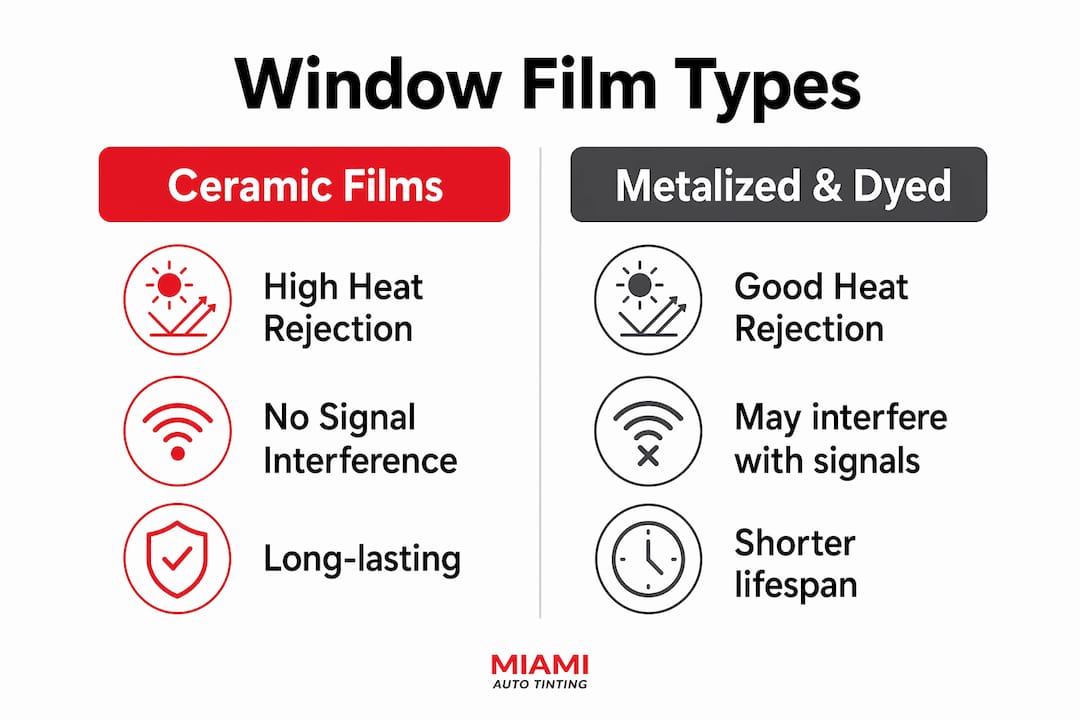
The table below compares the three main film types on the metrics that matter most for sliding doors.
| Film type | Heat rejection | UV blocking | Clarity | Signal interference |
|---|---|---|---|---|
| Ceramic | Very high | Up to 99% | Excellent | None |
| Metalized | High | High | Moderate | Possible |
| Dyed | Moderate | Moderate | Good | None |
The Total Solar Energy Rejected (TSER) rating is the standard metric used to compare films. A higher TSER means more solar energy stopped before it enters your home. Ceramic films consistently post the highest TSER scores.
What are the key benefits of tinting sliding glass doors?
The advantages of glass door tinting go well beyond keeping a room cooler. Each benefit compounds over time, which is why window tinting is a lasting home upgrade rather than a short-term fix.
- Energy savings. Reducing solar heat gain lowers your cooling load. Less work for your HVAC system means lower monthly utility bills. In a hot climate like Miami, this effect is significant year-round, not just in summer.
- UV protection. Films that block 99% of UV rays protect flooring, furniture, and artwork from fading. Replacing a faded hardwood floor or a set of sun-damaged sofas costs far more than a professional tint installation.
- Privacy without curtains. Daytime privacy films let you keep your doors unobstructed and your view open while preventing outside visibility into your home. You get light and privacy at the same time.
- Glare reduction. Tinting reduces glare that makes it hard to watch TV or work near a window. This is a daily comfort improvement that most homeowners notice immediately after installation.
- Aesthetic upgrade. A well-chosen film gives your sliding door a clean, finished look. Ceramic films in particular carry a neutral tone that works with most exterior and interior color schemes.
Pro Tip: Choose a film with a visible light transmission (VLT) between 35% and 50% for the best balance of glare control, privacy, and natural light in a living room or bedroom facing a patio.
How to choose the right tint for your sliding glass doors
Choosing the right film comes down to four factors: how much light you want, how much privacy you need, your climate, and your home's aesthetic. Getting this combination right means you will not need to adjust or replace the film for years.
The table below maps common tint shade levels to typical use cases for sliding doors.
| VLT level | Privacy level | Best use case |
|---|---|---|
| 70%+ (light) | Low | Rooms needing maximum natural light |
| 50% (medium) | Moderate | Living rooms, open-plan spaces |
| 35% (medium-dark) | High | Ground-floor bedrooms, street-facing doors |
| 20% (dark) | Very high | High-sun exposure, maximum heat rejection |
Dual-reflective films solve a specific problem: standard reflective films create a mirror effect at night when interior lights are on, reversing the privacy benefit. Dual-reflective films reduce interior reflectivity so you can see out clearly after dark while still rejecting heat during the day.
Climate is the other major variable. In Miami and South Florida, where sun intensity is high year-round, ceramic films with a TSER above 50% deliver the most measurable energy benefit. In milder climates, a lighter film with lower heat rejection may be sufficient. Southmiamitint's 3M IR and Iviron Kollmax ceramic options are specifically suited for high-heat environments where performance cannot be compromised.
Custom cutting is also worth considering. Non-standard door sizes require precise film cutting to avoid gaps or overlaps. A professional installer measures and cuts on-site, which eliminates the alignment errors that are common with pre-cut DIY kits on large panels.
Professional installation vs. DIY: which is right for you?
The size of a sliding glass door is the main reason professional installation outperforms DIY for this specific application. Large, continuous glass panels magnify every imperfection in the application process.
DIY kits are more prone to faults including bubbling, contamination from dust particles, and misalignment. Even a single dust particle trapped under the film creates a visible bubble that cannot be removed without pulling the film off and starting over. Sliding doors are large surfaces where even imperceptible dust causes visible imperfections, making a dust-free professional environment the practical standard for a clean result.
The benefits of professional installation include:
- Dust-free application environment. Professionals control the workspace to prevent contamination during installation.
- Precision cutting. Film is cut to exact measurements, including around door hardware and frames.
- Manufacturer warranty. Most professional-grade films carry warranties that DIY kits do not.
- Faster cure time. Professionals use application solutions and tools that reduce the time before the film fully adheres.
DIY makes sense for small windows or temporary applications where aesthetics are not the priority. For a primary sliding glass door in a living room or bedroom, the visible quality difference between professional and DIY work is significant. The professional installation advantage in finish quality and longevity justifies the cost difference for most homeowners.
Pro Tip: Before any installation, clean the glass thoroughly with an ammonia-free cleaner and let it dry completely. Residue on the glass surface is the leading cause of adhesion failure in both DIY and professional applications.
What does tinting sliding glass doors cost, and is it worth it?
Cost is the most common hesitation homeowners have before tinting. The numbers are more accessible than most people expect, and the return on investment is real.
- Professional installation cost. Professional tinting ranges from $400 to $1,200 depending on door size, film quality, and regional labor rates. The average cost sits around $612 as of 2025.
- DIY cost. Pre-cut or roll film kits cost significantly less upfront. The trade-off is application difficulty and a shorter lifespan for the film.
- Energy savings. Reduced HVAC load translates to lower monthly utility bills. In a high-sun market like Miami, the savings accumulate quickly over a full year.
- Furniture protection value. Replacing sun-faded flooring or furniture costs far more than a tint installation. Reduced energy costs and furniture protection together make the initial investment pay off within a few years.
- Factors that affect price. Door size, film type (ceramic costs more than dyed), number of panels, and installer experience all influence the final quote. Always get at least two quotes before committing.
The value of tinting glass doors is clearest when you calculate it across three to five years. Lower cooling bills, no faded furniture, and no need for heavy curtains or blinds add up to a return that most homeowners find exceeds the upfront cost.
Key Takeaways
Tinting sliding glass doors is the most direct way to reduce heat gain, block UV damage, and add privacy without sacrificing your view or natural light.
| Point | Details |
|---|---|
| Heat rejection is measurable | Solar films reject up to 82% of solar heat, cutting cooling costs year-round. |
| UV protection is near-total | Quality films block 99% of UV rays, preventing fading on floors and furniture. |
| Ceramic film leads on performance | Ceramic films offer the highest TSER rating with no signal interference and excellent clarity. |
| Professional installation matters | Large glass panels require a dust-free environment and precision cutting for a flawless result. |
| ROI is real and calculable | Energy savings and furniture protection together recover the installation cost within a few years. |
What I have learned after years of tinting glass doors
Most homeowners come to me focused on one thing: privacy. They want to stop feeling exposed in their own living room. That is a completely valid reason to tint, but it is rarely the benefit they end up valuing most after the job is done. The energy savings and the glare reduction tend to be the ones that change daily life the most noticeably.
The biggest misconception I see is that darker means better. A very dark film does reject more heat, but it also reduces natural light significantly, and that trade-off bothers most homeowners within a few weeks. The sweet spot for most living rooms and bedrooms is a ceramic film in the 35%–50% VLT range. You get strong heat rejection, real privacy during the day, and a room that still feels open and bright.
The other thing I tell every homeowner: do not cut corners on the film itself. The installation labor is a one-time cost. The film is what you live with for the next ten to fifteen years. Spending a little more on a quality ceramic product like 3M IR or Iviron Kollmax is the decision you will not regret. Cheap dyed films fade, bubble, and turn purple within a few years. Quality ceramic films look the same on year ten as they did on day one. The benefits of ceramic tint are not marketing language. They are measurable and they last.
— Jose
Southmiamitint's sliding glass door tinting services
Southmiamitint provides mobile and in-shop window tinting for residential sliding glass doors across Miami-Dade. The team installs 3M IR ceramic film, 3M Color Stable, and Iviron Kollmax ceramic tint, all of which are suited for the high-heat, high-UV conditions of South Florida.
If your sliding glass door is making your living room uncomfortable or your energy bills higher than they should be, a professional ceramic film installation is the most direct fix. Southmiamitint comes to your location, measures and cuts on-site, and applies film in a controlled environment for a clean, lasting result. Get a quote for ceramic window tinting in Miami and see what the right film can do for your home. You can also review 3M tinting options to compare film grades before your consultation.
FAQ
How much does it cost to tint a sliding glass door?
Professional tinting typically costs between $400 and $1,200 depending on door size, film type, and labor rates, with an average around $612 as of 2025. DIY kits cost less upfront but carry a higher risk of visible defects on large glass panels.
Does window tint make a room too dark?
A film with a VLT of 35%–50% reduces glare and heat without making a room feel dim. Ceramic films in this range maintain natural light while delivering strong solar heat rejection.
How long does window film last on sliding glass doors?
Quality ceramic films last ten to fifteen years under normal conditions. Dyed films have a shorter lifespan and are more prone to fading and discoloration over time.
Can window film be applied to any sliding glass door?
Film can be applied to most standard and non-standard sliding glass doors. Professional installers cut film on-site to fit exact dimensions, including around hardware and frames.
Does tinting a sliding glass door reduce privacy at night?
Standard reflective films can reverse their privacy effect at night when interior lights are brighter than the exterior. Dual-reflective films are designed to reduce this effect and maintain better outward visibility after dark.