
High-performance window film is one of the most cost-effective upgrades you can make to a home in a sunny climate. It blocks solar heat, rejects UV rays, and cuts cooling costs, all without replacing your windows. If you live in Florida, Texas, Arizona, or California, the case for installing it is straightforward.
Why high-performance window film belongs in every sunny home
The core benefits come down to heat, light, and protection. Here is what you get:
- Solar heat reduction. Quality films block up to 80% of solar heat, directly lowering how hard your air conditioner works.
- UV protection. Films block 95%–99.9% of UV rays, protecting furniture, flooring, and artwork from fading.
- Glare reduction. Lower visible light transmission means less eye strain when working or watching TV near windows.
- Privacy. Reflective or tinted films limit outside views into your home during daylight hours without blocking your outward view.
- Durability. Modern films include scratch-resistant coatings and come with lifetime warranties, so they hold up for years.
- Energy savings. Films with low Solar Heat Gain Coefficient (SHGC) values reduce your HVAC load, which shows up directly on your utility bill.
- Environmental benefit. Less air conditioning use means a lower carbon footprint. 3M Window Films can become carbon negative in as little as six months after installation.
1. Energy cost reduction you can actually measure
High-performance window film directly cuts your cooling bill. Window film can reduce utility costs by 30% to 40%, according to California-based consultant Donna Wells. The International Window Film Association puts the payback period at a few years, with quality products lasting multiple decades. That math works strongly in your favor in a hot climate.
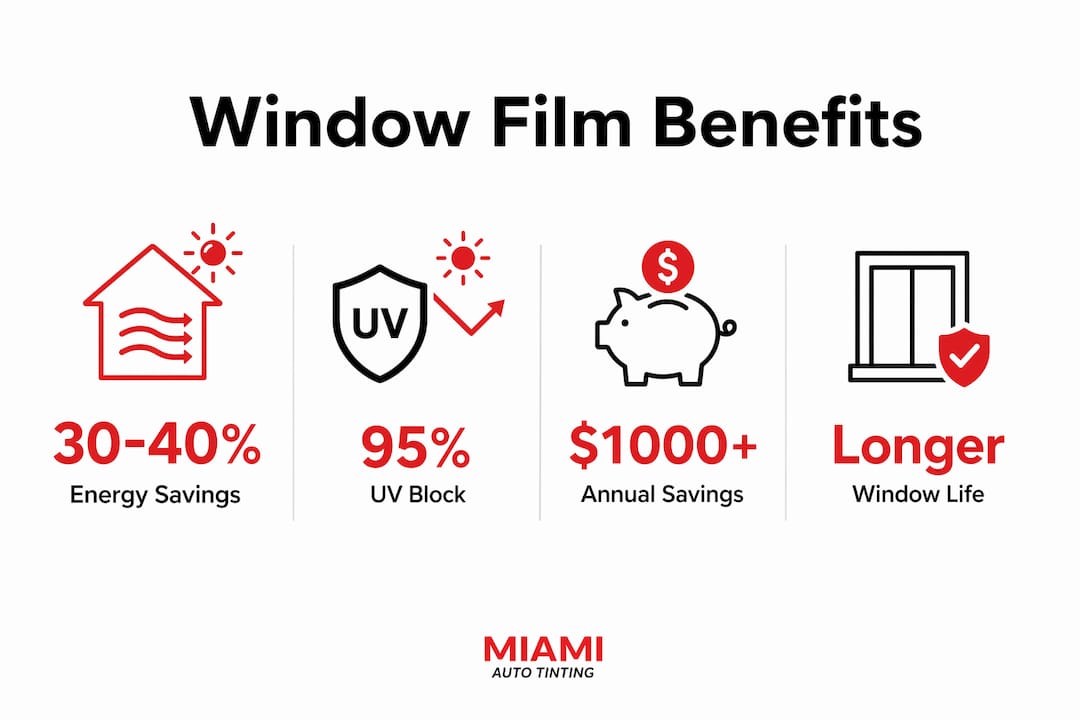
The U.S. Department of Energy classifies window film as a top-tier energy conservation technology. Savings can reach $1–$2 per square foot of film installed, or as much as 19 kWh per square foot of glass. For a home with a lot of south- or west-facing glass, those numbers add up fast.
Pro Tip: Ask your utility company about rebates before you book installation. Some state and utility programs offer incentives for energy-efficient window film, which can shorten your payback period further.
2. UV protection that preserves your home's interior
UV rays are the primary cause of fading in furniture, carpets, hardwood floors, and artwork. A quality film rejects 95%–99.9% of ultraviolet light, which is close to complete protection. You keep your natural light while the damaging part of the spectrum stays outside.
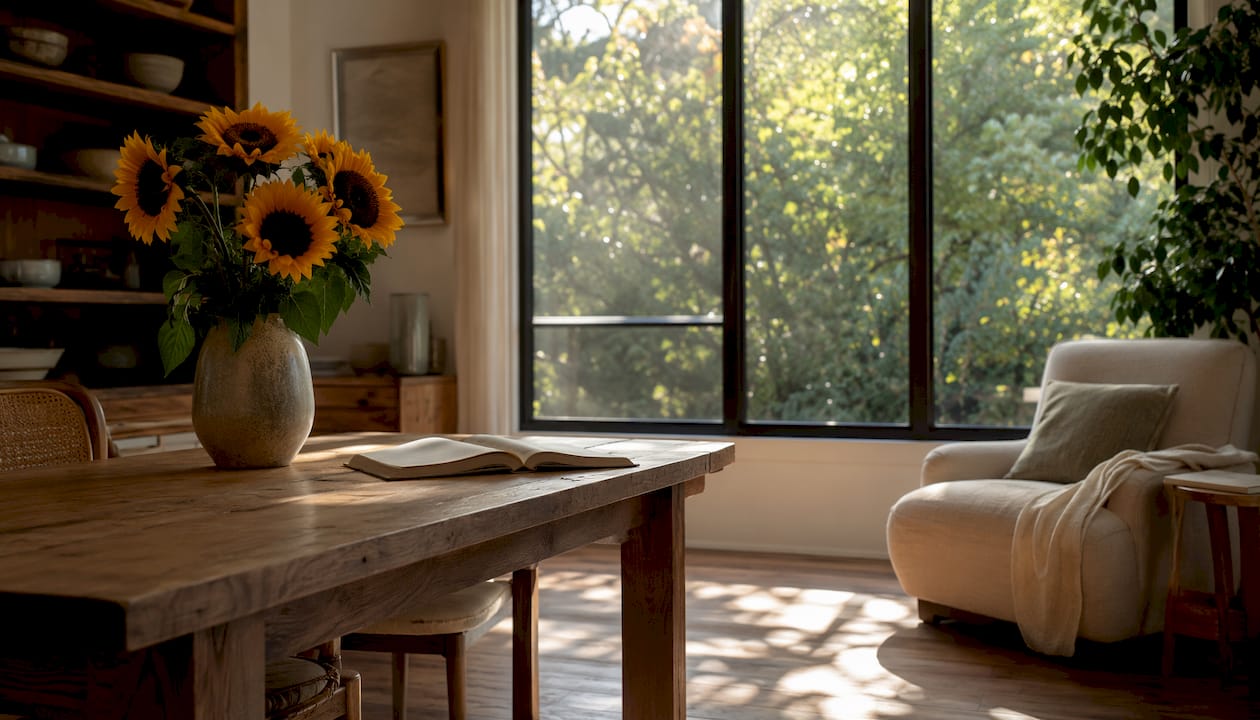
This matters most in rooms with direct sun exposure for several hours a day. Fabrics, dyes, and wood finishes all degrade faster than most homeowners expect. Film is a passive, always-on solution that requires no adjustment.
3. Glare reduction for comfort and screen usability
Glare from direct sunlight makes screens difficult to read and rooms uncomfortable to spend time in. Films with lower Visible Light Transmission (VLT) filter harsh light while still letting natural light through. The result is a room that feels brighter and more comfortable at the same time.
VLT affects both glare reduction and interior brightness, so the right level depends on your window orientation and how much natural light you want to preserve. South- and west-facing windows typically benefit from lower VLT films.
4. Privacy without sacrificing your view
Reflective and tinted films give you daytime privacy by limiting what people outside can see. You still see out clearly. This is especially useful for street-facing rooms, ground-floor bedrooms, and bathrooms with exterior windows.
Films with high reflectance create a mirror effect from outside during daylight. At night, when interior lighting is brighter than outside, the effect reverses, so reflective film alone is not a complete privacy solution for evening hours.
5. Glass protection and longer window lifespan
Window film adds a protective layer directly to your glass. It holds shattered glass together if a window breaks from impact or severe weather, reducing injury risk. The film also shields the glass surface from minor scratches and UV degradation over time.
For homes in hurricane-prone areas like South Florida, this added structural benefit is worth noting. Film is not a substitute for impact-rated glass, but it does add a meaningful layer of protection.
6. Environmental sustainability through lower energy use
Every degree you reduce indoor heat gain means less work for your HVAC system. Less HVAC use means lower electricity consumption and a smaller carbon footprint. 3M notes that their window films can help buildings qualify for LEED credits, which reflects how seriously the building industry takes this benefit.
Keeping your existing windows and adding film also keeps old glass out of landfills. It is a retrofit solution, not a replacement, which makes it a lower-impact choice compared to full window replacement.
7. Comparison with other energy-saving window treatments
Window film outperforms blinds and curtains on heat rejection because it works at the glass surface before heat enters the room. Blinds and curtains trap heat between the glass and the fabric, which still warms the interior. Storm windows add insulation but cost far more and require structural changes.
Film is also less expensive than replacing windows entirely. At a fraction of the cost of new windows, it can make an older single-pane window perform closer to a modern low-E unit. For homes with large glass areas that would be expensive to replace, film is often the most practical path.
How to choose the right film for your home
Choosing the right film starts with three numbers: SHGC, VLT, and TSER.
- SHGC (Solar Heat Gain Coefficient): Measures how much solar heat enters through the filmed window. An SHGC below 0.25 is high-performance, suitable for south- or west-facing windows in warm regions. Below 0.30 is excellent for most sunny climates.
- VLT (Visible Light Transmittance): Controls how much natural light comes through. Lower VLT means a darker film and better heat performance, but less daylight.
- TSER (Total Solar Energy Rejected): A TSER above 65% is high performance. Above 75% is exceptional and appropriate for the most demanding applications.
- NFRC certification: Look for an NFRC rating label showing SHGC and VT values. This label is your guarantee that the performance numbers are standardized and comparable across products.
- Film type: Ceramic films and spectrally selective low-e coatings offer the best balance of heat rejection and light preservation. They block heat without making windows look dark or reflective.
- Warranty: Look for a transferable lifetime warranty. It signals manufacturer confidence and protects your investment if you sell the home.
- Window orientation: South- and west-facing windows need the most aggressive films. North-facing windows can use lighter options. A professional installer can advise on the right film for each exposure. Check out Southmiamitint's guide on choosing the best heat rejection film for Miami's specific climate.
Pro Tip: Request a sample of your chosen film applied to a small section of glass before committing to the full installation. This lets you evaluate the light level and appearance in your actual space before the job is done.
Trusted film brands: 3M IR, 3M Color Stable, and Iviron Kollmax
Southmiamitint installs three proven film lines, each suited to different priorities.
- 3M IR: Uses advanced nano-technology layering to reject infrared heat while maintaining high visible light transmission. 3M pioneered multilayer window film technology and has been developing window films since 1966. 3M IR is a strong choice when you want maximum heat rejection without a dark appearance.
- 3M Color Stable: Patented color-stable technology means the film does not turn purple or fade over time, a common problem with older dyed films. It combines heat rejection with a neutral appearance that suits most home aesthetics. Learn more about 3M ceramic film performance and what sets it apart.
- Iviron Kollmax: A ceramic film that delivers high heat rejection and UV protection without metal layers, so it does not interfere with cell signals or GPS. Ceramic construction also means it holds its color and performance over the long term. For homeowners who want the benefits of ceramic technology at a competitive price point, Kollmax is a practical option.
All three lines are available with manufacturer warranties and are installed by trained professionals. NFRC-certified performance data is available for each product, so you can compare SHGC and VLT values before making a decision.
Pro Tip: Ask your installer which film line is certified for your specific glass type. Some films are not recommended for certain tempered or laminated glass configurations, and using the wrong product can void both the film warranty and your window manufacturer's warranty.
Installation and maintenance: what you need to know
Professional installation is not optional if you want the film to perform as rated; learn more about proper techniques at the Auto Detailing Blog | AMB Pro Detailing Bowling Green KY. Certified installers trained by manufacturers know how to prep the glass surface, apply the film without trapping debris, and finish edges cleanly. Bubbling, peeling, and haze are almost always the result of poor application, not a bad product.
- Film is permanent until professionally removed. Removal requires specialized tools and release agents and should not be a DIY project. Choose your film carefully before installation.
- Cleaning is simple. Once applied, film is maintained just like the original glass. Use a soft cloth and a mild, ammonia-free cleaner.
- Inspect edges annually. Check for any lifting at corners or edges, especially after severe weather. Early detection prevents larger failures.
- Climate and glass type matter. Thicker glass and certain coatings affect how film adheres and performs. A professional assessment before installation avoids compatibility issues.
For a deeper look at how professional installation compares to DIY, Southmiamitint's breakdown of professional vs. DIY tinting covers the key differences clearly.
Pro Tip: Before signing any installation contract, ask whether the warranty is transferable to a new owner. A transferable lifetime warranty adds real value to your home and protects the next buyer, which can be a selling point if you move.
Get professional window film installation in Miami

Southmiamitint brings professional window film installation directly to your home in Miami-Dade. No need to drop off or schedule around a shop. The team installs 3M IR, 3M Color Stable, and Iviron Kollmax ceramic film on residential windows, with the expertise to match the right film to your glass type, orientation, and budget.
Book your residential installation and start cutting your cooling costs with film that is built to last.
Key Takeaways
High-performance window film cuts solar heat gain, blocks UV rays, and reduces cooling costs, making it one of the most practical upgrades for homes in sunny U.S. climates.
| Point | Details |
|---|---|
| Energy savings are real | Window film can reduce utility costs by 30%–40% with a payback period of roughly three years. |
| UV protection is near-total | Quality films block 99% of UV rays, preventing fading of furniture, flooring, and artwork. |
| NFRC labels matter | Look for SHGC and VT ratings on NFRC-certified film to compare heat rejection and light transmission accurately. |
| Professional installation is required | Certified installers prevent bubbling, debris, and edge failures that cause premature film degradation. |
| Film is a permanent retrofit | Removal requires specialized tools and professional service, so choose your film carefully before installation. |